Monterey California — Retro Vintage History
What's with the sardines? Walk Cannery Row today — hotels and shops now, but the long tin buildings on pilings give it away: the Sardine Capital of the World. From the early 1900s through the 1940s, Monterey's canneries pulled silver tides of sardines out of the bay and packed them by the millions, the air thick with the smell of fish and the cannery whistles calling shifts at all hours. Then, around 1950, the sardines simply stopped coming, and the Row fell silent almost overnight. The street kept the name. They built Cannery Row, and their ghost still runs through every weathered board of it.
Wear the HistoryWhere you're from. Where you love. Where you explored. Where you belong.
But Monterey's deeper claim is older and grander: this is where California began. Before Sacramento, before the gold, Monterey was the capital — first of Spanish Alta California from 1777, then of Mexican California, the one seat of government the territory kept under three flags. And in 1849, when California was about to become a state, the delegates met here at Colton Hall to write its first constitution. For most of a century the business of California was done in this town of whitewashed adobe on the edge of a deep blue bay, and Monterey collected the territory's firsts almost by default — the first theater, the first brick house, and the first printing press and newspaper in California all began here.

People were here long before any of that. The Costanoan, or Ohlone, lived on Monterey Bay for thousands of years before the first ship arrived. A Spanish expedition under Sebastián Vizcaíno sailed in in 1602 and named the harbor for the Count of Monte Rey; the name stuck, though no one came back to settle for another 168 years. Then on June 3, 1770, Gaspar de Portolá and Father Junípero Serra came ashore and founded the presidio and mission that became the town — the mission itself moving south to neighboring Carmel the following year.
QUICK FACTS — MONTEREY, CA
Sebastián Vizcaíno sailed in and named the harbor for the Count of Monte Rey in 1602; settlement came 168 years later.
On June 3, 1770, Gaspar de Portolá and Father Junípero Serra founded the presidio and mission; the mission moved to Carmel in 1771.
Monterey was the capital of Alta California from 1777 — Spanish, then Mexican — until the American flag rose in 1846.
The 1794 Royal Presidio Chapel is California's oldest stone building and its first architect-designed building.
The 1827 Custom House is California's oldest government building — and California Historical Landmark Number One.
Delegates wrote California's first constitution at Colton Hall in 1849; the city incorporated in 1850, the year of statehood.
Monterey Jack cheese carries the city's name — the registry lists California's first marketed cheese here in 1859.
The first cannery opened in 1902; by the 1930s Monterey was the Sardine Capital of the World, until the fish vanished around 1950.
Monterey is the Adobe Capital of California, and the proof is still standing. The 1794 Royal Presidio Chapel is the oldest building in town and the first architect-designed building in California. A short walk away runs the Path of History, a trail of thick-walled adobes from the Spanish and Mexican decades — the Custom House, California's oldest government building, where the United States flag first rose over the territory; Colton Hall, where the constitution was written; the Larkin House and the Cooper-Molera adobe. The low, deep-eaved Monterey-Colonial style was born here, and it carries the town's name to this day.
The waterfront tells a different century. Monterey was a Chinese, Japanese, and Sicilian fishing village before the sardine canneries arrived around 1900 and turned the shoreline into an industrial machine. At its peak Cannery Row ran two dozen canneries and reduction plants, and for a while Monterey was one of the busiest fishing ports in the Western Hemisphere — the street later made famous by the Monterey novelist John Steinbeck. When the fishery collapsed at mid-century the canneries closed, and the buildings waited decades for their second life as the Row you walk today.
And one export carries the city's name into every grocery store in America: Monterey Jack. The mild cheese descends from the queso del país made on the Mexican-era ranchos, and it took its name from David Jacks, the Scottish-born land baron who came to control much of the peninsula — he acquired the town's own pueblo lands at a courthouse auction Monterey never forgave — and began shipping the local cheese under his name in the 1880s. The city's registry of firsts lists California's first marketed cheese at Monterey in 1859, and Jacks Peak, the highest point on the peninsula, still carries the family name. The cheese outlived the grudge.
South of town the land turns wild at Point Lobos, the granite-and-cypress headland often called the crown jewel of California's state parks, where sea otters raft in the kelp and the surf breaks white against the rocks. Monterey Bay itself is a drowned submarine canyon — deep, cold, and astonishingly rich with life — which is why the old Hovden cannery at the end of the Row was reborn in 1984 as a place to look at the sea instead of empty it. The same water that built the canneries now draws people to watch whales and otters in it.

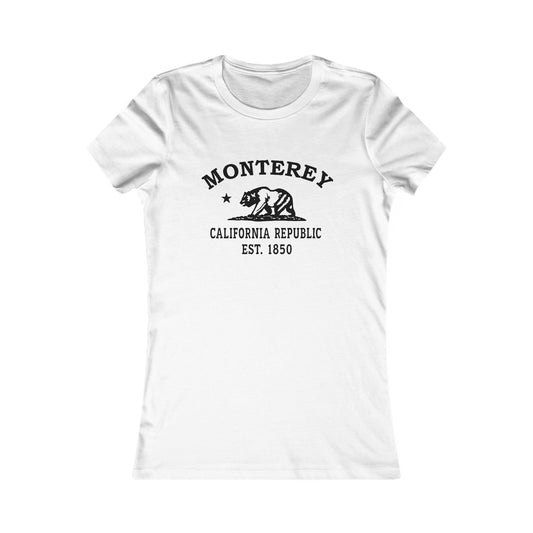
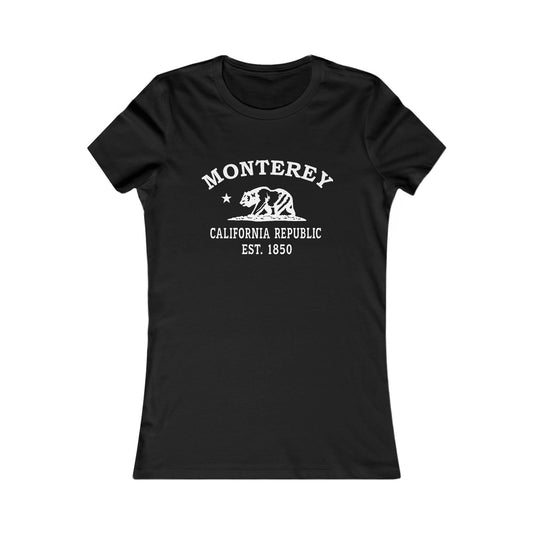
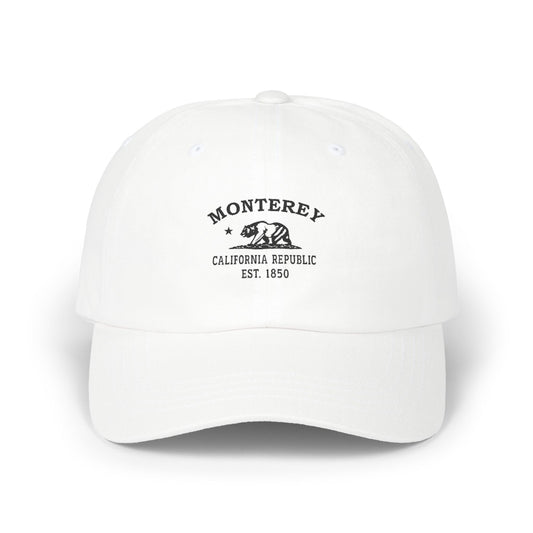
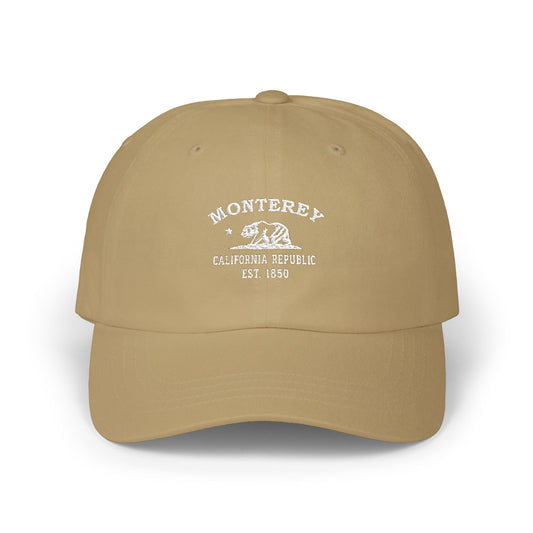
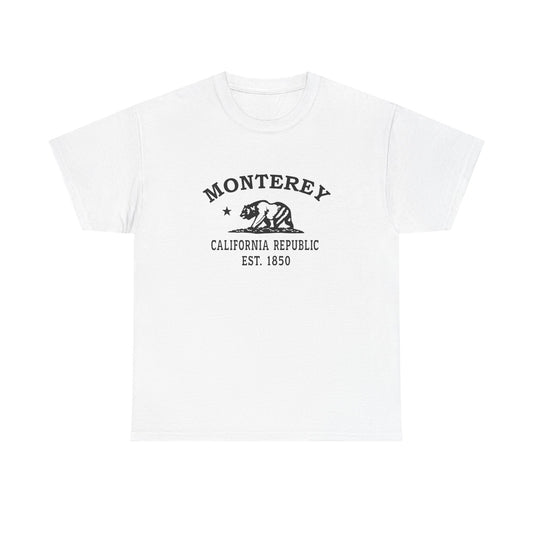
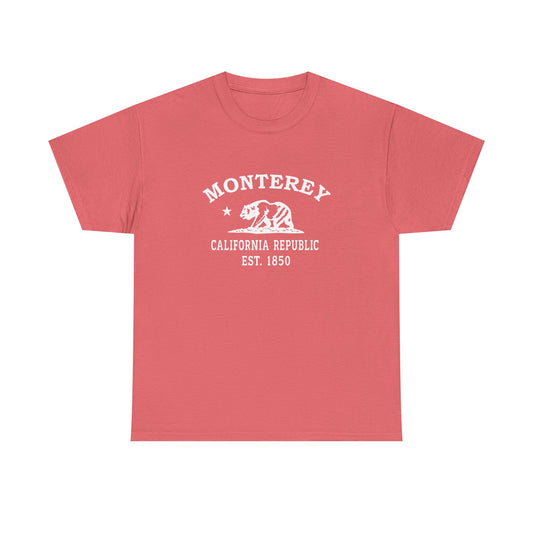
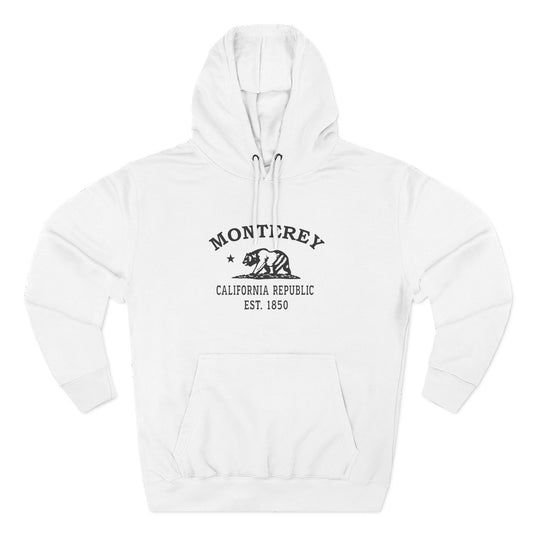
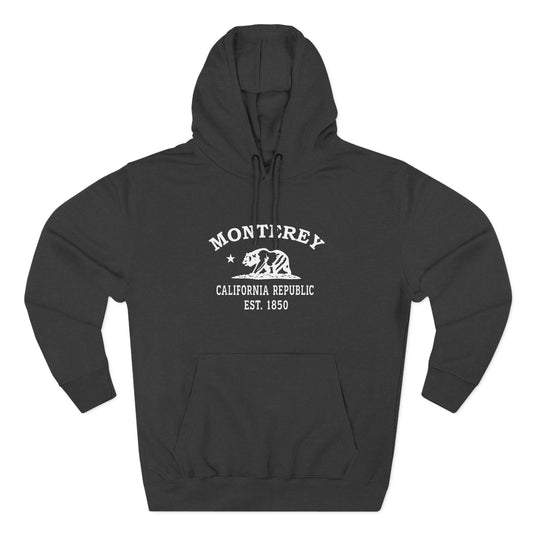
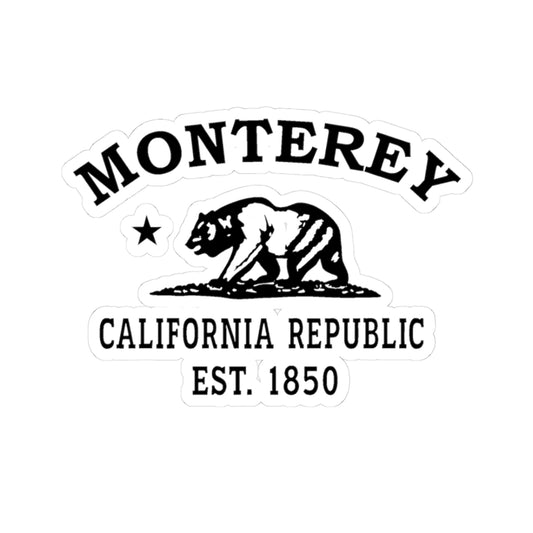
Our Monterey logo carries California's grizzly bear and lone star above “California Republic — Est. 1850,” the shared retro emblem of our California places, drawn in worn black-and-white like an old crate label or cannery stamp. The 1850 marks the year Monterey was incorporated as a city — the same year California became a state. The bear is the through-line that links Monterey to every other California town we make; what makes this one Monterey is everything around it — the first capital, the adobes, the canneries, and the bay.
From the room where California wrote its constitution to the canneries that fed the bay, Monterey is the original California — adobe walls, cannery tin, and the deep blue water that ran through all of it. Our Monterey designs gather that layered history into wearable form. From California's first capital to the Sardine Capital of the World: wear a little of Monterey's original-California history.
Monterey, California — Travel Guide
Visiting Monterey Today
Monterey sits on the southern edge of Monterey Bay, about eighty-five miles south of San Francisco — a walkable city of Spanish and Mexican adobes, a historic waterfront, and a coastline of granite headlands and cypress. Its old town, Cannery Row, and the bay are easy to explore on foot and along the recreation trail in a relaxed day or two.
Adobes, Cannery Row & the Bay
For visitors looking for things to do in Monterey, California:
- Walk the Path of History past the 1794 Royal Presidio Chapel, the Custom House, and Colton Hall — where California's first constitution was written.
- Explore Cannery Row, the old sardine-canning district later made famous by the writer John Steinbeck.
- Spend time at Point Lobos State Natural Reserve — granite headlands, cypress, sea otters, and tide pools just south of town.
- Stroll Old Fisherman's Wharf for harbor views and the working waterfront.
- Visit the Monterey Bay Aquarium, built on the old Hovden cannery site at the end of the Row.
- Wander the downtown adobes of Monterey State Historic Park.
- Take in Monterey Bay itself — whale-watching, kayaking, and the national marine sanctuary.
Why People Visit Monterey
Monterey rewards visitors who want the original California — the first capital, a town of 18th-century adobes, and a deep, wild bay. People come for the Path of History and Cannery Row, for Point Lobos and the marine sanctuary, and for an easy, scenic stretch of Central Coast where Spanish-colonial heritage and a famous waterfront sit side by side.
Wear the History
Where you're from. Where you love. Where you explored. Where you belong.
Kindred Cities
Greetings, friends from Nanao (ようこそ), Lleida (bienvenidos) and Isola delle Femmine (benvenuti) — Monterey keeps friends on three coasts.
Monterey's deepest friendship is a tale of two fishing towns that reinvented themselves. Nanao, on Japan's Noto Peninsula, was a fading port until it looked to Monterey — which had turned its collapsed sardine industry into Cannery Row, an aquarium and a famous jazz festival — and copied the model. Lleida brings inland Catalonia; Isola delle Femmine a Sicilian fishing village, kin to the Sicilian families who once worked Monterey's sardine fleet.
Nanao has been Monterey's sister since 1995 — close enough that Nanao runs the only Monterey Jazz Festival licensed outside California, and that when a 2024 earthquake struck the Noto Peninsula, Monterey raised relief funds for the town near its epicenter.
Come from Nanao and Monterey will feel like the town your own remade itself after: Cannery Row reborn, sea otters off the wharf, and jazz in September off a fog-bound bay. Come and visit us soon.
When you plan the trip, See Monterey — the area's official tourism bureau — is the place to start.
Wear the History
Where you're from. Where you love. Where you explored. Where you belong.

For deeper reading on the Monterey history described here — the Costanoan (Ohlone) homeland, the 1602 Vizcaíno naming, the 1770 founding by Portolá and Serra, Monterey as California's first capital, the 1849 constitutional convention at Colton Hall, the 1794 Royal Presidio Chapel and the Path of History adobes, and the Cannery Row sardine era — it may be useful to consult (1) the Monterey History & Art Association and the Colton Hall Museum, (2) the Monterey Public Library California History Room, (3) Monterey State Historic Park, (4) the California State Archives and California State Library, and (5) the Old Monterey Foundation. For travel and visitor information, it may be useful to contact (1) See Monterey (the Monterey County Convention & Visitors Bureau), (2) the City of Monterey Recreation department, (3) California State Parks, (4) the Monterey Bay National Marine Sanctuary visitor center, and (5) the Monterey Regional Airport information desk.
Shop the Monterey California collection
View full collection-
Monterey California Vintage Retro Premium Crewneck Sweatshirt - Black Logo
Regular price $48.00 USDRegular price -
Monterey California Vintage Retro Premium Crewneck Sweatshirt - White Logo
Regular price $48.00 USDRegular price -
Monterey California Vintage Retro Womens Fitted Ringspun Cotton Tee - Black Logo
Regular price $28.00 USDRegular price -
-
Monterey California Vintage Retro Embroidered Cotton Cap - Black Logo
Regular price $32.00 USDRegular price -
Monterey California Vintage Retro Embroidered Cotton Cap - White Logo
Regular price $32.00 USDRegular price -
Monterey California Vintage Retro Unisex Heavy Cotton Tee - Black Logo
Regular price $22.00 USDRegular price -
Monterey California Vintage Retro Unisex Heavy Cotton Tee - White Logo
Regular price $22.00 USDRegular price -
Monterey California Vintage Retro Unisex Heavy Cotton Hoodie - Black Logo
Regular price $56.00 USDRegular price -
Monterey California Vintage Retro Unisex Heavy Cotton Hoodie - White Logo
Regular price $56.00 USDRegular price -
Monterey California Vintage Retro Vinyl Sticker - Black Logo
Regular price From $6.00 USDRegular price -
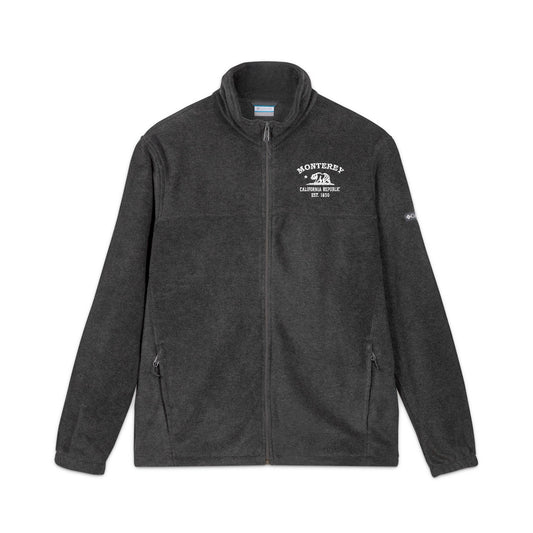
Monterey California Vintage Retro Unisex Embroidered Fleece Jacket - White Logo
Regular price $98.00 USDRegular price -
Monterey California Vintage Retro Back Printed Art Series Cotton Tee - Black Logo
Regular price $32.00 USDRegular price -
Monterey California Vintage Retro Giclée Print Art Series Poster
Regular price From $38.00 USDRegular price -
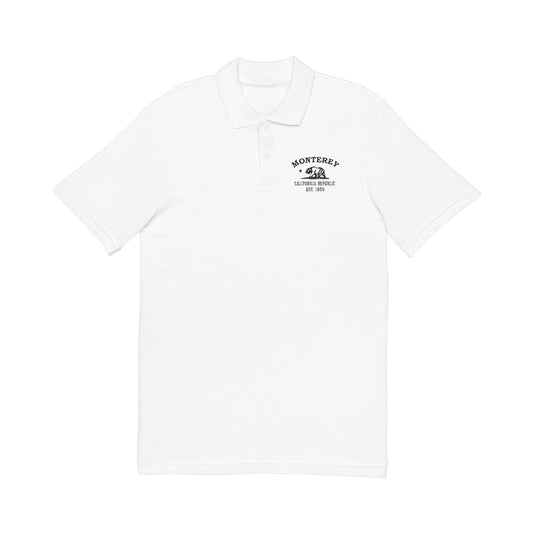
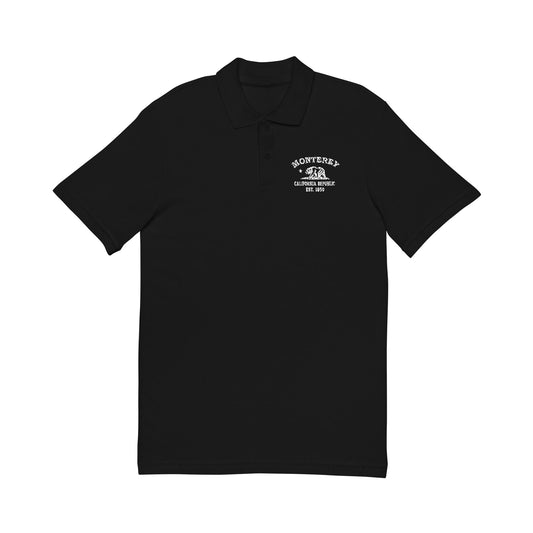
Monterey California Vintage Retro Unisex Embroidered Cotton Polo - Black Logo
Regular price $48.00 USDRegular price -
Monterey California Vintage Retro Ceramic Mug - Black Logo
Regular price From $16.00 USDRegular price -
Monterey California Vintage Retro Cotton Canvas Tote Bag - White Logo
Regular price $25.00 USDRegular price -
Monterey California Vintage Retro Cotton Canvas Tote Bag - Black Logo
Regular price $25.00 USDRegular price -
Monterey California Vintage Retro Thank You Card Set - Black Logo
Regular price From $25.00 USDRegular price -
Monterey California Vintage Retro Cotton Jersey Baby Bodysuit - Black Logo
Regular price $26.00 USDRegular price -
Monterey California Vintage Retro Unisex Cotton Jersey Tank Top - White Logo
Regular price $28.00 USDRegular price -
Monterey California Vintage Retro Unisex Cotton Jersey Tank Top - Black Logo
Regular price $28.00 USDRegular price -
Monterey California Vintage Retro Unisex Heavy Crewneck Sweatshirt - Black Logo
Regular price $44.00 USDRegular price