
Monterey is the Adobe Capital of California, and the proof is still standing. The 1794 Royal Presidio Chapel is the oldest building in town and the first architect-designed building in California. A short walk away runs the Path of History, a trail of thick-walled adobes from the Spanish and Mexican decades — the Custom House, California's oldest government building, where the United States flag first rose over the territory; Colton Hall, where the constitution was written; the Larkin House and the Cooper-Molera adobe. The low, deep-eaved Monterey-Colonial style was born here, and it carries the town's name to this day.
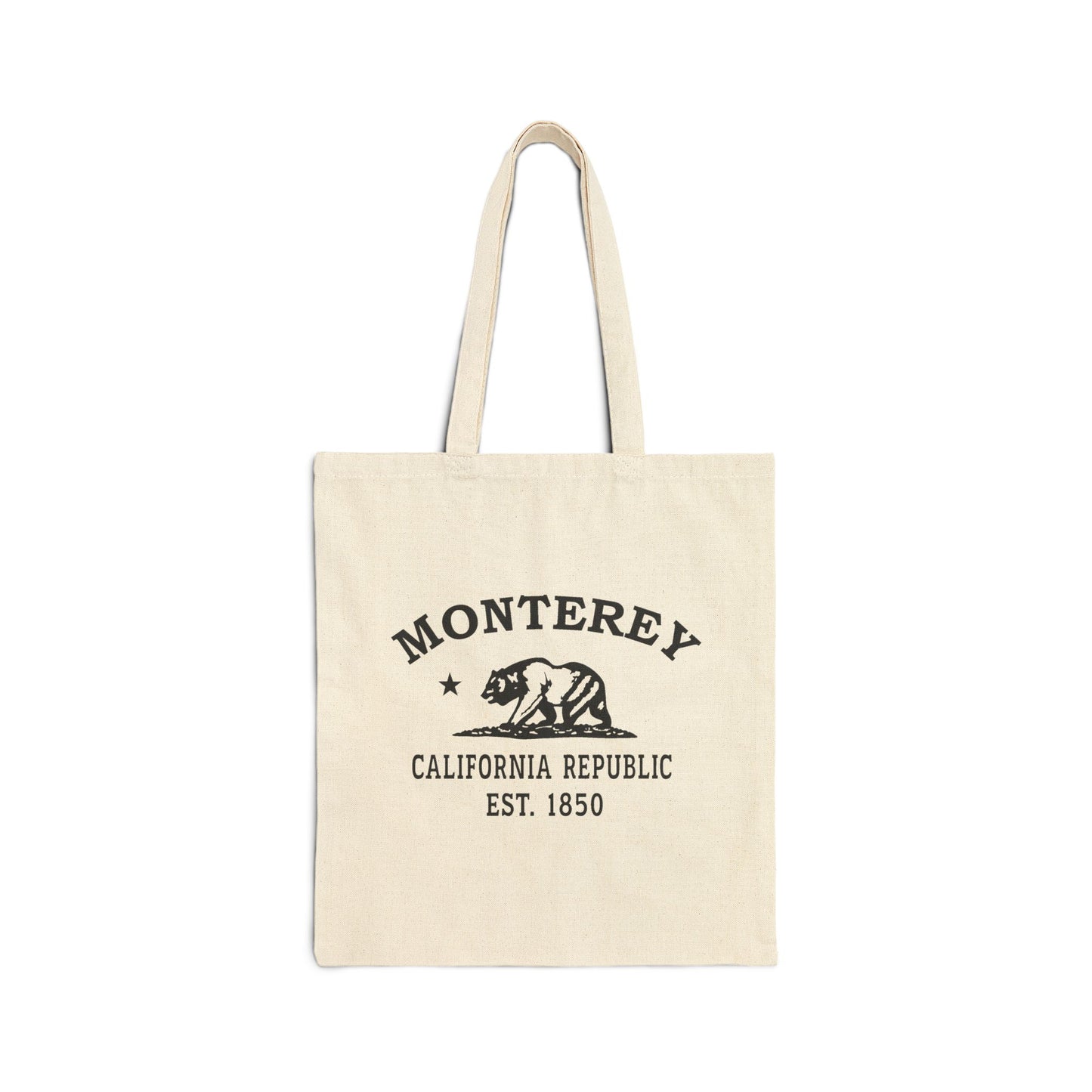
Our Monterey logo carries California's grizzly bear and lone star above “California Republic — Est. 1850,” the shared retro emblem of our California places, drawn in worn black-and-white like an old crate label or cannery stamp. The 1850 marks the year Monterey was incorporated as a city — the same year California became a state. The bear is the through-line that links Monterey to every other California town we make; what makes this one Monterey is everything around it — the first capital, the adobes, the canneries, and the bay.
Why People Visit Monterey
Monterey rewards visitors who want the original California — the first capital, a town of 18th-century adobes, and a deep, wild bay. People come for the Path of History and Cannery Row, for Point Lobos and the marine sanctuary, and for an easy, scenic stretch of Central Coast where Spanish-colonial heritage and a famous waterfront sit side by side.
