Bethel Alaska — Retro Vintage History
What's with "where the river is the road"? In Bethel there are no highways in or out — the town sits off the road system, reached only by air and by the Kuskokwim River itself. For much of the year the river is the road: in summer, skiffs and barges carry people and freight up and down the water to some fifty villages; in deep winter the Kuskokwim freezes hard enough to drive on, and the state marks an official ice road across it. The seasons that matter most here are breakup, when the ice goes out in a roar each spring, and freeze-up, when travel pauses until the river sets. Watch the Kuskokwim and you are watching the calendar of the whole delta.
Wear the HistoryBethel is the largest community in western Alaska — the eighth-largest city in the state, home to roughly six thousand people — and the hub of the Yukon-Kuskokwim Delta, one of the largest river deltas on earth. The delta is a vast, flat sweep of tundra, lakes, and braided channels, a globally important waterfowl nursery protected as the Yukon Delta National Wildlife Refuge, where the Kuskokwim runs its last fifty miles toward the Bering Sea. People have lived here for thousands of years. The Central Yup'ik name for the place is Mamterilleq, "Place of the Smokehouse," and the delta remains a heartland of Yup'ik life, language, and subsistence — salmon on the river in summer, a country measured by season and weather rather than by miles of pavement, some four hundred miles by air from Anchorage with no road between.

The name Bethel arrived in 1885, when Moravian missionaries — among them the Weinlands and the Kilbucks — established a mission on the river and gave it the Biblical name meaning "House of God." A trading post of the Alaska Commercial Company had already drawn business to the same bend of the Kuskokwim. The mission brought a church, a school, and a written form of the Yup'ik language; it settled alongside the Yup'ik world rather than replacing it. For well over a century the two have been interwoven here, and the delta has remained, throughout, Yup'ik ground.
Through the twentieth century Bethel grew into the service center for the whole region. The Alaska Commercial Company trading post gave way to a town; a post office opened in 1905; a military airfield was built during World War II, in 1942; and the city incorporated in 1957, two years before Alaska statehood. With no roads to the rest of Alaska, aviation became the lifeline, and Bethel's airport turned into one of the busiest bush-flying crossroads in the state — small carriers shuttling people, mail, and groceries out to the villages, with river barges hauling the heavy freight up the Kuskokwim each summer. Today the town anchors the delta's administration, schools, and the regional health system, serving more than fifty surrounding communities from a single hub at the end of the river.
Bethel's most far-reaching "first" went on the air in 1971. KYUK, owned and operated by Bethel Broadcasting and pushed into being by the region's own Native leaders, became the first Native-owned and -operated public radio station in the United States — soon joined by KYUK-TV in 1972 — broadcasting in both English and Yup'ik across a region the size of a small state. For families throughout the delta, much of it Yup'ik-speaking, KYUK was for years the only local media for hundreds of miles, carrying news, weather, basketball, and gospel in Yup'ik. Over half a century it has built an irreplaceable archive of thousands of recordings of the region's language, music, and elders. It remains one of the country's landmark experiments in Native-owned broadcasting.
Winter brings the other thing Bethel is known for. The Kuskokwim 300 — the "K300" — has run nearly every January since 1980: a roughly three-hundred-mile sled-dog race that loops up the frozen river from Bethel to Aniak and back, commemorating the old mail trail that once tied the river villages to the outside world. It was founded just as snowmachines were replacing the dog teams locals had long relied on, and it is now widely regarded as one of the toughest mid-distance races in the sport, drawing top mushers north into some of the hardest weather anywhere. Around it has grown a whole winter calendar of delta races — the Bogus Creek 150, the Akiak Dash, and more. In Yukon-Kuskokwim country, where dog teams once did the work the snowmachine does now, the K300 keeps the tradition running.
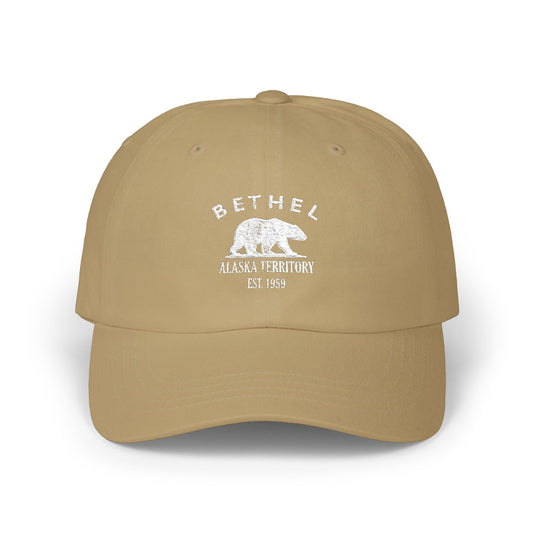
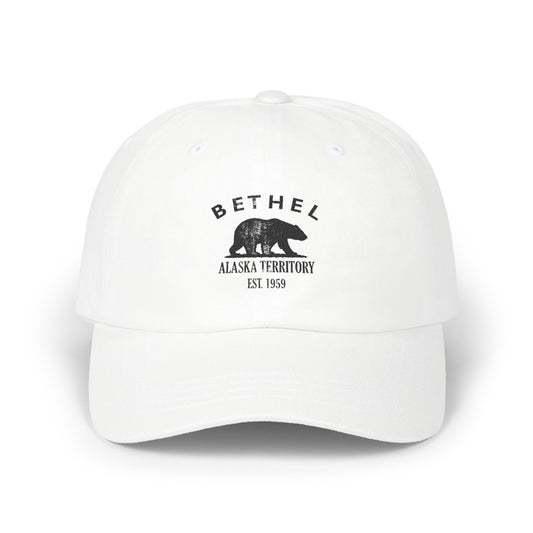
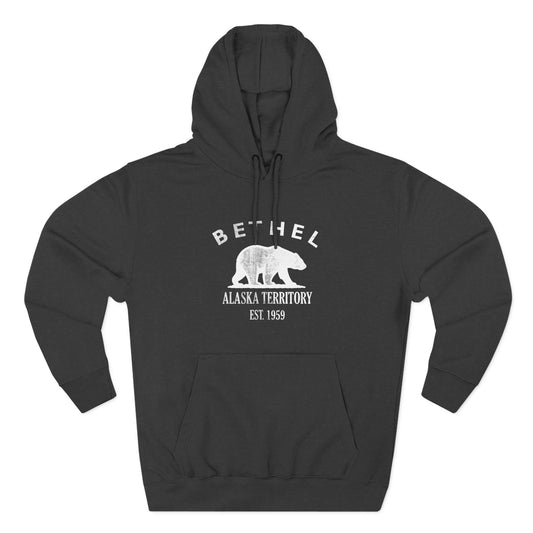
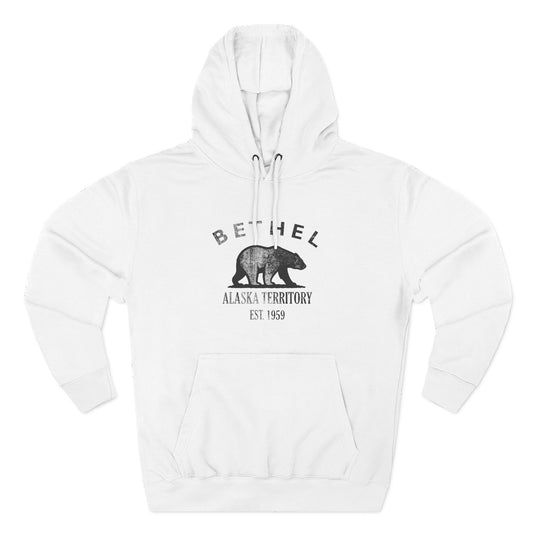
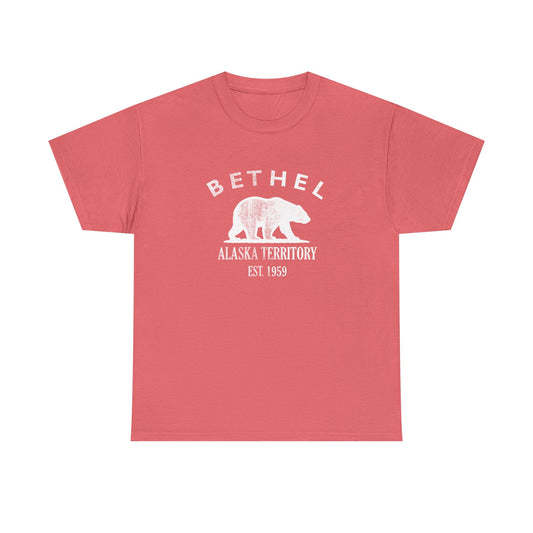
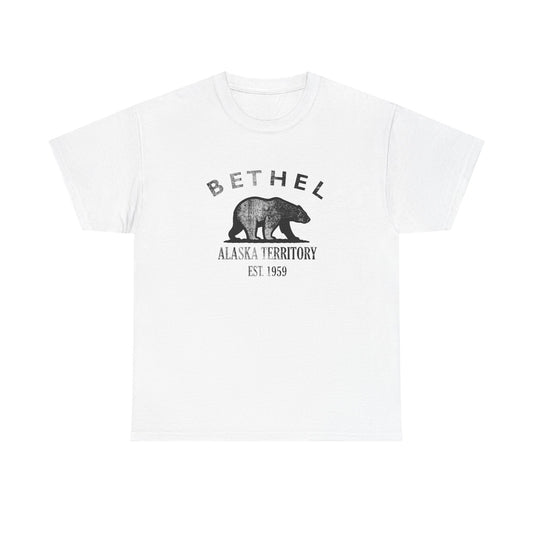
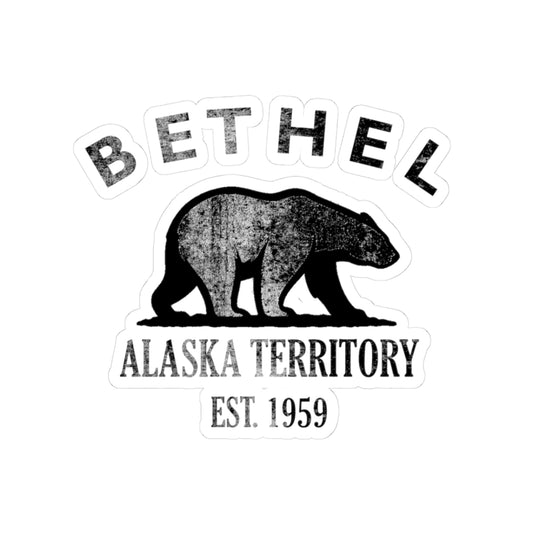
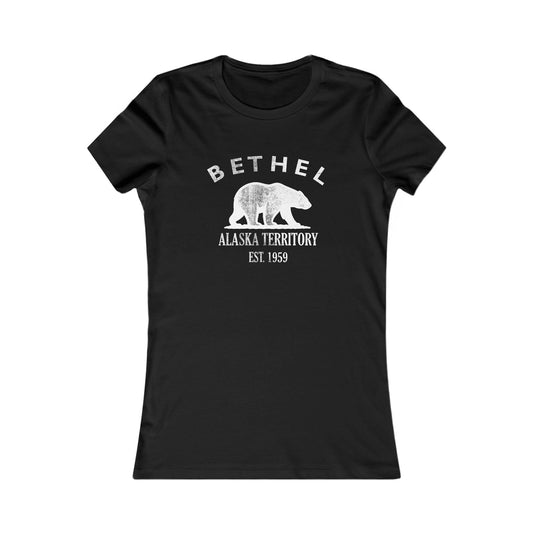
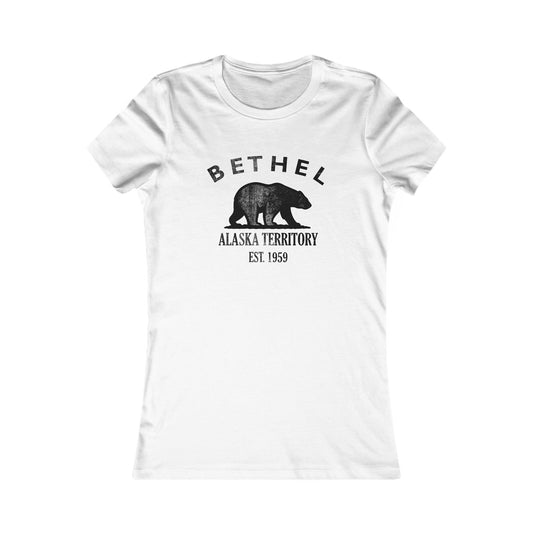
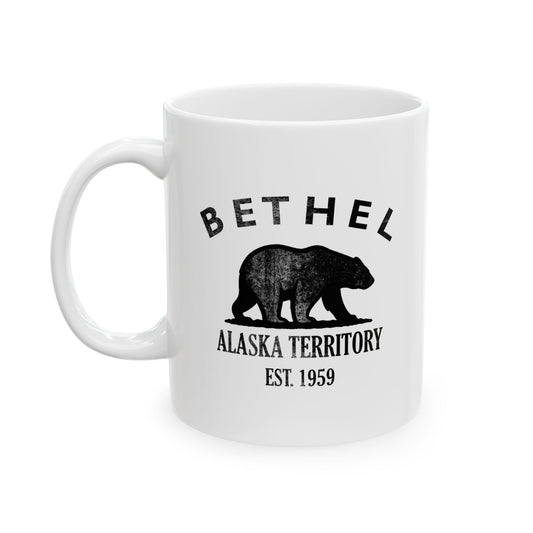
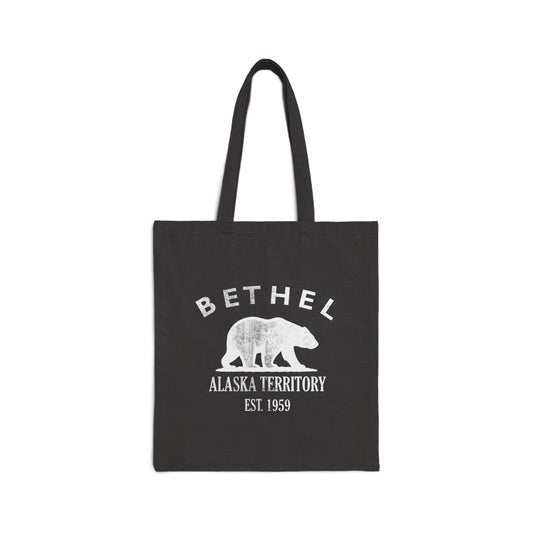
Our Bethel logo carries the distressed bear and the "Alaska Territory — Est. 1959" banner, the shared retro emblem of our Alaska towns; 1959 marks the year Alaska became a state — Alaska's birthday, not Bethel's, which began as a Yup'ik settlement long before and incorporated as a city in 1957. Rendered in worn black-and-white, like an old outfitter's stamp or a crate label, it ties Bethel to every other Alaska town we make. The bear is far-north wilderness, plain and rugged. What makes this one Bethel is the story behind it — the river, the delta, and the firsts the rest of the state learned from.
So Bethel gathers a great northern river, the largest delta in the country, a Yup'ik homeland, and a pair of genuine firsts into one fly-in town near the edge of the Bering Sea. Our Bethel designs gather that into wearable form. Wear the history. Bethel, Alaska — on the Kuskokwim, at the heart of the delta, where the river is the road.

Bethel, Alaska — Travel Guide
Visiting Bethel Today
Bethel sits on the Kuskokwim River in the Yukon-Kuskokwim Delta of western Alaska — off the road system, reached only by air or river. It is the hub for some fifty surrounding villages: a working delta town of boardwalks, boat harbors, and big tundra sky.
The River, the Cultural Center & the Delta
For visitors looking for things to do in Bethel, Alaska:
- Visit the Yupiit Piciryarait Cultural Center, with regional exhibits and a performance hall modeled on a traditional Yup'ik community house.
- Stop at the Yukon Delta National Wildlife Refuge visitor center for exhibits on one of the world's great waterfowl nurseries.
- Walk the riverfront boardwalks and the Brown Slough small-boat harbor, where skiffs and barges work the Kuskokwim.
- Time a winter trip to the Kuskokwim 300 sled-dog race in January, run on and along the frozen river.
- Look for the Cama-i Dance Festival each March, a regional gathering hosted in Bethel.
- Stand at a river overlook for the drama of spring breakup or fall freeze-up on the Kuskokwim.
Why People Visit Bethel
People come to Bethel for the real thing: a remote, fly-in delta town that is the heart of Yup'ik western Alaska, where the Kuskokwim is the main road and the seasons set the pace. It rewards travelers who want the far north on its own terms — river, tundra, the long northern light, and a community that has lived well here for generations.
Wear the History
Kindred Cities
Greetings, friends from Rovaniemi, Finland (tervetuloa) and Yellowknife, Canada — fellow hub towns of the great northern rivers and the long winter dark.
Rovaniemi and Yellowknife are cut from the same cloth as Bethel: river-and-tundra capitals you reach by air, gateways to enormous wild country, and homelands of northern peoples — Yup'ik on the Kuskokwim, Sámi in Finnish Lapland, Dene around Great Slave Lake. The aurora is common property up here.
If your year runs on snowmachines, river ice and the return of the light, you'll know this country on arrival: the Kuskokwim as the main road, tundra to every horizon, and a Yup'ik community that has lived well here for generations. Come and visit us soon.
This far out, start with the City of Bethel and the Travel Alaska visitor service.
Wear the History

For deeper reading on the Bethel history described here — the Yup'ik homeland of Mamterilleq, the 1885 Moravian mission founding and the Alaska Commercial Company trading post, the 1942 wartime airfield and the city's 1957 incorporation, the 1971 sign-on of KYUK as the first Native-owned and -operated public radio station in the United States, and the Kuskokwim 300 sled-dog race first run in 1980 — it may be useful to consult (1) KYUK / Bethel Broadcasting and its public archive, (2) the Kuskokwim Consortium Library in Bethel, (3) the Yupiit Piciryarait Cultural Center, (4) the Alaska State Library and Historical Collections in Juneau, and (5) the City of Bethel records office. For travel and visitor information, it may be useful to contact (1) the City of Bethel, (2) Travel Alaska, the state's official tourism office, (3) the Yukon Delta National Wildlife Refuge visitor center, (4) the Bethel Chamber of Commerce, and (5) the regional air carriers and the Alaska Department of Transportation for current river and runway conditions.
Shop the Bethel Alaska collection
View full collection-
Bethel Alaska Vintage Retro Premium Crewneck Sweatshirt - Black Logo
Regular price $48.00 USDRegular price -
Bethel Alaska Vintage Retro Premium Crewneck Sweatshirt - White Logo
Regular price $48.00 USDRegular price -
Bethel Alaska Vintage Retro Embroidered Cotton Cap - White Logo
Regular price $32.00 USDRegular price -
Bethel Alaska Vintage Retro Embroidered Cotton Cap - Black Logo
Regular price $32.00 USDRegular price -
Bethel Alaska Vintage Retro Unisex Heavy Cotton Hoodie - White Logo
Regular price $56.00 USDRegular price -
Bethel Alaska Vintage Retro Unisex Heavy Cotton Hoodie - Black Logo
Regular price $56.00 USDRegular price -
Bethel Alaska Vintage Retro Unisex Heavy Cotton Tee - White Logo
Regular price $22.00 USDRegular price -
Bethel Alaska Vintage Retro Unisex Heavy Cotton Tee - Black Logo
Regular price $22.00 USDRegular price -
Bethel Alaska Vintage Retro Unisex Embroidered Fleece Jacket - White Logo
Regular price $98.00 USDRegular price -
Bethel Alaska Vintage Retro Vinyl Sticker - Black Logo
Regular price From $6.00 USDRegular price -
-
Bethel Alaska Vintage Retro Womens Fitted Ringspun Cotton Tee - Black Logo
Regular price $28.00 USDRegular price -
Bethel Alaska Vintage Retro Ceramic Mug - Black Logo
Regular price From $16.00 USDRegular price -
Bethel Alaska Vintage Retro Cotton Canvas Tote Bag - White Logo
Regular price $25.00 USDRegular price -
Bethel Alaska Vintage Retro Thank You Card Set - Black Logo
Regular price From $25.00 USDRegular price -
Bethel Alaska Vintage Retro Cotton Canvas Tote Bag - Black Logo
Regular price $25.00 USDRegular price -
Bethel Alaska Vintage Retro Cotton Jersey Baby Bodysuit - Black Logo
Regular price $26.00 USDRegular price -
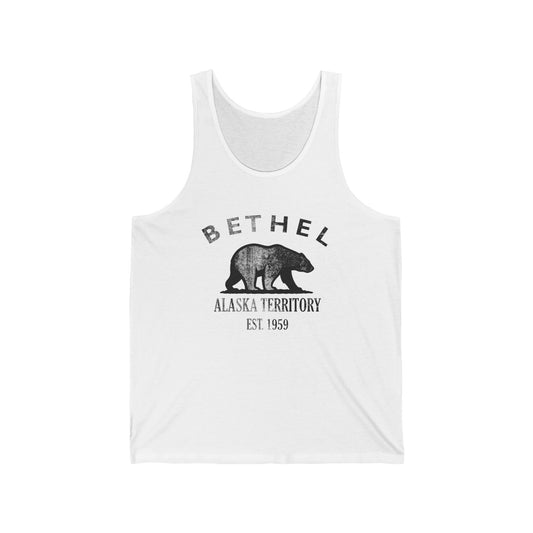
Bethel Alaska Vintage Retro Unisex Cotton Jersey Tank Top - White Logo
Regular price $28.00 USDRegular price -
Bethel Alaska Vintage Retro Unisex Cotton Jersey Tank Top - Black Logo
Regular price $28.00 USDRegular price -
Bethel Alaska Vintage Retro Back Printed Art Series Cotton Tee - Black Logo
Regular price $32.00 USDRegular price -
Bethel Alaska Vintage Retro Giclée Print Art Series Poster
Regular price From $38.00 USDRegular price -
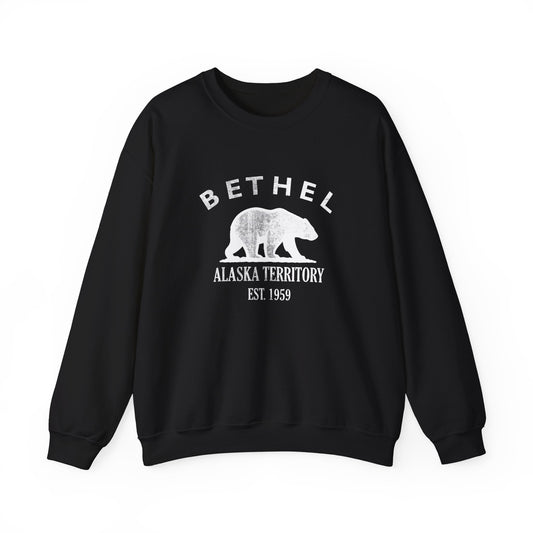
Bethel Alaska Vintage Retro Unisex Heavy Crewneck Sweatshirt - Black Logo
Regular price $44.00 USDRegular price -
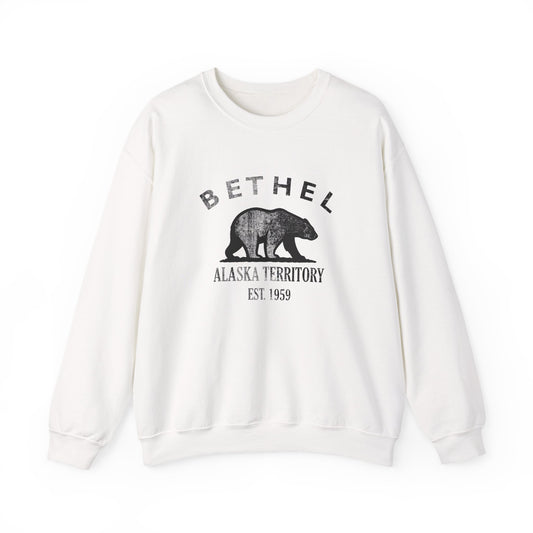
Bethel Alaska Vintage Retro Unisex Heavy Crewneck Sweatshirt - White Logo
Regular price $44.00 USDRegular price -
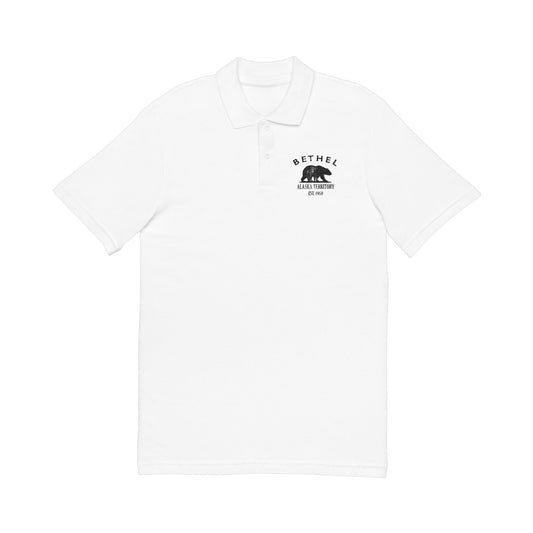
Bethel Alaska Vintage Retro Unisex Embroidered Cotton Polo - Black Logo
Regular price $48.00 USDRegular price