Every design is set in hand-lettered vintage type for that old-school, crate-label look. One sample color shown — black and white logo options on every piece. Recently in the national press. Enjoy!
-
Fairbanks Alaska Vintage Retro Premium Crewneck Sweatshirt - Black Logo
Regular price $48.00 USDRegular price -
Fairbanks Alaska Vintage Retro Premium Crewneck Sweatshirt - White Logo
Regular price $48.00 USDRegular price -
Fairbanks Alaska Vintage Retro Unisex Heavy Cotton Hoodie - White Logo
Regular price $56.00 USDRegular price -
Fairbanks Alaska Vintage Retro Unisex Heavy Cotton Hoodie - Black Logo
Regular price $56.00 USDRegular price -
Fairbanks Alaska Vintage Retro Embroidered Cotton Cap - White Logo
Regular price $32.00 USDRegular price -
Fairbanks Alaska Vintage Retro Embroidered Cotton Cap - Black Logo
Regular price $32.00 USDRegular price -
Fairbanks Alaska Vintage Retro Back Printed Art Series Cotton Tee - Black Logo
Regular price $32.00 USDRegular price -
Fairbanks Alaska Vintage Retro Giclée Print Art Series Poster
Regular price From $38.00 USDRegular price -
Fairbanks Alaska Vintage Retro Unisex Heavy Cotton Tee - White Logo
Regular price $22.00 USDRegular price -
Fairbanks Alaska Vintage Retro Unisex Heavy Cotton Tee - Black Logo
Regular price $22.00 USDRegular price -
Fairbanks Alaska Vintage Retro Vinyl Sticker - Black Logo
Regular price From $6.00 USDRegular price -
-
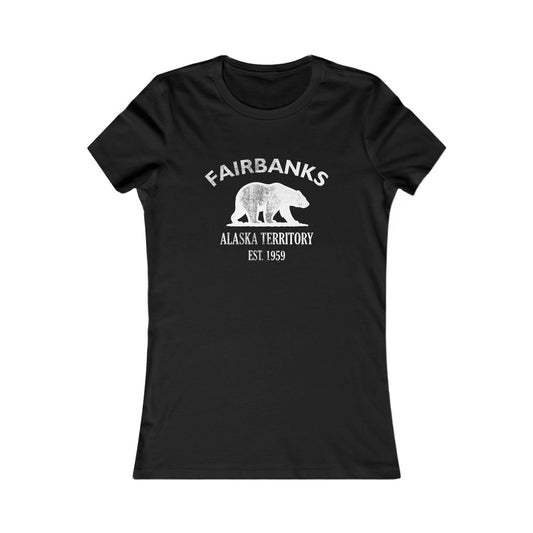
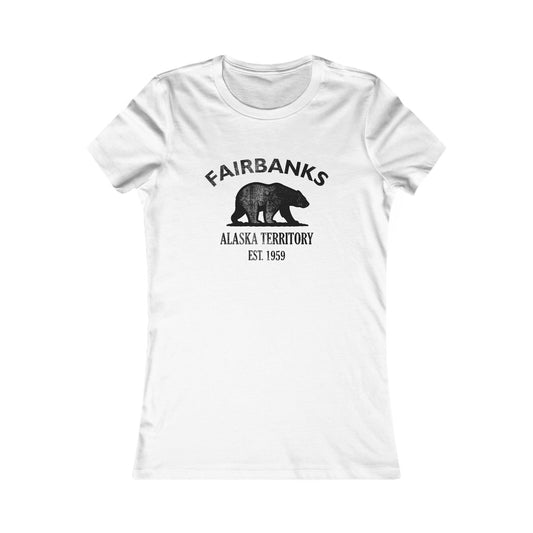
Fairbanks Alaska Vintage Retro Womens Fitted Ringspun Cotton Tee - Black Logo
Regular price $28.00 USDRegular price -
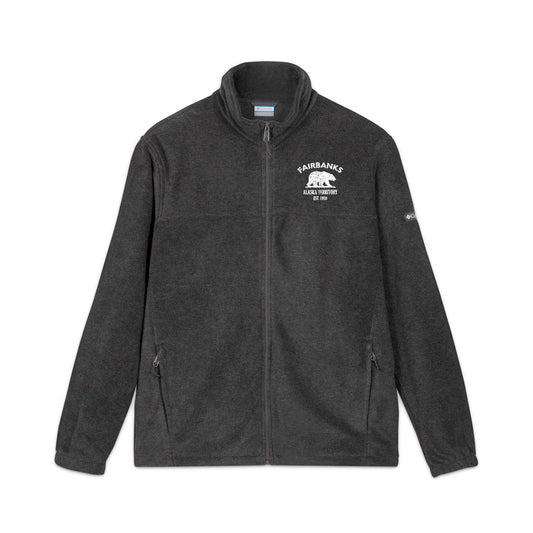
Fairbanks Alaska Vintage Retro Unisex Embroidered Fleece Jacket - White Logo
Regular price $98.00 USDRegular price -
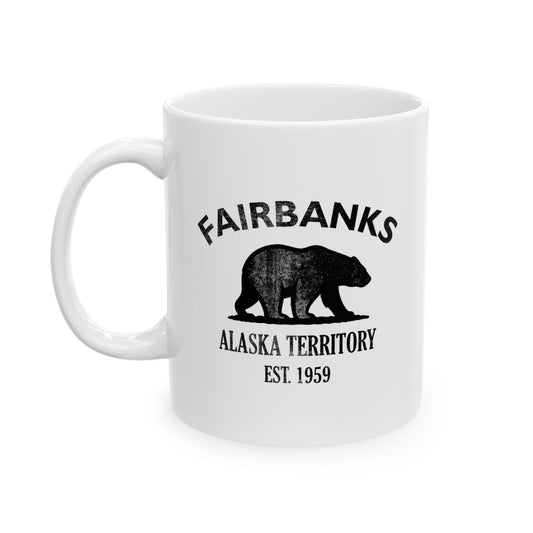
Fairbanks Alaska Vintage Retro Ceramic Mug - Black Logo
Regular price From $16.00 USDRegular price -
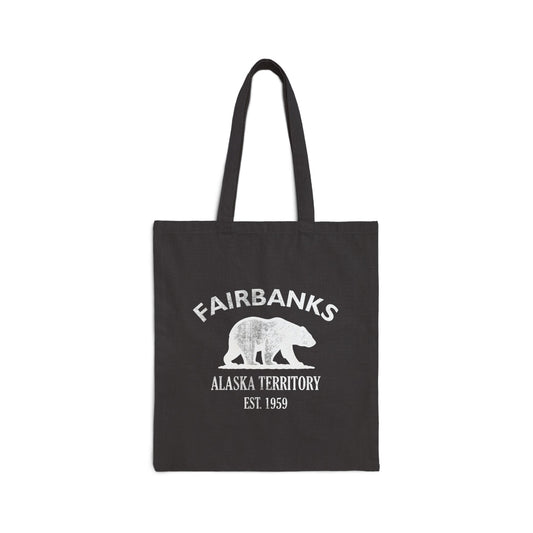
Fairbanks Alaska Vintage Retro Cotton Canvas Tote Bag - White Logo
Regular price $25.00 USDRegular price -
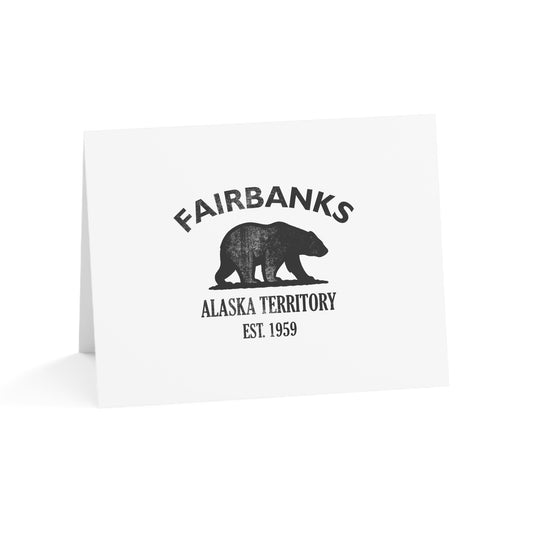
Fairbanks Alaska Vintage Retro Thank You Card Set - Black Logo
Regular price From $25.00 USDRegular price -
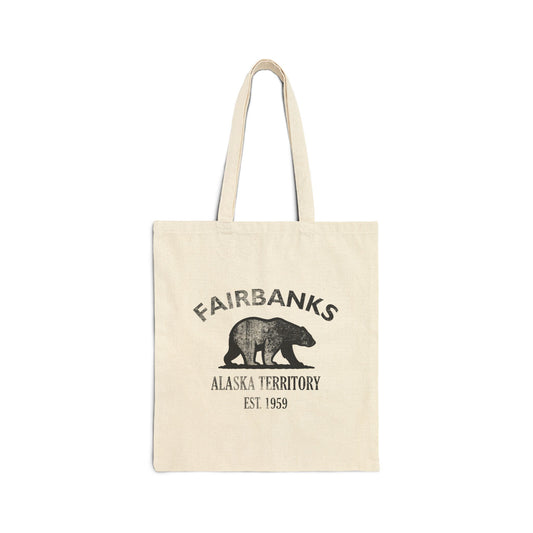
Fairbanks Alaska Vintage Retro Cotton Canvas Tote Bag - Black Logo
Regular price $25.00 USDRegular price -
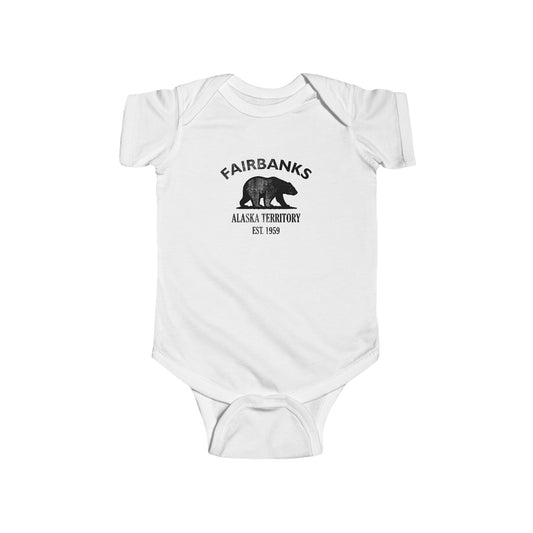
Fairbanks Alaska Vintage Retro Cotton Jersey Baby Bodysuit - Black Logo
Regular price $26.00 USDRegular price -
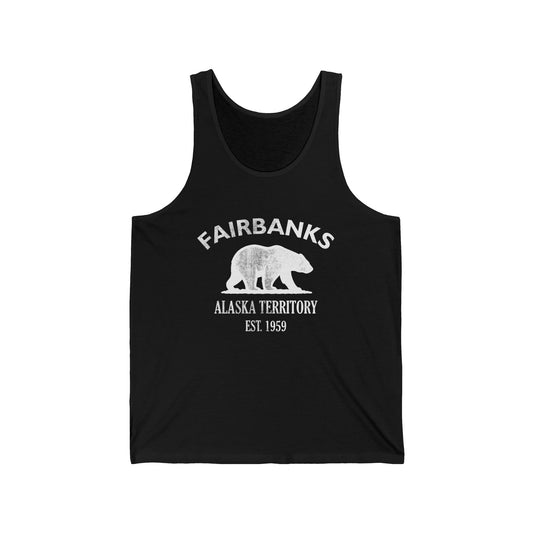
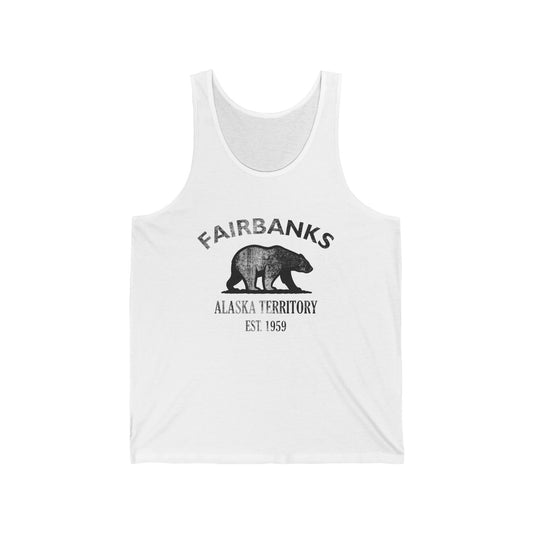
Fairbanks Alaska Vintage Retro Unisex Cotton Jersey Tank Top - White Logo
Regular price $28.00 USDRegular price -
Fairbanks Alaska Vintage Retro Unisex Cotton Jersey Tank Top - Black Logo
Regular price $28.00 USDRegular price -
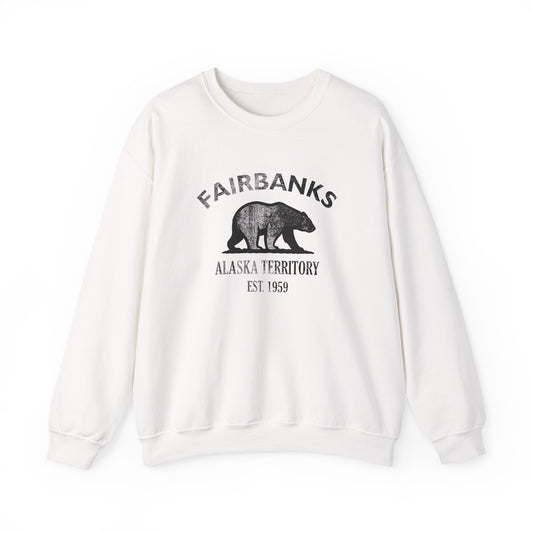
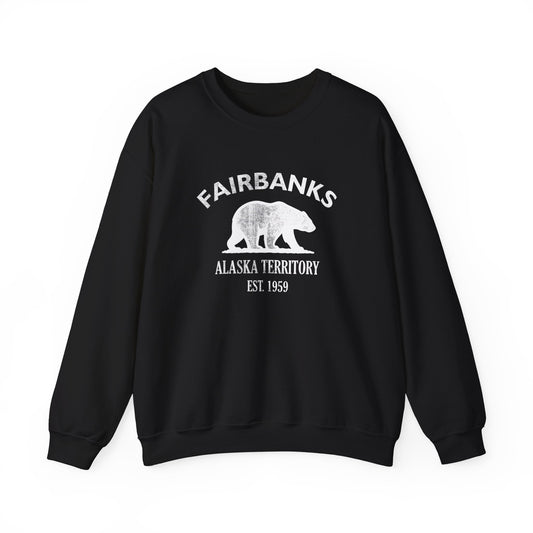
Fairbanks Alaska Vintage Retro Unisex Heavy Crewneck Sweatshirt - Black Logo
Regular price $44.00 USDRegular price -
Fairbanks Alaska Vintage Retro Unisex Heavy Crewneck Sweatshirt - White Logo
Regular price $44.00 USDRegular price -
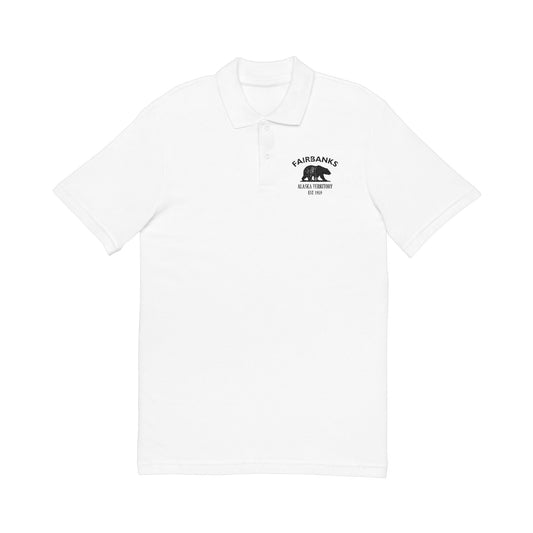
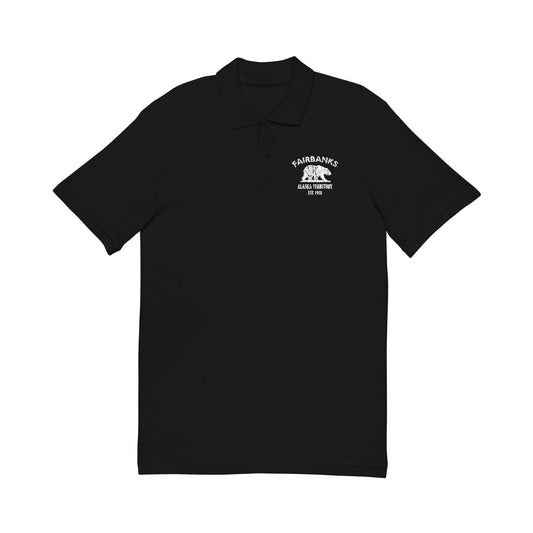
Fairbanks Alaska Vintage Retro Unisex Embroidered Cotton Polo - Black Logo
Regular price $48.00 USDRegular price






Fairbanks Alaska — Retro Vintage History
What's with the Golden Heart City? Fairbanks has called itself the Golden Heart City for more than a century, and the name does double duty. It sits almost exactly in the heart of Alaska — in the Interior, at the confluence of the Chena and Tanana Rivers, roughly halfway between the Gulf coast and the Arctic — and it was born, heart and soul, out of gold. The whole town exists because a trader got stranded on a river and a prospector found color in a creek a year later. Add the warmth Fairbanks is known for toward the people who make the long trip north, and the nickname fits from every angle: the golden heart of Alaska.
Wear the HistoryThe trader was Captain E.T. Barnette. In August 1901 he was steaming up the Tanana River aboard the sternwheeler Lavelle Young, hoping to plant a trading post far upriver, when low water forced the boat into the shallow Chena and stranded it well short of his goal. Under his contract, the captain put Barnette and his tons of goods ashore right there, on the bank where downtown Fairbanks stands today. Barnette was furious — he was hundreds of miles from where he meant to be — but he had little choice, so he set up shop and waited to see what the country would bring.

What it brought was gold. On July 22, 1902, an Italian prospector named Felix Pedro — born Felice Pedroni — struck pay dirt in the creeks north of Barnette's post, and word raced through the North. Barnette sent his employee Jujiro Wada to carry the news to the miners of Dawson, and the stampede was on; by 1903 hundreds of prospectors had poured into the Tanana Valley and a town was rising on the Chena. Barnette had already chosen the name: at the urging of Judge James Wickersham, he called the place Fairbanks, after Charles W. Fairbanks, a powerful Indiana senator who would soon become vice president under Theodore Roosevelt. The senator never visited, but his name stuck to the gold camp for good.
For a few years Fairbanks was one of the richest gold camps in the North. The easy creek gold gave way to deep, industrial mining — giant gold dredges that chewed through the frozen ground and left long gravel tailings still visible today, with Gold Dredge 8 preserved as a landmark of the era. The boom faded as the best ground was worked out, and the population rose and fell with the price of gold, but mining never entirely left: the Interior is still Alaska's gold country. The dredges that sit quiet in the hills are the town's wooly mammoths — perfectly preserved in the dry, cold air, monuments to the rush that made the place.
Fairbanks outlasted the gold by becoming the hub of the Interior. The Alaska Railroad reached town in 1923, when President Warren Harding drove a golden spike at nearby Nenana, tying Fairbanks to the coast and the rest of the territory. Six years before that, in 1917, the Alaska Agricultural College and School of Mines had been founded on a ridge above the river — the seed of the University of Alaska Fairbanks, now a major northern research center. In the 1940s the military arrived in force, and the airfields that became Fort Wainwright and Eielson made Fairbanks a strategic outpost of the Far North. Each wave left the town a little more permanent.
Today the thing that draws the world to Fairbanks hangs in the sky. The city sits directly under the auroral oval, which makes it one of the best places on Earth to watch the northern lights — green and violet curtains rippling over the boreal forest on clear, cold nights. The same far-north position gives Fairbanks its other signature: a summer of nearly endless daylight, the Midnight Sun, balanced against winters that drop to forty and fifty below. People come now for the aurora, the ice-carving championships, the hot springs, and the road north toward Denali and the Arctic — the same Interior wilderness the stampeders crossed, seen from the warm side of the window.
Our Fairbanks logo carries the distressed Alaska bear above "Alaska Territory — Est. 1959," the shared retro emblem of our Alaska towns; the bear stands for the wild Interior country the gold-seekers pushed into, and 1959 marks the year Alaska joined the Union as a state. Rendered in worn black-and-white, like a stamp on a miner's crate or an outfitter's sign, it ties Fairbanks to every other Alaska town we make. What makes this one Fairbanks is the story behind the brand — the grounded riverboat, the gold strike, and the city that grew up golden-hearted under the northern lights.
So Fairbanks gathers a stranded steamboat, a gold strike, and a sky full of aurora onto the banks of the Chena, in the heart of Alaska. Our Fairbanks designs gather that into wearable form. Wear the history. Under the northern lights — Fairbanks, Alaska.

Fairbanks, Alaska — Travel Guide
Visiting Fairbanks Today
Fairbanks sits in the heart of Interior Alaska, where the Chena meets the Tanana, about 120 miles north of Denali and a couple hundred south of the Arctic Circle. It is the launch point for the Interior and the Arctic, and a destination in its own right — above all for the aurora.
Aurora, Gold & the Interior
For visitors looking for things to do in Fairbanks, Alaska:
- Watch for the northern lights on clear nights from late summer through spring — Fairbanks is one of the best aurora spots on Earth.
- Tour Gold Dredge 8 and pan for gold on the ground that started the rush.
- Visit the Museum of the North on the University of Alaska Fairbanks campus for art, science, and Interior history.
- Walk Pioneer Park, with relocated Gold-Rush cabins and the sternwheeler Nenana.
- Soak at Chena Hot Springs, a steaming oasis in the snow up the valley.
- Stroll the Chena Riverwalk and Golden Heart Plaza in the historic downtown core.
Why People Visit Fairbanks
Visitors come to Fairbanks for the aurora — the city's spot under the auroral oval is hard to beat — and stay for the layered Interior story: gold dredges and frontier cabins, a northern university and big-sky wilderness in every direction. It is the gateway to Denali and the Arctic, with hot springs and ice art for the winter and the Midnight Sun for the summer. Equal parts gold-rush heritage and far-north spectacle, Fairbanks rewards anyone drawn to the heart of Alaska.
Wear the History
Kindred Cities
Greetings, friends from Monbetsu, Japan (ようこそ) and Aix-les-Bains, France (bienvenue) — Fairbanks reaches a long way in two directions.
Fairbanks's ties point opposite ways. Monbetsu, on Hokkaido's Sea of Okhotsk, is a drift-ice town that knows Fairbanks's kind of winter — the deep cold, the long dark, the daily business of living with ice. Aix-les-Bains is the older and quieter tie: a thermal-spa resort on a French alpine lake, a reminder that even the Interior dreams of warm water.
The Monbetsu tie was formalized in 1991 — a natural match between two cities built on winter: Fairbanks under the aurora, Monbetsu under the drift ice that locks its harbour each year.
Arrive from a place that turns winter into a way of life, and Fairbanks will feel like kin: the aurora overhead on clear nights, ice carved into sculpture, and hot springs steaming in the snow. Forty below is just weather here. Come and visit us soon.
When you plan the trip, Explore Fairbanks — the city's official visitor bureau — is the place to start.
Wear the History

For deeper reading on the Fairbanks history described here — E.T. Barnette's 1901 trading post on the Chena, Felix Pedro's July 1902 gold strike and the Fairbanks Gold Rush, the naming for Charles W. Fairbanks, the founding of the college that became the University of Alaska Fairbanks in 1917, and the arrival of the Alaska Railroad in 1923 — it may be useful to consult (1) the Tanana-Yukon Historical Society, (2) the University of Alaska Fairbanks and the Elmer E. Rasmuson Library Alaska and Polar Regions Collections, (3) the Alaska State Library and Historical Collections, (4) the Fairbanks North Star Borough clerk's records office, and (5) the Fairbanks Community Museum. For travel and visitor information, it may be useful to contact (1) Explore Fairbanks, the official visitor bureau, (2) the Greater Fairbanks Chamber of Commerce, (3) the Fairbanks North Star Borough Parks and Recreation, (4) the Alaska state parks office, and (5) the Fairbanks International Airport and the Alaska Railroad.