Every design is set in hand-lettered vintage type for that old-school, crate-label look. One sample color shown — black and white logo options on every piece. Recently in the national press. Enjoy!
-
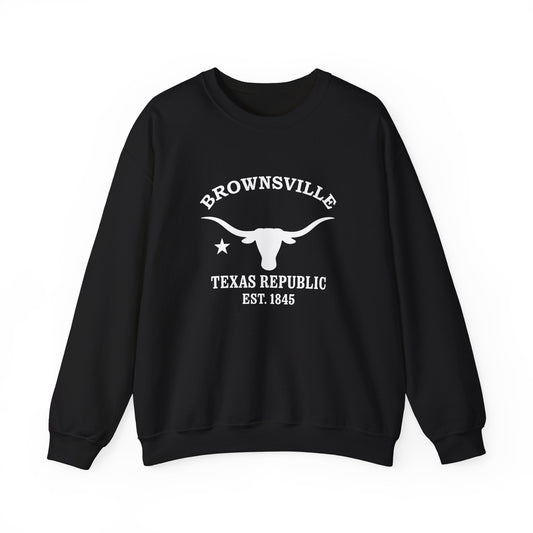
Brownsville Texas Vintage Retro Premium Crewneck Sweatshirt - Black Logo
Regular price $48.00 USDRegular price -
Brownsville Texas Vintage Retro Premium Crewneck Sweatshirt - White Logo
Regular price $48.00 USDRegular price -
Brownsville Texas Vintage Retro Embroidered Cotton Cap - White Logo
Regular price $32.00 USDRegular price -
Brownsville Texas Vintage Retro Embroidered Cotton Cap - Black Logo
Regular price $32.00 USDRegular price -
Brownsville Texas Vintage Retro Vinyl Sticker - Black Logo
Regular price From $6.00 USDRegular price -
Brownsville Texas Vintage Retro Unisex Heavy Cotton Tee - White Logo
Regular price $22.00 USDRegular price -
Brownsville Texas Vintage Retro Unisex Heavy Cotton Tee - Black Logo
Regular price $22.00 USDRegular price -
Brownsville Texas Vintage Retro Unisex Heavy Cotton Hoodie - White Logo
Regular price $56.00 USDRegular price -
Brownsville Texas Vintage Retro Unisex Heavy Cotton Hoodie - Black Logo
Regular price $56.00 USDRegular price -
Brownsville Texas Vintage Retro Back Printed Art Series Cotton Tee - Black Logo
Regular price $32.00 USDRegular price -
Brownsville Texas Vintage Retro Giclée Print Art Series Poster
Regular price From $38.00 USDRegular price -
Brownsville Texas Vintage Retro Ceramic Mug - Black Logo
Regular price From $16.00 USDRegular price -
-
Brownsville Texas Vintage Retro Womens Fitted Ringspun Cotton Tee - Black Logo
Regular price $28.00 USDRegular price -
Brownsville Texas Vintage Retro Unisex Embroidered Fleece Jacket - White Logo
Regular price $98.00 USDRegular price -
Brownsville Texas Vintage Retro Cotton Canvas Tote Bag - White Logo
Regular price $25.00 USDRegular price -
Brownsville Texas Vintage Retro Cotton Canvas Tote Bag - Black Logo
Regular price $25.00 USDRegular price -
Brownsville Texas Vintage Retro Thank You Card Set - Black Logo
Regular price From $25.00 USDRegular price -
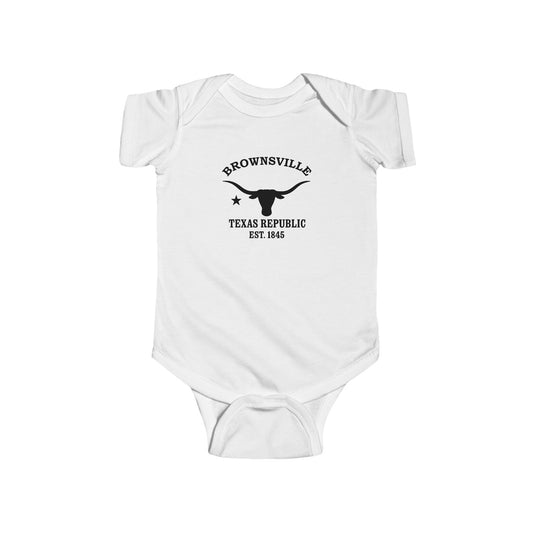
Brownsville Texas Vintage Retro Cotton Jersey Baby Bodysuit - Black Logo
Regular price $26.00 USDRegular price -
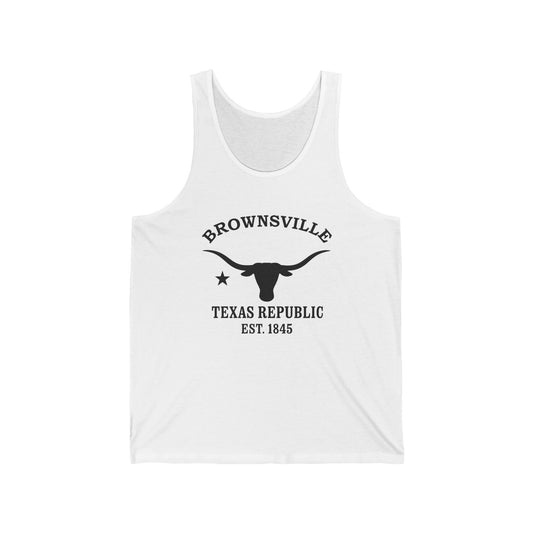
Brownsville Texas Vintage Retro Unisex Cotton Jersey Tank Top - Black Logo
Regular price $28.00 USDRegular price -
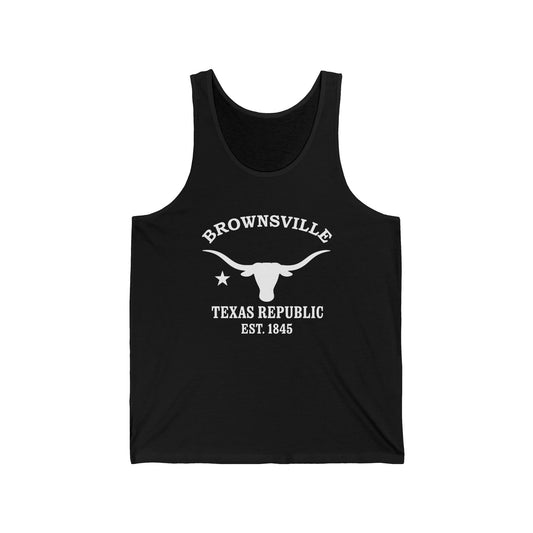
Brownsville Texas Vintage Retro Unisex Cotton Jersey Tank Top - White Logo
Regular price $28.00 USDRegular price -
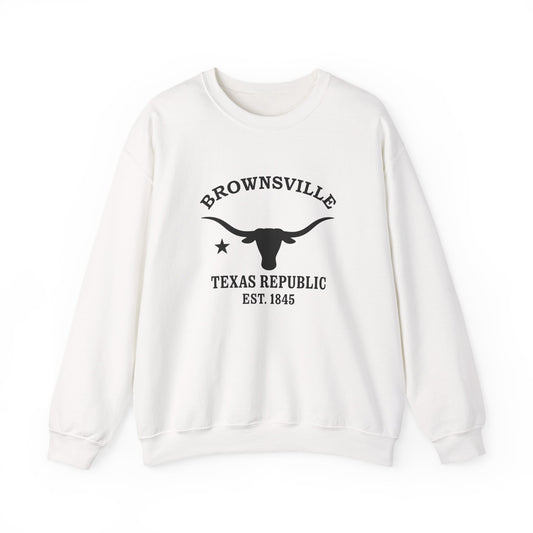
Brownsville Texas Vintage Retro Unisex Heavy Crewneck Sweatshirt - Black Logo
Regular price $44.00 USDRegular price -
Brownsville Texas Vintage Retro Unisex Heavy Crewneck Sweatshirt - White Logo
Regular price $44.00 USDRegular price -
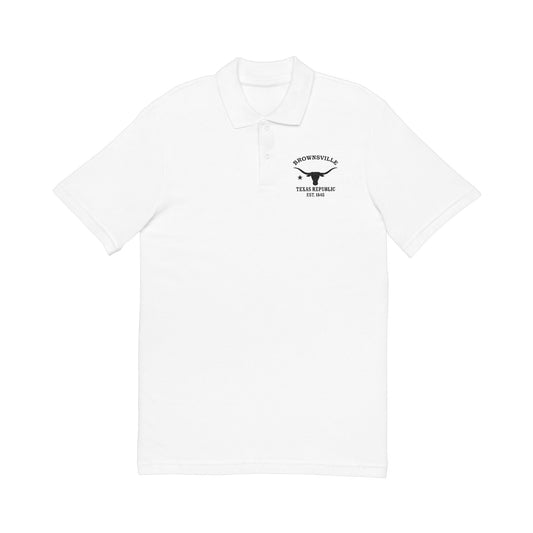
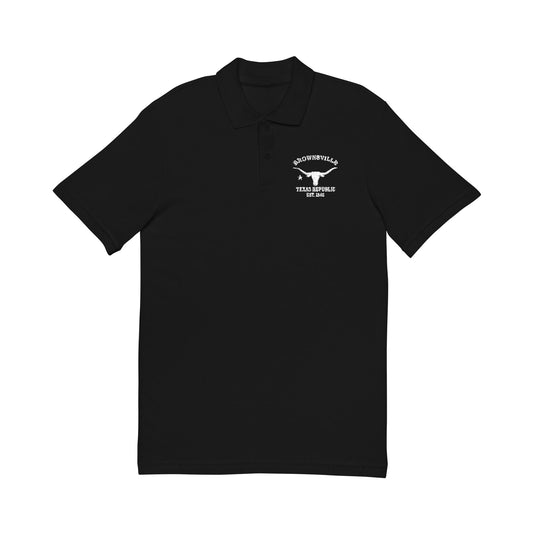
Brownsville Texas Vintage Retro Unisex Embroidered Cotton Polo - Black Logo
Regular price $48.00 USDRegular price





Brownsville Texas — Retro Vintage History
What's with Charro Days? Every winter, just before Lent, Brownsville and its sister city Matamoros throw a four-day party across the river called Charro Days, and for that long weekend the border all but disappears. Since 1938 the two downtowns have traded mariachi and conjunto music, folklorico dancers, charro riders in their wide sombreros, and a Grand International Parade — the mayors meeting mid-bridge to shake hands while children swap the American and Mexican flags. Charro Days is Brownsville in miniature: a city that has always treated two countries as one neighborhood, where the Rio Grande reads less like a boundary than a seam.
Wear the HistoryThat seam was drawn in 1846. When the United States and Mexico went to war over the border, General Zachary Taylor — later a U.S. president — built a fort on the north bank of the Rio Grande, and the war's first major battle was fought a few miles away at Palo Alto on May 8, 1846, followed the next day by Resaca de la Palma. The fort took the name Fort Brown, for Major Jacob Brown, who fell in its defense. Today the Palo Alto Battlefield is a National Historical Park — the only national park unit devoted to that war — preserving the ground where the conflict began.

The city itself followed two years later. When the Treaty of Guadalupe Hidalgo ended the war in 1848 and set the Rio Grande as the border, a merchant named Charles Stillman — a Connecticut Yankee who had been doing business across the river in Matamoros — bought up land beside the fort, laid out streets, and founded the town of Brownsville. It became the seat of the new Cameron County the next year. Stillman's riverboats worked the Rio Grande trade, and the settlement around the fort grew quickly into the commercial heart of the lower valley, a port and crossing point between two nations.
Brownsville holds a second, stranger distinction. Where the Mexican-American War opened just outside town, the Civil War effectively closed there. On May 13, 1865 — more than a month after the surrender at Appomattox — Confederate and Union forces met at Palmito Ranch a few miles east of the city in what is remembered as the last land battle of the war. So Brownsville can claim both ends of the story: the first major battle of one war and the last land battle of another, bookends fought within sight of the same river.
In the decades that followed, Brownsville settled into its real character: a border city that lived by the river. Cotton and cattle moved through during the Civil War and after; the deepwater Port of Brownsville and the international bridges made it a gateway for trade between Texas and Tamaulipas. Spanish, Mexican, and Anglo traditions blended into a single Rio Grande Valley culture — the food, the music, the language all crossing the bridge daily. By the twentieth century Brownsville was the largest city in the valley and, sitting at the very bottom of Texas, the southernmost city on the U.S. mainland.
Today Brownsville wears its setting lightly. The subtropical climate and the resacas — old oxbow channels of the Rio Grande that wind through the city — give it a green, watery feel found nowhere else in Texas. It sits on one of the great North American birding routes, with the Sabal Palm Sanctuary preserving a rare native palm forest at the river's edge, and the Gladys Porter Zoo drawing families since 1971. The Gulf and the long beaches are an easy drive south. It is a city of two flags and one community, warm in every sense, where Texas runs out and the tropics begin.
Our Brownsville logo carries the Texas longhorn and the Lone Star above "Texas Republic — Est. 1845," the shared retro emblem of our Texas towns; the longhorn stands for the ranching country the lower valley grew out of, and the star for the independent Texas that joined the Union in 1845. Rendered in worn black-and-white, like a brand burned into a trade crate or a fiesta poster, it ties Brownsville to every other Texas town we make. What makes this one Brownsville is the story behind it — first shots and last stands, a Connecticut merchant's river town, and a two-nation fiesta on the Rio Grande.
So Brownsville gathers two wars' bookends, a binational fiesta, and a green border seam onto the banks of the Rio Grande. Our Brownsville designs gather that into wearable form. Wear the history. Brownsville, Texas — first shots, last stands, and a two-nation fiesta where the river meets the Gulf.

Brownsville, Texas — Travel Guide
Visiting Brownsville Today
Brownsville sits at the southern tip of Texas, on the Rio Grande across from Matamoros, where border culture, subtropical nature, and Gulf-coast landscapes meet. It is the largest city in the Rio Grande Valley and a gateway between two countries.
Battlefields, Birds & the Border
For visitors looking for things to do in Brownsville, Texas:
- Tour Palo Alto Battlefield National Historical Park, where the Mexican-American War began in 1846, with interpretive trails.
- Visit the Gladys Porter Zoo, renowned for endangered-species conservation and tropical animals.
- Walk the Historic Downtown District, with brick commercial blocks and border-era architecture.
- Explore Resaca de la Palma State Park and the Sabal Palm Sanctuary for birding in a subtropical refuge.
- Tour the Stillman House and Historic Brownsville Museum for the city's founding story.
- Time a visit for Charro Days in late winter — the binational fiesta with Matamoros.
Why People Visit Brownsville
Visitors come to Brownsville for a mix found nowhere else: battlefield and border history, world-class birding among the resacas and palms, and a living binational culture of music, food, and festival. The Gulf beaches are a short drive, Matamoros a few blocks across the river, and the Charro Days fiesta turns late winter into a two-nation celebration. Equal parts Texas heritage and Rio Grande Valley warmth, Brownsville rewards anyone drawn to the place where the river meets the Gulf.
Wear the History
Kindred Cities
A warm welcome to friends from Matamoros, Mexico (bienvenidos) — our neighbour across the Rio Grande, near enough to wave to.
Brownsville and Matamoros are really one community split by a river and a border. Families, language, food and music cross the bridge daily; the two downtowns have grown up facing each other for nearly two centuries. Where the Rio Grande meets the Gulf, Texas and Tamaulipas read less like a boundary than a seam.
The friendship has its own festival: Charro Days, held jointly since 1938, when the two cities throw a four-day binational fiesta — their mayors meeting mid-bridge to shake hands while children trade the American and Mexican flags.
If Matamoros is home, Brownsville barely needs an introduction — but come for the shared table anyway: norteño and conjunto on the radio, the Gulf an hour down the road, and a border culture that treats two countries as one neighbourhood. Come and visit us soon.
When you plan the trip, the Brownsville Convention & Visitors Bureau is the place to start.
Wear the History

For deeper reading on the Brownsville history described here — the 1846 Battle of Palo Alto and the opening of the Mexican-American War, Fort Brown and Major Jacob Brown, Charles Stillman's founding of the city in 1848, the 1865 Battle of Palmito Ranch as the Civil War's last land battle, and the Charro Days fiesta with Matamoros since 1938 — it may be useful to consult (1) the Brownsville Historical Association, (2) the University of Texas Rio Grande Valley library and special collections, (3) the Texas State Library and Archives Commission, (4) the Cameron County clerk's records office, and (5) the Stillman House Museum and Historic Brownsville Museum. For travel and visitor information, it may be useful to contact (1) the Brownsville Convention and Visitors Bureau, (2) the Brownsville Chamber of Commerce, (3) the Brownsville Parks and Recreation Department, (4) the Texas state parks office, and (5) the Brownsville South Padre Island International Airport.