Skip to product information
1 of 4

Skagway Alaska Holiday Ornament - Soapy Smith's Soap

Skagway Alaska Holiday Ornament - Soapy Smith's Soap

Regular price $28.00 USD
Regular price Sale price $28.00 USD
Sale
Free U.S. Shipping
Size
Shape
Quantity


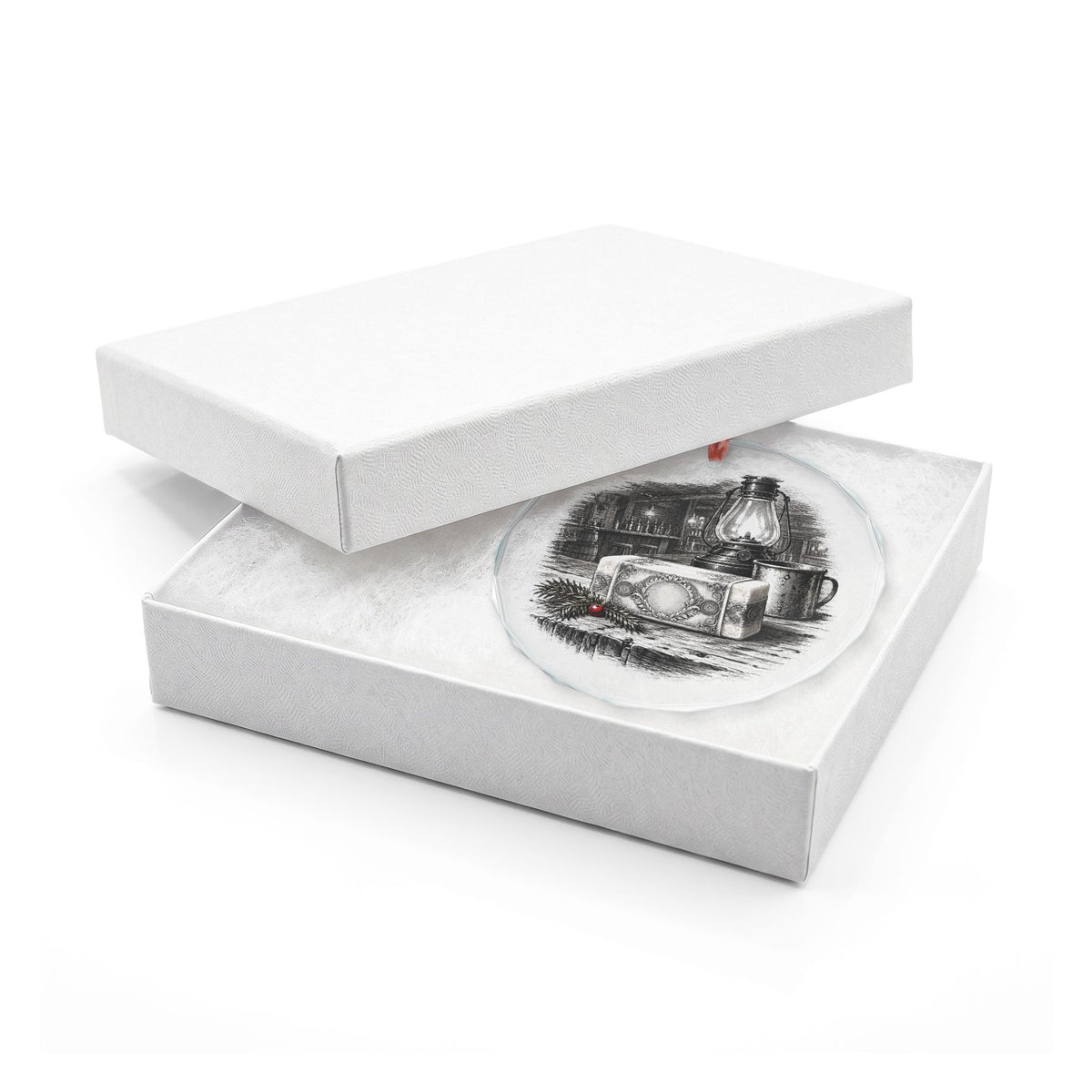
A cake of soap wrapped in a hundred-dollar-bill band, on a saloon counter beside a tin cup and a lantern. Skagway's most famous con, with a sprig of evergreen for the season.

In the gold-rush Skagway of 1898, Soapy Smith sold bars of soap on the street with the promise that some wrappers hid bills up to a hundred dollars. His own men in the crowd won every time. Soapy ran the town's rackets, the saloons and a fair share of its politics until a vigilante shot him on the wharf that July. The soap racket gave him his name.

Skagway tells the story on every walking tour, half appalled and half fond. The town has a parlor named for him and a wake held every year on the anniversary.

A con man's soap is a strange thing to hang on a tree, which is why a Skagway family would. The red berry on the sprig is the holiday touch.

Soapy Smith ran Skagway in the Klondike Gold Rush, selling bars of soap that never held the prize. This gold rush ornament is an Alaska ornament and Skagway souvenir, a piece of Skagway gold rush history and Soapy Smith history for the tree.

Every Skagway ornament ships ready to give. Hang it on the tree, in a window, off a lamp, or send one to the person who misses Skagway most.

3-inch faceted crystal glass ornament, white-backed print, line-drawn in 1880s engraving style, your choice of white or gold gift box.


QUICK FACTS — SKAGWAY AK CRYSTAL ORNAMENT — SOAPY SMITH'S SOAP

Town: Skagway, Alaska

Founded: 1897; incorporated June 28, 1900

Known for: Gateway to the Klondike Gold Rush; the Chilkoot Trail; the White Pass & Yukon Route railroad; a gold-rush downtown frozen in time

Art: Soapy Smith's Soap, original Merlin Classics engraving

Blank: 3-inch (76 mm) round clear crystal glass ornament, faceted gem-cut edge

Print: white-backed for contrast; red ribbon hanger

Packaging: white or gold gift box, chosen at checkout

Made to order in the USA


View full details

Wear Local. Feed Local. Stay Classic.

Product FAQs

How does your sizing work?

Every item is made to order, so please check the size chart on this page before you buy. Women's fitted tees run small; size up for a looser fit. Caps are one size with an adjustable strap.

How are items made and when will they arrive?

We make each item to order using premium blanks, embroidery and soft-hand prints. Production takes 2-5 business days (weekends and holidays excluded), then 4-10 days in transit via USPS, UPS or FedEx to U.S. addresses; most orders arrive within 6-15 business days. You'll get a tracking link the moment it ships. Any current shipping offer is shown in the bar at the top of every page and applies automatically at checkout, no code needed.

How do I send a gift?

Enter the recipient's address as the shipping address and your own as the billing address at checkout. Nothing ships with a price; the package includes a plain packing slip. Tracking goes to your email, not theirs. For birthdays and holidays, order two weeks ahead to be safe.

What's the return policy?

Made-to-order items can't be returned or exchanged for size or color, so please use the size chart and photos before ordering. If anything arrives defective, misprinted or damaged, send a photo and your order number within 30 days and we'll replace it or refund you.

How do I care for my item?

Apparel: wash cold, inside out, with like colors; no bleach; tumble dry low or hang dry. Embroidered pieces: iron inside out to protect the stitching. Caps: spot clean. Printed glasses and water bottles: hand wash only, no dishwasher, so the artwork lasts. Mugs and engraved glasses are dishwasher safe. Any item-specific care notes are in the description above.

Who makes this?

Merlin Classics is a small Connecticut brand making original retro designs for the towns people love. Every piece is printed, embroidered or engraved to order in the USA, and the business supports hunger relief in the communities our collections celebrate.

The thing that settled the contest, and outlived the gold, was the railroad. In May 1898 crews began blasting a narrow-gauge line straight up the coastal wall behind town — the White Pass & Yukon Route, engineered by the Irish-born contractor Michael Heney, who liked to say he could build a railroad anywhere a man could climb. Working with hand tools and black powder through brutal winters, they reached the 2,885-foot summit early in 1899 and drove the last spike at Carcross, in the Yukon, on July 29, 1900. By then the rush was fading, but the "Scenic Railway of the World" had given Skagway a permanent reason to exist — and today it is the town's signature excursion.

In 1976 Congress made it official, establishing the Klondike Gold Rush National Historical Park around the preserved blocks of Broadway — wooden boardwalks, restored 1898 storefronts, and the old railroad depot — now the most-visited national park in Alaska. The cruise ships followed. Tucked at the head of a deep glacial fjord and ringed by steep peaks, Skagway is one of the busiest ports on the Inside Passage, with more than a million day-visitors a season stepping off onto the same waterfront the stampeders once crossed. It is a gold-rush boomtown that found its second fortune in being remembered.

Why People Visit Skagway

Visitors come to Skagway for the most intact Gold-Rush town in Alaska — a real boomtown you can walk through — and for the railway that climbs straight out of it into the mountains. It is compact, dramatic, and easy to explore on foot, with the harbor, the historic district, and the trailheads all close together. Equal parts living history and big northern scenery, Skagway rewards anyone who wants to stand at the starting line of the Klondike stampede.

Skagway Alaska Merlin Classics retro logo — distressed Alaska bear, Alaska Territory Est. 1959