


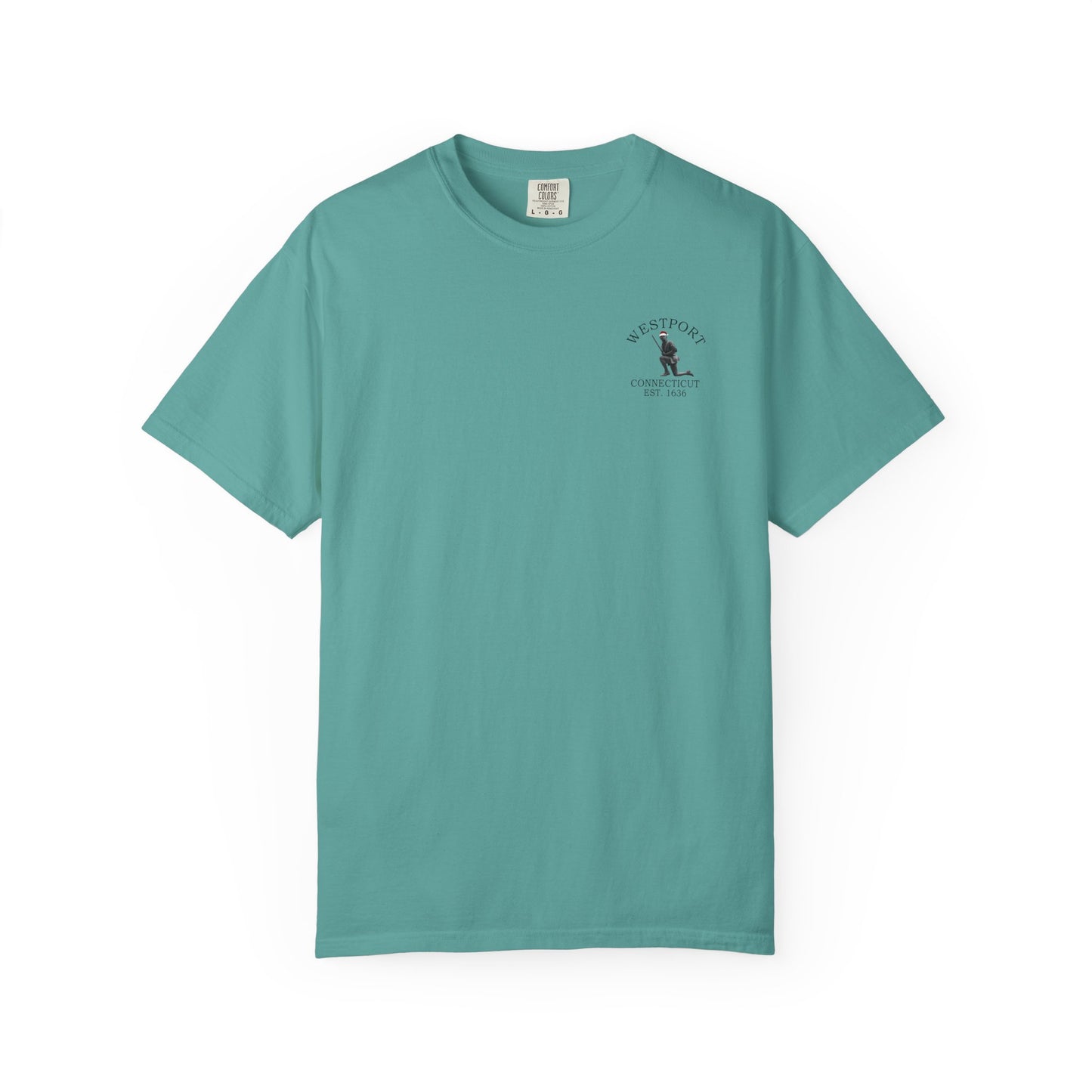
Today Westport is known for its beaches, its theater, and a shoreline elegance that has never lost its Revolutionary bones. Its story blends a colonial shipping village, the 1777 landing at Compo, an 1835 town, an onion-farming past, and an arts colony that drew the country's illustrators and players. Our Westport designs gather that identity into wearable form — Compo Beach, the Minute Man, the Saugatuck, the Sound. Explore the collection and carry a little of the Westport shore with you.
Around 1910 something unexpected happened: artists. Illustrators, writers, and playwrights discovered the farmhouses and the shore light, and Westport became one of America's great arts colonies — F. Scott Fitzgerald rented a house on Compo Road South around 1920, and the Sound-shore world he found here is bound up with the one he later put into The Great Gatsby. In 1931 the players converted an 1835 tannery into the Westport Country Playhouse, still the town's stage today, and by mid-century the arts colony had settled into an affluent New York commuter town that never quite stopped being a colony.
Why People Visit Westport Connecticut
- Spend a day at Compo Beach, the town's Sound-front park, and find the Minute Man statue on the bluff above the 1777 landing site — the 1901 commemorative cannons stand nearby.
- Walk the Saugatuck River waterfront and the historic Saugatuck village, the colonial shipping center the town grew from, and cross the 1884 Cribari swing bridge.
- Catch a show at the Westport Country Playhouse, founded in 1931 in a converted 1835 tannery, or a summer concert at the Levitt Pavilion.
- Browse downtown Main Street and the river walk, with shops and galleries near the water.
- Kayak to Cockenoe Island off Compo, or walk Longshore's shoreline paths and public golf course.
- Drive a stretch of the Merritt Parkway for its celebrated 1930s bridges — no two are alike.
- Read up at the Westport Library before exploring the town's deep arts-colony history.
