


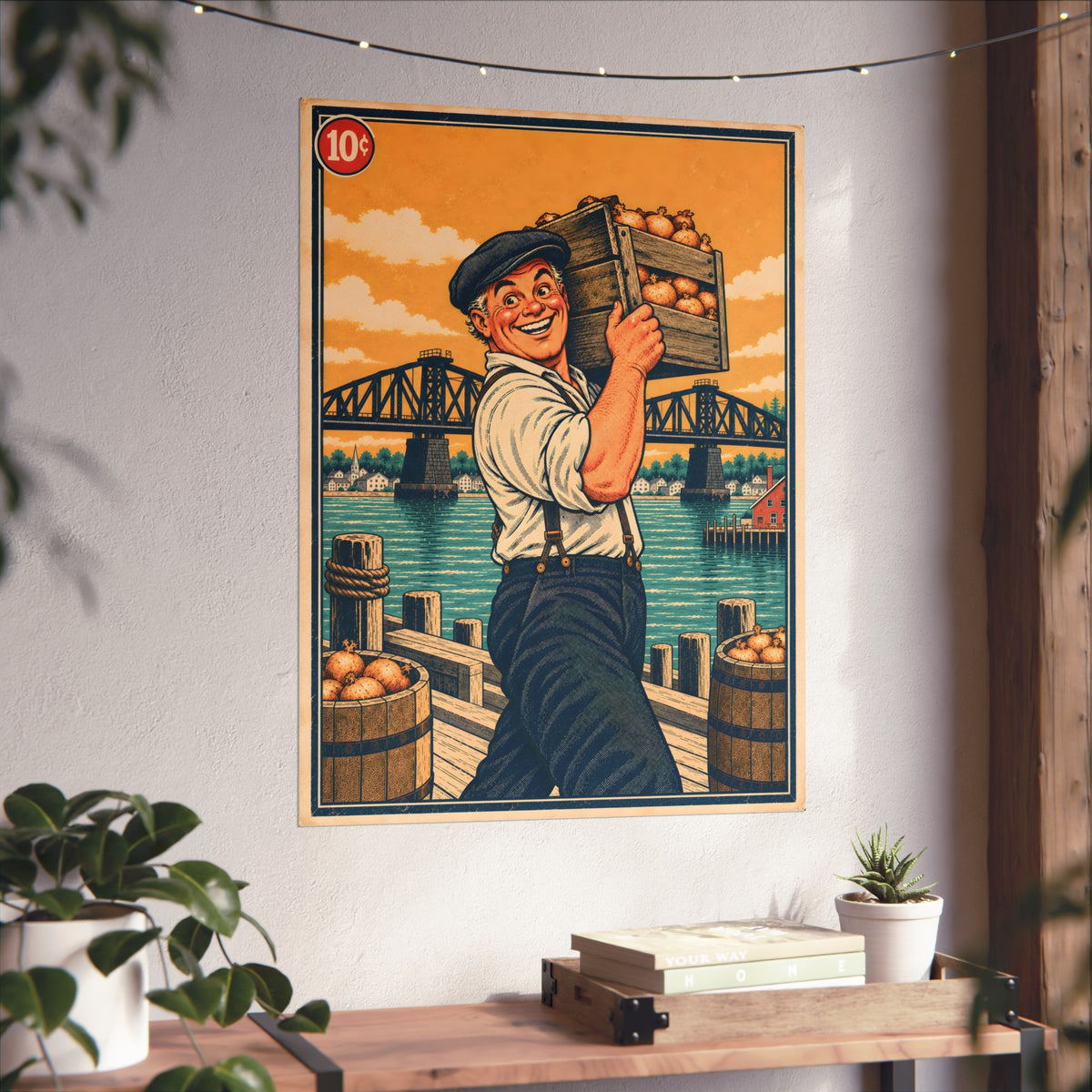
Peace returned the town to its river. The Saugatuck River shipping village grew into a busy little port — sloops and schooners working Long Island Sound to New York — and in 1835 the villagers decided their harbor deserved its own government: led by Daniel Nash, 130 residents petitioned to incorporate a new town, drawn from parts of Norwalk, Fairfield, and Weston, and Westport was born on May 28, 1835. The village kept its salt-water character; the 1884 swing bridge across the Saugatuck — known to everyone as the Cribari Bridge — still turns beside the old shipping quarter, and the Bridge Street district beside it is on the National Register.
Today Westport is known for its beaches, its theater, and a shoreline elegance that has never lost its Revolutionary bones. Its story blends a colonial shipping village, the 1777 landing at Compo, an 1835 town, an onion-farming past, and an arts colony that drew the country's illustrators and players. Our Westport designs gather that identity into wearable form — Compo Beach, the Minute Man, the Saugatuck, the Sound. Explore the collection and carry a little of the Westport shore with you.
Why People Visit Westport Connecticut
- Spend a day at Compo Beach, the town's Sound-front park, and find the Minute Man statue on the bluff above the 1777 landing site — the 1901 commemorative cannons stand nearby.
- Walk the Saugatuck River waterfront and the historic Saugatuck village, the colonial shipping center the town grew from, and cross the 1884 Cribari swing bridge.
- Catch a show at the Westport Country Playhouse, founded in 1931 in a converted 1835 tannery, or a summer concert at the Levitt Pavilion.
- Browse downtown Main Street and the river walk, with shops and galleries near the water.
- Kayak to Cockenoe Island off Compo, or walk Longshore's shoreline paths and public golf course.
- Drive a stretch of the Merritt Parkway for its celebrated 1930s bridges — no two are alike.
- Read up at the Westport Library before exploring the town's deep arts-colony history.
