
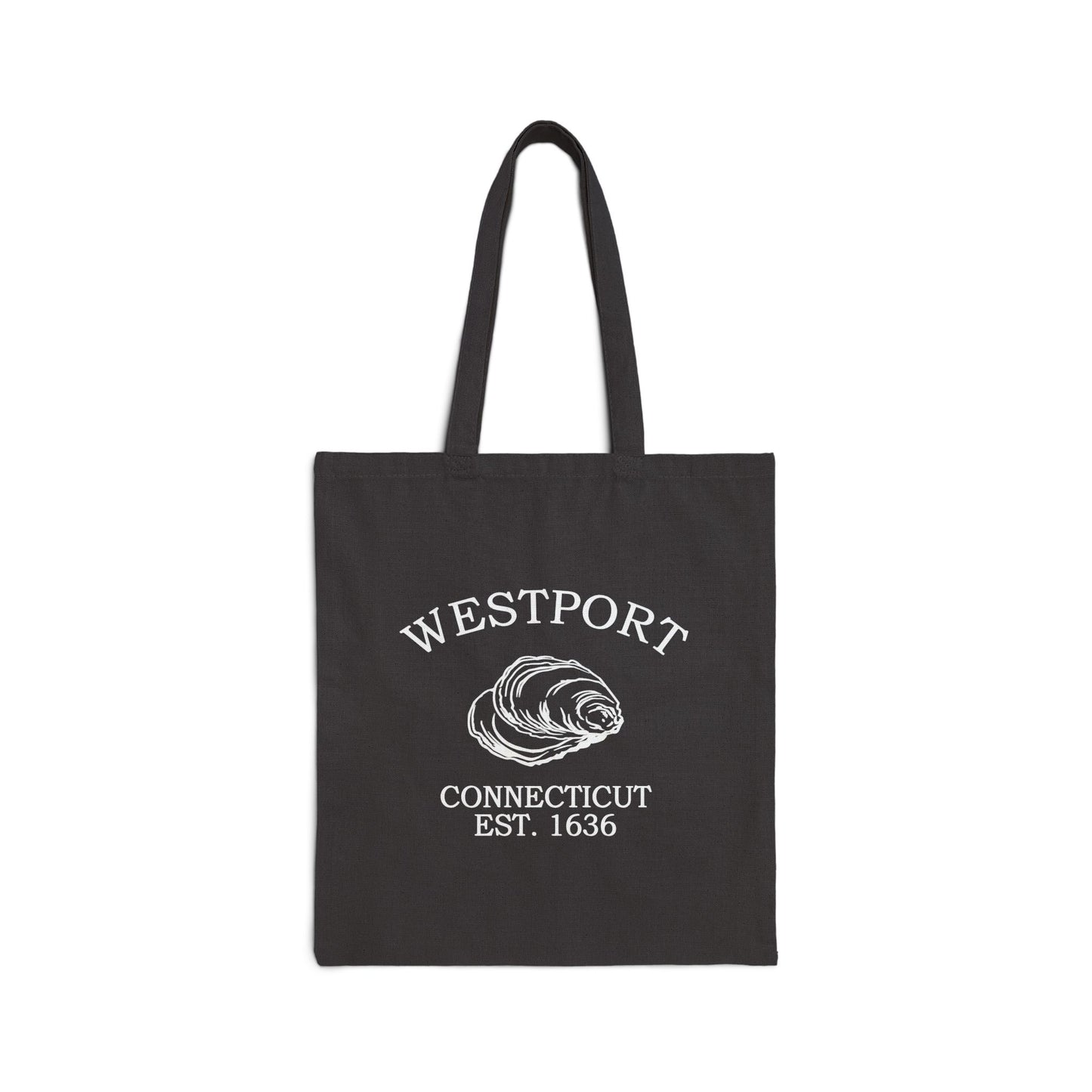
Our Westport logo carries the same emblem every Merlin Classics Connecticut town wears — an oyster above "Connecticut, Est. 1636," the colony's founding year, rendered in hand-printed black and white with a worn, vintage feel. The oyster is the shoreline state's mark, the through-line that ties Westport to every other Connecticut town we make. What makes this one Westport is everything around it: the landing at Compo, the Minute Man on the bluff, the Saugatuck running down to the Sound. On a tee or a cap it reads less like a souvenir and more like a small piece of the Connecticut coast — Est. 1636, worn plain.
Peace returned the town to its river. The Saugatuck River shipping village grew into a busy little port — sloops and schooners working Long Island Sound to New York — and in 1835 the villagers decided their harbor deserved its own government: led by Daniel Nash, 130 residents petitioned to incorporate a new town, drawn from parts of Norwalk, Fairfield, and Weston, and Westport was born on May 28, 1835. The village kept its salt-water character; the 1884 swing bridge across the Saugatuck — known to everyone as the Cribari Bridge — still turns beside the old shipping quarter, and the Bridge Street district beside it is on the National Register.
Why People Visit Westport Connecticut
Westport draws people who love the shore, the arts, and a good story. It is a Revolutionary-War landing site with a Minute Man on the beach, a colonial shipping village turned arts colony, and a Long Island Sound shoreline of beaches, river, and marsh. Visitors come for the rare mix — history you can stand on at Compo, theater and music in the summer, and a refined New England coast an easy train ride from New York.
