


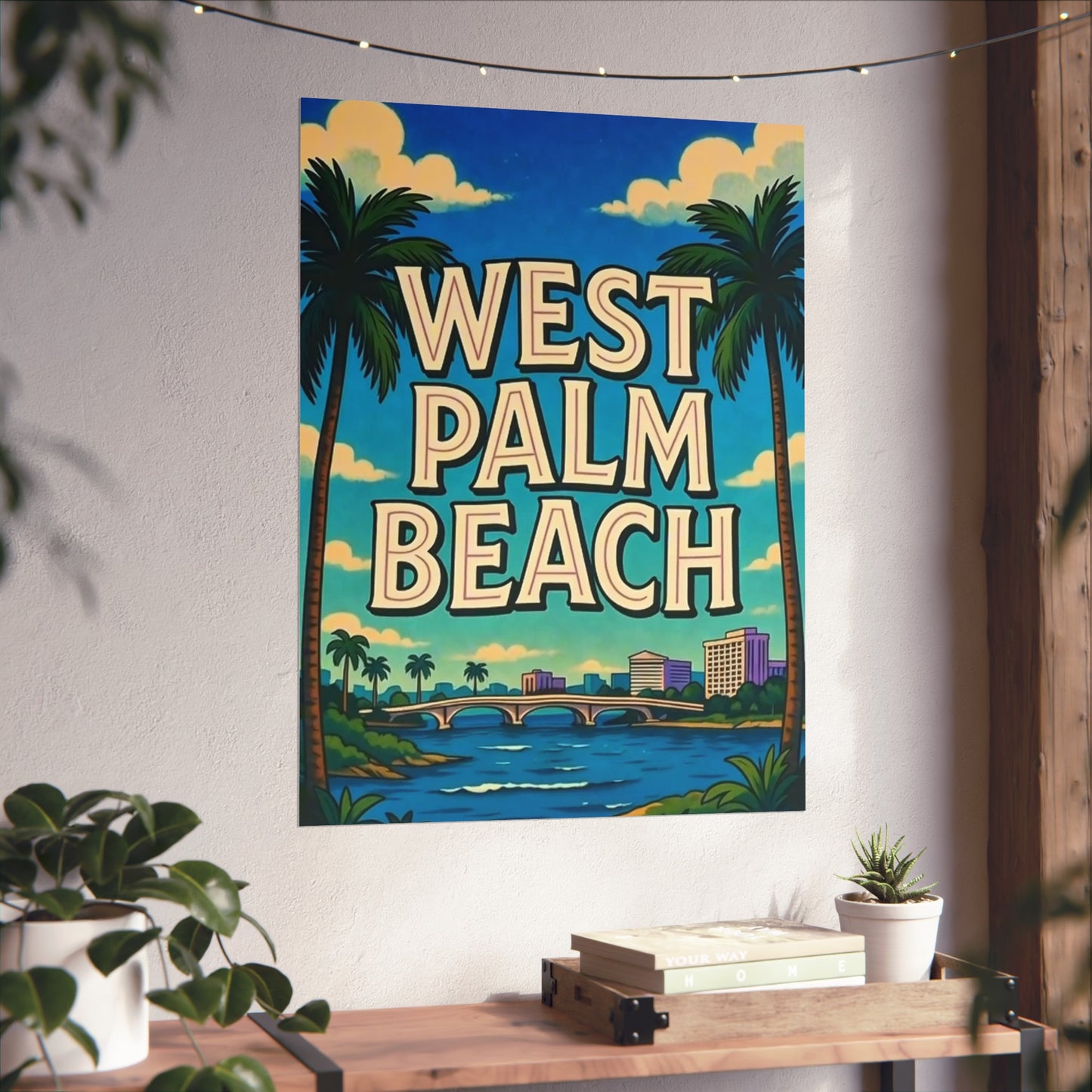
Look at a downtown map and you’ll find the streets named, in alphabetical order, for native plants: Althea, Banyan, Clematis, Datura, Evernia, Fern. Flagler’s planners laid the grid that way in 1893, and Clematis became the main drag — storefronts and theaters — while a block over, Banyan Street filled with saloons so rowdy that the temperance crusader Carry Nation came to town in 1904 to set it straight. Clematis faded mid-century, then came roaring back in the 1990s as the city’s nightlife and festival heart. The plant names are still there, in order, if you know to look.
Today West Palm Beach is waterfront promenades and palm-lined avenues, the Norton and the Kravis, Clematis nightlife and the Intracoastal breeze. Our West Palm Beach designs gather that identity — the alligator emblem, Flagler’s railroad city, the mainland-and-island story — into wearable form. West Palm Beach, Florida — Flagler’s city on the Intracoastal, where the railroad came south and the palms never quit.
Why People Visit West Palm Beach
West Palm Beach rewards visitors who want culture with their coastline: a serious arts scene, a lively downtown, historic neighborhoods under the palms, and the Intracoastal at the center of it all. Add the island just across the water and the year-round South Florida sun, and Flagler’s mainland city makes an easy case for itself.
