
Here is the thing the name keeps half-hidden: West Palm Beach is the city; Palm Beach is the island. Across the Intracoastal sit the Gilded-Age hotels Flagler built — the Royal Poinciana, The Breakers — and the mansions of the very rich. West Palm Beach was the other side of that economy: the depot and the storefronts, the carpenters and railroad men, the place where the work got done and the workers lived. That split still defines the city. It is the down-to-earth, culturally rich mainland — the one with the downtown, the museums, and the nightlife — looking across the water at the glamour it helped build and supply.
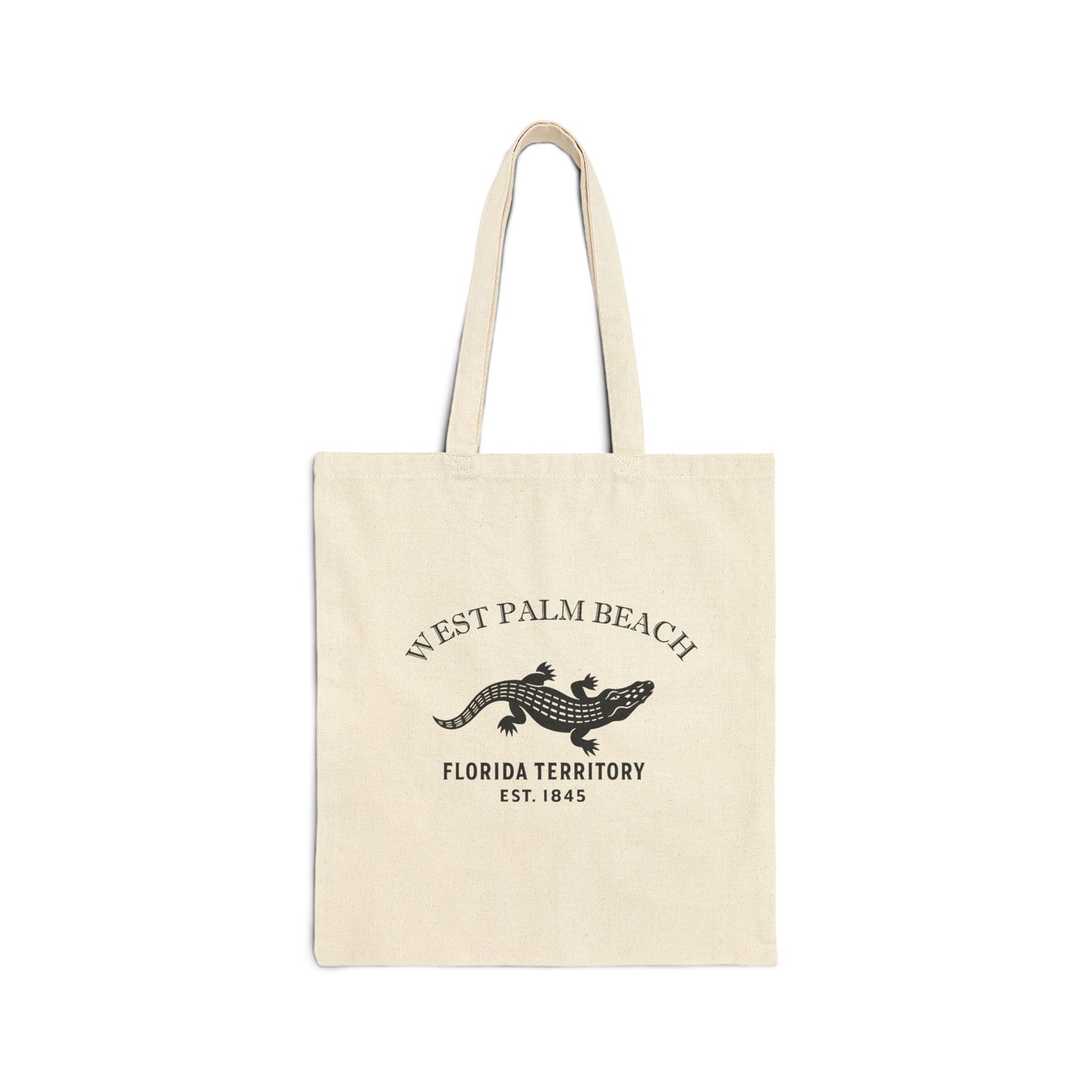
Our West Palm Beach logo carries the Florida alligator over “Florida Territory · Est. 1845,” the year Florida became a state — the shared emblem of every Merlin Classics Florida town. Printed in clean retro black-and-white that reads like an old crate label or woodcut, the alligator stands for Florida as a whole; what makes this one West Palm Beach is everything behind it — Flagler’s railroad, the plant-named streets, the Intracoastal and the island across it, and a working mainland city that grew up proud beside the glamour.
Why People Visit West Palm Beach
West Palm Beach rewards visitors who want culture with their coastline: a serious arts scene, a lively downtown, historic neighborhoods under the palms, and the Intracoastal at the center of it all. Add the island just across the water and the year-round South Florida sun, and Flagler’s mainland city makes an easy case for itself.
