


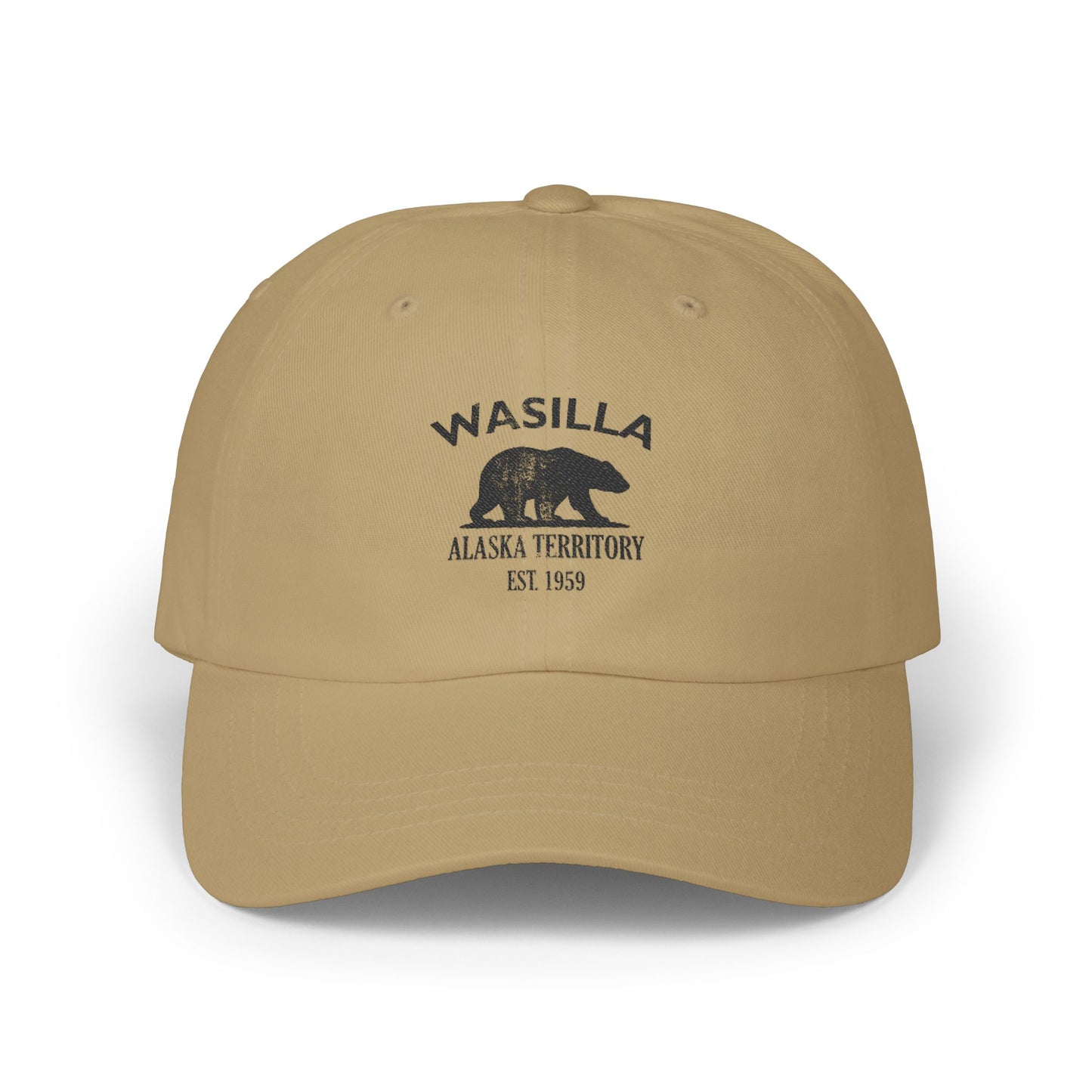
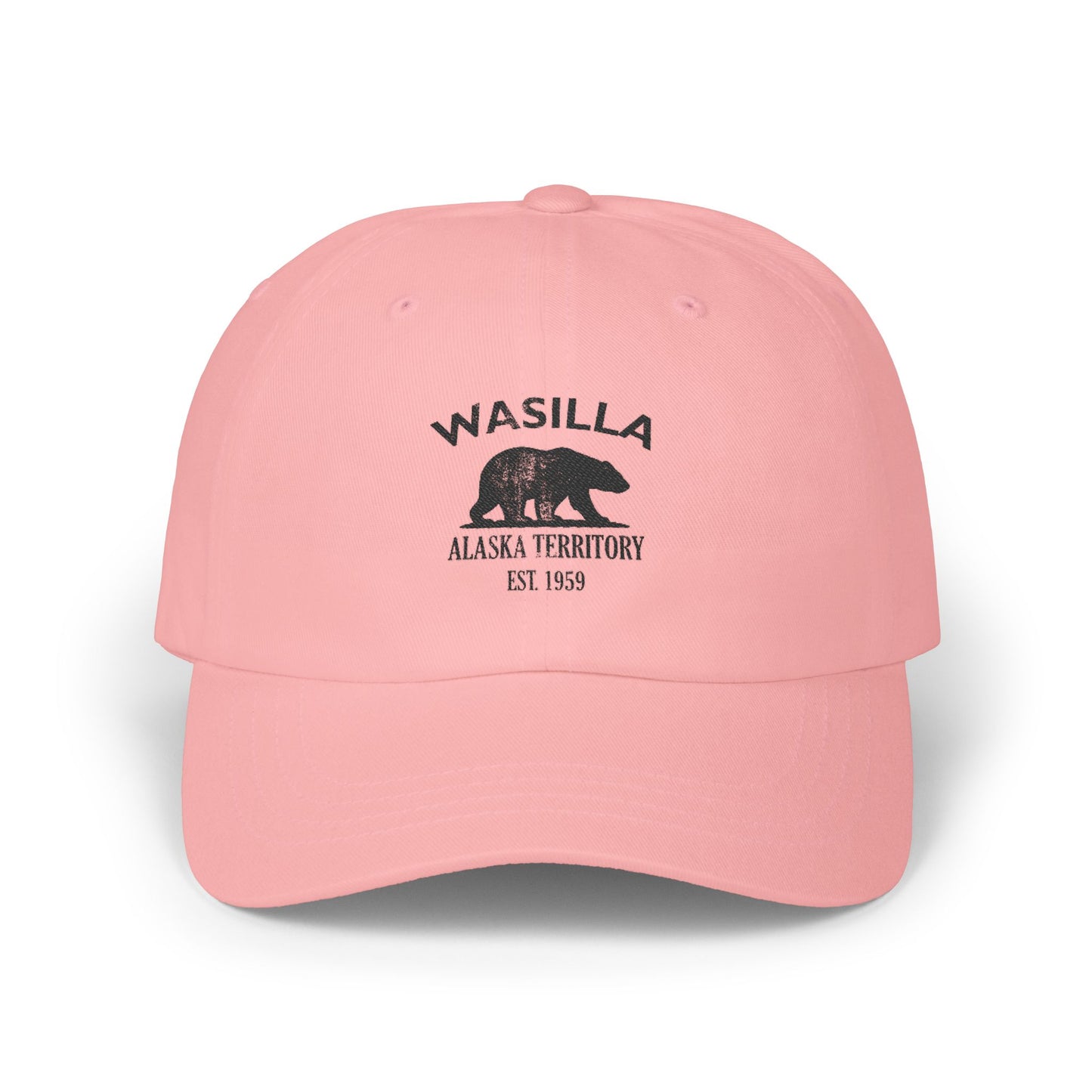
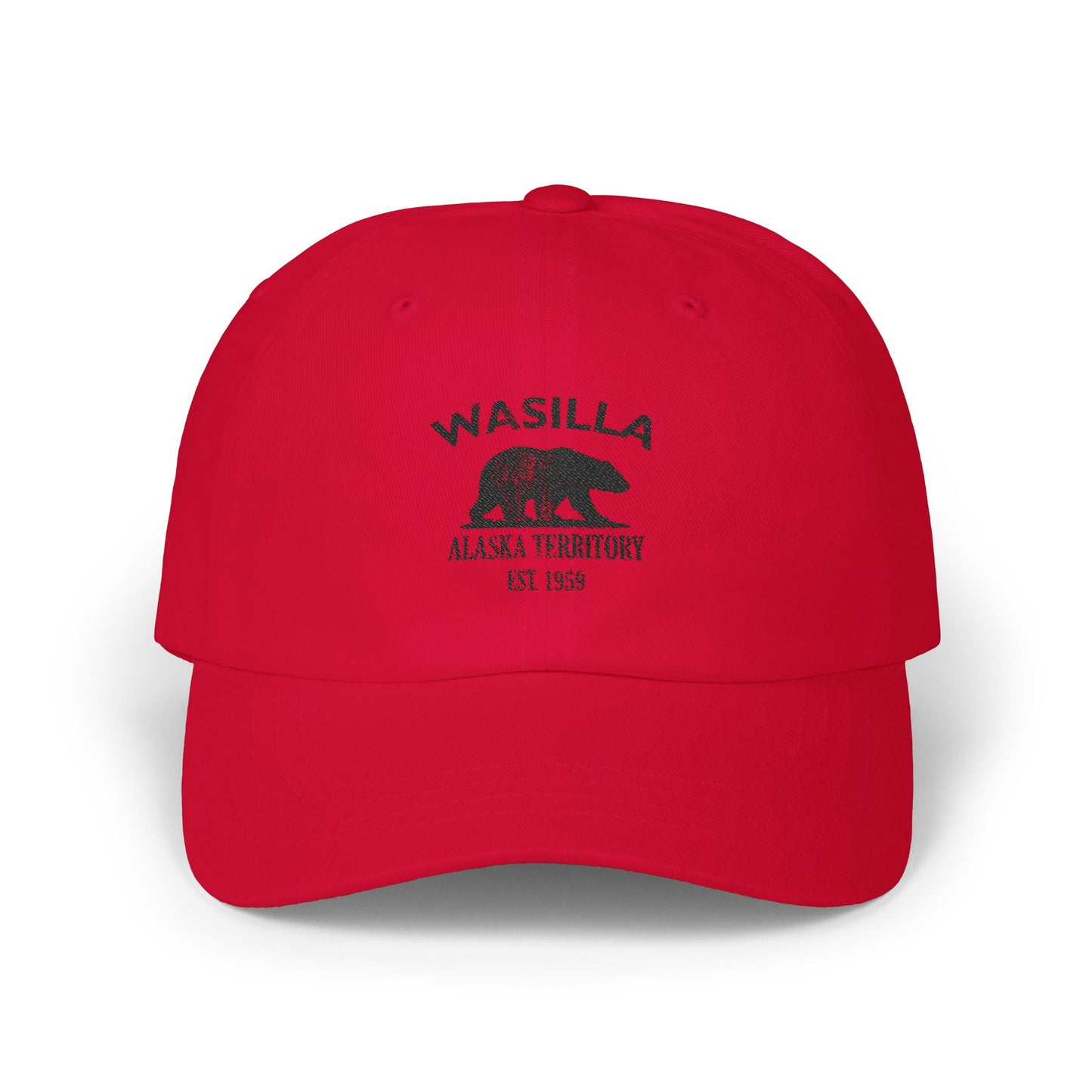
Our Wasilla logo carries Alaska's bear over “Alaska Territory · Est. 1959,” the year Alaska became the forty-ninth state — the shared emblem of every Merlin Classics Alaska place. Printed in a distressed black-and-white that reads like an old outfitter's stamp, the bear is the Last Frontier in shorthand: rugged, wild, and at home in the cold. What makes this one Wasilla is the country behind it — the Mat-Su Valley, the lakes and ranges, and the trail that runs all the way to Nome.
The Dena'ina Athabascan people lived in this valley long before the railroad, and the town still carries one of their names: Wasilla comes from Chief Wasilla, a Dena'ina leader of the Knik country. For decades the trading post at Knik was the region's supply hub — until 1915, when Anchorage was founded and the new Alaska Railroad pushed north. In 1917 the line crossed the wagon road to the Willow Creek gold mines, a townsite was platted on the high ground between Wasilla Lake and Lake Lucille, and its lots were auctioned that June. Knik emptied out — some residents are said to have dragged their houses to the new town — and Wasilla rose in its place as the “Gateway to the Willow Creek Mining District.” For its first decades the town lived on that gold, the freight-transfer point between the railroad cars and the mine roads.
Why People Visit Wasilla
Wasilla balances Alaska heritage with easygoing valley life — lakeside walks, broad mountain scenery, and the deep history of the long trail north. It's accessible, relaxed, and a practical base for exploring the Mat-Su Valley and Southcentral Alaska.
