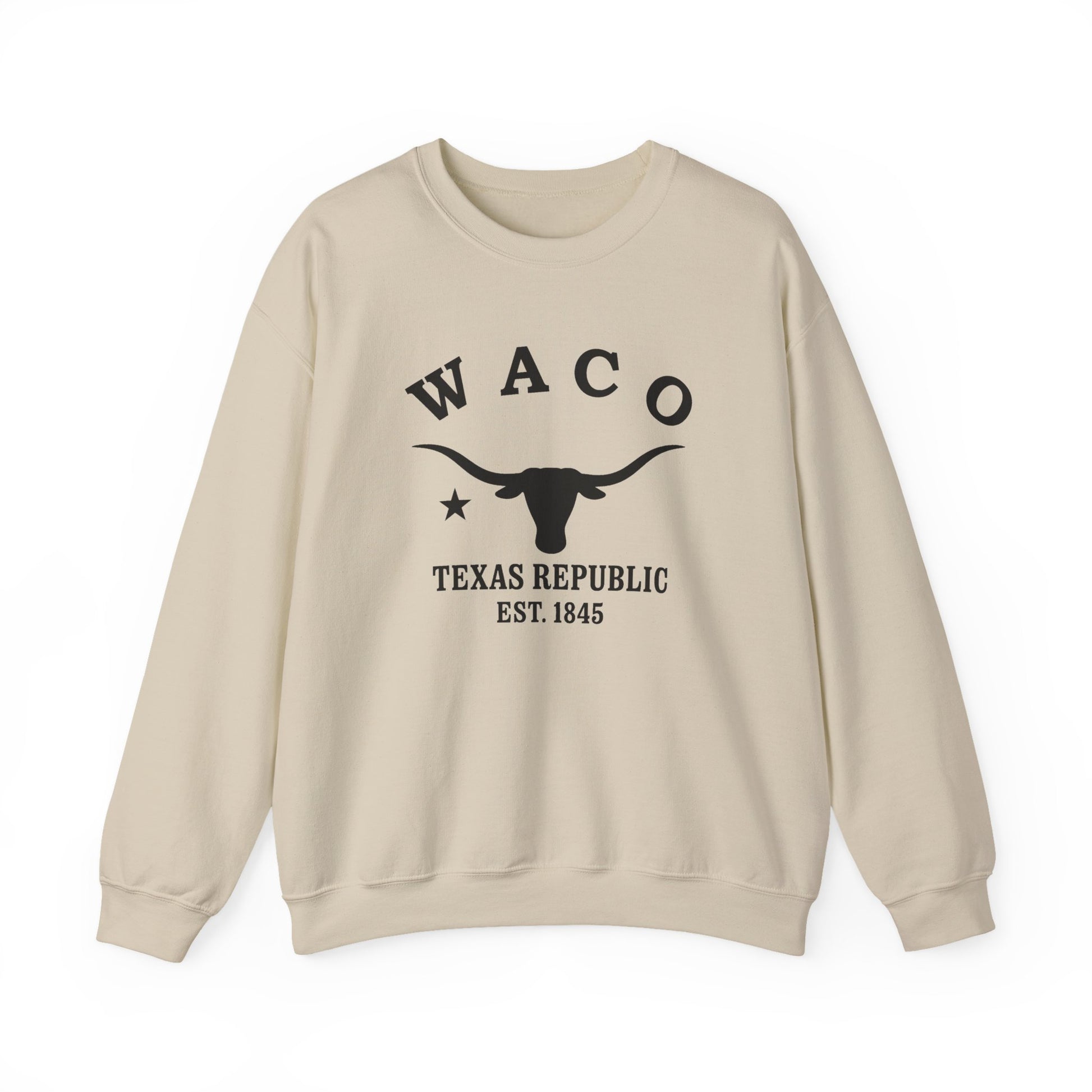
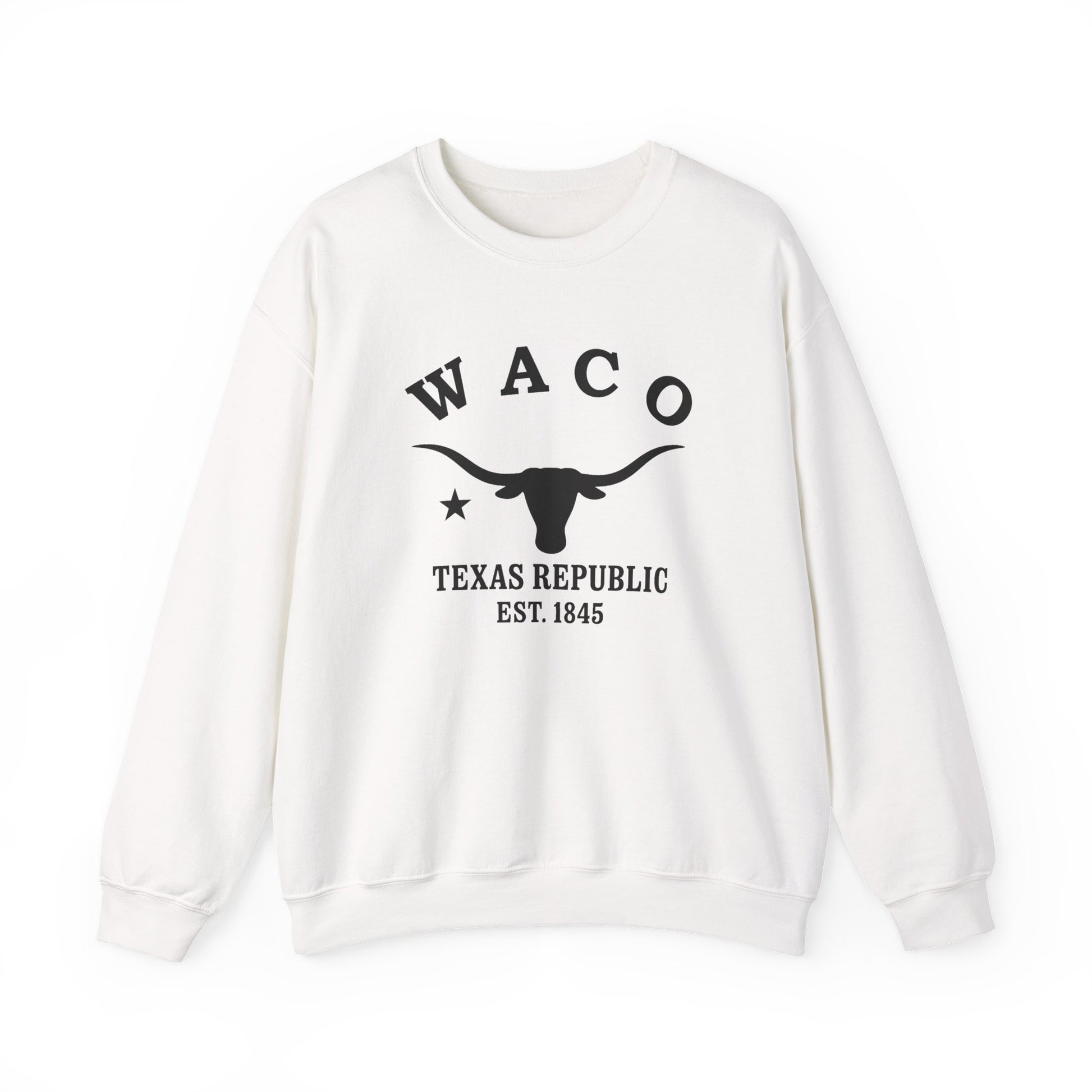
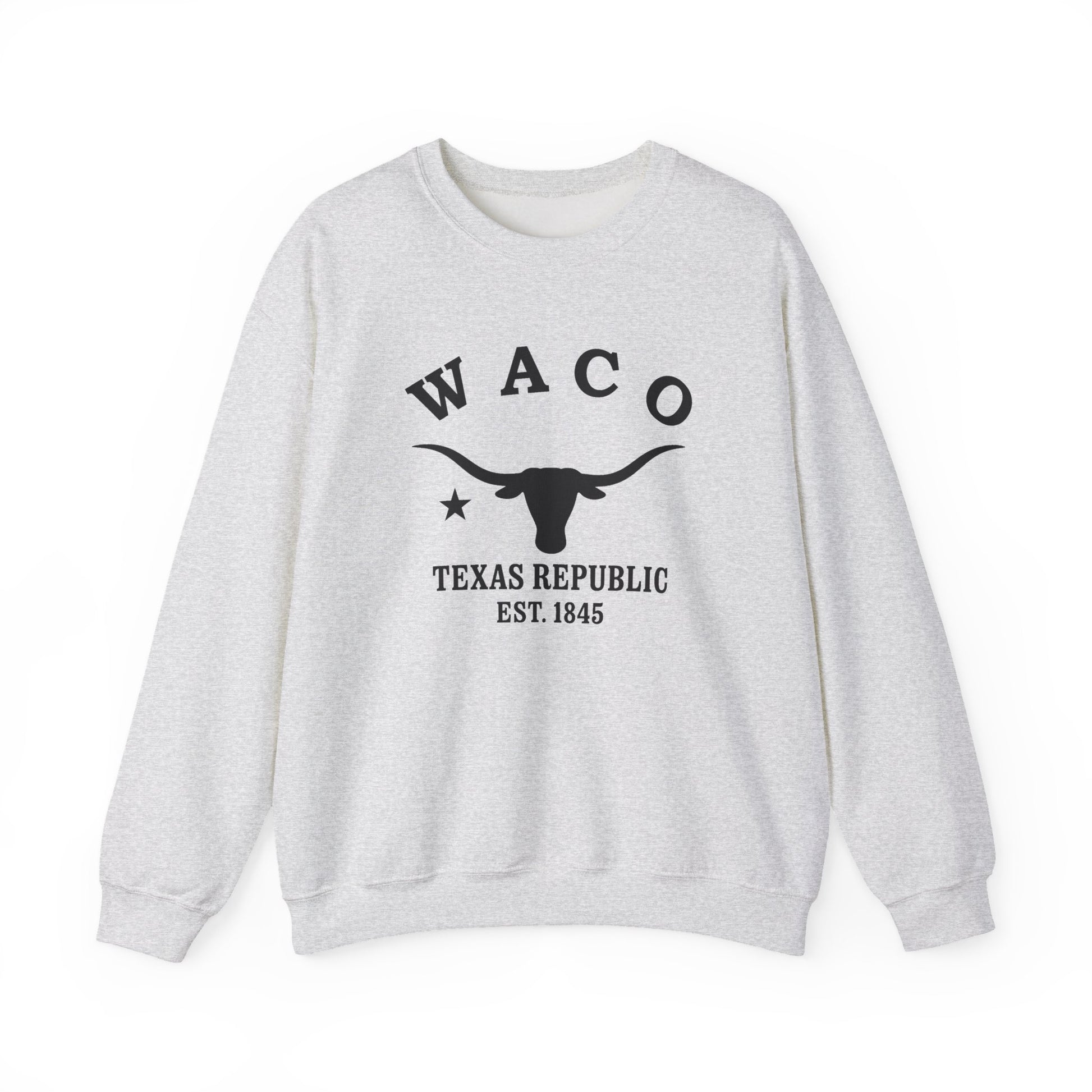
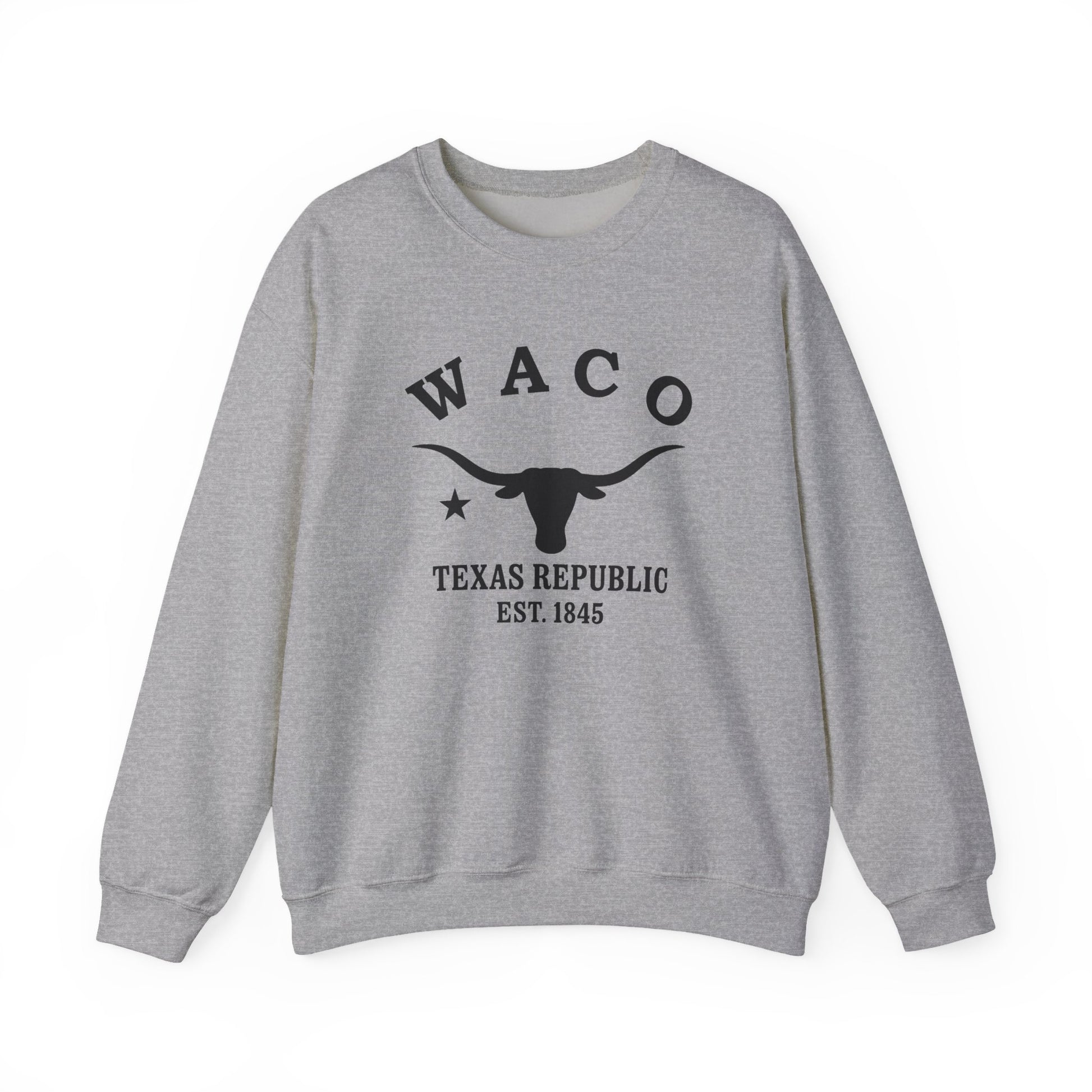
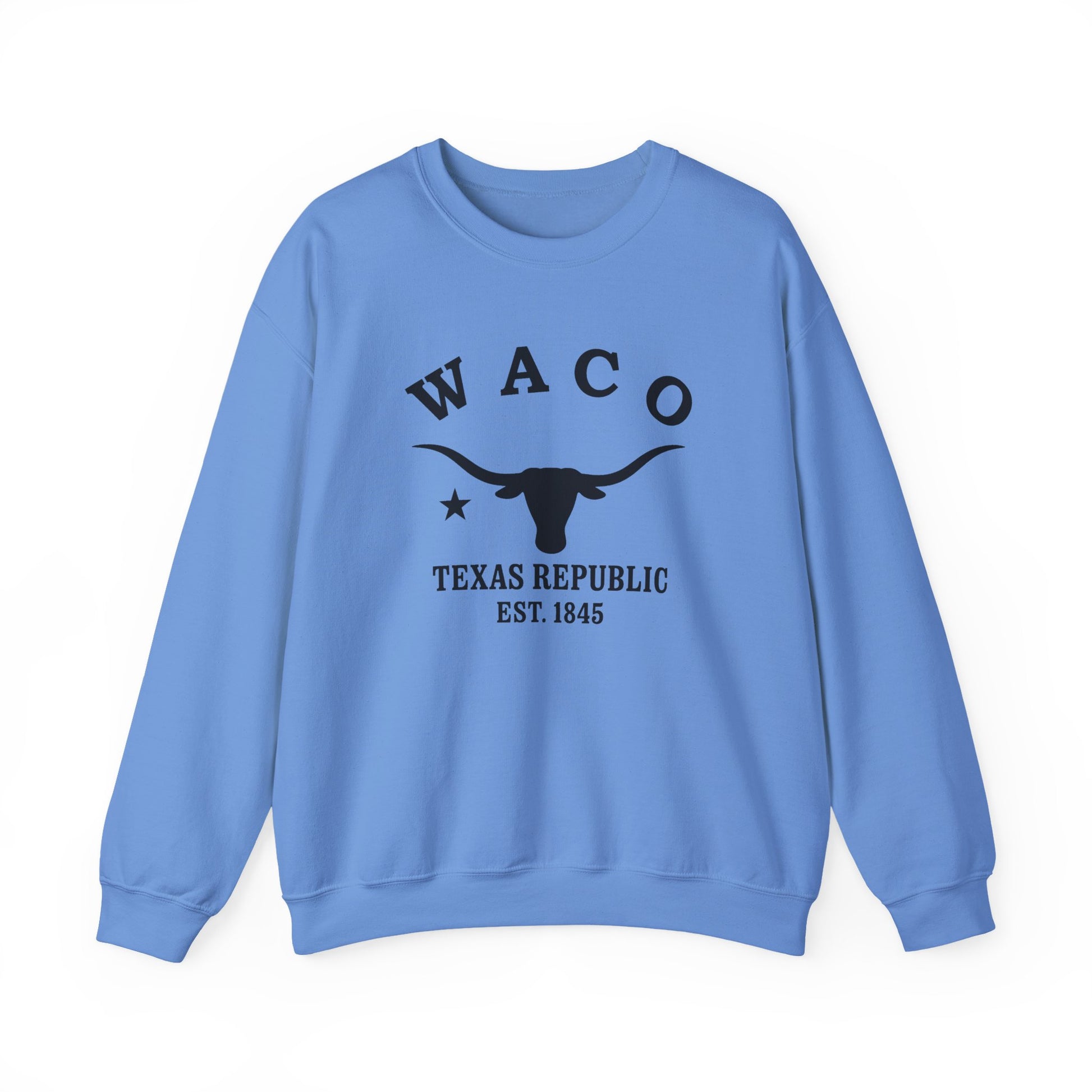
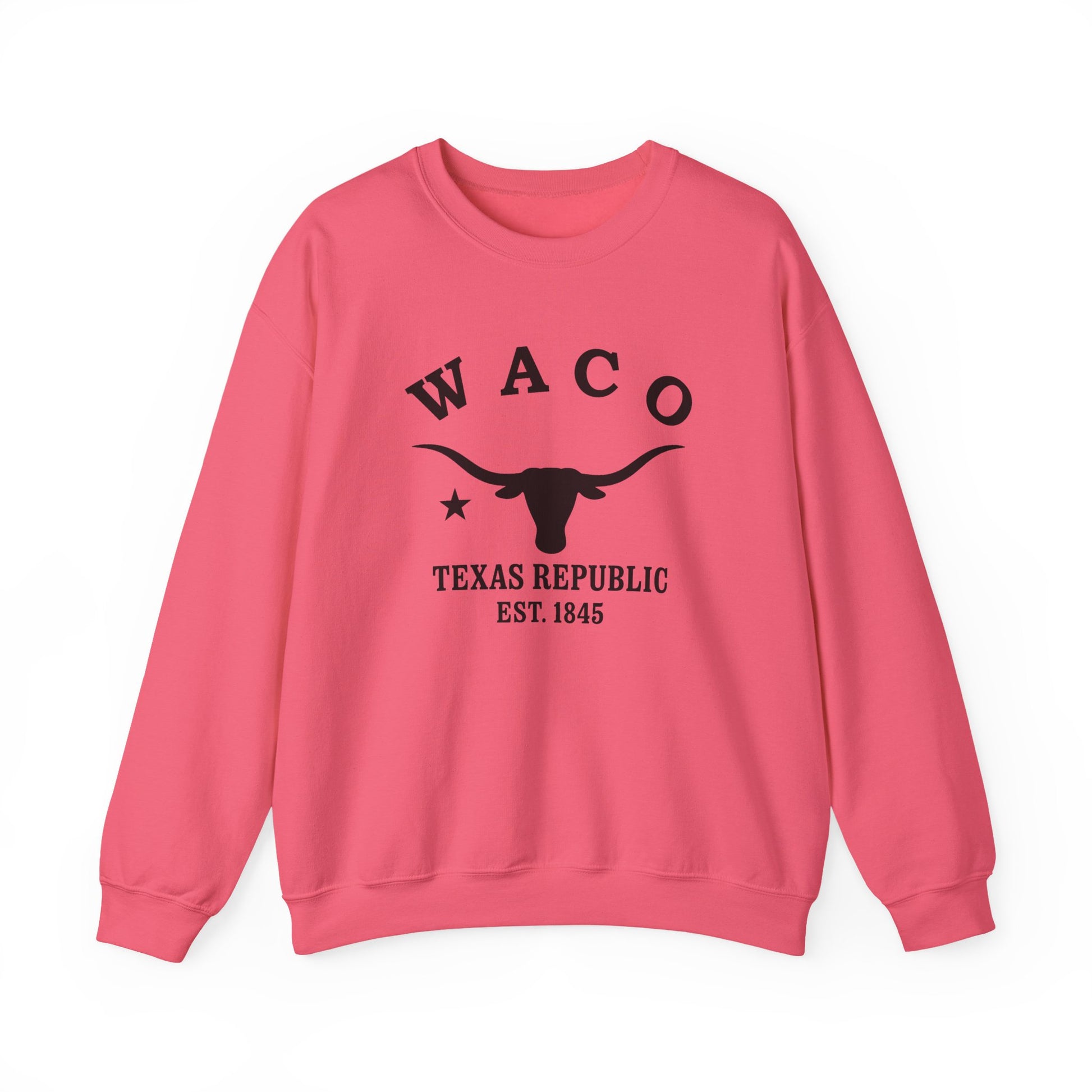
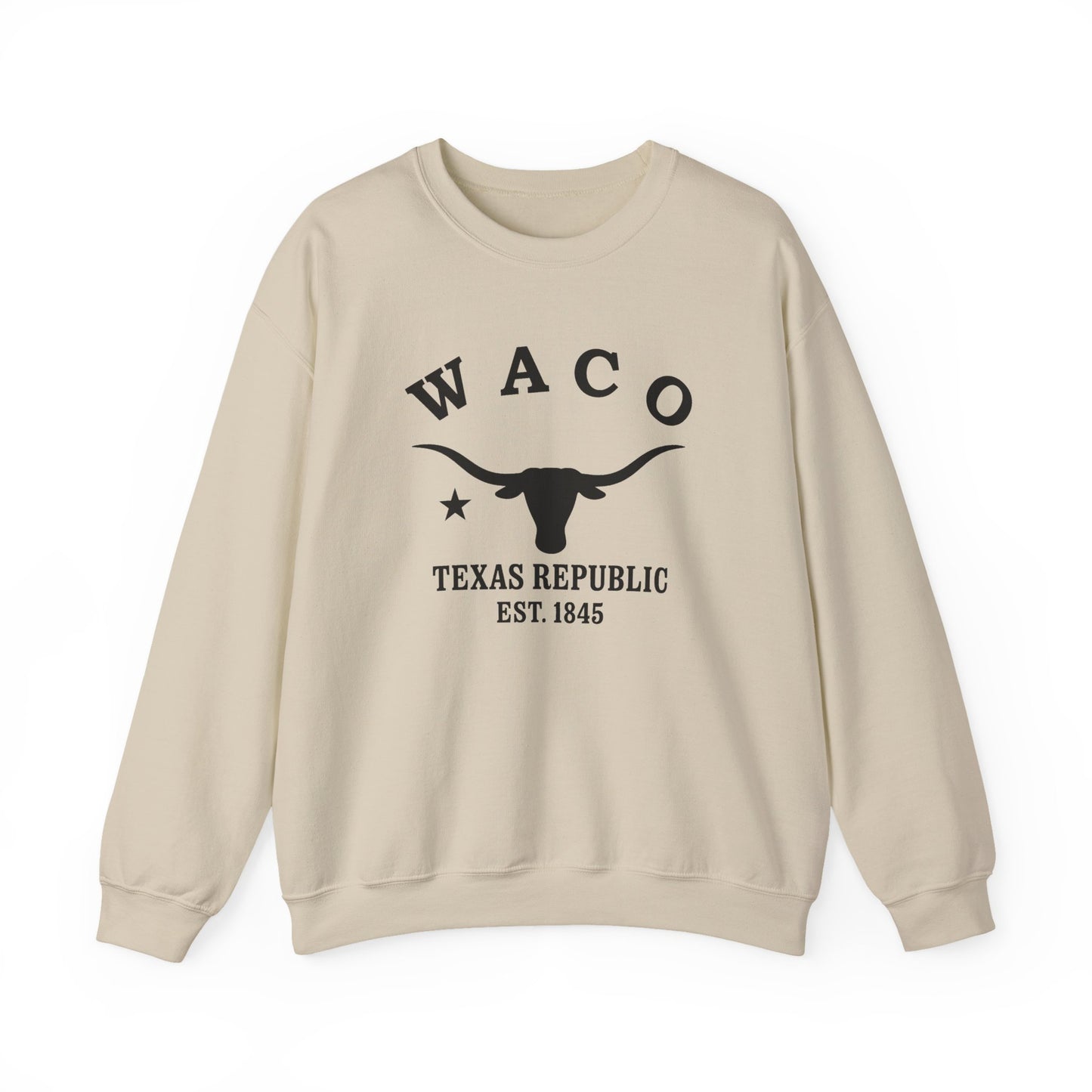
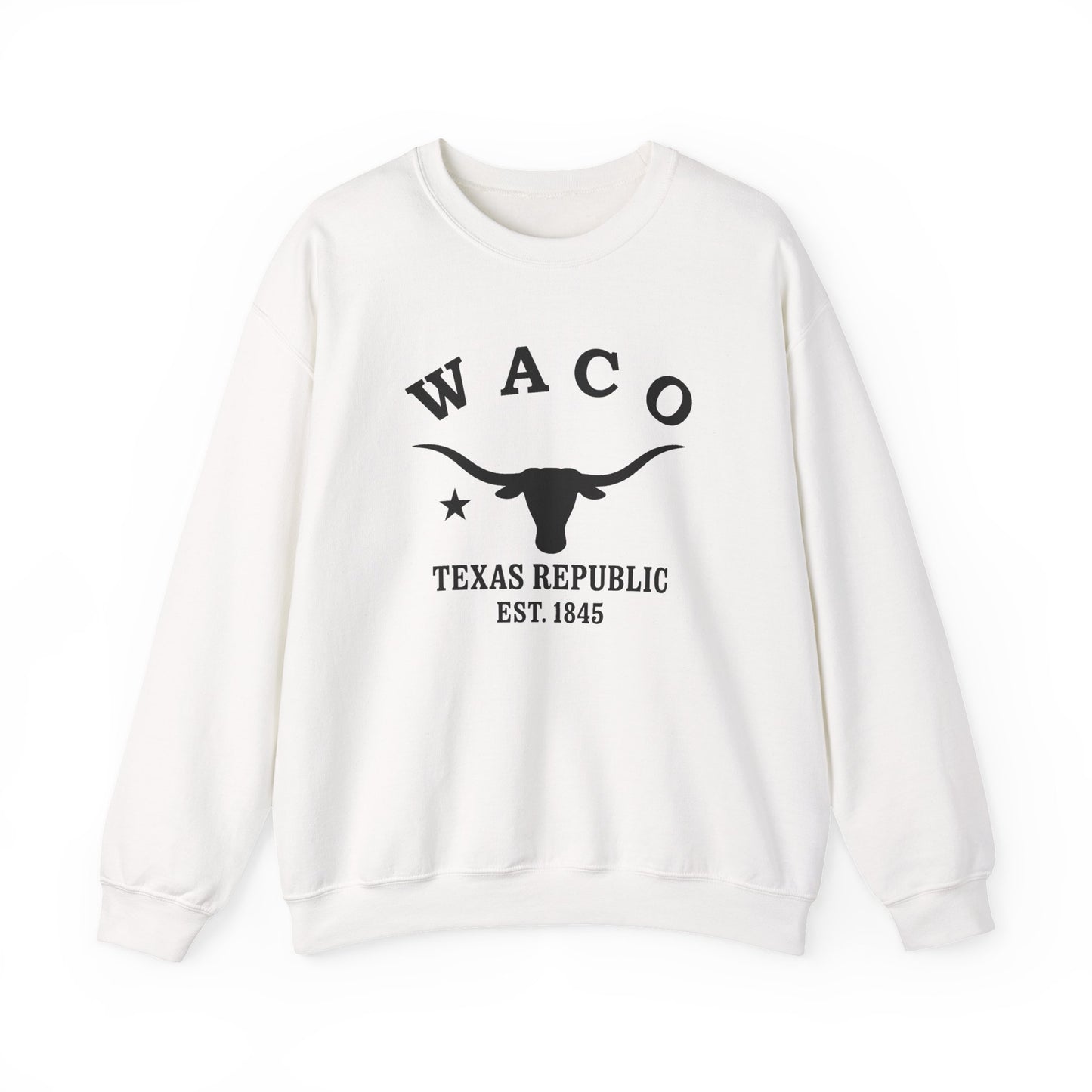
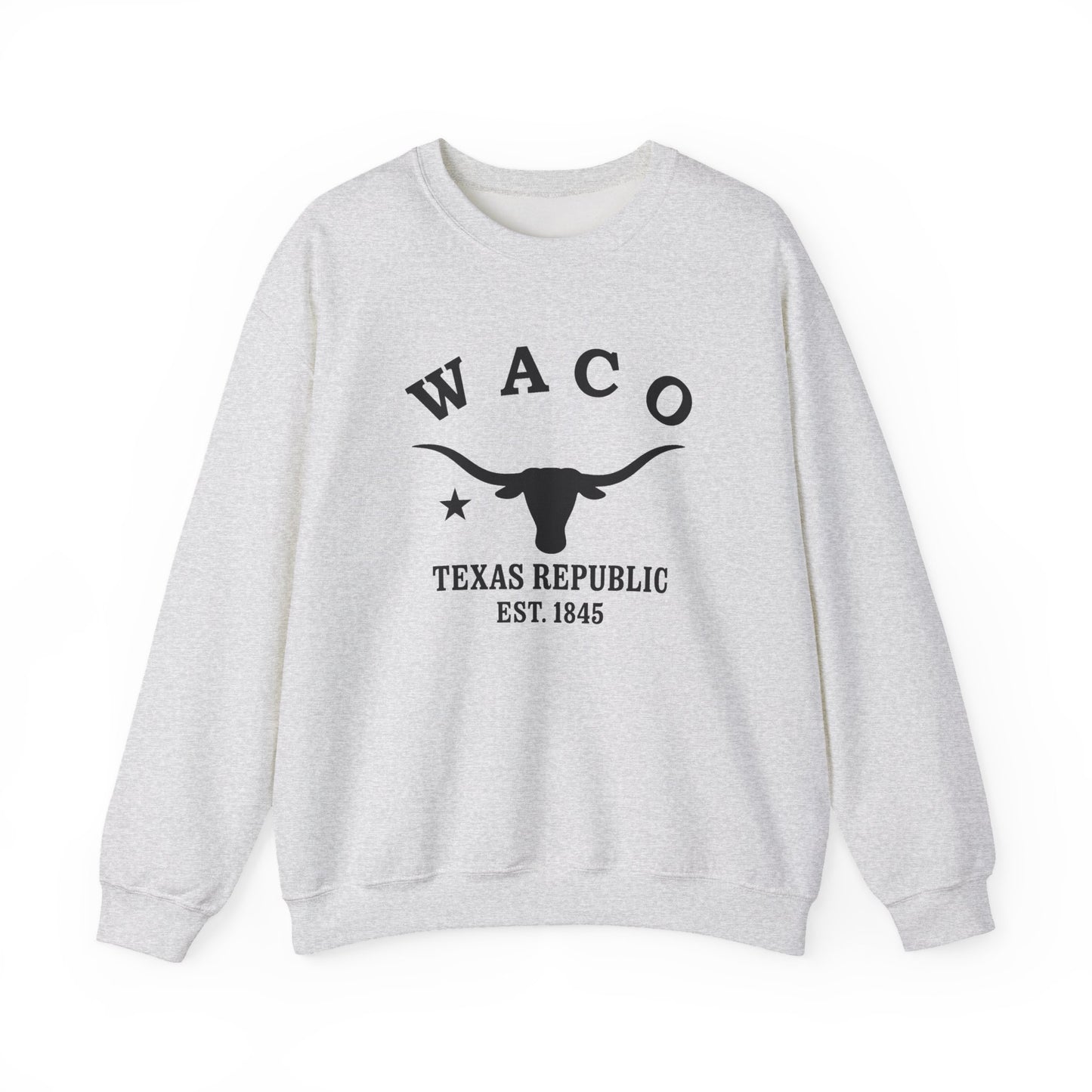
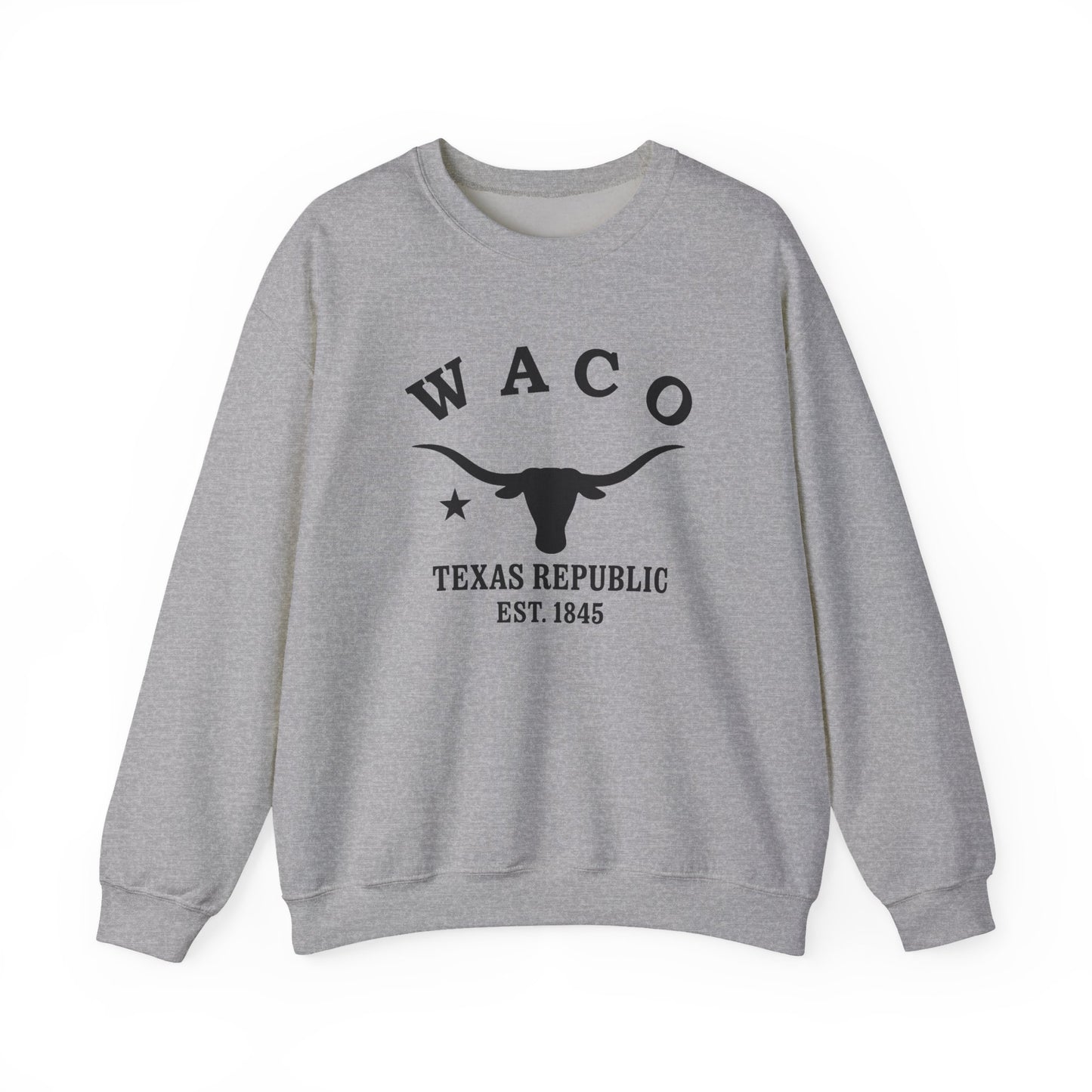
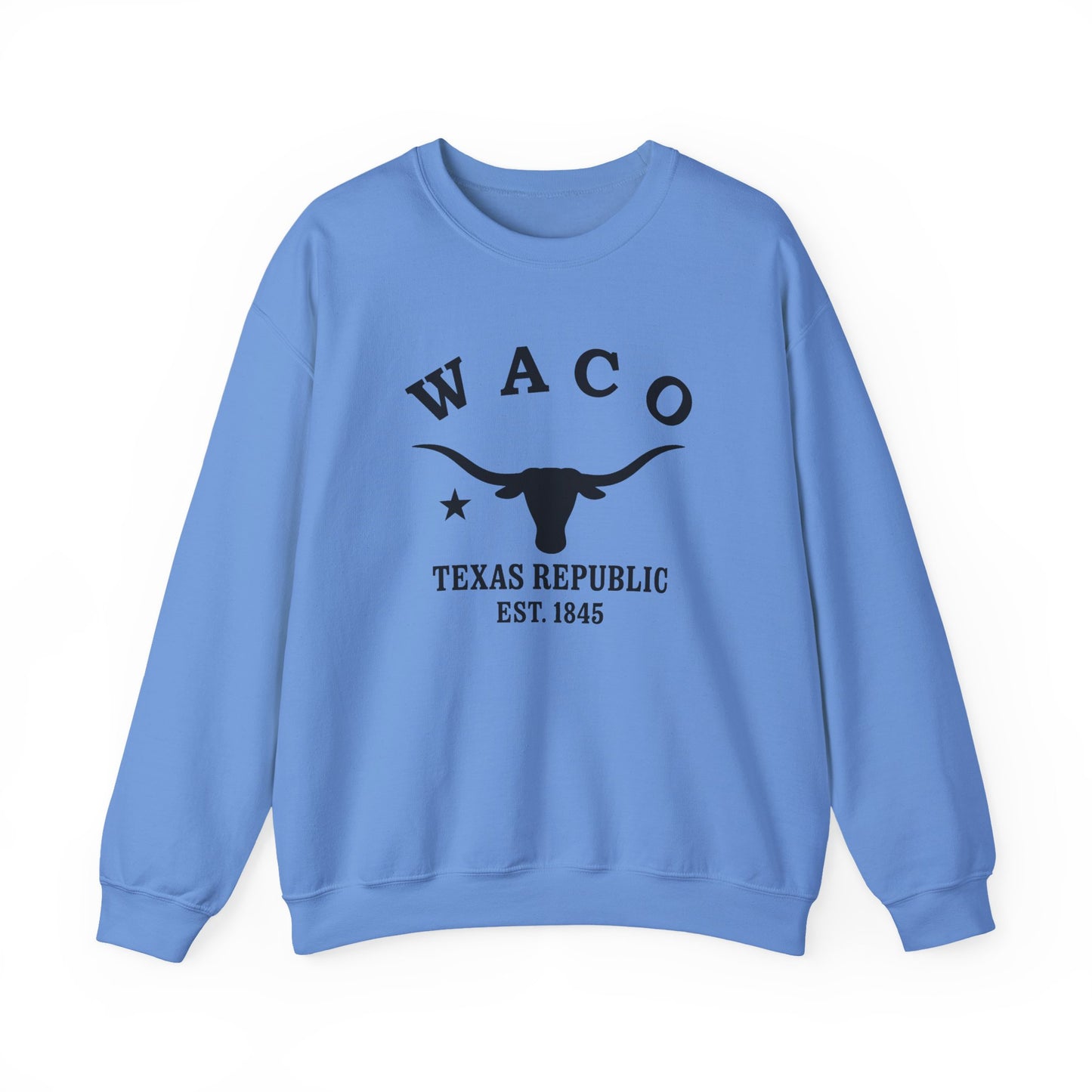
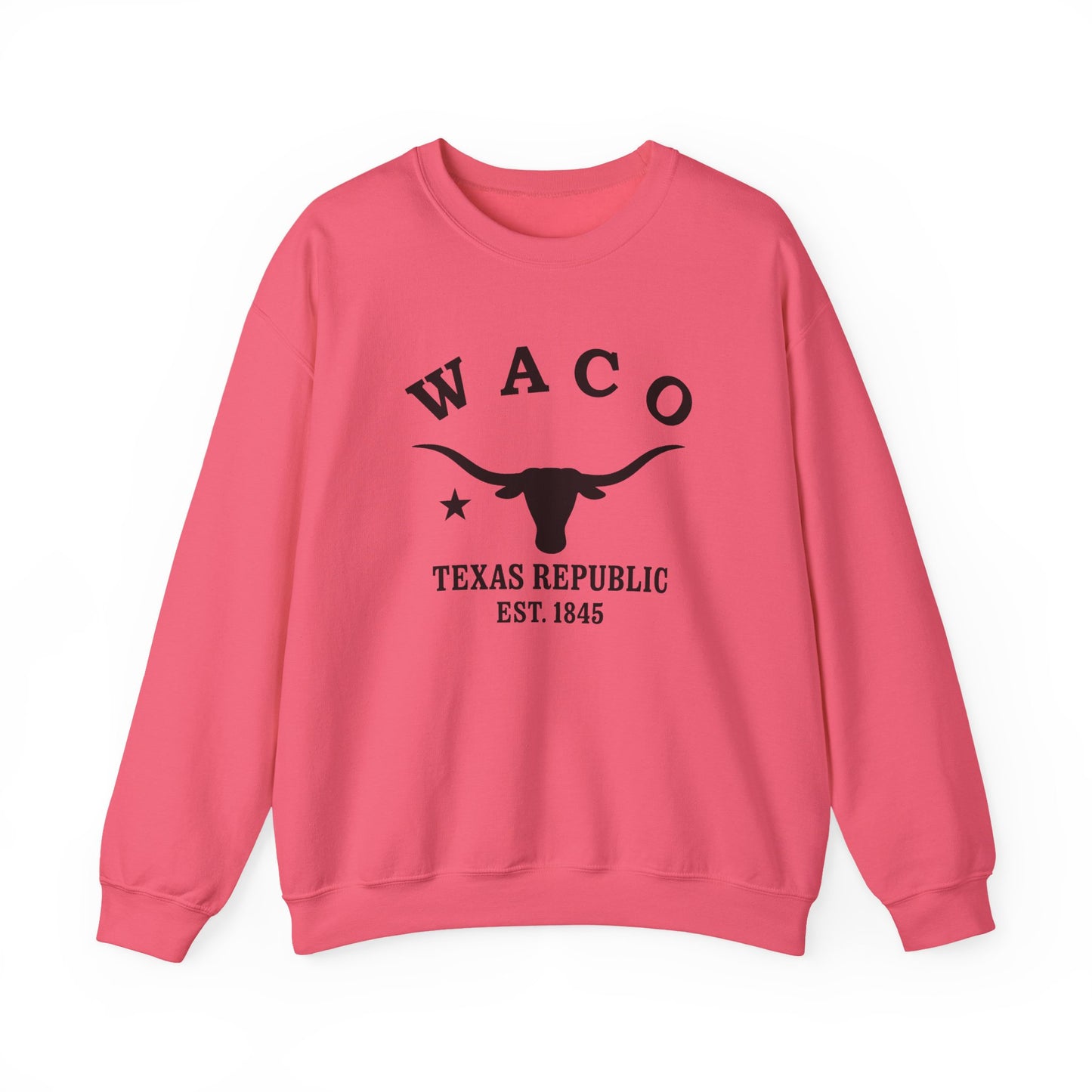
Our Waco logo carries Texas's longhorn and Lone Star above ‘Texas Republic — Est. 1845,’ the shared retro emblem of our Texas towns. The longhorn fits Waco better than almost anywhere — these are the very cattle that crossed the Brazos here by the hundreds of thousands — and the star and 1845 mark Texas's Republic and statehood. Rendered in branding-iron black and white, it ties Waco to every other Texas town we make; what makes this one Waco is the river, the bridge, and the mammoths.
So the town built a bridge — and not a modest one. The Waco Suspension Bridge opened in 1870: a 475-foot span of nearly three million locally made bricks, hung from cables supplied by the Roebling company of Trenton, the same firm that would build the Brooklyn Bridge. At its debut no single-span suspension bridge west of the Mississippi was longer. Cattle crossed at five cents a head, wagons and stagecoaches rolled over two abreast, and Waco boomed. The bridge is a pedestrian landmark now, and the bronze longhorns of the ‘Branding the Brazos’ sculpture still drive across the riverbank beside it.
Why People Visit Waco
Waco balances discovery with simple outdoor time. Visitors mix fossils, the historic bridge, and museums with shaded riverfront parks and an easy downtown. It is friendly, curious, and easy to navigate, with year-round appeal in its parks, paths, and public spaces. Frontier Texas and Ice Age deep time sit side by side here — history and everyday culture together in a welcoming way, with relaxed mornings and unhurried afternoons.
