

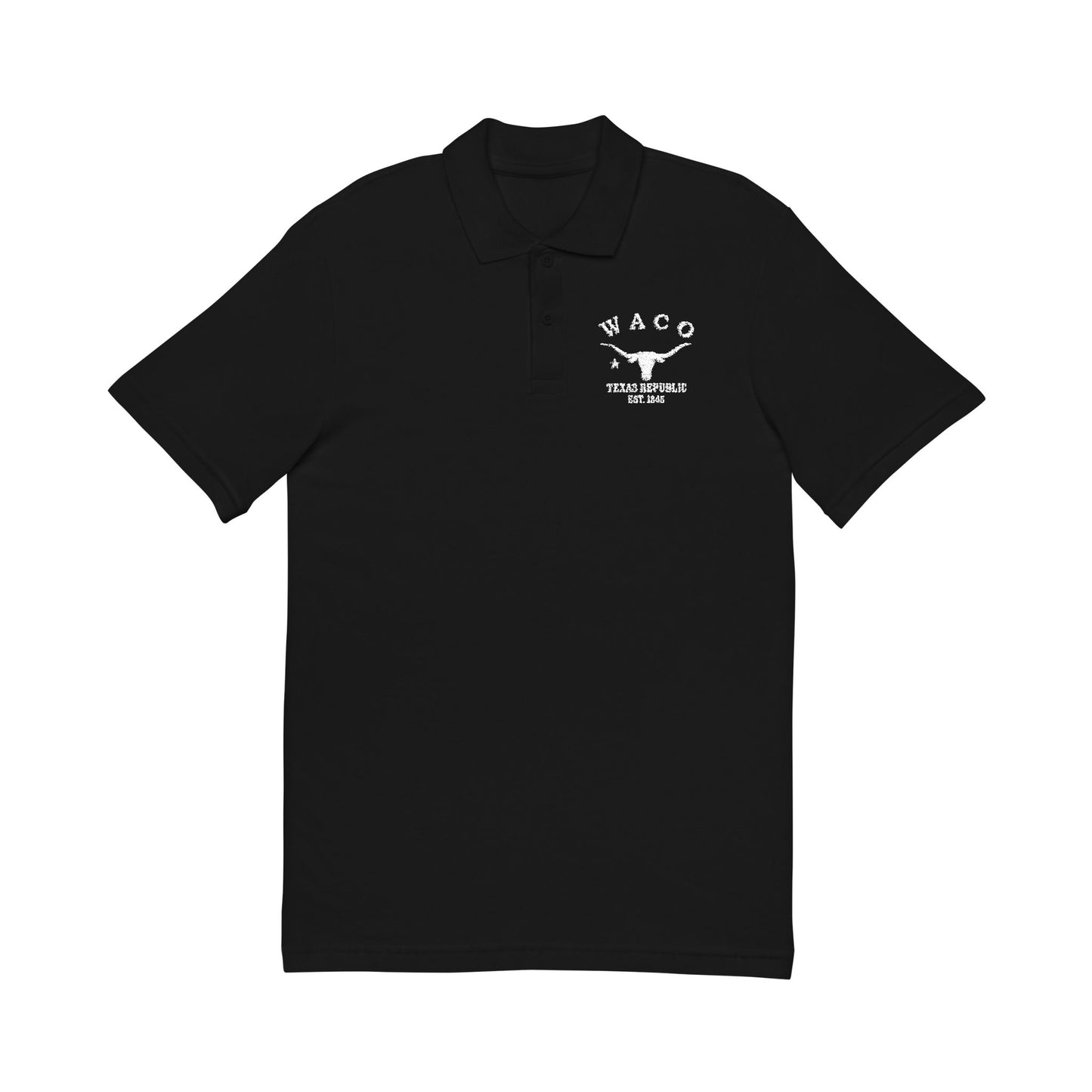

In the nineteenth century, Waco thrived on cotton, ranching, and railroads. The twentieth century brought universities, industry, and cultural growth. By the 1950s and 1960s, suburban neighborhoods spread, schools expanded, and parades filled streets. Baylor University became a cultural anchor, while agriculture remained strong. Its timeline reflects Texas’s adaptability: frontier trading post transformed into suburban city. Waco’s mid-century decades emphasized optimism, resilience, and tradition. Growth reflected Texas’s broader story: balancing heritage with expansion. Waco demonstrated endurance, community pride, and ambition, making it a city where frontier history and suburban optimism blended in cultural continuity.
Today Waco is celebrated as a cultural hub, educational center, and suburban city. Its story reflects Indigenous presence, frontier resilience, and suburban pride. Our Waco designs embody this layered identity, pairing the longhorn and Lone Star motif with vintage styling. They invite you to explore the Waco collection and carry forward a reminder of Texas’s resilience. Retro in tone, the logo reflects toughness and authenticity. Waco’s emblem honors both heritage and optimism, making it a vintage symbol of Texas identity. Explore the collection and share in Waco’s story of resilience, tradition, and community pride.
Why People Visit Waco Texas
- See Waco Mammoth site, sheltered dig with Columbian mammoth fossils in place.
- Visit Cameron Park Zoo, naturalistic habitats along wooded park trails.
- Tour Dr Pepper Museum, quirky history of a Texas born soft drink.
- Walk the Brazos Riverwalk over to the historic Suspension Bridge.
- Browse Magnolia at the Silos, lawns, shops, and city views.
