Skip to product information
1 of 1

Stonington Connecticut Vintage Retro Cotton Canvas Tote Bag - Black Logo

Stonington Connecticut Vintage Retro Cotton Canvas Tote Bag - Black Logo

Regular price $28.00 USD
Regular price Sale price $28.00 USD
Sale
Free U.S. Shipping
Color
Size
Quantity


The Stonington tote, for the town that beat the Royal Navy twice. Heavy 12 oz cotton canvas with the Stonington vintage retro logo printed on both sides in black.

The tote is the Stonington piece that gets used daily: groceries, books, a towel for the beach, the farmers’ market on Saturday. It is flat to mail, so it is also the simplest Stonington gift to send to someone out of state. Ships free in the U.S.

Durable cotton canvas tote bag made from heavy 12 oz (407 g/m²) canvas with a clean, minimalist look. One size 15" × 16" with 20" self-fabric handles for comfortable shoulder carry; sewn-in label. Retro logo printed both sides. A sturdy everyday carry for errands, books, or groceries—constructed from 100% cotton canvas.

Settled in 1649 and Connecticut’s oldest borough, Stonington sits on a one-square-mile peninsula between Stonington Harbor and Fishers Island Sound. In 1775 the town traded fire with HMS Rose, and from August 9 to 12, 1814, four British warships bombarded the point for three days; two cannons on the shore answered them, and the fleet withdrew. Those two guns still stand in Cannon Square.

The borough kept going to sea. In 1820 Stonington sealer Nathaniel Palmer sighted the Antarctic mainland, the 1840 Old Lighthouse now houses the Stonington Historical Society museum, and the 1888 stone American Velvet Mill on Bayview Avenue has become studios. At the town dock, Connecticut’s last commercial fishing fleet still ties up, which is why the mark on this piece reads as a working harbor rather than a resort.


QUICK FACTS — STONINGTON CT COTTON CANVAS TOTE

Town: Stonington, Connecticut

Founded: Settled 1649; borough incorporated 1801

Known for: Battle of Stonington, Aug 9–12, 1814; Connecticut’s oldest borough; the state’s last commercial fishing fleet

Art: Stonington vintage retro logo, black (printed)

Blank: Cotton canvas tote, 15" × 16", 20" self-fabric handles

Fabric: Heavy 12 oz (407 g/m²) 100% cotton canvas

Print: Retro logo both sides, black ink

Made to order in the USA


Made to order and shipped free in the U.S. More Stonington pieces, and the rest of Connecticut, are one button away.


View full details

Wear Local. Feed Local. Stay Classic.

Product FAQs

How does your sizing work?

Every item is made to order, so please check the size chart on this page before you buy. Women's fitted tees run small; size up for a looser fit. Caps are one size with an adjustable strap.

How are items made and when will they arrive?

We make each item to order using premium blanks, embroidery and soft-hand prints. Production takes 2-5 business days (weekends and holidays excluded), then 4-10 days in transit via USPS, UPS or FedEx to U.S. addresses; most orders arrive within 6-15 business days. You'll get a tracking link the moment it ships. Any current shipping offer is shown in the bar at the top of every page and applies automatically at checkout, no code needed.

How do I send a gift?

Enter the recipient's address as the shipping address and your own as the billing address at checkout. Nothing ships with a price; the package includes a plain packing slip. Tracking goes to your email, not theirs. For birthdays and holidays, order two weeks ahead to be safe.

What's the return policy?

Made-to-order items can't be returned or exchanged for size or color, so please use the size chart and photos before ordering. If anything arrives defective, misprinted or damaged, send a photo and your order number within 30 days and we'll replace it or refund you.

How do I care for my item?

Apparel: wash cold, inside out, with like colors; no bleach; tumble dry low or hang dry. Embroidered pieces: iron inside out to protect the stitching. Caps: spot clean. Printed glasses and water bottles: hand wash only, no dishwasher, so the artwork lasts. Mugs and engraved glasses are dishwasher safe. Any item-specific care notes are in the description above.

Who makes this?

Merlin Classics is a small Connecticut brand making original retro designs for the towns people love. Every piece is printed, embroidered or engraved to order in the USA, and the business supports hunger relief in the communities our collections celebrate.

The 21-year-old who found Antarctica. In the autumn of 1820, six years after the British sailed away, a 21-year-old Stonington sea captain named Nathaniel Brown Palmer sailed south out of this harbor on a 47-foot sloop called the Hero. He was hunting fur seals. The fleet had been working the South Shetland Islands off the tip of South America, and the seals there were getting scarce. Palmer was sent further — past the known maps, past where any American ship had reliably gone — to look for new rookeries. On November 17, 1820, barely past his 21st birthday, Palmer sighted a coastline that no one in his hemisphere had ever charted. He sailed close enough to see mountains rising directly out of the ice. What he was looking at would later be named Palmer Land, and the entire peninsula extending north toward South America is now the Antarctic Peninsula — the seventh continent's northernmost reach. He was the first American to sight Antarctica — one of the first three sightings in history, all within that same year — and the only one of the three with the continent's great peninsula carrying his name today. He came home to Stonington. Lived the rest of his life here. His house still stands at 40 Palmer Street, two blocks from the lighthouse he sailed past on his way south. A continent named for a kid from a one-square-mile village.

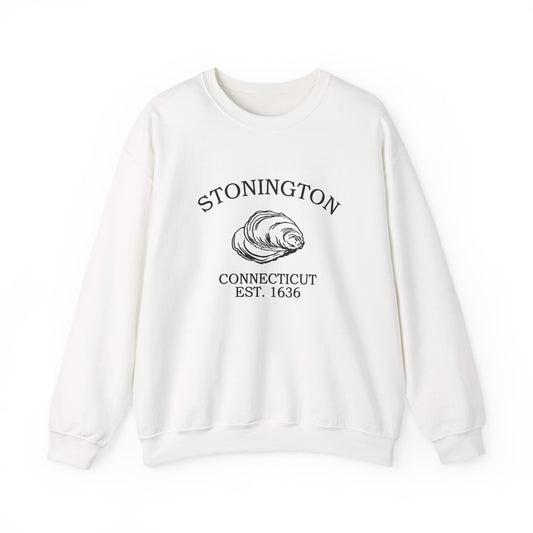
Our Stonington logo carries the borough's two signatures — the lighthouse and the cannon — the granite sentinel at the end of Water Street and the guns of 1814, printed black-and-white with the worn look of an old harbor chart. It reads as the borough in shorthand: stone, salt, and a polite refusal to be moved.

Why People Visit Stonington Connecticut

  • Tour the Old Lighthouse Museum at 7 Water Street, the 1840 granite lighthouse that since 1925 has been the oldest lighthouse museum in America, holding the original sixteen-star battle flag from 1814.
  • Visit Cannon Square, where the two surviving 18-pounder cannons that defended the borough in 1814 still point toward the harbor entrance.
  • See the Captain Nathaniel B. Palmer House at 40 Palmer Street, home of the 21-year-old sea captain who first sighted Antarctica in 1820.
  • Relax on DuBois Beach, sandy cove at the tip of the borough with views across Fishers Island Sound to Connecticut, Rhode Island, and New York.
  • Walk Water Street, tree-lined with white picket fences, antique shops, and historic sea captains' homes.
  • Watch the working fleet at Town Dock, Connecticut's last commercial fishing fleet, with views of the harbor and surrounding islands.
  • Explore the historic American Velvet Mill on Bayview Avenue, built in 1888 to attract new industry to the borough. The American Velvet Company opened there in 1892 and at its 1950s peak was the largest velvet producer in the United States, operating roughly 300 broad looms with around 450 workers. The company moved operations to Virginia late in the 20th century, and the building has since been repurposed as a maker space.
  • Come in December for the Lobster Trap Tree by the Town Dock — the borough's internationally photographed Christmas tree built entirely of stacked lobster traps.

Stonington Connecticut Merlin Classics retro vintage logo featuring lighthouse, cannon, and Battle of Stonington heritage motif