


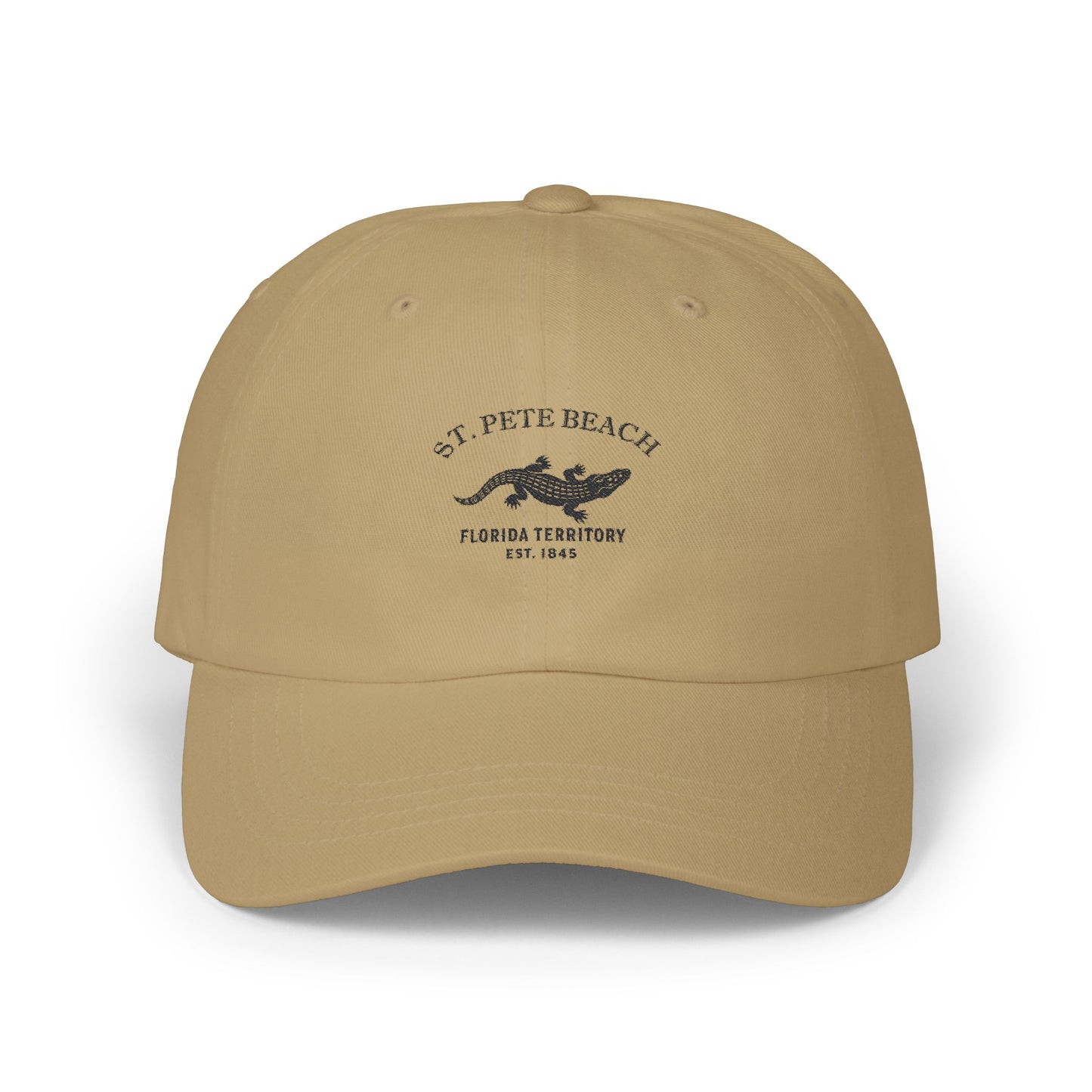

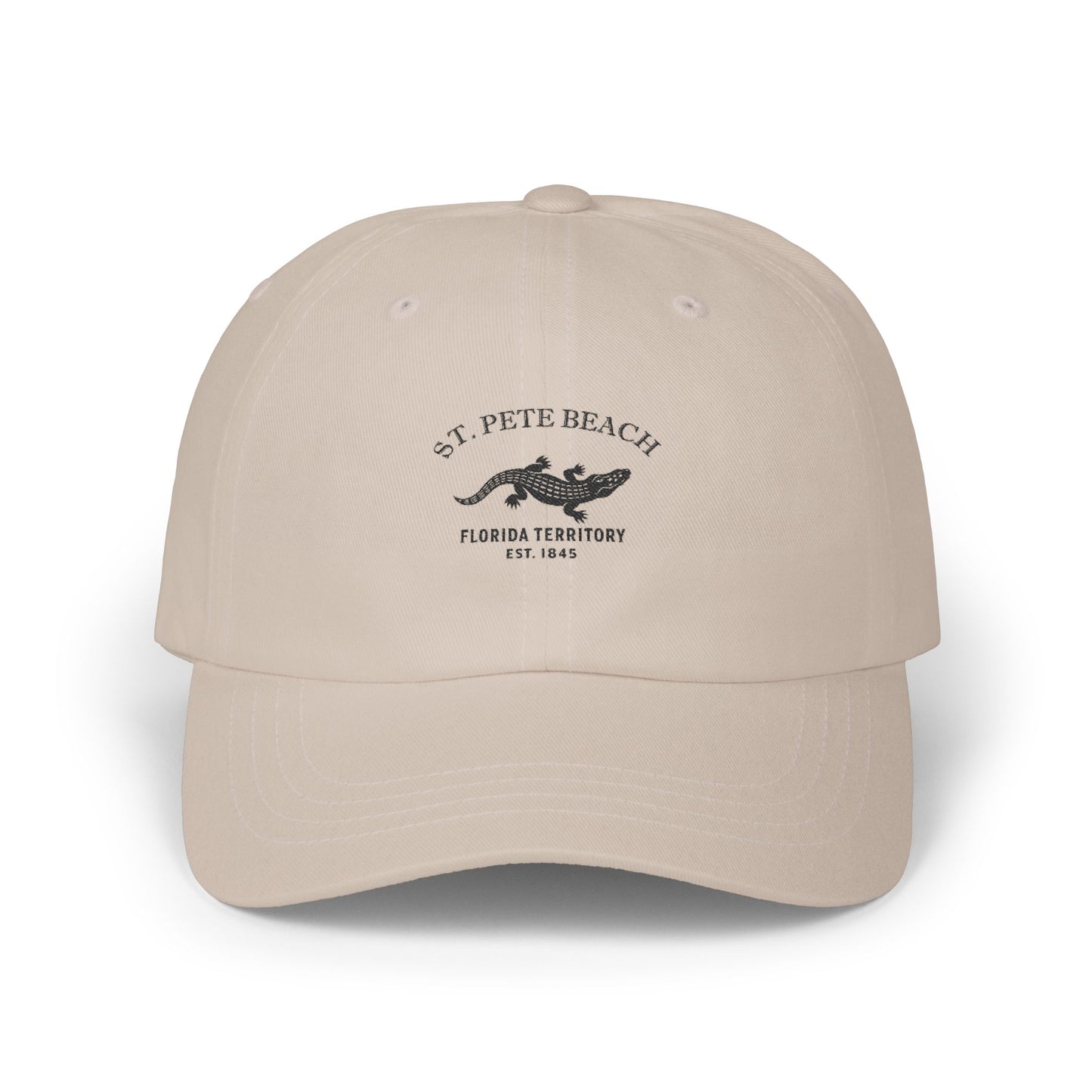

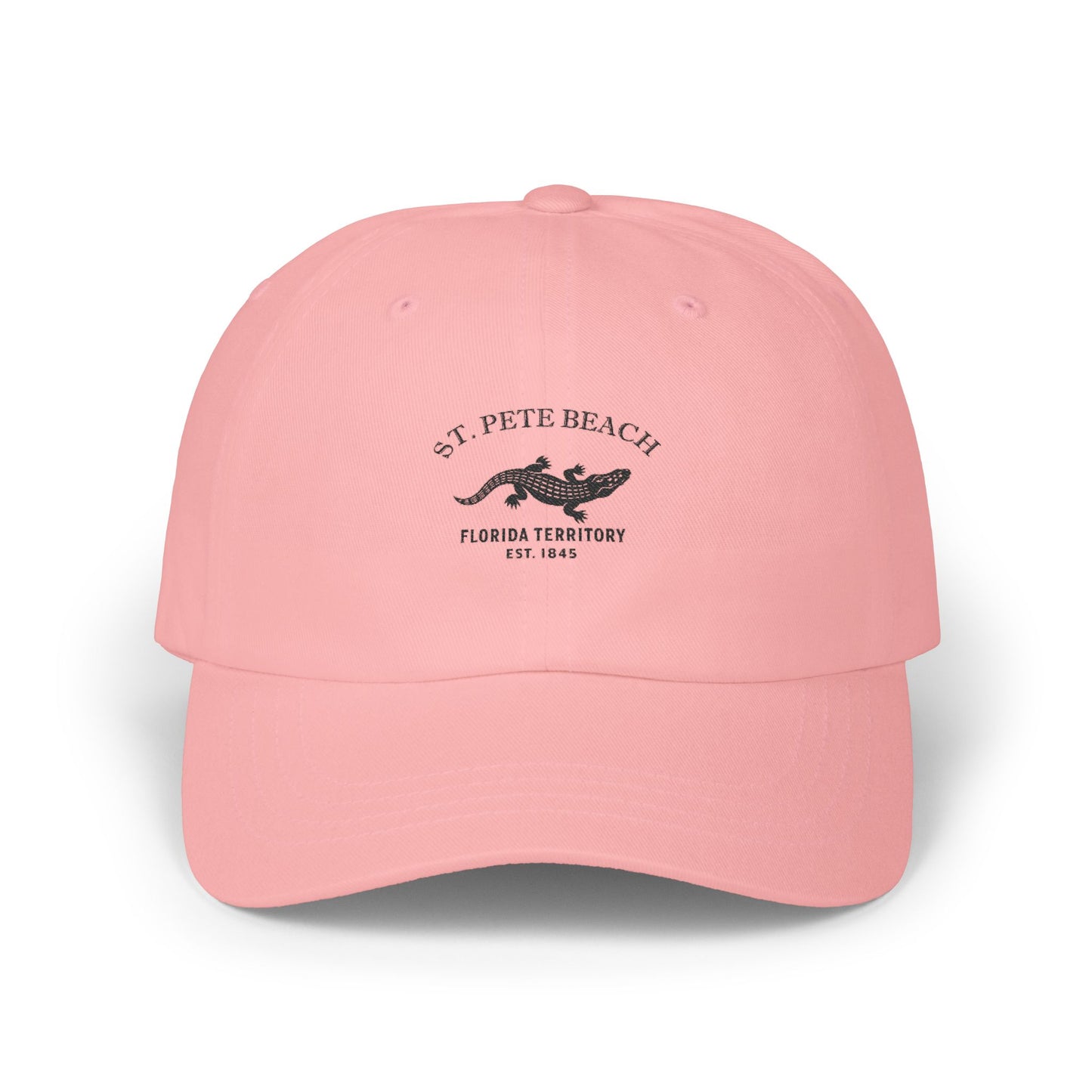

Our St. Pete Beach retro logo uses a Florida alligator motif, symbolizing resilience, toughness, and survival. The alligator reflects Florida’s wild heritage and the persistence required to endure hurricanes. The "EST. 1845" date marks Florida statehood — Florida was admitted to the Union as the twenty-seventh state on March 3, 1845. Its black-and-white styling is retro, resembling woodcut prints and crate stamps. The motif bridges St. Pete Beach’s dual identity: resort glamour and storm-tested endurance. On merchandise, it conveys toughness, authenticity, and pride, retro in tone. The alligator emblem honors St. Pete Beach’s layered story, making it a vintage symbol of resilience. Retro in style, it reflects Florida’s cultural strength and pride.
St. Pete Beach begins at Pass-a-Grille — the oldest beach resort community on Florida's west coast, at the south end of a barrier island called Long Key, where the Gulf of Mexico runs white and flat for seven miles. Spanish charts marked a fishing camp here as Rancho de Juaquin in 1783, and the name Pass-a-Grille itself comes from the French Passe aux Grilleurs, the passage of the fishermen who pulled their boats up on the sand and grilled the day's catch right there. In 1886 a Union Army veteran named Zephaniah Phillips homesteaded the key with his family, the first to stay, and others followed — a ferry, a first hotel by the turn of the century, then bridges to the mainland. In January 1928 the eight-story Don CeSar rose on Long Key, a rose-pink Mediterranean-Revival tower its builder named for a chivalrous character in an old opera; locals called it the Pink Palace, and its color is still protected by law as a navigational landmark for mariners, visible for miles across the Gulf. Four separate beach towns shared this island — Pass-a-Grille Beach, Don Ce-Sar Place, Belle Vista Beach, and St. Petersburg Beach — and on July 9, 1957 they voted to merge into one city, St. Petersburg Beach, which trimmed its name to St. Pete Beach in 1994. The old streets endure: the Pass-a-Grille Historic District, listed on the National Register in 1989, holds one of the largest concentrations of historic buildings on the Gulf Coast, and its 8th Avenue was once dubbed "America's shortest main street" by Ripley's Believe It or Not. Low Old-Florida cottages, no high-rises in the historic blocks, the Gulf on one side and Boca Ciega Bay on the other barely two hundred yards apart — this is a sugar-sand barrier island that has been welcoming beachgoers longer than anywhere else on the coast, where the day ends in pink light over the water and the Pink Palace glows the same color as the sky.
Why People Visit St Pete Beach Florida
- Relax on Pass-a-Grille Beach — wide shoreline with dunes, the longest stretch of undeveloped public beach in Pinellas County, and quiet neighborhood streets.
- Wander the Pass-a-Grille Historic District — Old-Florida cottages and the 8th Avenue shops and galleries once called "America's shortest main street."
- Visit the Gulf Beaches Historical Museum — local history in the first church built on the Pinellas barrier islands.
- Explore Fort De Soto Park on nearby Mullet Key — beaches, trails, and historic seacoast batteries.
- Take in the rose-pink "Pink Palace" landmark on the point — the 1928 Gulf-coast icon visible for miles.
- Catch the sunset along Gulf Boulevard and the public beach accesses — the long pink hour over the water toward Egmont Key and the Sunshine Skyway.
