


Coast Miwok, Southern Pomo, and Wappo people had lived in the Sonoma Valley — Jack London's "Valley of the Moon" — for thousands of years before any of this. Father José Altimira raised Mission San Francisco Solano on the north edge of what would become the plaza on July 4, 1823 — the twenty-first, last, and northernmost of the California missions, and the only one founded under Mexican rather than Spanish rule. The mission was secularized in 1834. General Mariano Guadalupe Vallejo arrived from Monterey the following year and in 1835 laid out the Mexican pueblo of Sonoma around its eight-acre plaza, building barracks on the north side and his own home, Lachryma Montis, just west of town. Twelve years later, the Bear Flag Party rode in. After the United States took California in 1848 and statehood followed on September 9, 1850, Sonoma settled into its second chapter — agriculture, wine, and the railroad. Agoston Haraszthy founded Buena Vista Winery just east of town in 1857, planting European Vitis vinifera and earning the title father of California viticulture. The city formally incorporated in 1883.
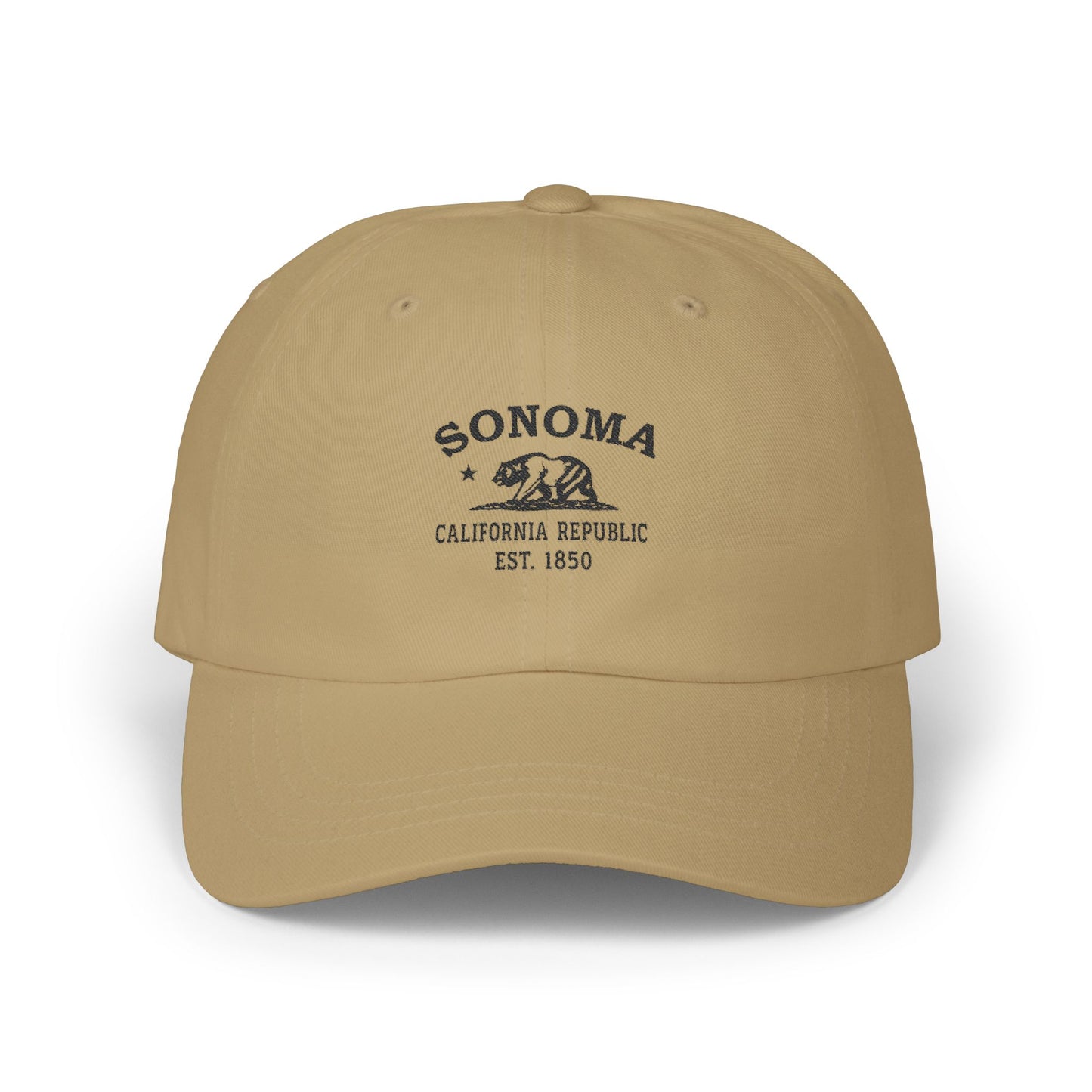
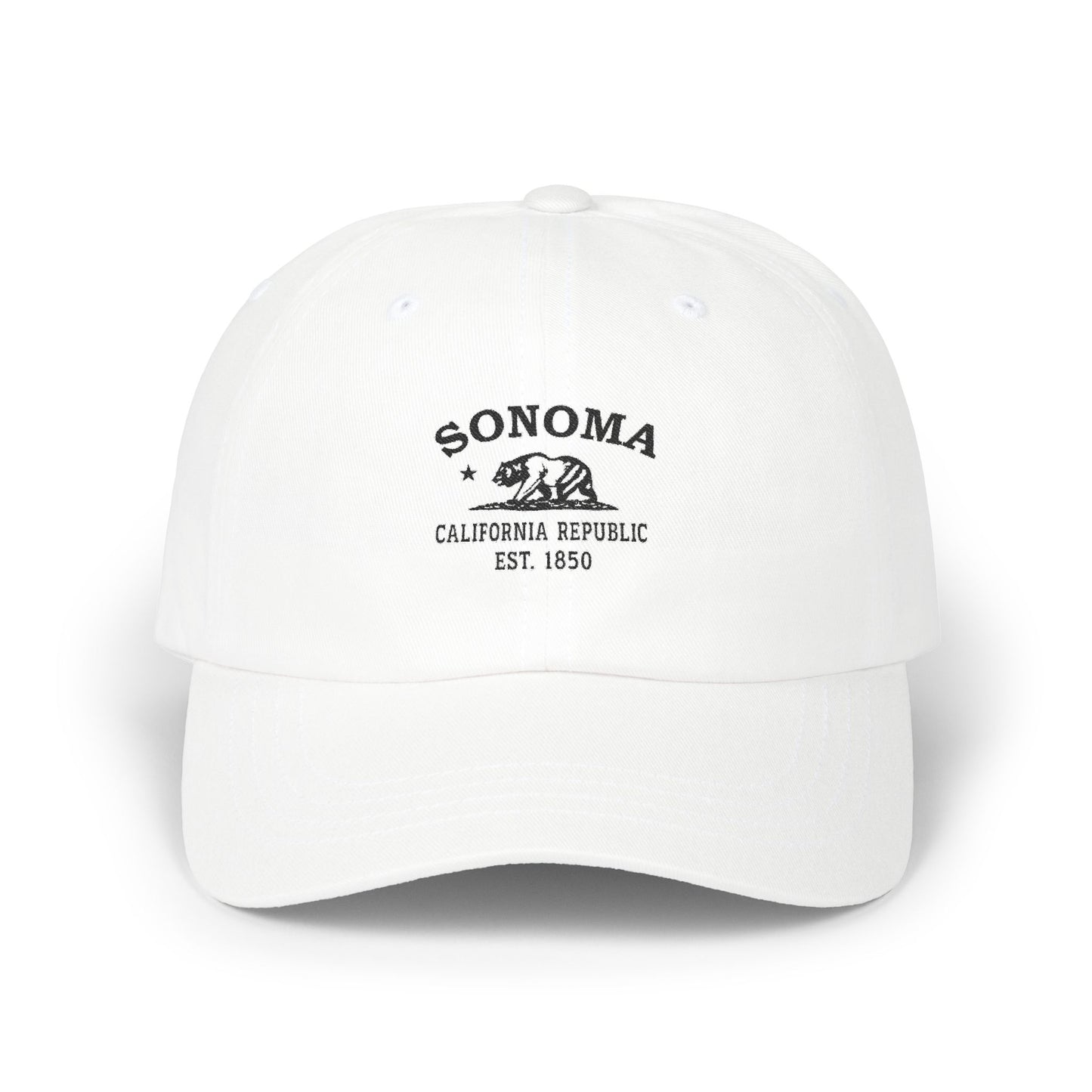
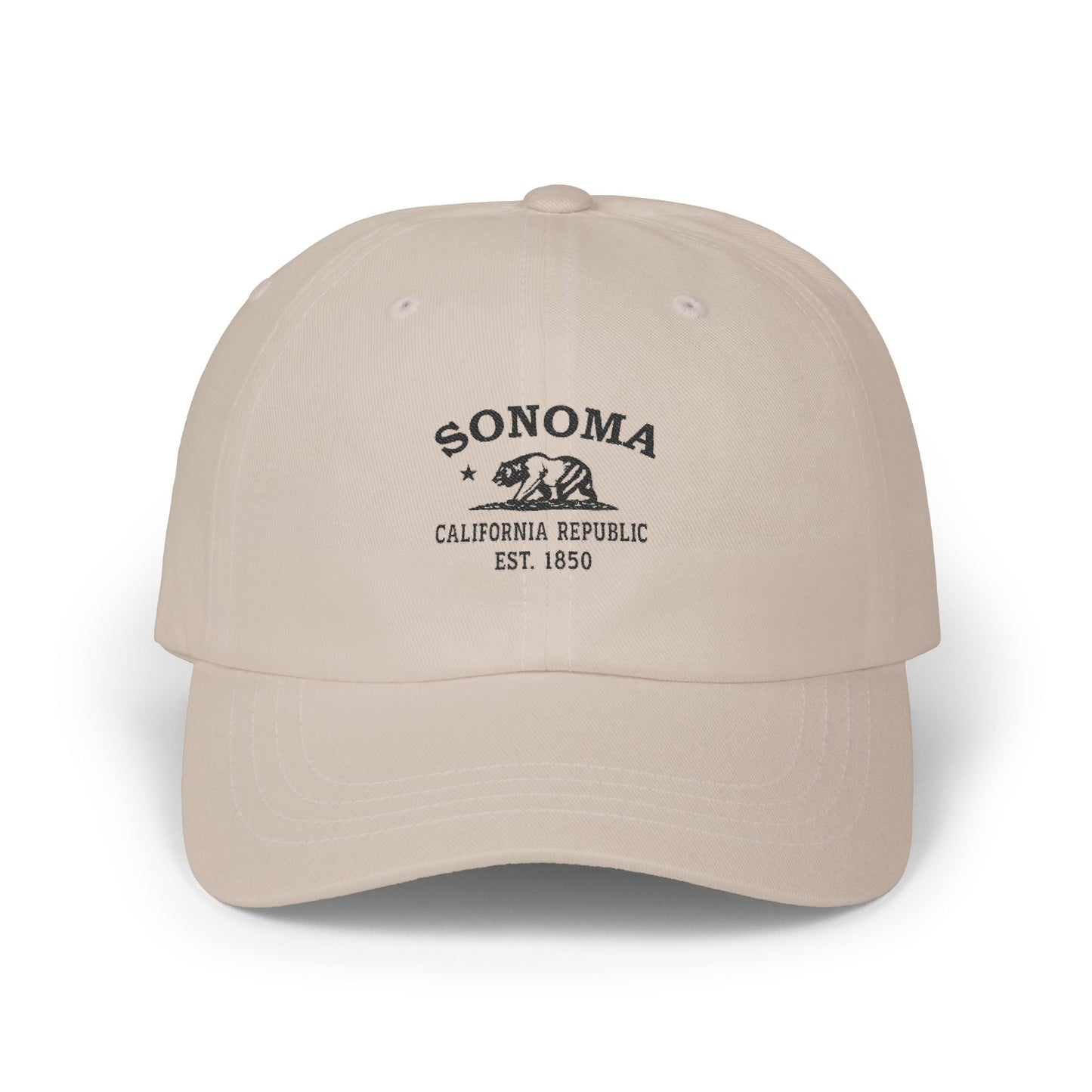
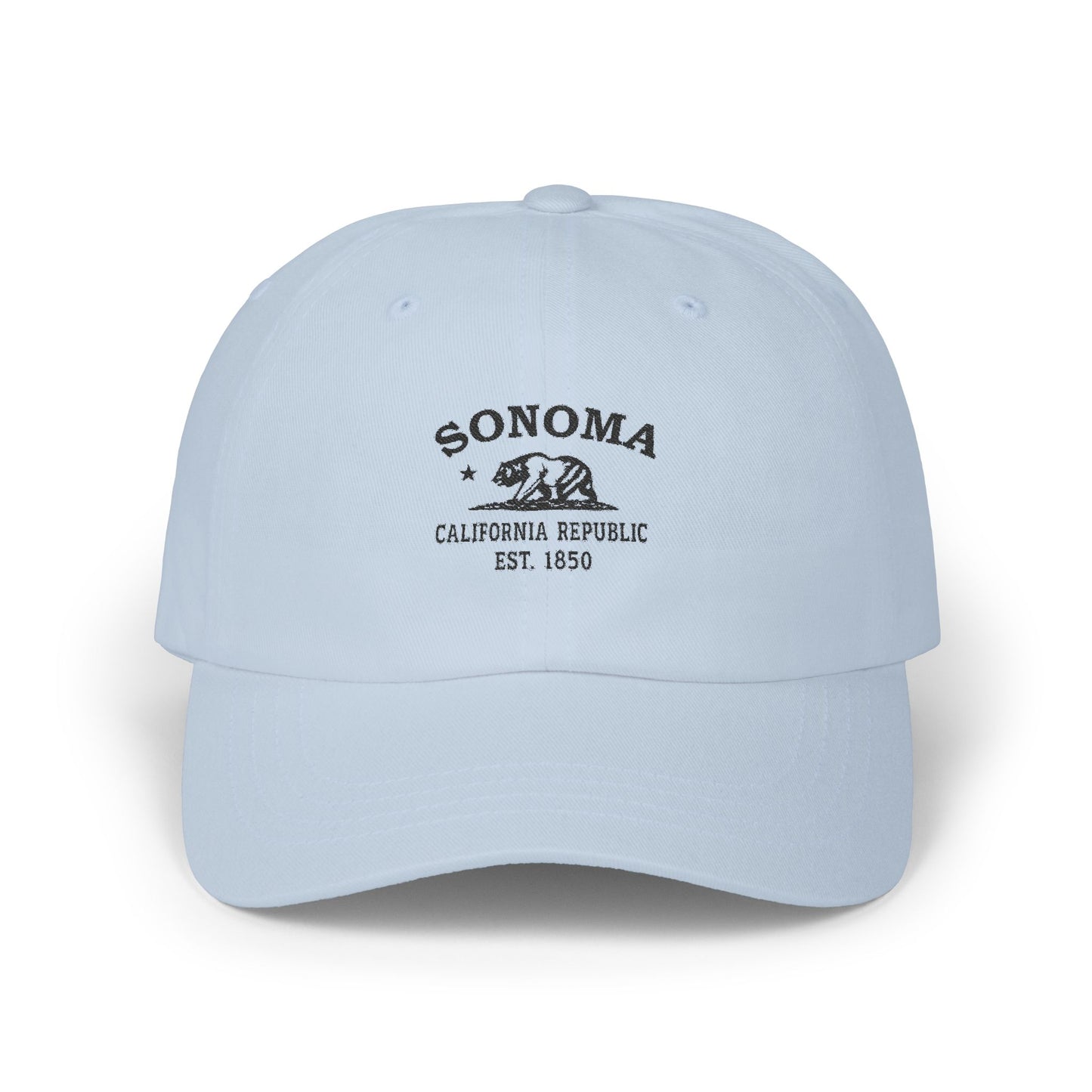
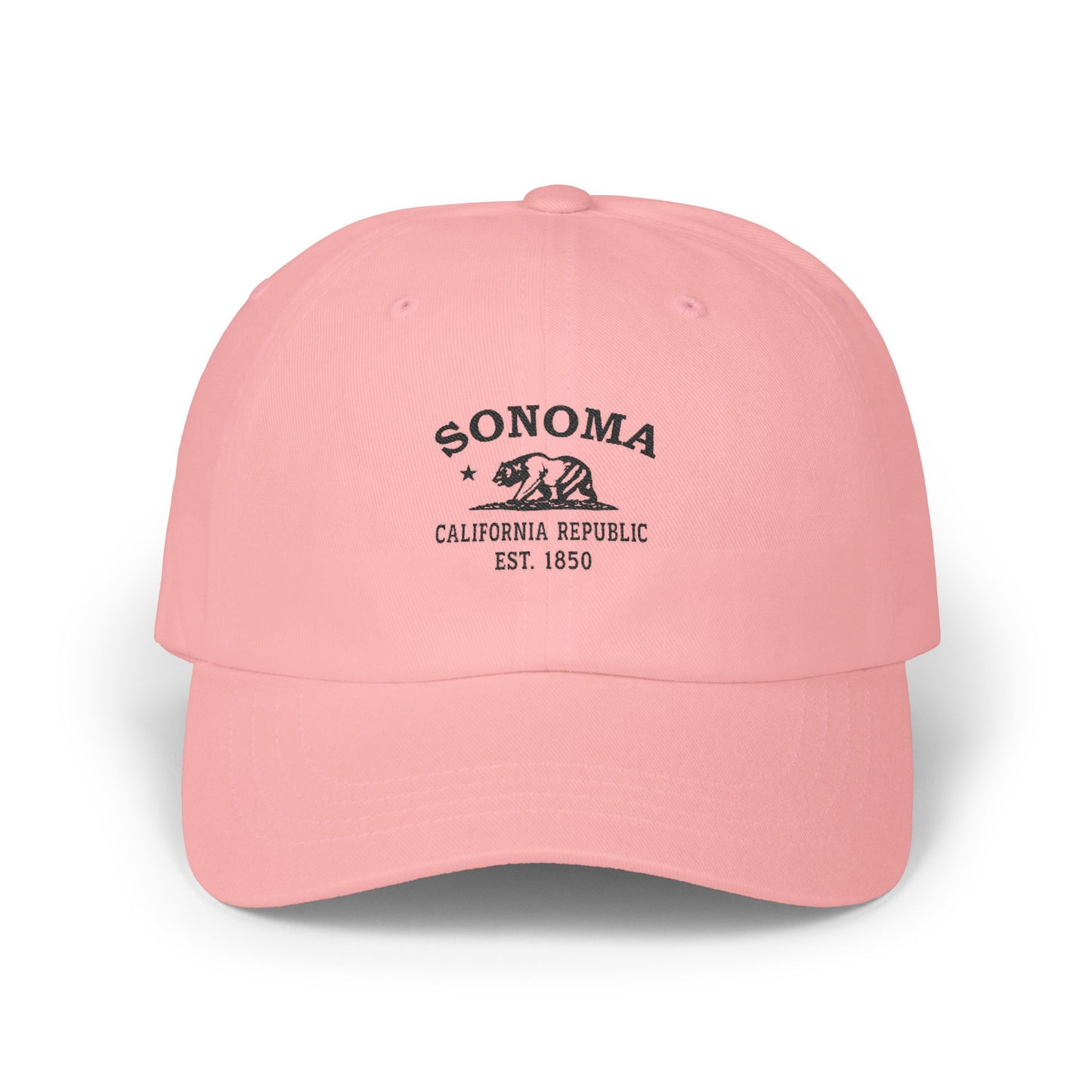
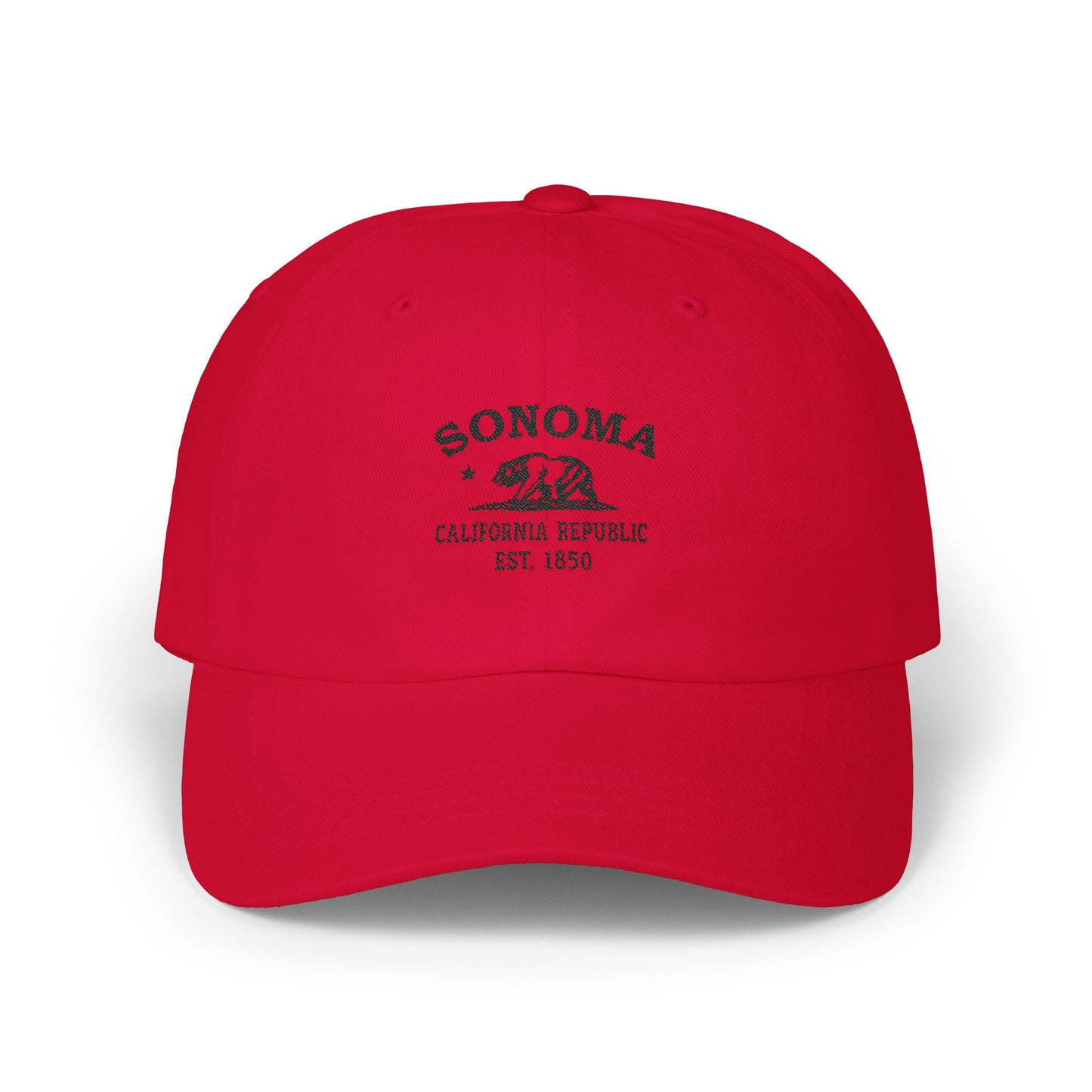
Our Sonoma retro logo carries the California Republic bear and star — the same bear and star Todd hand-painted on the Plaza in 1846, the same pair that became the state flag in 1911. The "Est. 1850" beneath them marks California statehood, the year the Republic settled finally into the United States. Rendered in black-and-white with a hand-printed, distressed feel, the design reads less like a souvenir and more like a piece of California's actual paperwork — the original flag, the original star, the original year. On a tee or a cap it carries the simplest possible statement: California started here.
Why People Visit Sonoma California
- Walk Sonoma Plaza — eight acres, the largest town plaza in California, ringed by adobes, with the Mission Revival City Hall in the center and the Bear Flag Monument on the northeast lawn.
- Tour Mission San Francisco Solano on the Plaza's northeast corner — the 21st, last, and northernmost of the California missions and the only one founded under Mexican rule, established by Father José Altimira on July 4, 1823.
- Visit the Sonoma Barracks beside the Mission — the 1830s Mexican army barracks where General Vallejo's troops were stationed and where the Bear Flag was painted in 1846, now part of Sonoma State Historic Park.
- See the Bear Flag Monument on the Plaza's northeast lawn — a bronze of a Bear Flagger raising the flag, dedicated in 1932 on the spot where the original flag was raised on June 14, 1846.
- Tour Lachryma Montis, General Vallejo's Carpenter-Gothic home a short walk west of the Plaza, preserved as part of Sonoma State Historic Park.
- Visit Buena Vista Winery just east of town — founded in 1857 by Agoston Haraszthy, the father of California viticulture, and the birthplace of California's premium wine industry.
- Drive the Sonoma Valley AVA — the Valley of the Moon — north toward Glen Ellen and Kenwood, with vineyards producing Cabernet, Chardonnay, Pinot Noir, and Zinfandel, oak hills, and the Mayacamas Mountains forming the eastern wall.
- Detour to Jack London State Historic Park in Glen Ellen — the Beauty Ranch where London wrote The Valley of the Moon, a regional Sonoma Valley site about twenty minutes north.
- Drive west to the Sonoma Coast — about forty miles to Bodega Bay and the long Pacific shoreline of Sonoma Coast State Park.
- Return June 14 for Bear Flag Day, when the Plaza fills for the annual re-enactment of the 1846 raising.
