

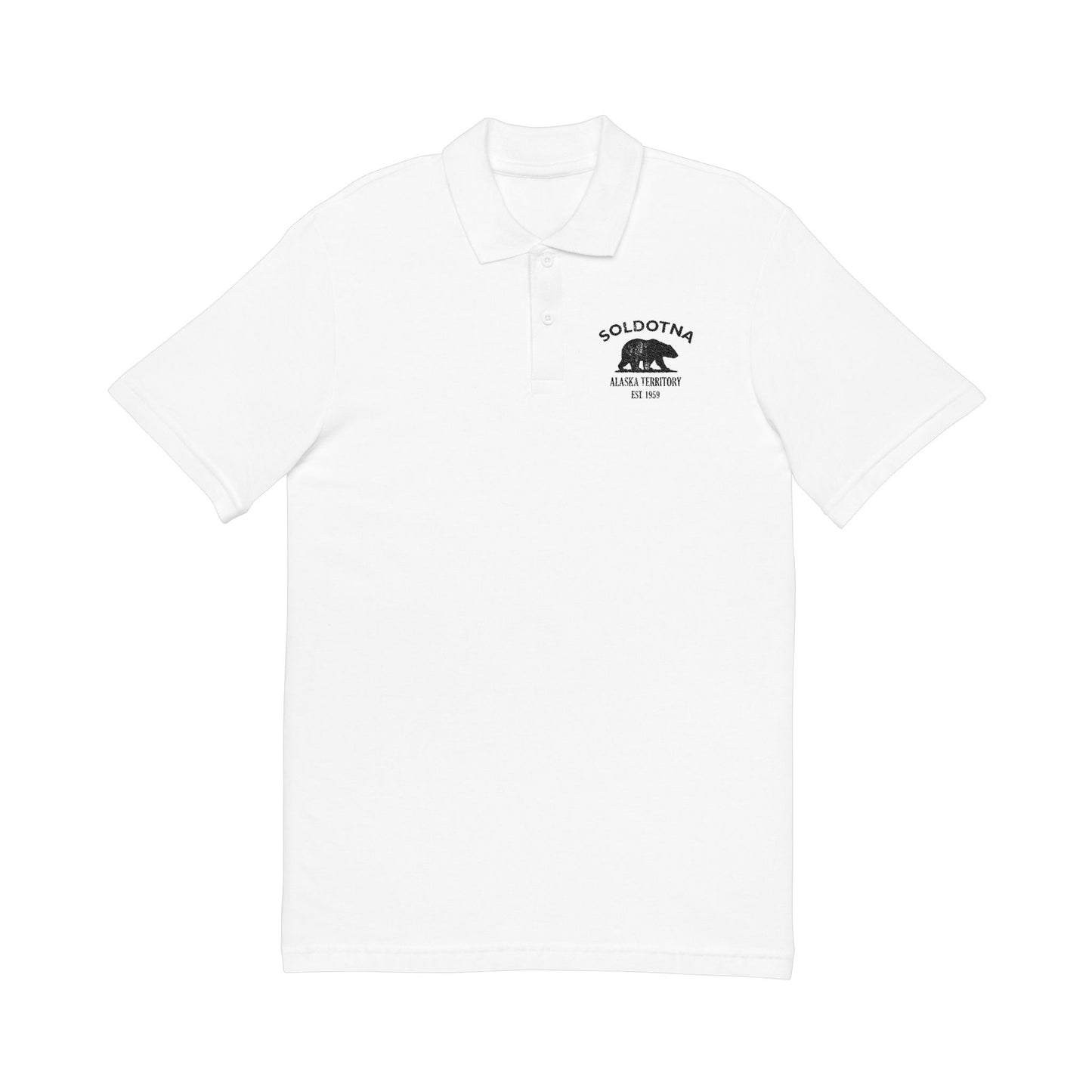

In the mid-twentieth century, Soldotna grew as settlers expanded farms and fishing communities. The Sterling Highway connected it to Anchorage in 1950, boosting growth. By the 1950s and 1960s, suburban neighborhoods, schools, and businesses supported expansion. Its timeline reflects adaptability: frontier town evolving into modern community. Soldotna’s mid-century decades highlighted optimism, resilience, and cultural pride. The town’s growth emphasized resilience, showing Alaska’s ability to adapt to harsh winters while celebrating subsistence traditions. Its story demonstrates continuity, pride, and adaptability, blending frontier grit with modern suburban optimism across Alaska’s layered cultural and frontier heritage.
Today Soldotna is known for its salmon runs, festivals, and suburban neighborhoods. Its story reflects Indigenous presence, homesteader endurance, and suburban optimism. Our Soldotna designs capture this layered identity, pairing the bear motif with vintage styling. They invite you to explore the Soldotna collection and carry forward a reminder of Alaska’s resilience. Retro in tone, the logo reflects toughness, authenticity, and cultural pride. Soldotna’s emblem honors both heritage and modern growth, making it a vintage symbol of Alaska’s layered story. Explore the collection and share in Soldotna’s story of resilience, endurance, and pride.
Why People Visit Soldotna Alaska
Soldotna balances river recreation with friendly learning spaces. Visitors enjoy parks, trail systems, and boardwalk access. It is active, welcoming, and river centered. Travelers find year round appeal in parks, paths, and public spaces. The setting combines natural beauty with accessible neighborhoods and landmarks. History and everyday culture sit side by side in a welcoming way.
