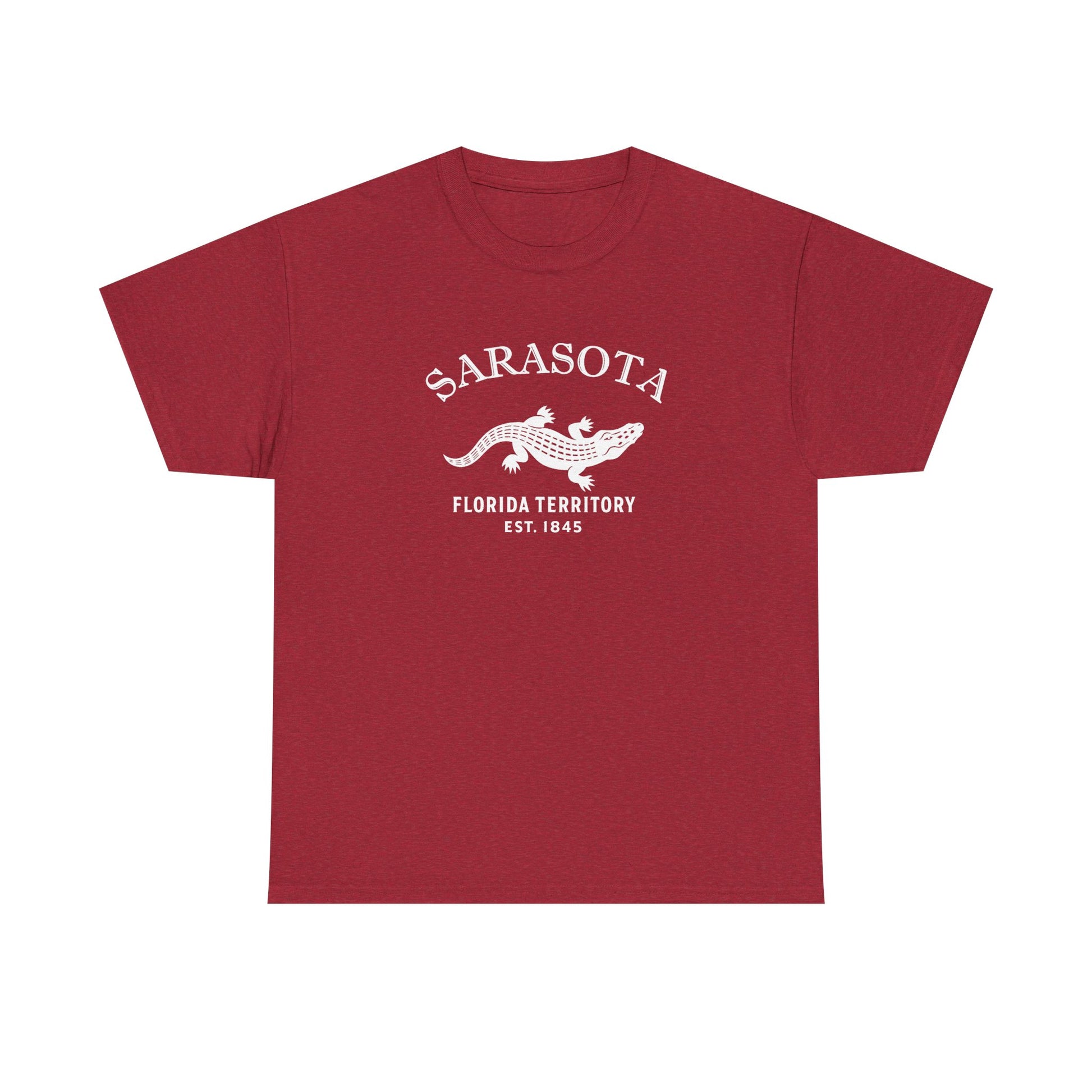
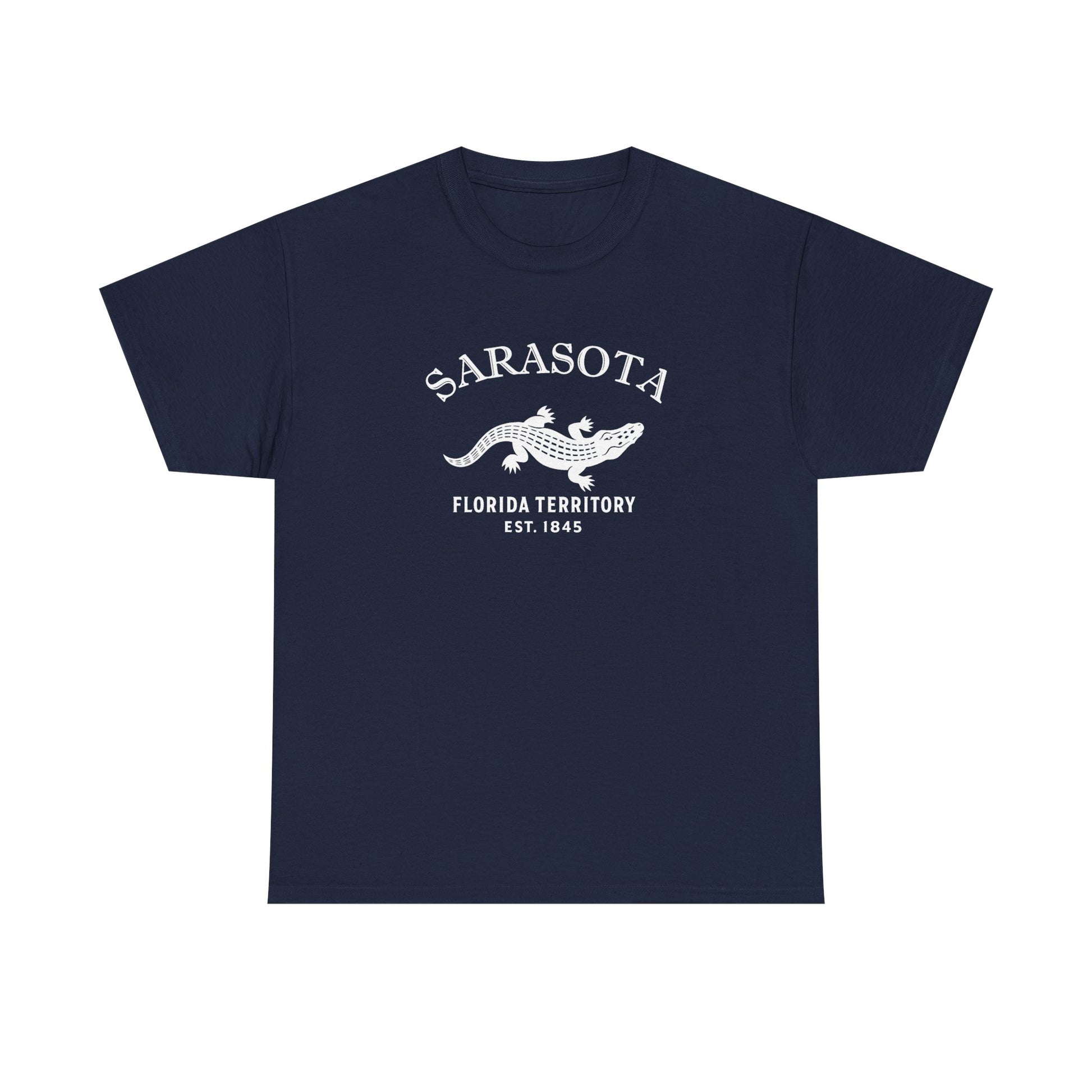
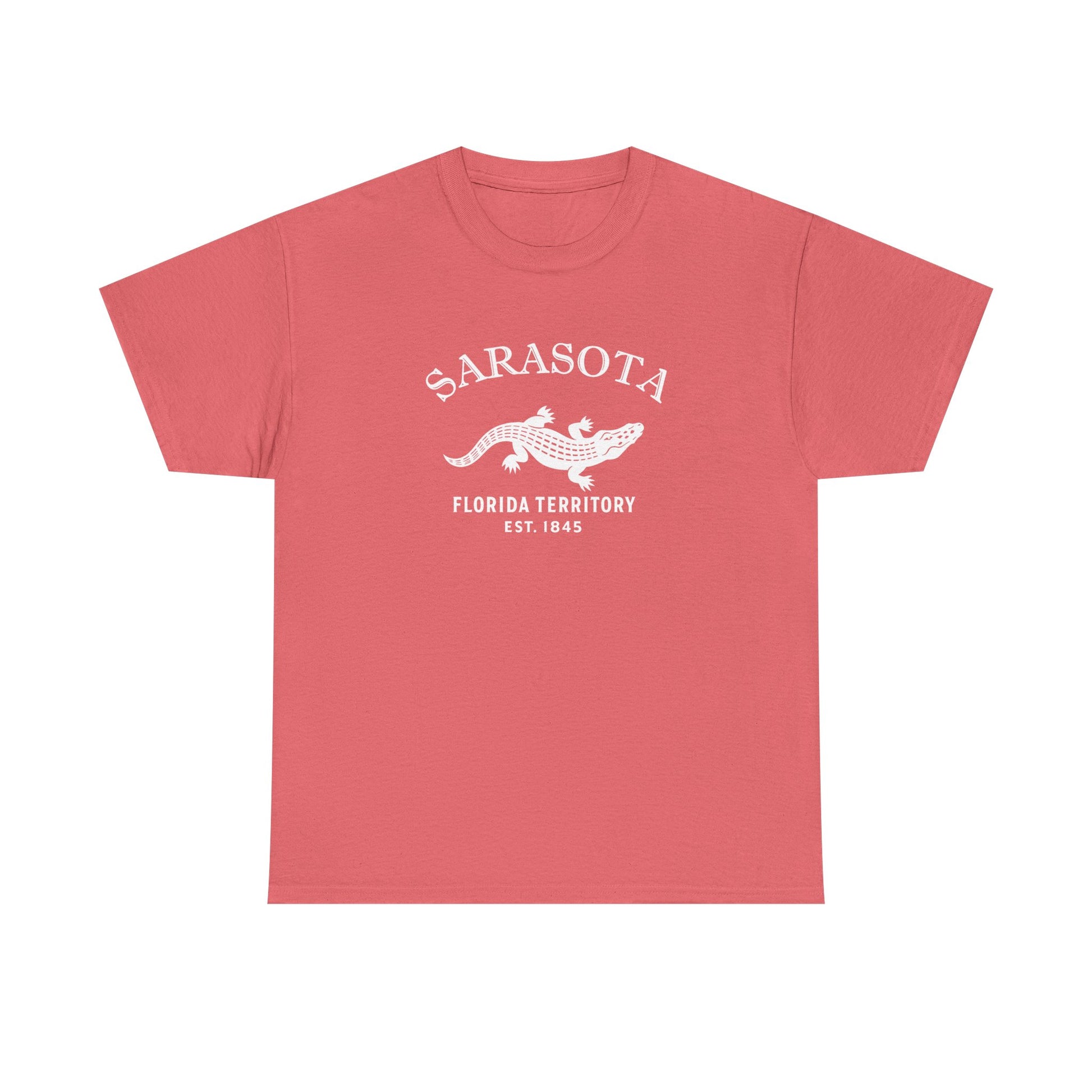
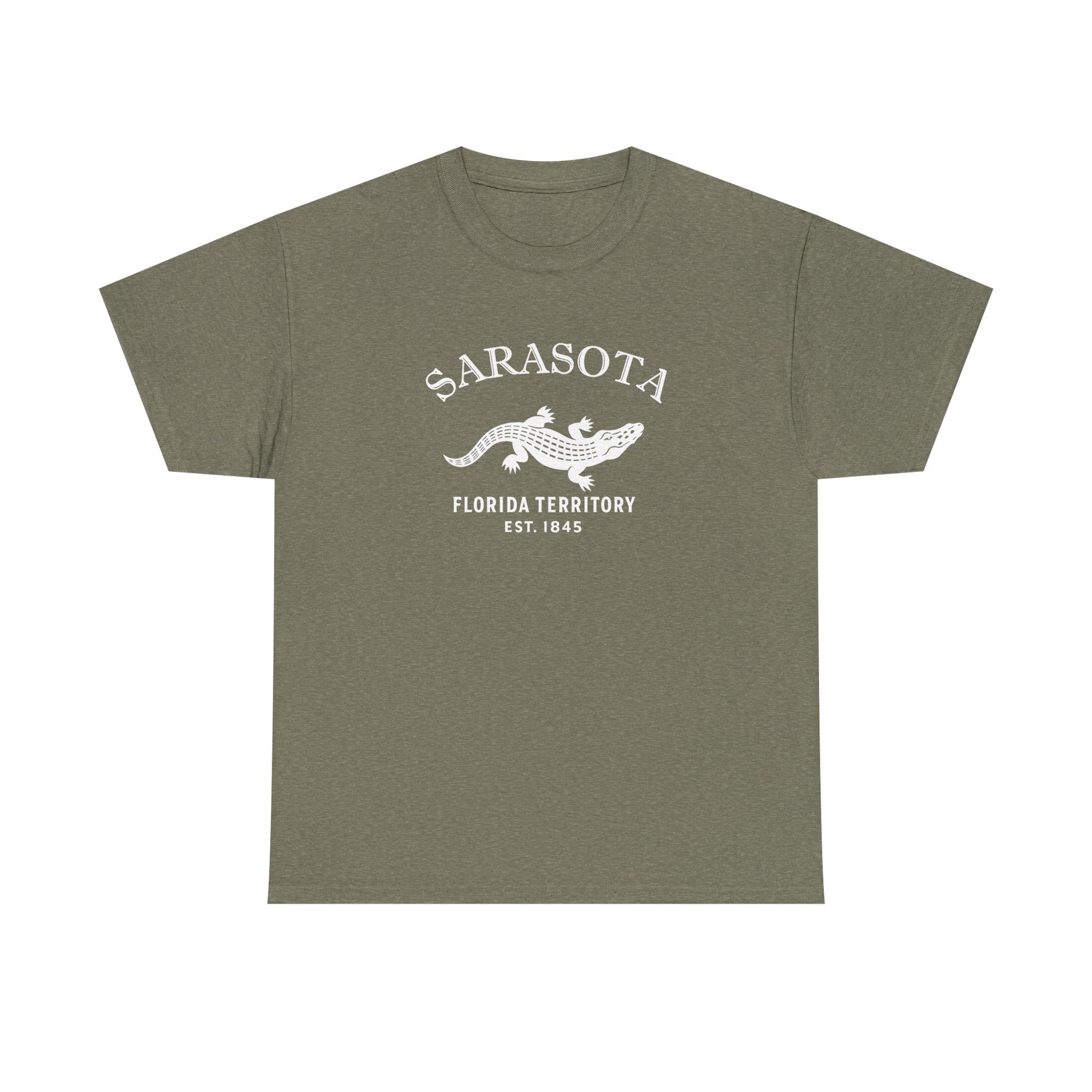
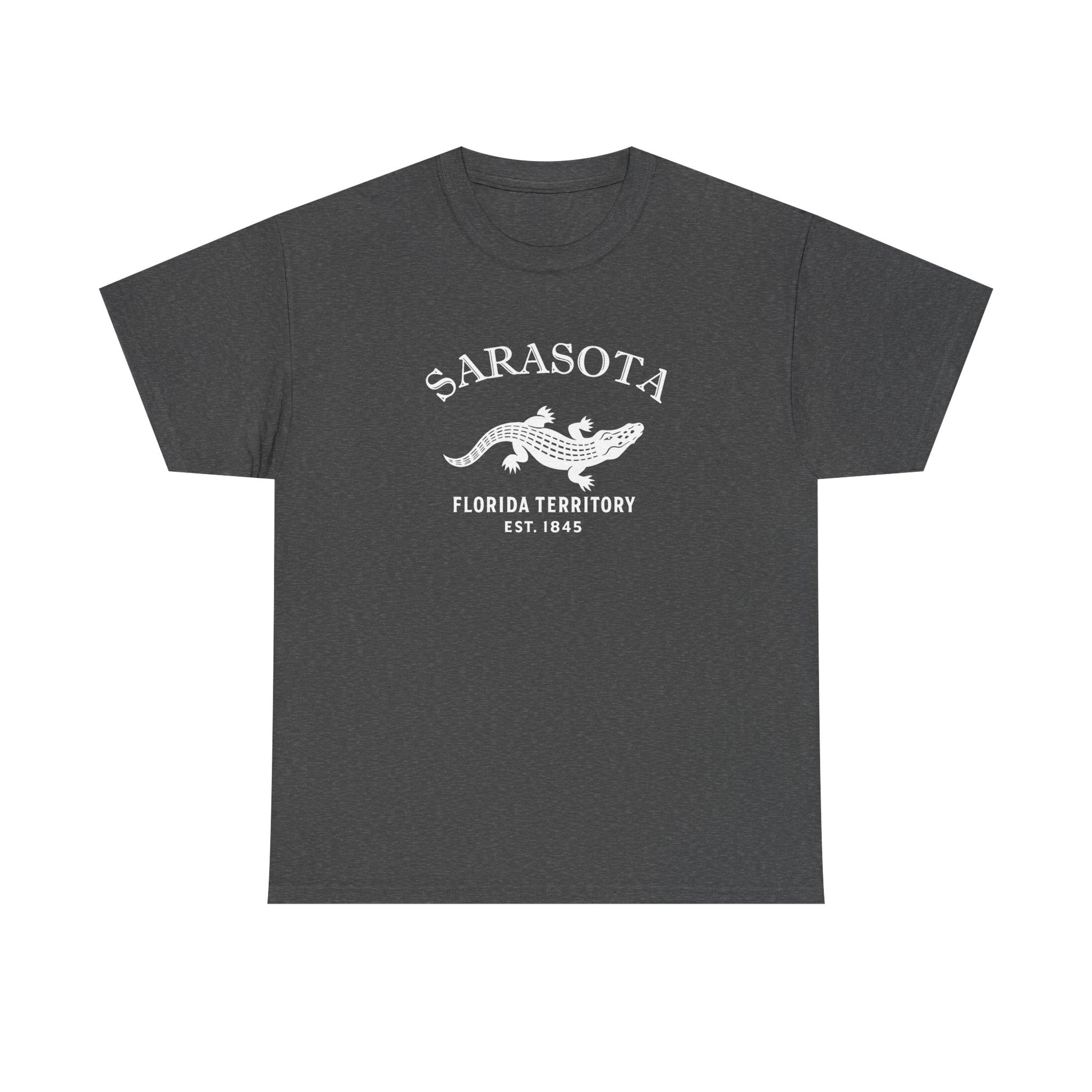
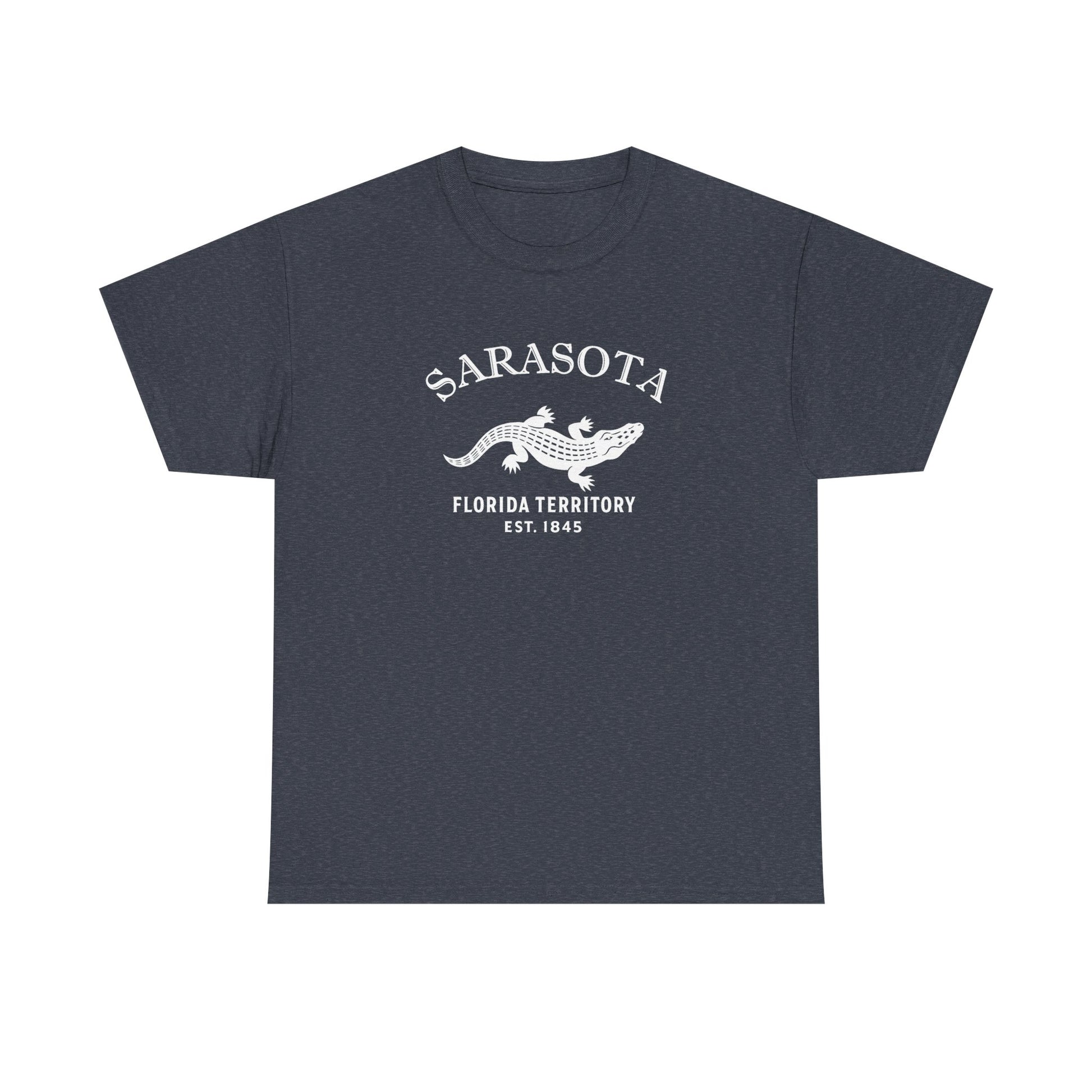
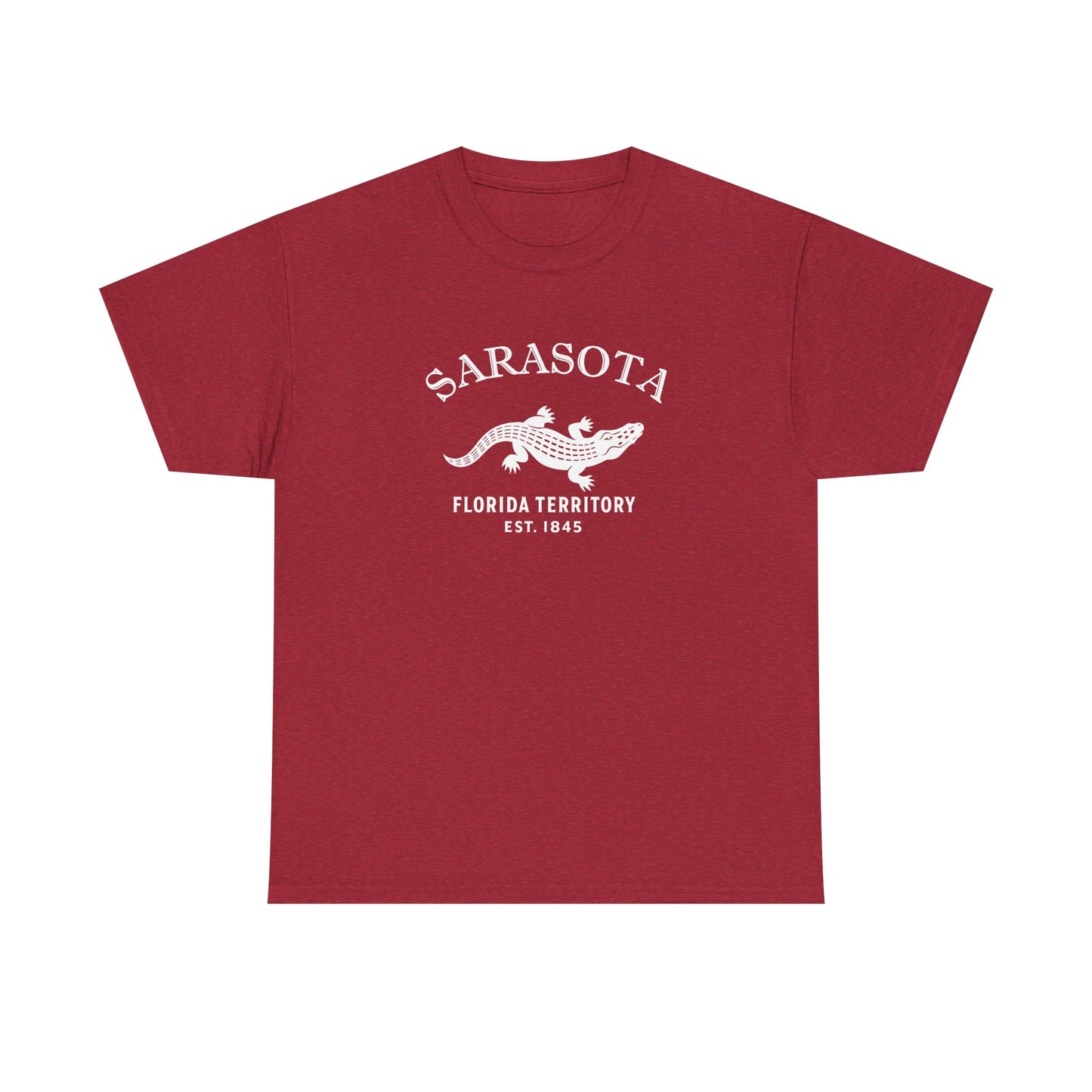
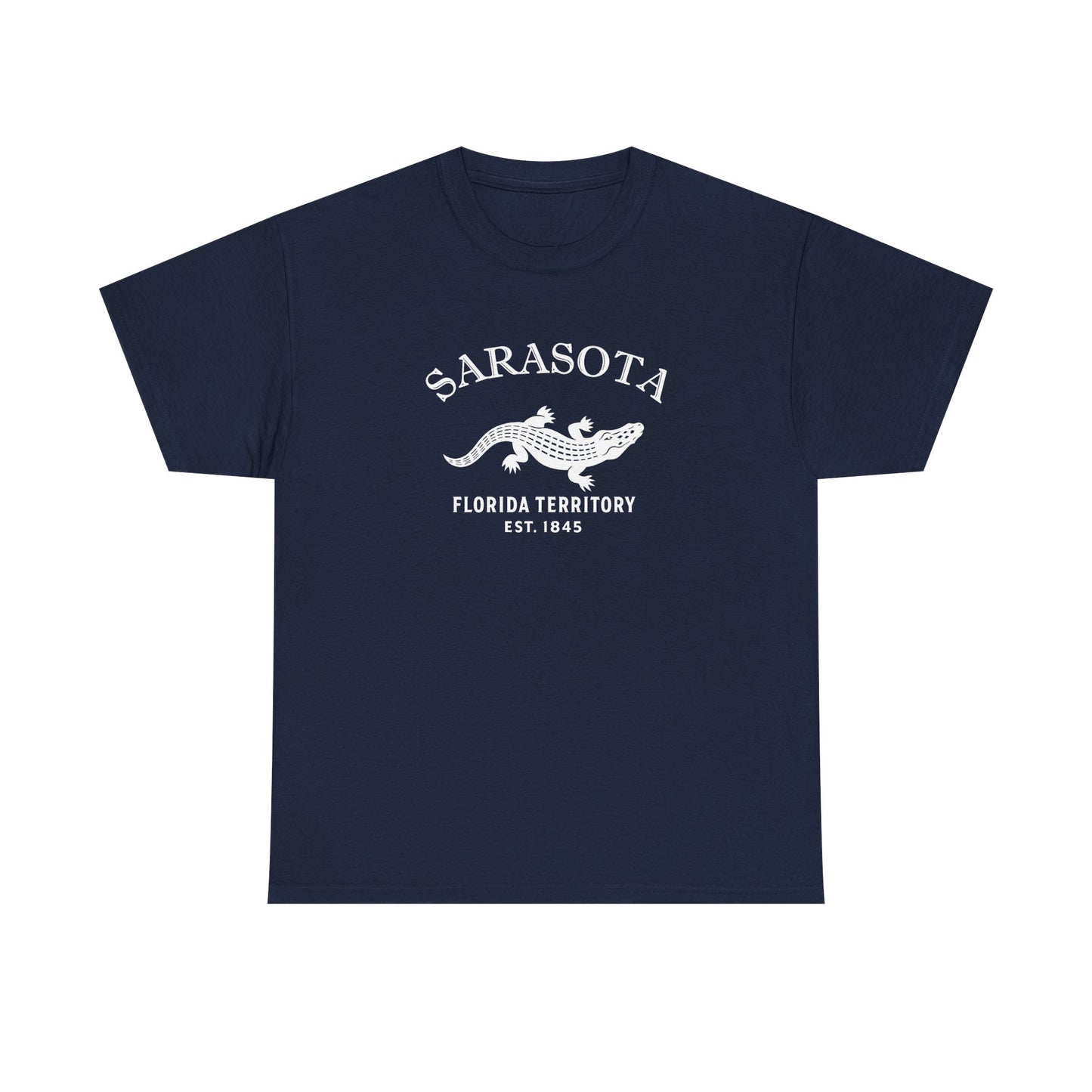
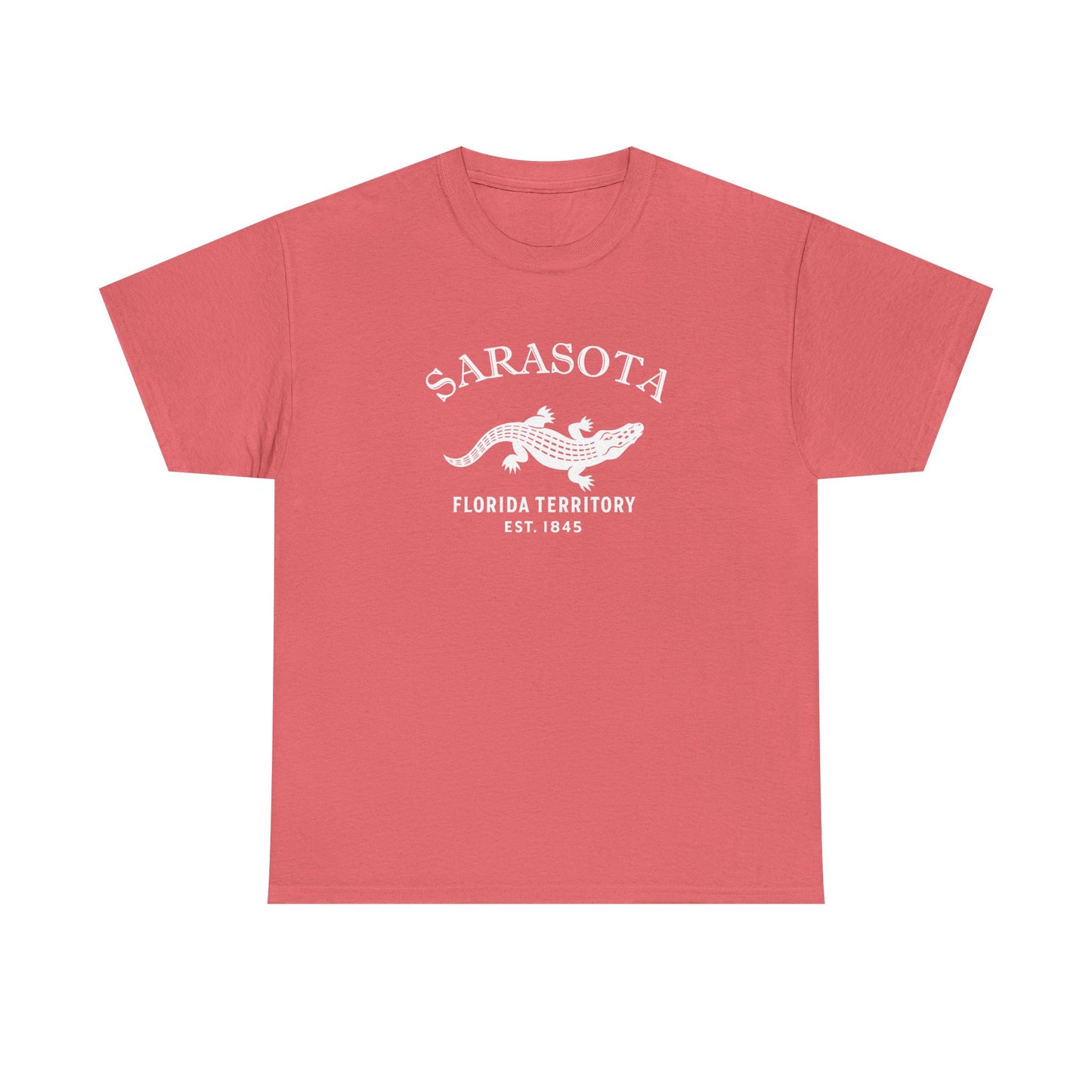
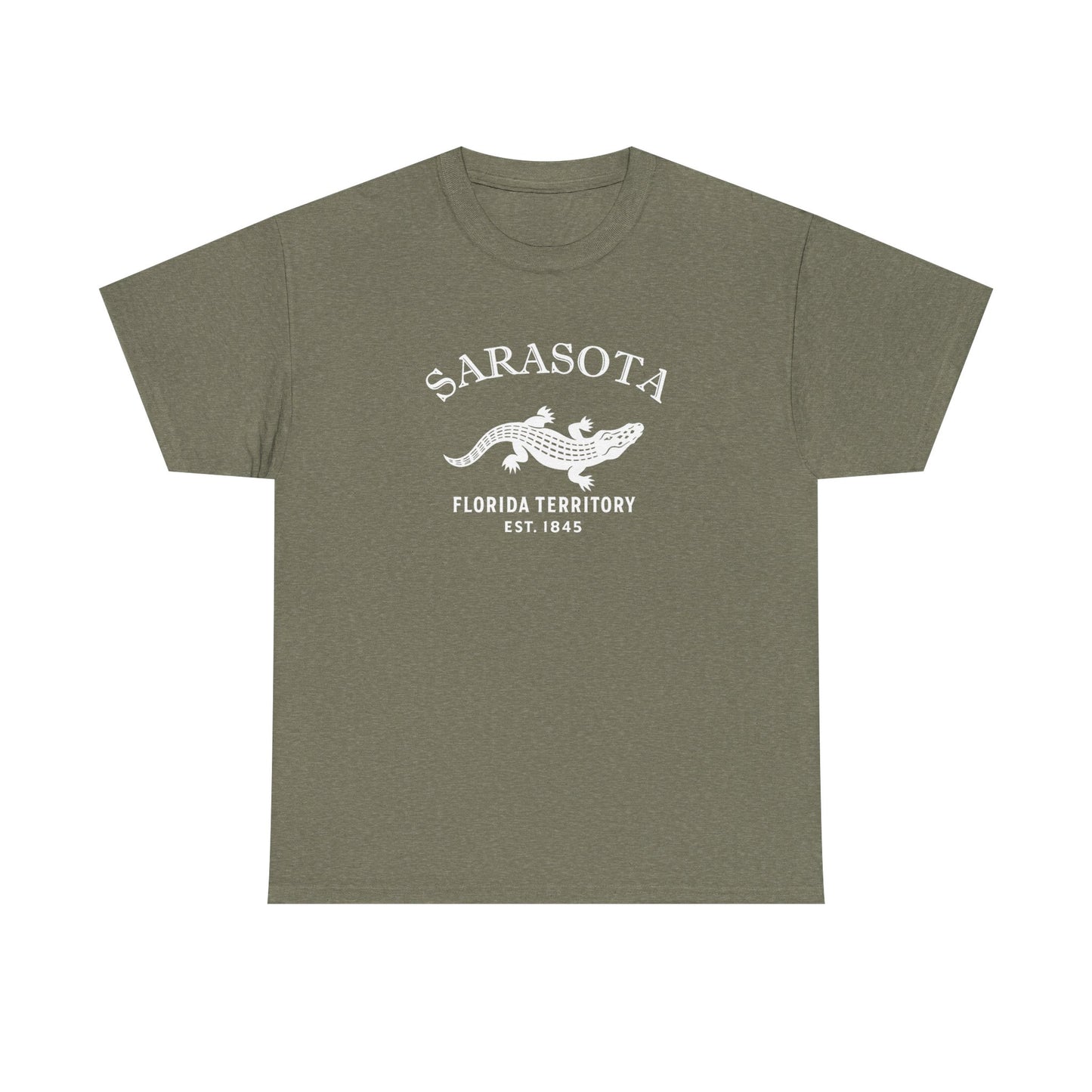
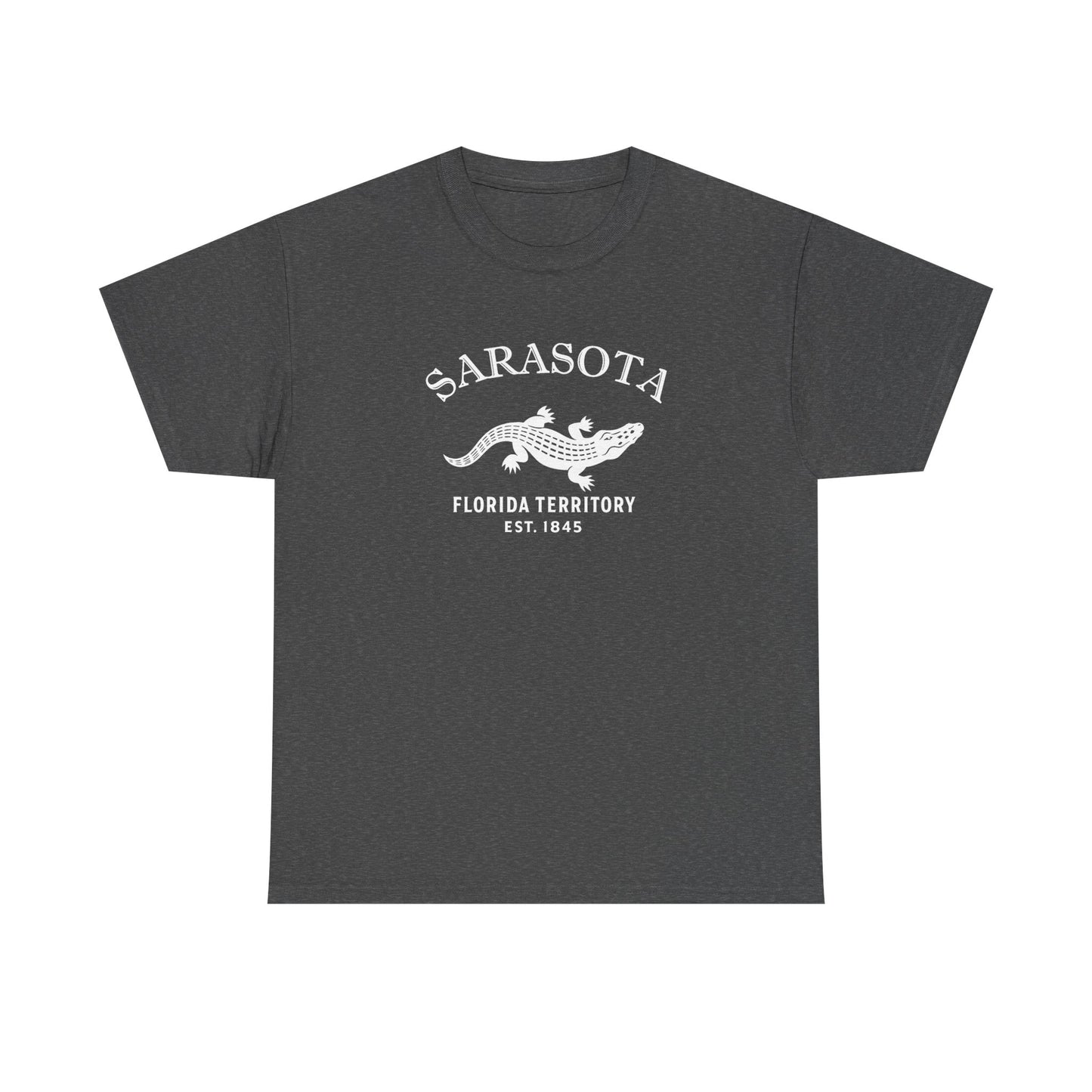
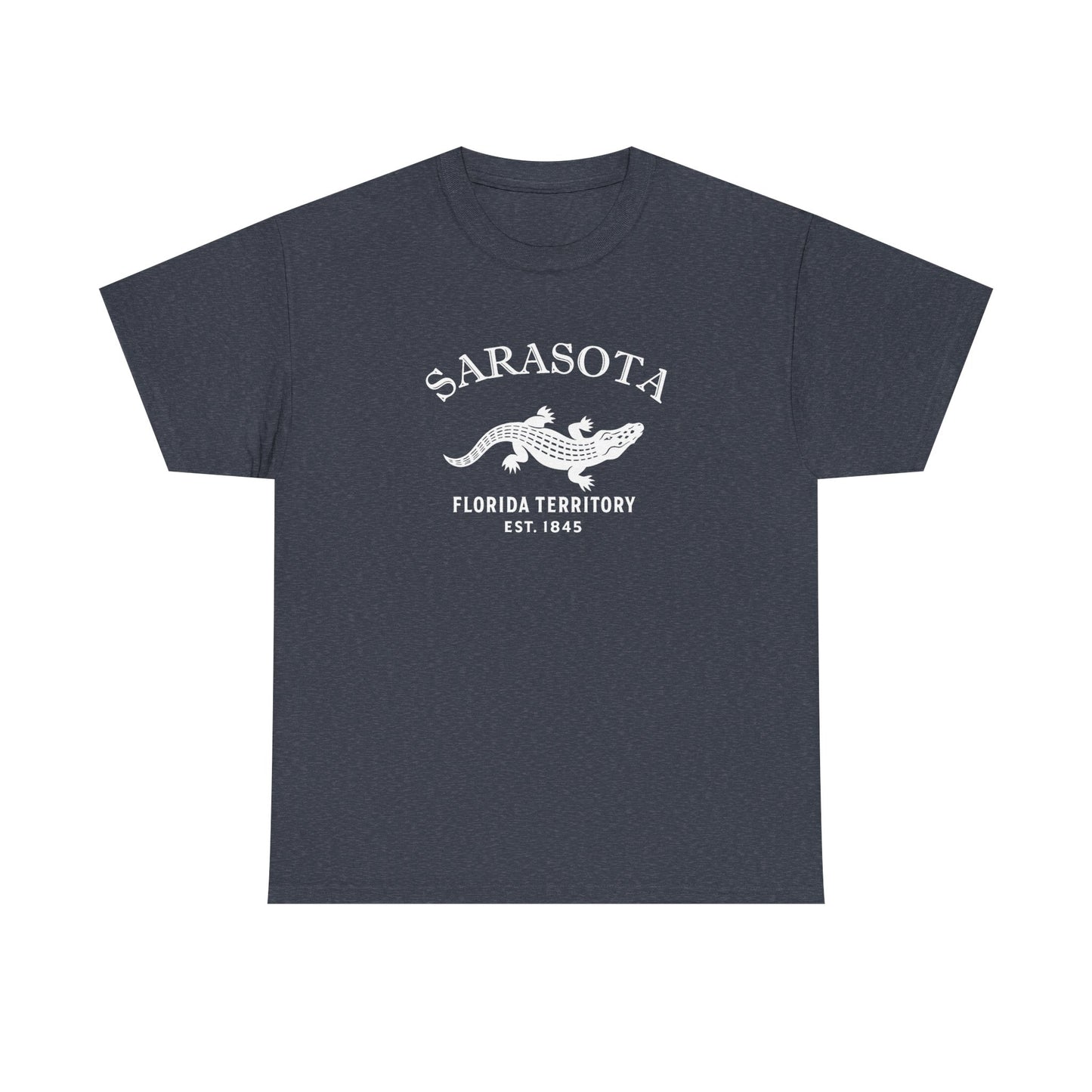
What Ringling started, the town carried on. Sarasota became Florida's arts capital — the opera, the theaters, the Van Wezel hall, Marie Selby's bayfront gardens — a remarkable cultural density for a city its size. And just across the water lay the other half of its fame: the barrier islands, where Siesta Key's sand is almost pure quartz, so fine and white it stays cool underfoot. Arts and Gulf beach, side by side, became the Sarasota signature.
Our Sarasota logo carries Florida's alligator over "1845," the year Florida joined the Union — the shared emblem of every Merlin Classics Florida place. Printed black-and-white with the worn look of an old crate label or a woodcut stamp, the gator reads as Florida in shorthand: subtropical, sun-baked, and a little wild. What makes this one Sarasota is the place behind it — the circus capital, the palace on the bay, the museum, and the white sand of the keys.
Why People Visit Sarasota Florida
- Tour The Ringling — Ca' d'Zan, the Museum of Art (the State Art Museum of Florida), and the bayfront grounds.
- Wander Marie Selby Botanical Gardens, with orchids, banyans, and bayfront walkways.
- Spend an afternoon on Siesta Key, whose fine white quartz sand is regularly ranked among the country's best.
- Browse St. Armands Circle, the 1920s Mediterranean shopping district near Lido Key.
- Catch a performance at the Van Wezel Performing Arts Hall on the bayfront.
