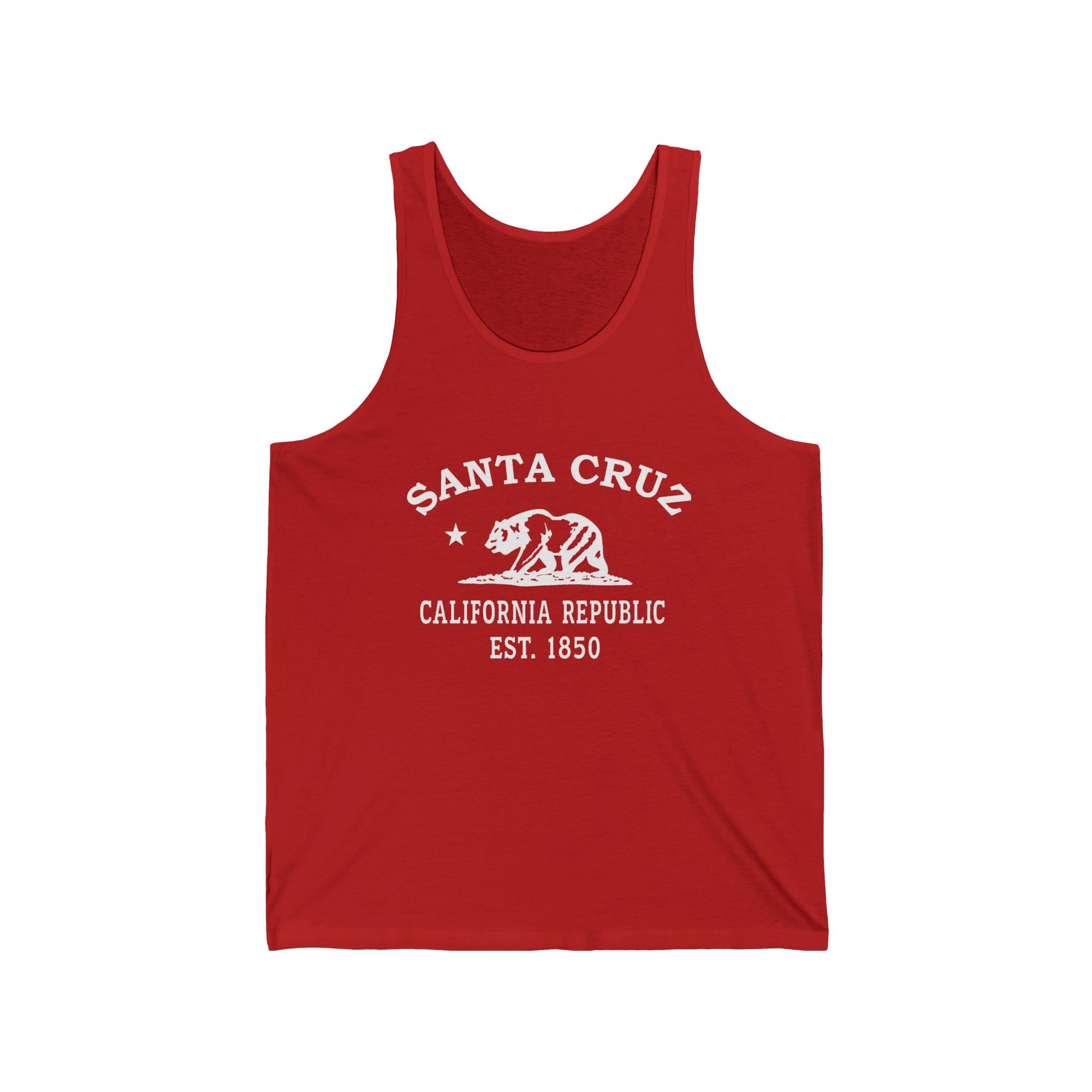
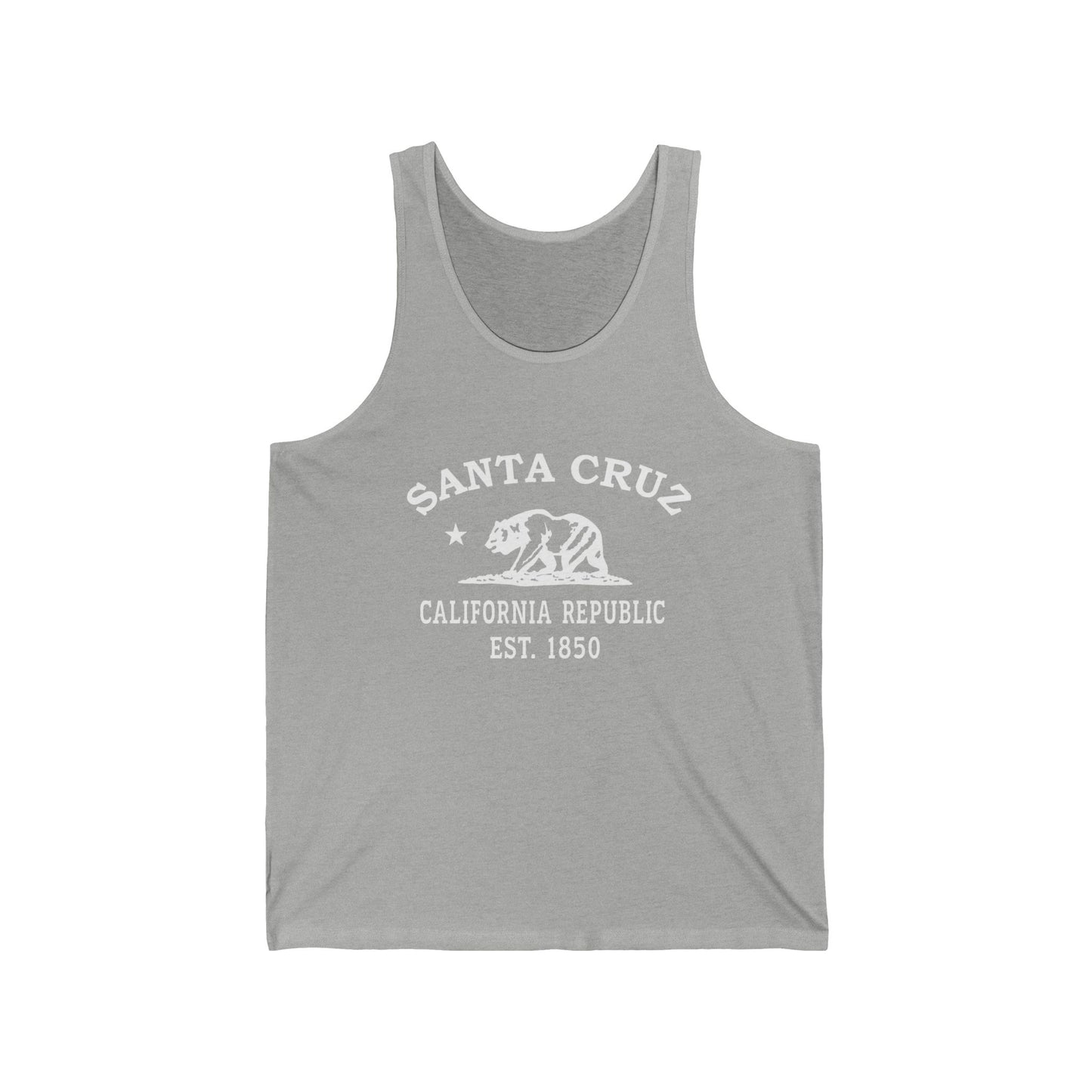
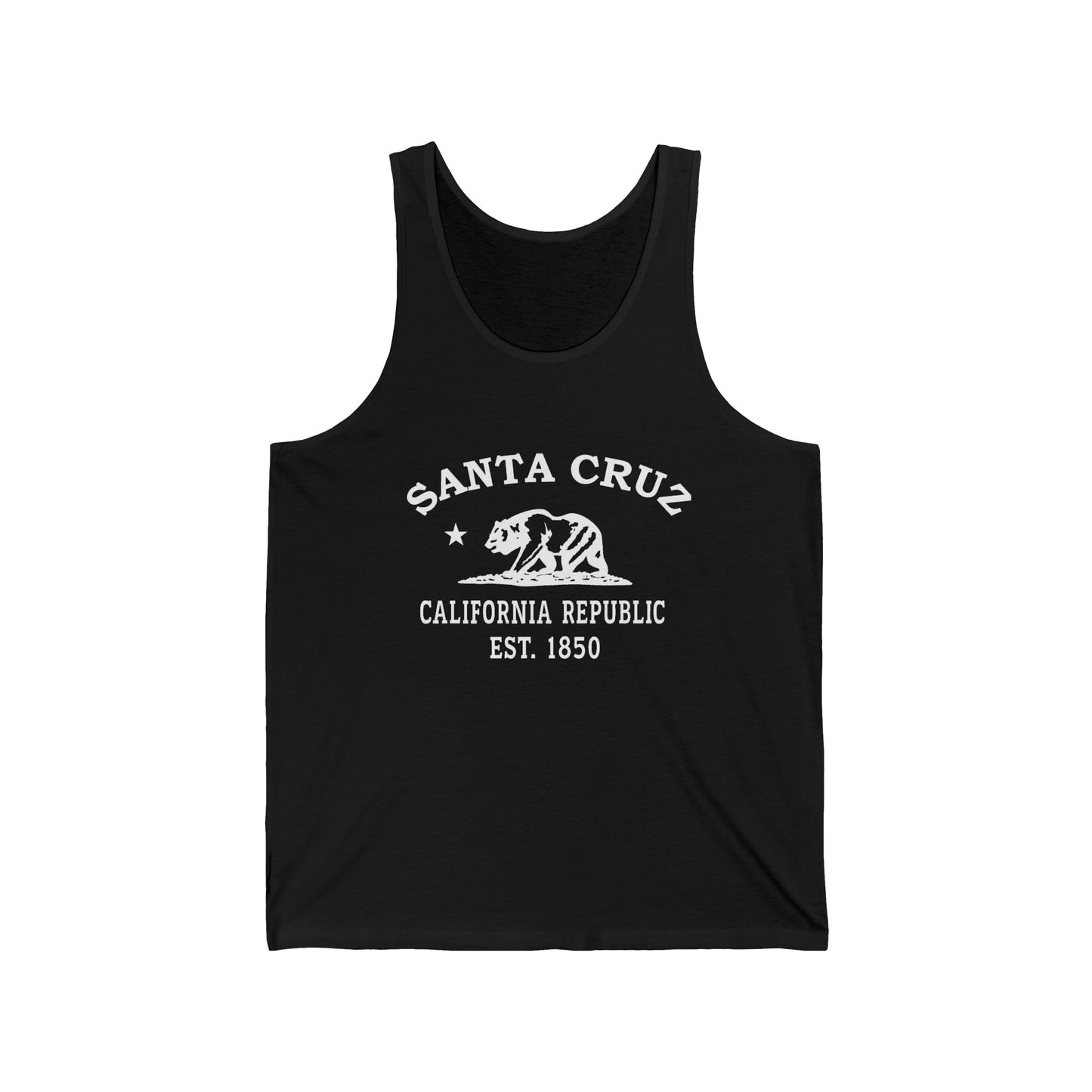
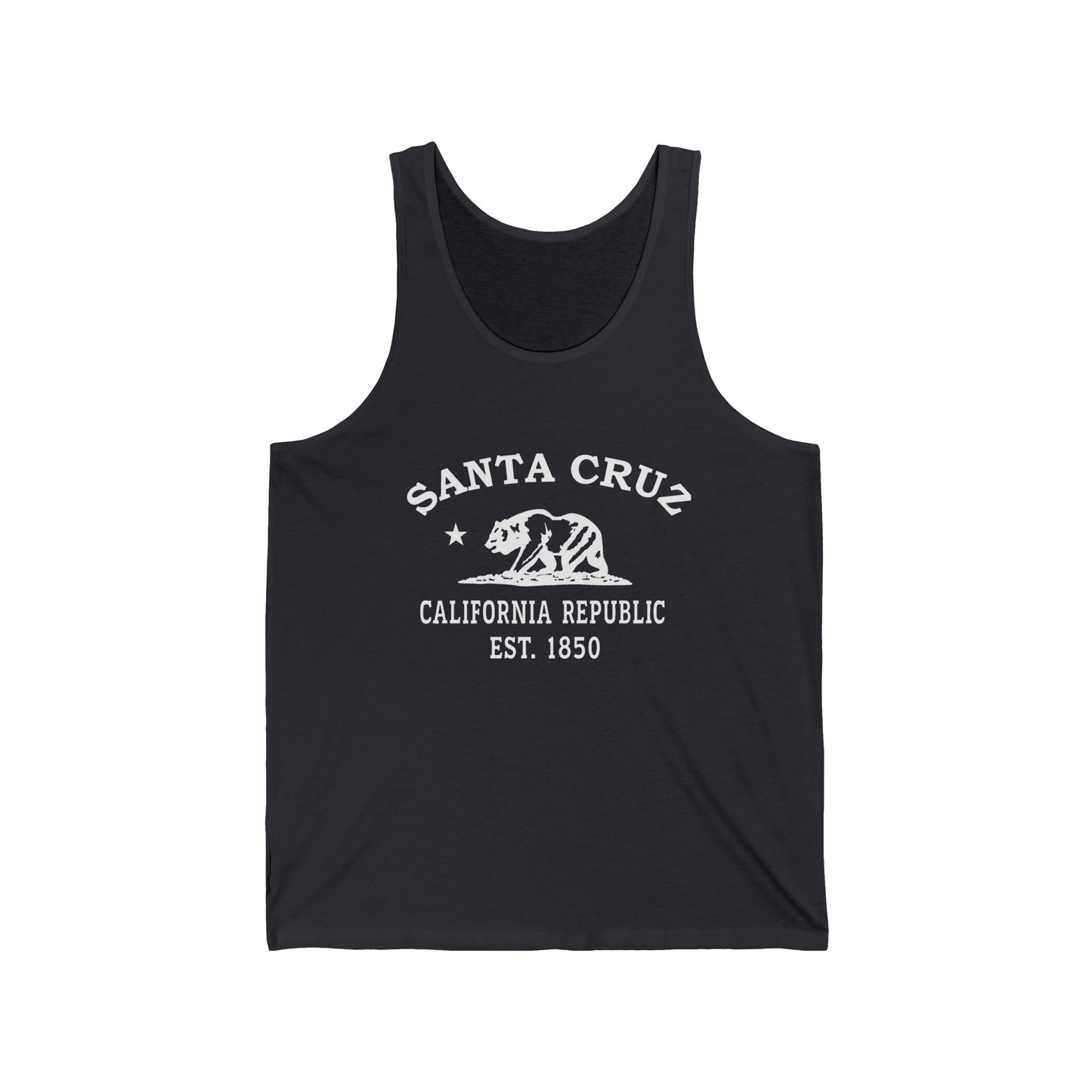
Santa Cruz runs the West Coast's last great seaside boardwalk. On August 28, 1791, Father Fermín Francisco de Lasuén raised the cross at the mouth of the San Lorenzo River and founded Mission Santa Cruz, the twelfth of the twenty-one missions, named not for a saint but for the Holy Cross. The river flooded it that first winter and the padres rebuilt on the bluff above; the Neary-Rodriguez Adobe still stands at Santa Cruz Mission State Historic Park, the best-preserved Native-housing building in the California mission chain. In 1797 the Spanish founded a pueblo across the river called Branciforte — one of only three civil settlements Spain ever planted in Alta California. An 1840 earthquake cracked the mission's bell tower and the 1857 Fort Tejon earthquake brought the rest down; Holy Cross Church went up on the site in 1889, and a half-size replica of the original chapel was built in 1932 with Gladys Sullivan Doyle's money. The city incorporated in 1866.
Today Santa Cruz is, above everything, a coast town: the Boardwalk on the bay, the Carousel still spinning, the Giant Dipper still climbing its lift hill into the marine layer, West Cliff Drive running the bluffs from Lighthouse Point to Natural Bridges, and the redwoods of Big Basin and Henry Cowell standing the way they have stood since the mission was a wooden tent. Our Santa Cruz designs are made for that coast — the city where mainland America first surfed, and that came back from Loma Prieta with a new downtown. The redwoods start where the boardwalk ends. On Monterey Bay since 1791.
Why People Visit Santa Cruz California
Santa Cruz offers California's oldest surviving amusement park on the bay, the 1911 Looff Carousel and the 1924 Giant Dipper as a paired National Historic Landmark, the only original Mission Santa Cruz building still standing, the surf breaks at Steamer Lane and Pleasure Point where mainland American surfing began in 1885, the sea arches and monarch grove at Natural Bridges, the rebuilt Pacific Garden Mall downtown, and the redwoods of Henry Cowell and Big Basin — California's first state park. It is a coast town that has been running its boardwalk longer than any other California city has been running anything along the Pacific. On Monterey Bay since 1791.
