Skip to product information
1 of 6

San Francisco California Vintage Retro Unisex Heavy Crewneck Sweatshirt - Black Logo

San Francisco California Vintage Retro Unisex Heavy Crewneck Sweatshirt - Black Logo

Regular price $38.00 USD
Regular price Sale price $38.00 USD
Sale
Shipping calculated at checkout.
Color
Size
Quantity
Unisex heavy crewneck sweatshirt in medium-heavy fleece for warmth and durability. Classic fit with ribbed collar, cuffs & waistband, double-needle seams, and a tear-away label. DTG print. Standard 50% cotton/50% polyester; Heather Sport 60/40. White may appear off-white; Orange hue may vary.

View full details

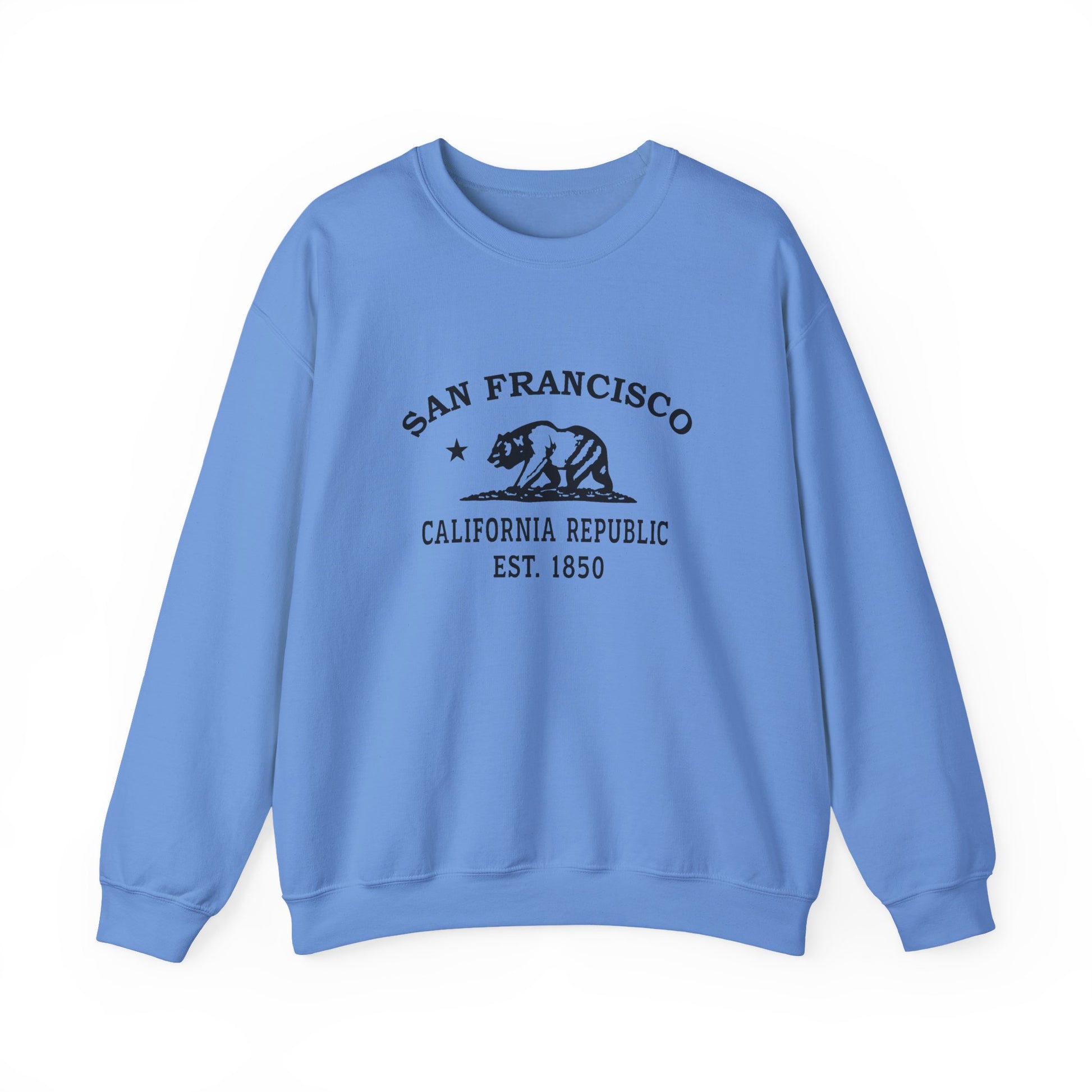
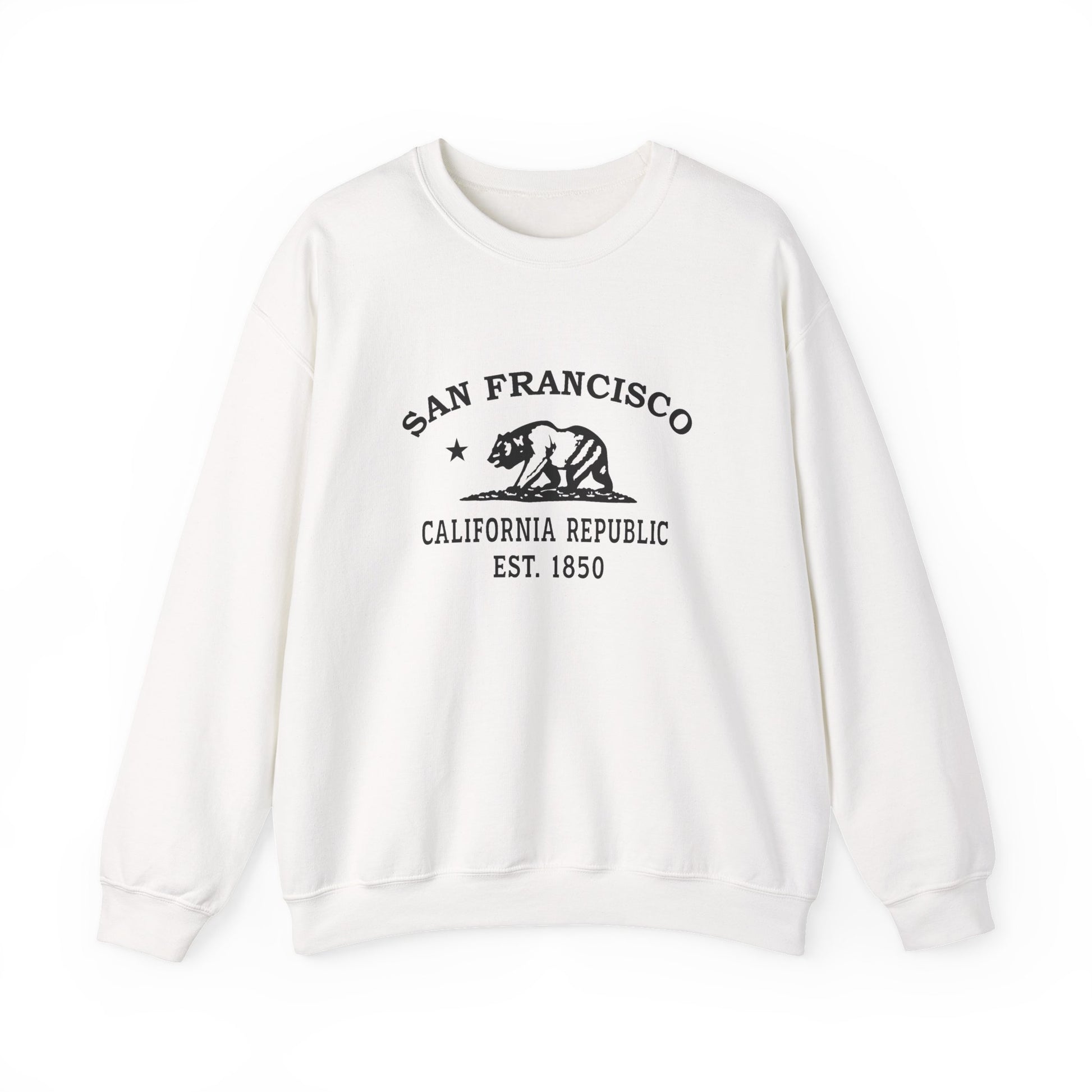
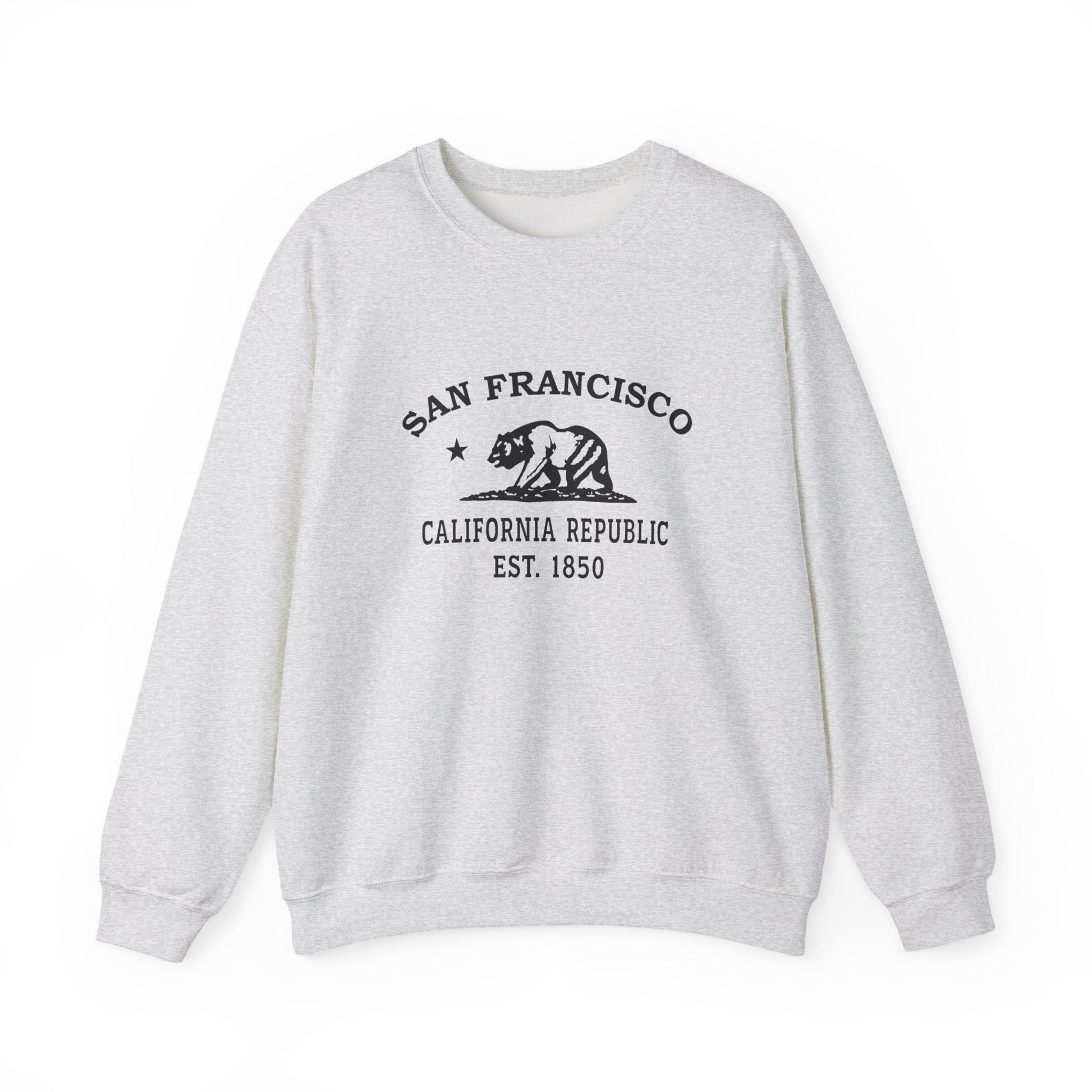
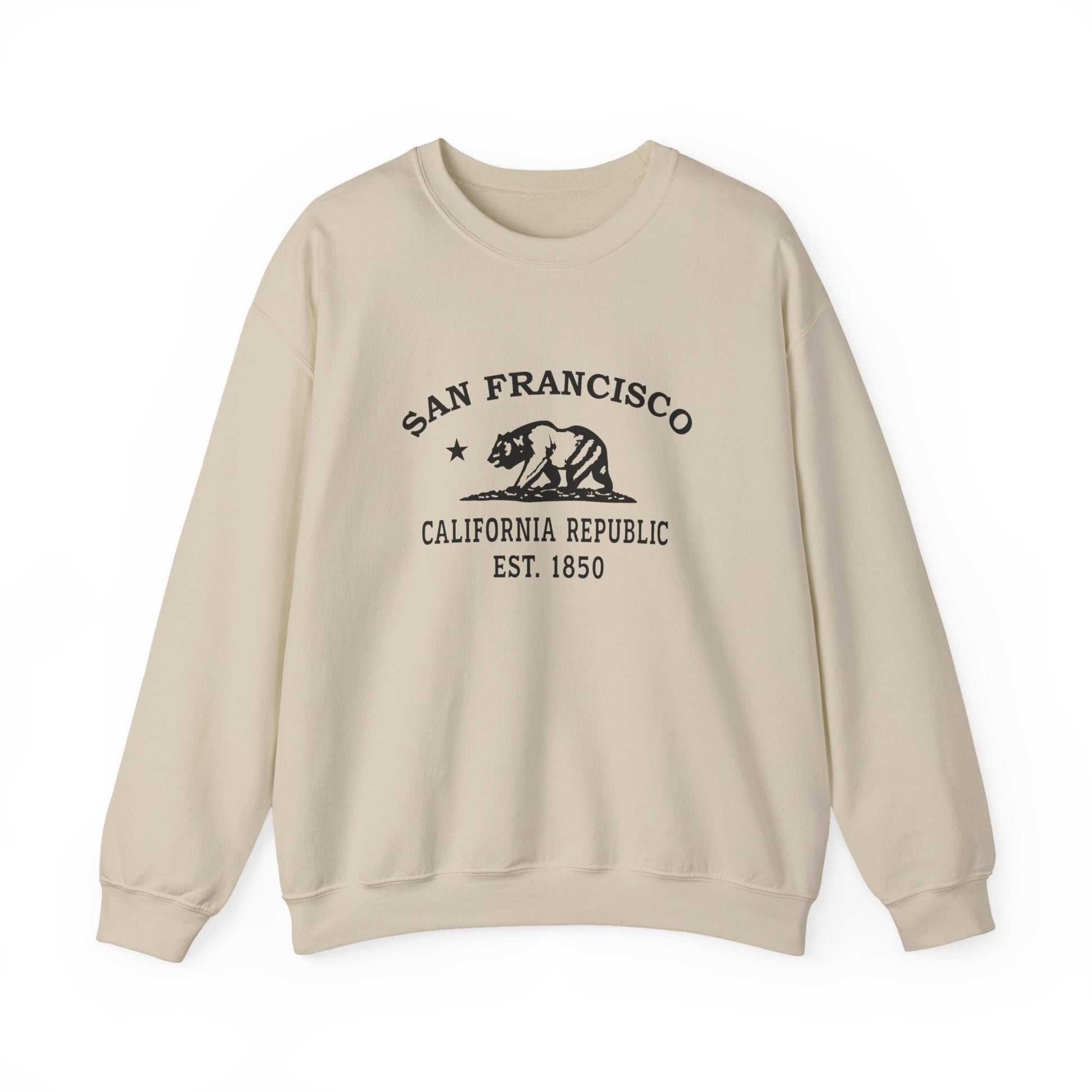
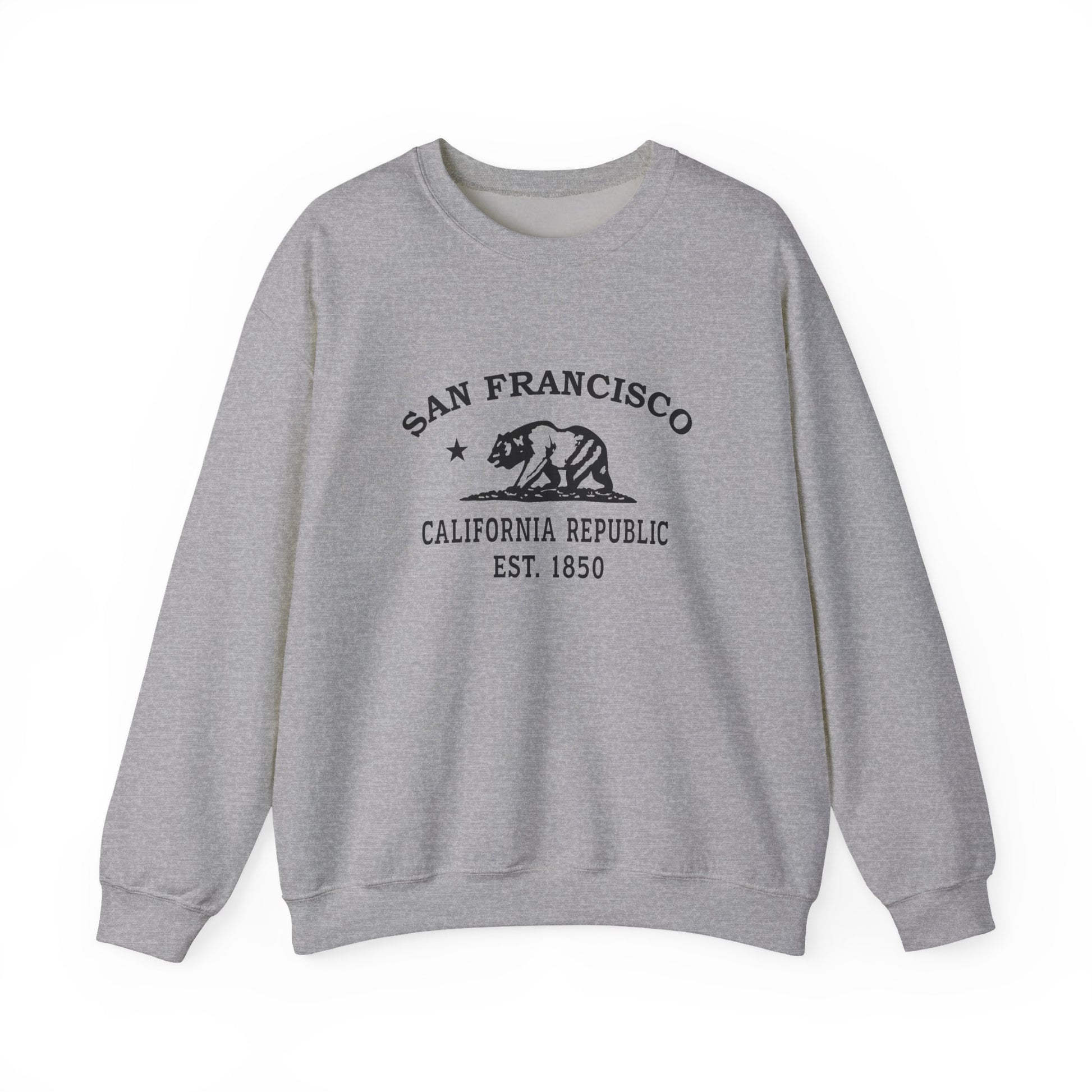
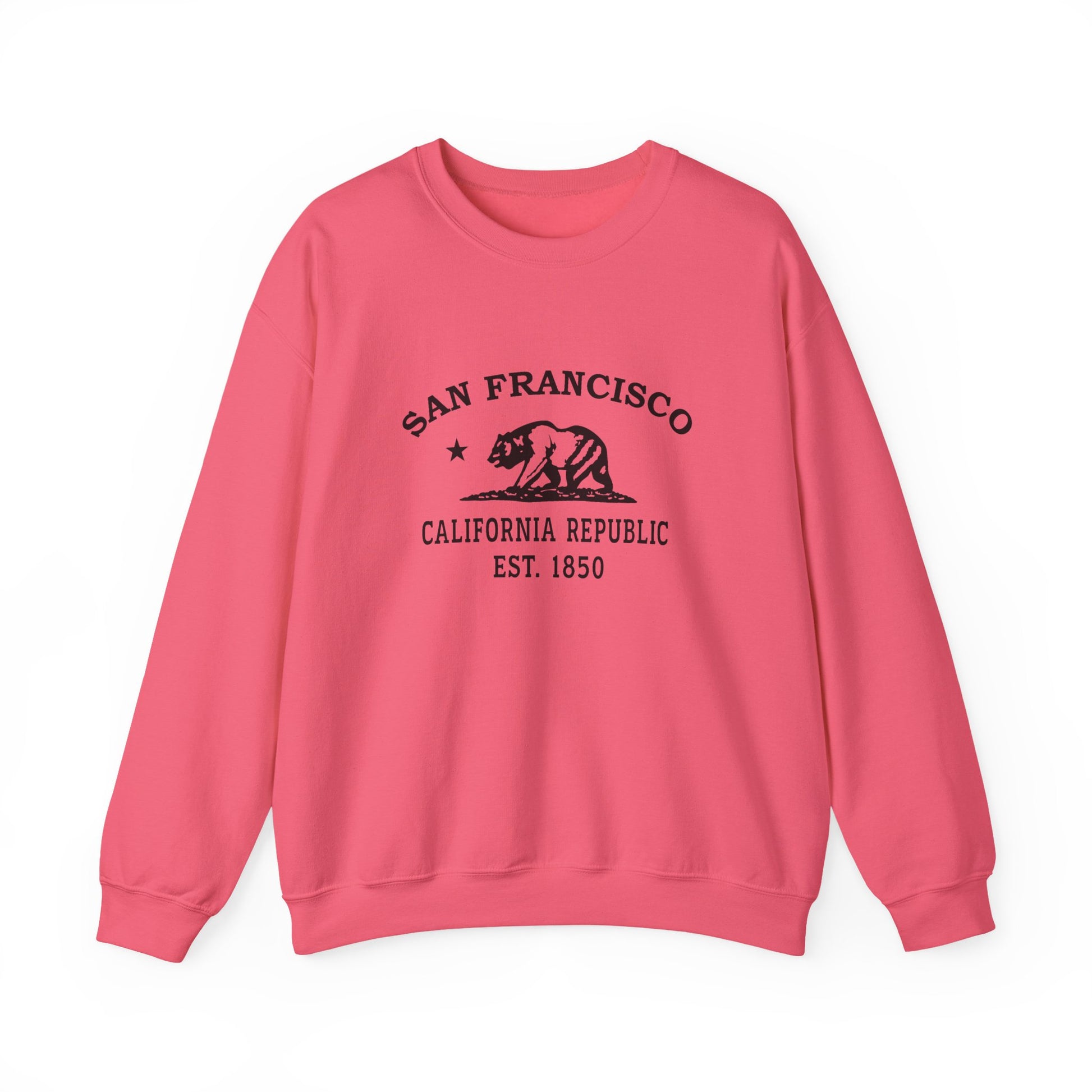
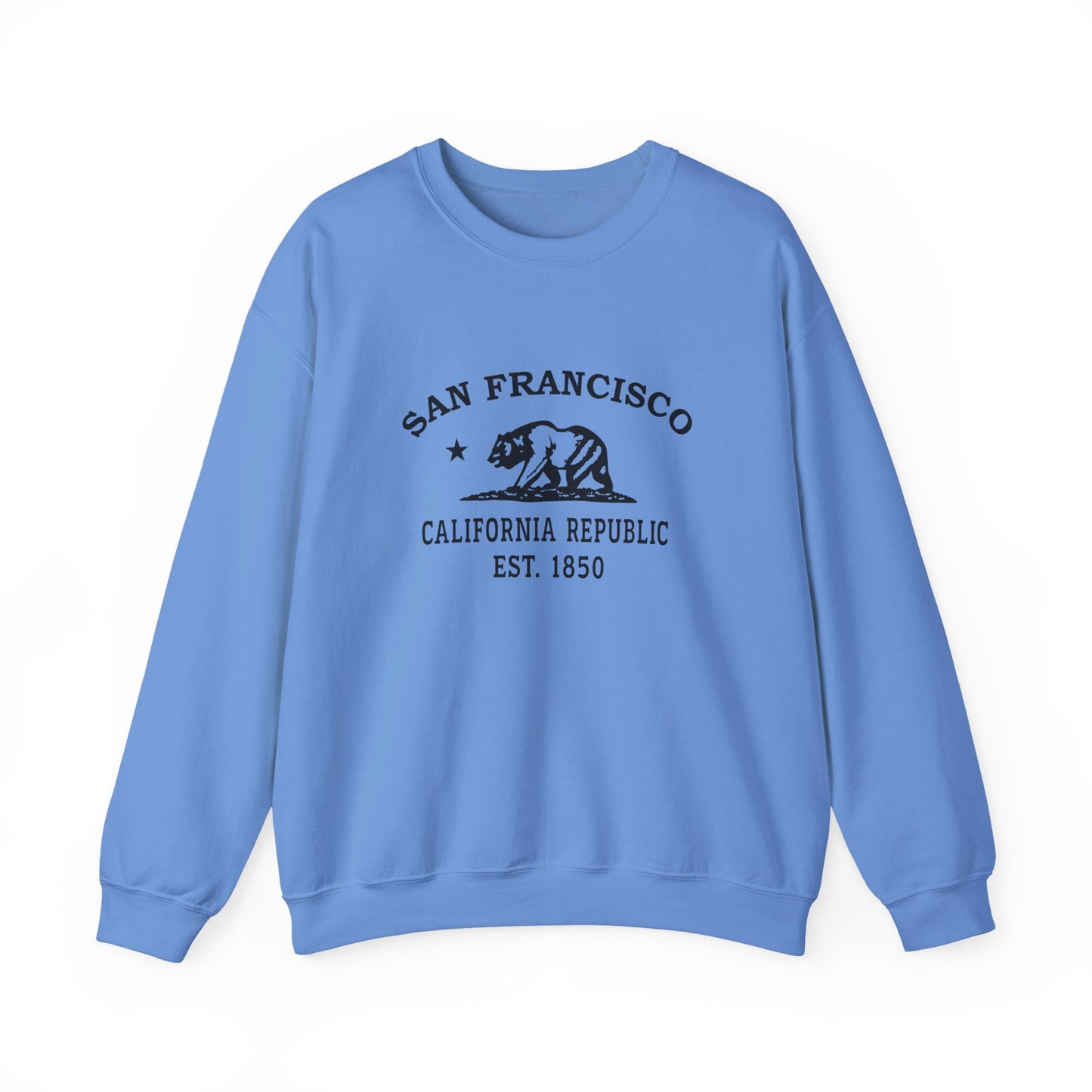
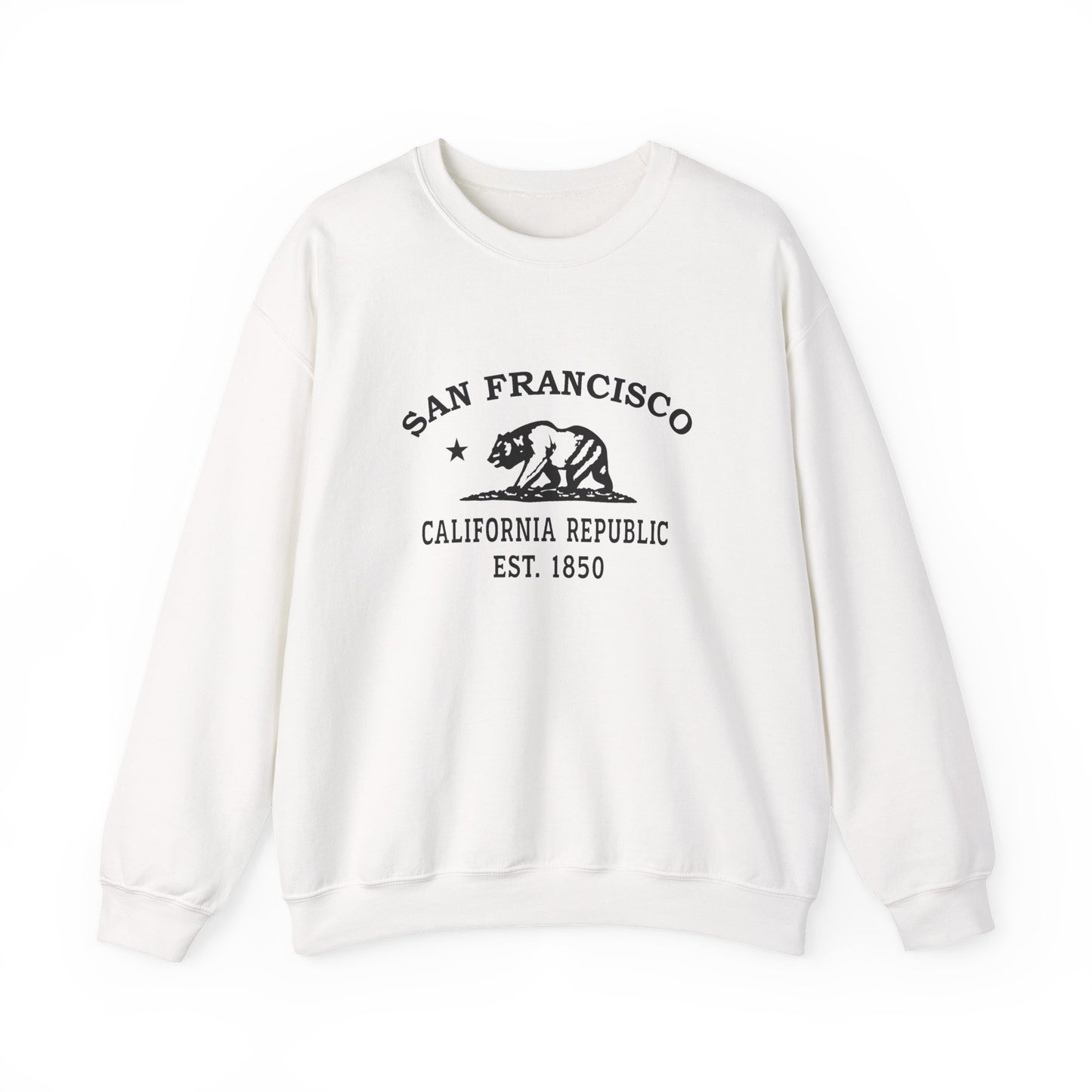
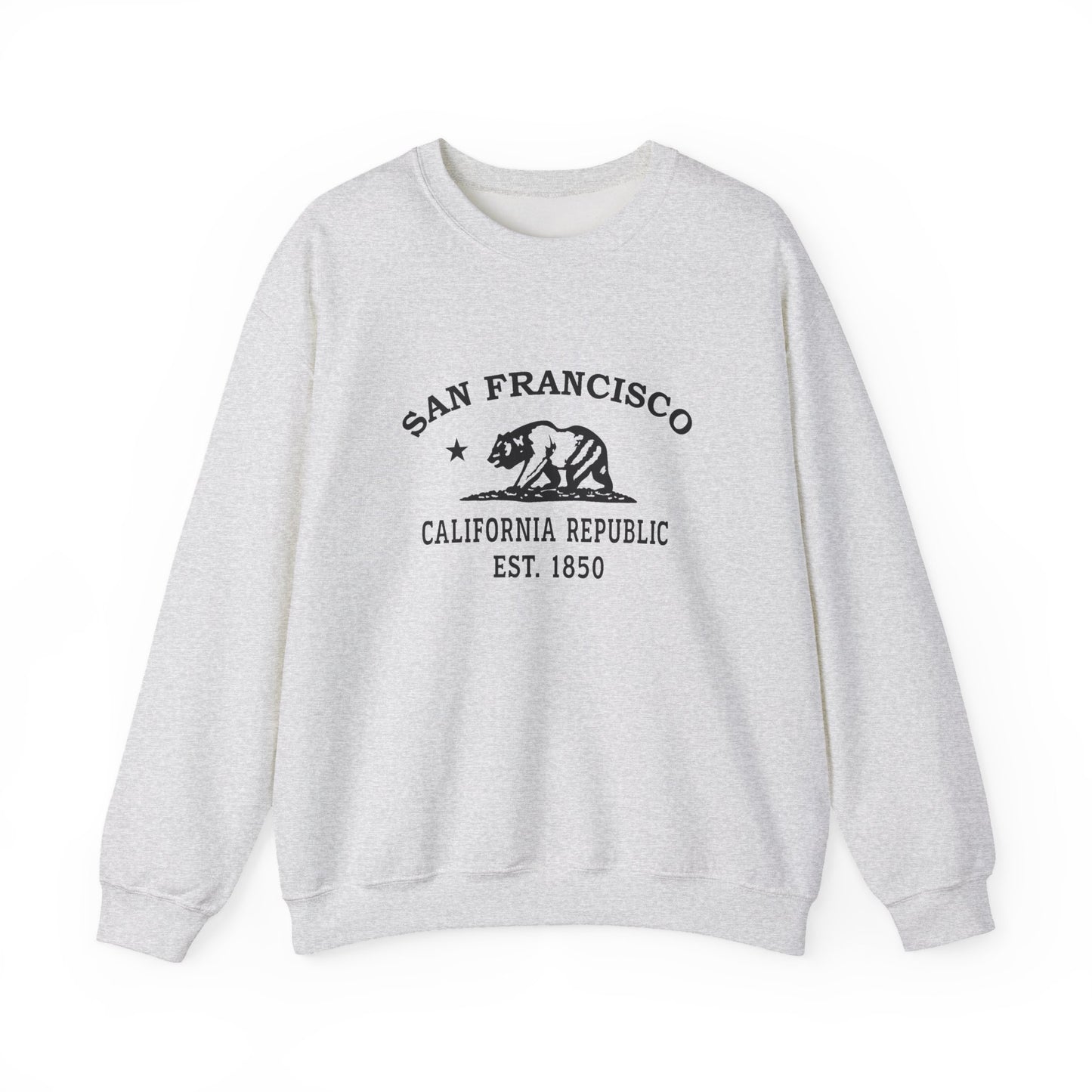
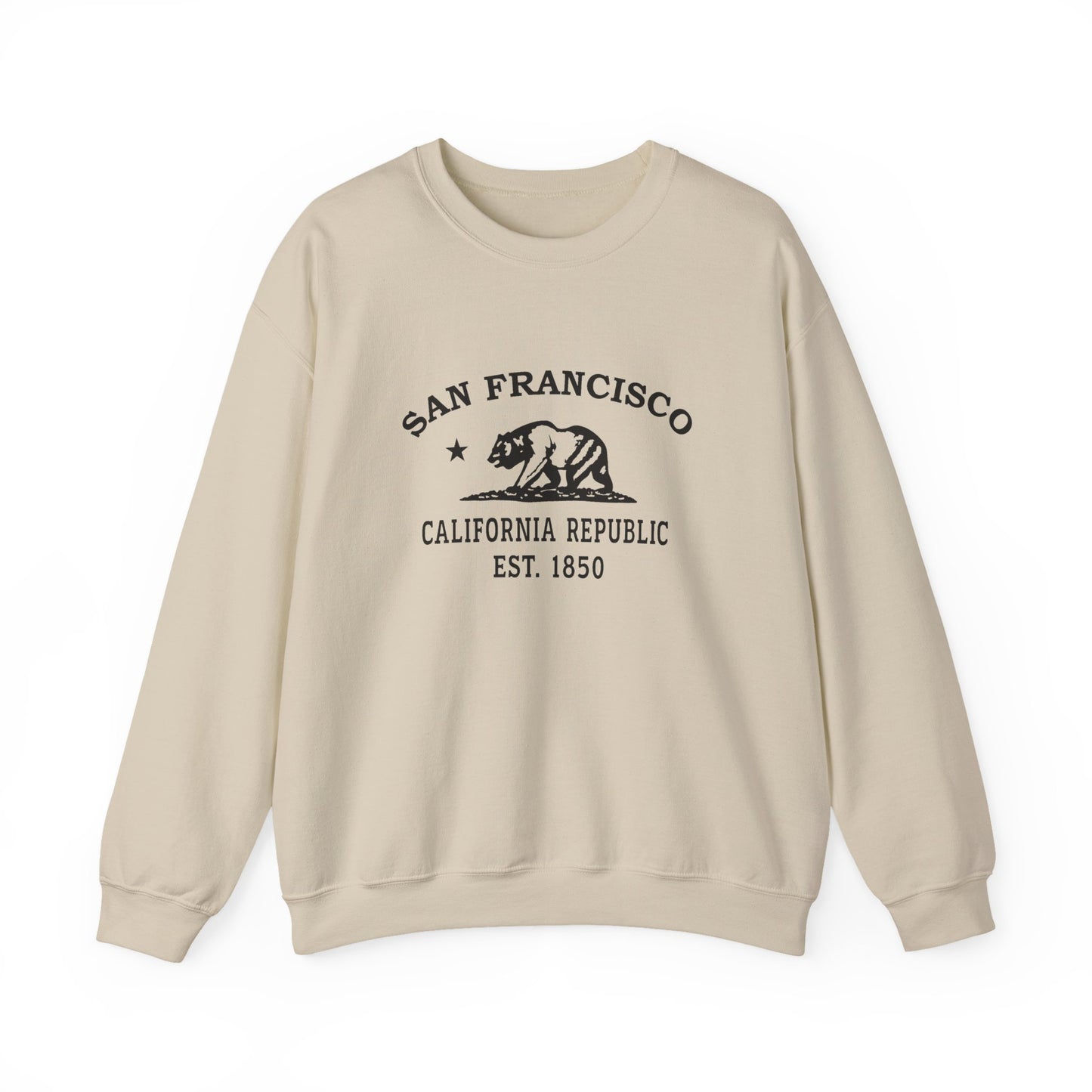
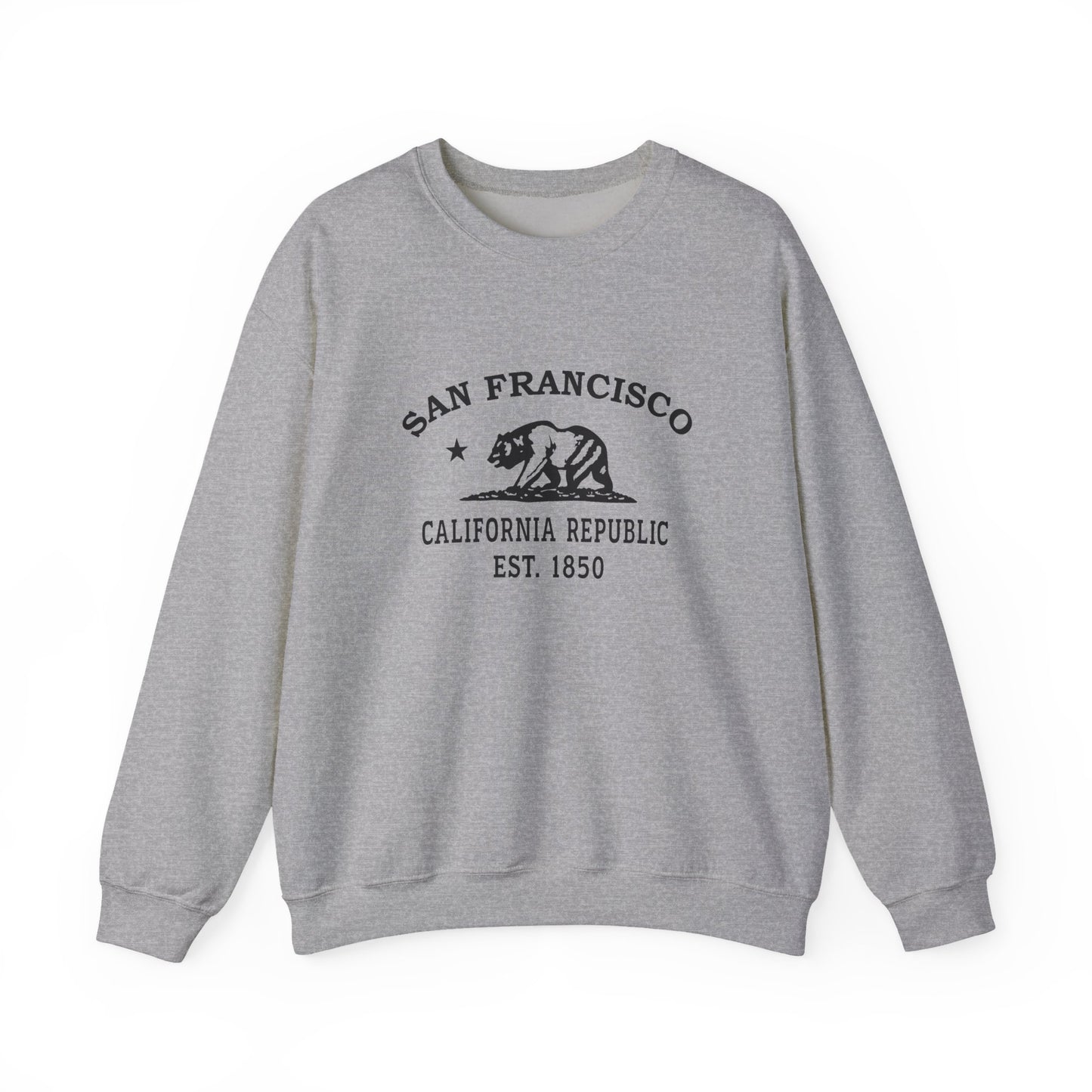
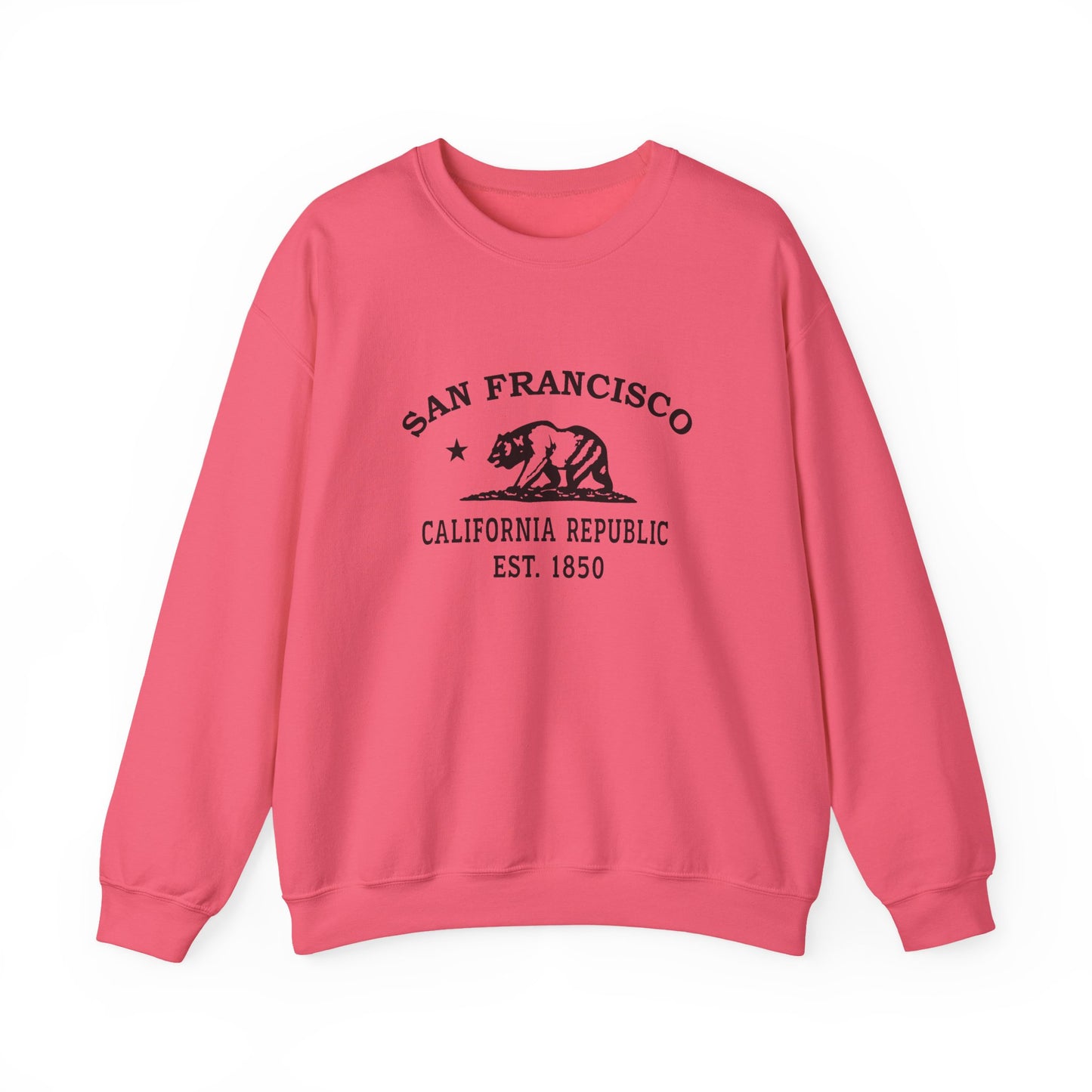
Our San Francisco retro logo carries the California Bear and the star of the Bear Flag tradition, with "1850" stamped beneath — the year of California statehood and San Francisco's incorporation. The black-and-white styling is retro, in the visual vocabulary of WPA posters, crate labels, and the wayfinding of the rebuilt city. The bear and star, paired with the date, do the work of placing the design in the founding generation of the state — and the city that came back from 1906, built the Bridge, and ran the cable cars every day in between.

San Francisco is the city the Gold Rush built and the 1906 earthquake rebuilt. The Ramaytush Ohlone have been the original peoples of this seven-by-seven-mile peninsula for at least ten thousand years. On March 28, 1776, Juan Bautista de Anza planted a cross at the tip of the peninsula above what is now Fort Point and selected the sites of a presidio and a mission; on June 29, 1776 — five days before the Declaration of Independence was signed across the continent — Father Francisco Palóu and Father Pedro Cambón celebrated the first mass at Mission San Francisco de Asís, and on October 9 they formally dedicated the mission. Lieutenant José Joaquín Moraga founded the Presidio of San Francisco on September 17, 1776. The adobe chapel completed in 1791, known as Mission Dolores for the nearby Arroyo de los Dolores, still stands and is the oldest intact building in the city. A small Mexican-era village called Yerba Buena grew up along the cove. The U.S. Navy took it without a shot in July 1846, and on January 30, 1847, Lieutenant Washington Bartlett renamed the place San Francisco. A year later, on January 24, 1848, James Marshall found gold at Sutter's Mill on the American River; on May 12 of that year, a Mormon merchant named Sam Brannan walked San Francisco's streets with a vial of gold flakes shouting Gold! Gold! Gold from the American River! Brannan had already bought every pick, shovel, and pan he could find. By the end of 1848 the town of fewer than a thousand was a city of twenty-five thousand. San Francisco incorporated on April 15, 1850, the same year California became the thirty-first state. At four in the morning on August 2, 1873, the Scottish-born inventor Andrew Smith Hallidie took the controls of the Clay Street Hill Railroad and ran the first cable car down the Nob Hill grade — the world's first successful cable railway, and today, with the Powell-Hyde, Powell-Mason, and California Street lines, the only moving National Historic Landmark in the United States. The Painted Ladies of Alamo Square — the Queen Anne row at 710-720 Steiner Street, built between 1892 and 1896 by the developer Matthew Kavanaugh — were a generation old when, at five-twelve in the morning on April 18, 1906, a magnitude-7.9 earthquake on the San Andreas Fault ran for forty-five seconds and toppled the city. The fire that followed burned for four days. Eighty percent of San Francisco was destroyed. The city rebuilt fast enough to throw a world's fair in 1915 — the Panama-Pacific International Exposition on the Marina — and Bernard Maybeck's Palace of Fine Arts still stands from it. Coit Tower went up on Telegraph Hill in 1933. Alcatraz Island was the federal penitentiary from 1934 to 1963. Joseph B. Strauss broke ground for the Golden Gate Bridge on January 5, 1933, and at six in the morning on May 27, 1937, two hundred thousand people walked across the new four-thousand-two-hundred-foot Art Deco span — Irving Morrow's International Orange against the fog and the strait. Lombard Street still bends eight times down Russian Hill. The Painted Ladies are still on Steiner. The fog still pours through the Gate every evening from May to September. On the Bay since 1776.

Why People Visit San Francisco California

San Francisco offers the Golden Gate Bridge in International Orange against the strait, the 1776 Mission Dolores still standing as the oldest building in the city, the only moving National Historic Landmark in the country still running uphill on Andrew Hallidie's 1873 system, the Painted Ladies of Alamo Square that survived 1906, the 1915 Palace of Fine Arts, Coit Tower on Telegraph Hill, Lombard Street's eight switchbacks down Russian Hill, Alcatraz federal-prison rock in the bay, Chinatown — the oldest in North America — rebuilt after the fire, the 1898 Ferry Building on the Embarcadero, the 1912 marble counter at Swan Oyster Depot on Polk Street, forty-nine hills, the western beach at Ocean Beach, and the fog that pours through the Gate every evening from May to September. It is a peninsula city that came back from a magnitude-7.9 earthquake and built the most photographed bridge in the world inside thirty years. On the Bay since 1776.

San Francisco California Merlin Classics retro vintage logo featuring California Bear and star motif with 1850 statehood-and-incorporation date