
What survived came south. Hugh and Jeannette McKean — she the granddaughter of Charles Hosmer Morse, the industrialist who had shaped modern Winter Park after becoming its largest landowner in 1904 — drove to the ruins and saved what they could. Jeannette had founded the Morse Gallery of Art in Winter Park in 1942; the rescued Tiffany glass became the heart of what is today the Charles Hosmer Morse Museum of American Art on Park Avenue, whose treasures include the Daffodil Terrace and the chapel Tiffany designed for the 1893 World's Fair. The peacocks that strut Winter Park's streets are descendants of the birds the McKeans brought home — a living thread back to Laurelton Hall.
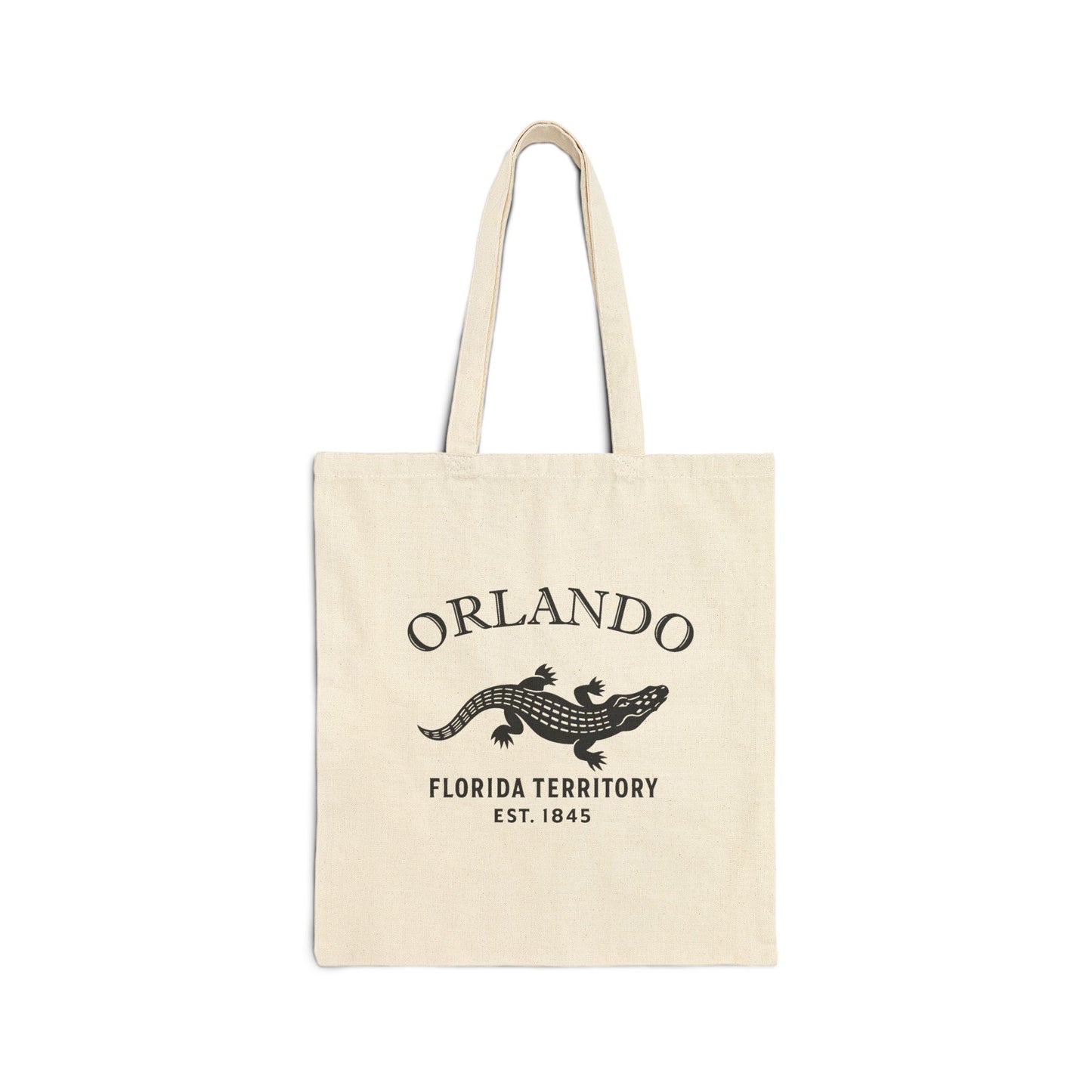
Our Orlando logo carries Florida's alligator over "Florida Territory · Est. 1845," the year Florida joined the Union — the shared emblem of every Merlin Classics Florida place. Printed black-and-white with the worn look of an old citrus-crate stamp, the gator reads as wild Florida in shorthand: tough, sun-baked, and unmistakably of the place. What makes this one Orlando is the country behind it — Lake Eola, the swans, the orange groves of the City Beautiful, and the whole rich metro that surrounds it, from Winter Park's Tiffany glass to the theme parks that made the name famous.
Why People Visit Greater Orlando
The world comes to Orlando for its attractions, but its enduring charm is everything around them: lakes, oaks, swans, and a citrus-country past in the city itself, and a Winter Park two miles north that holds the finest Tiffany glass on earth. Visitors who slow down find gardens, historic downtown streets, lakefront paths, and a rescued palace's worth of colored light — a whole greater Orlando that feels a world away from the crowds.
