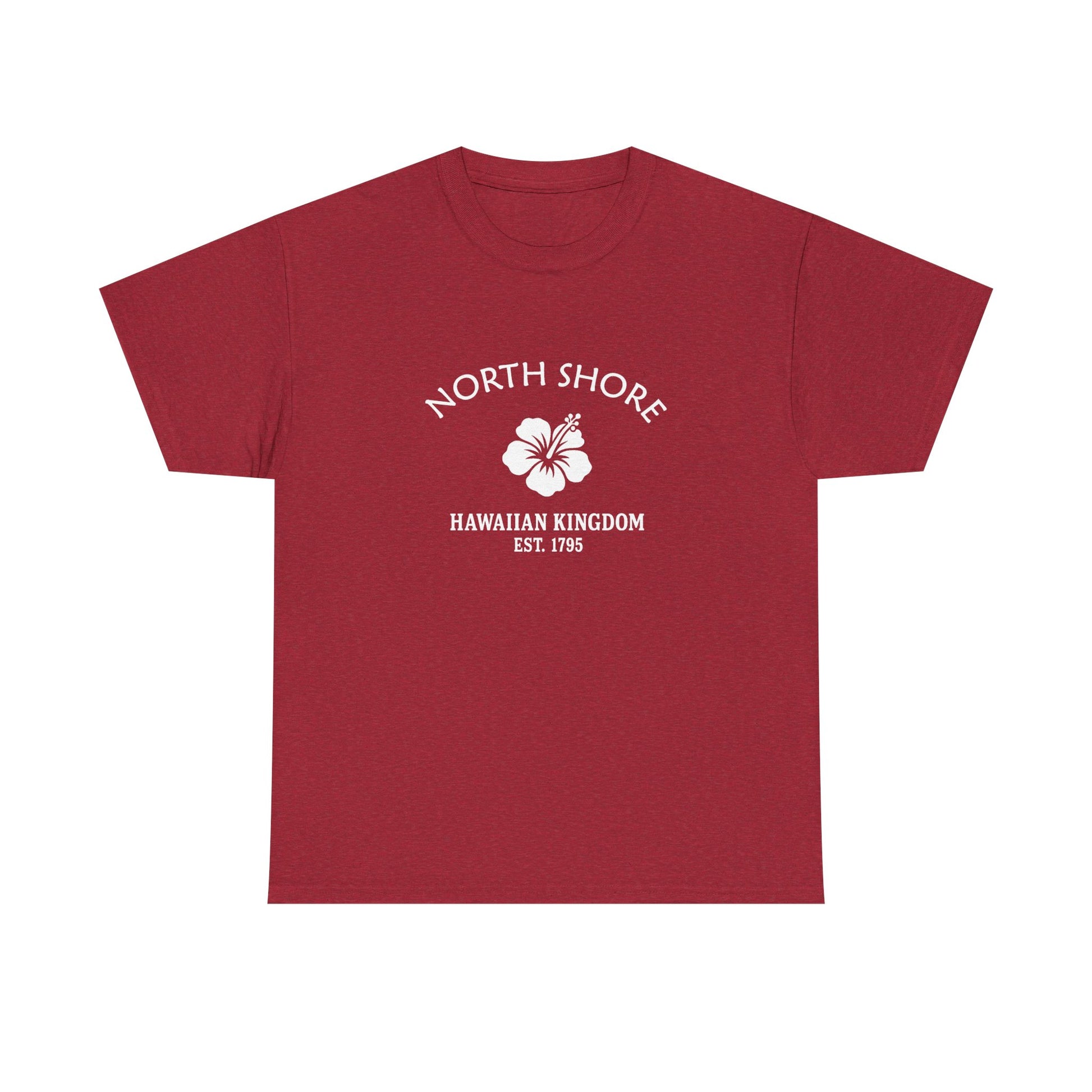
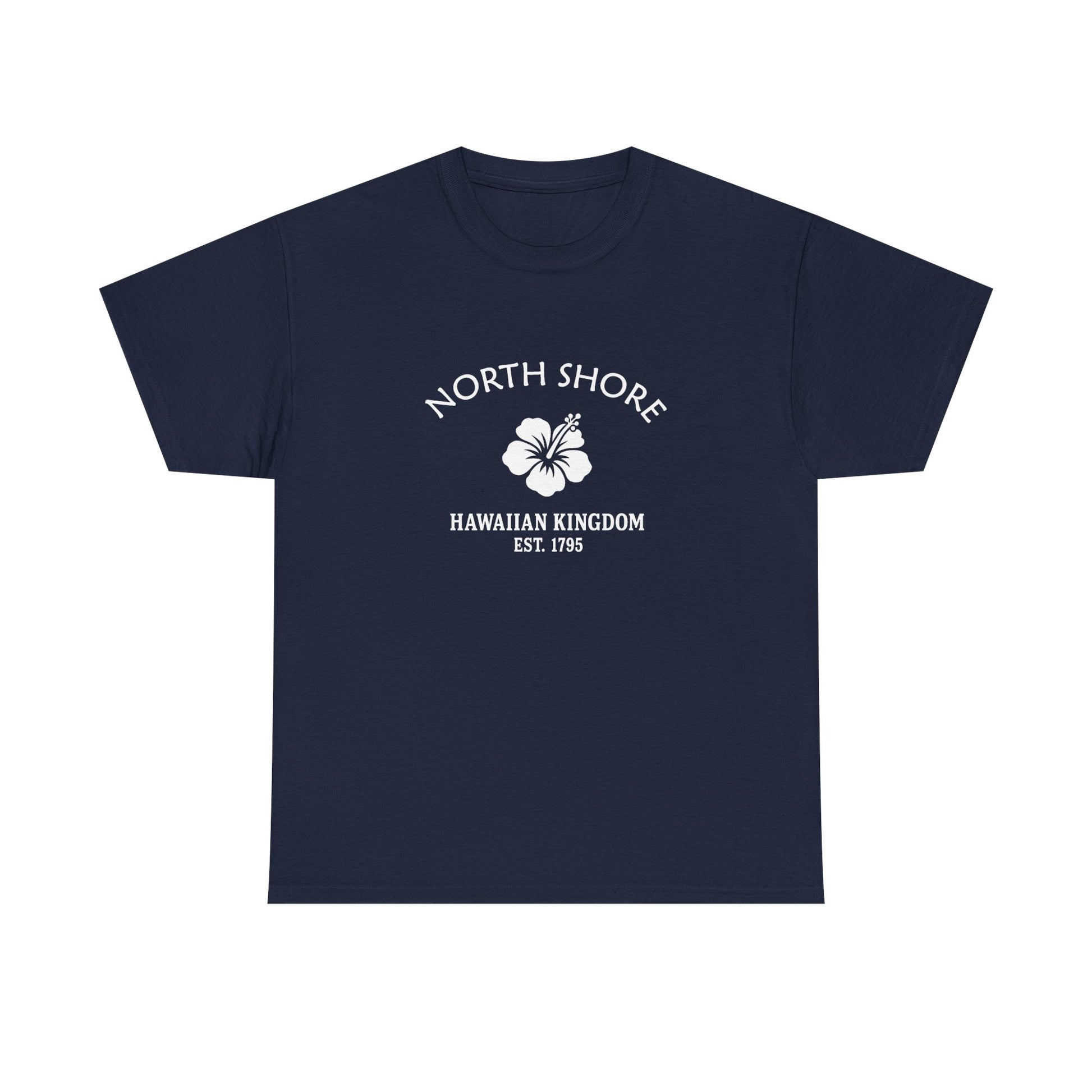
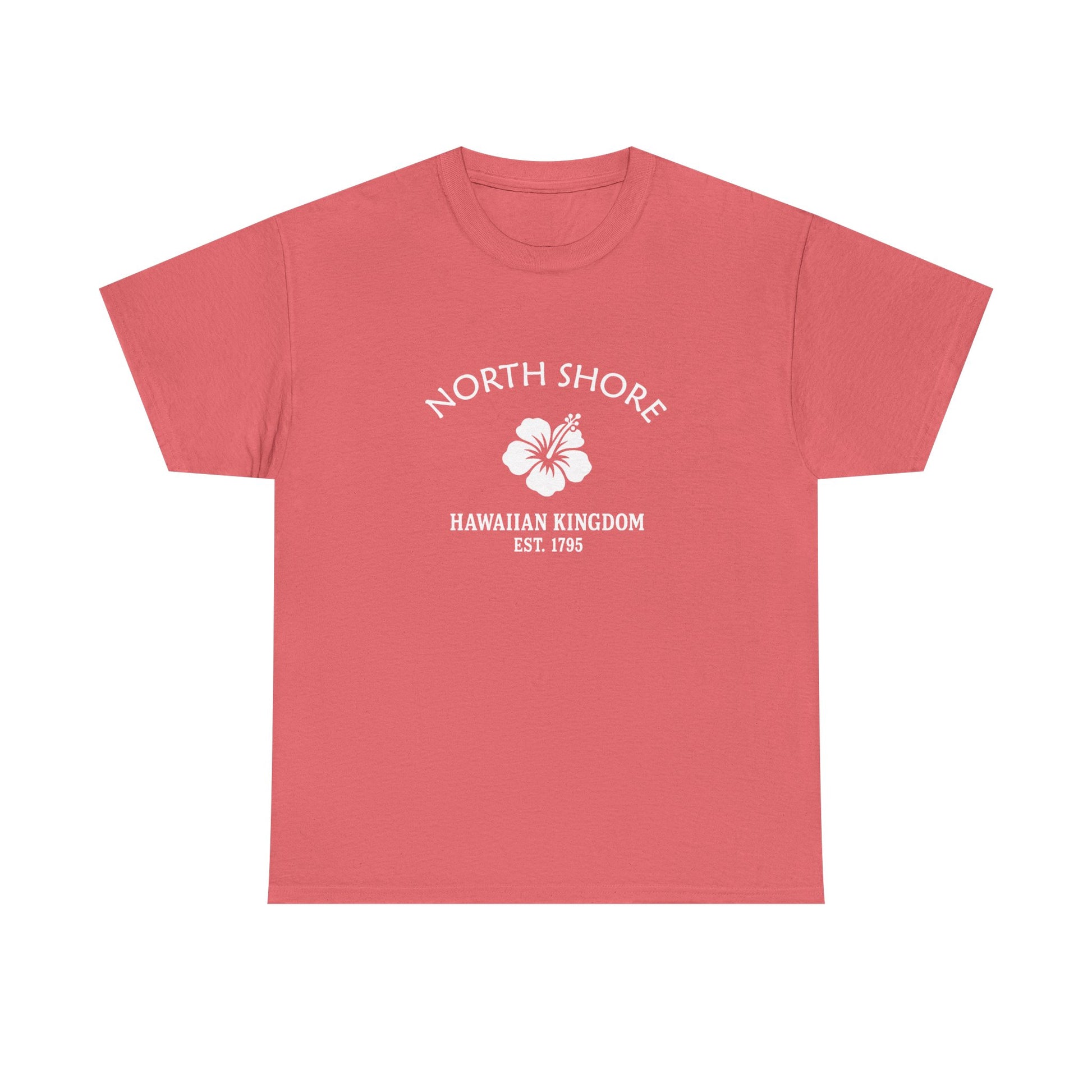
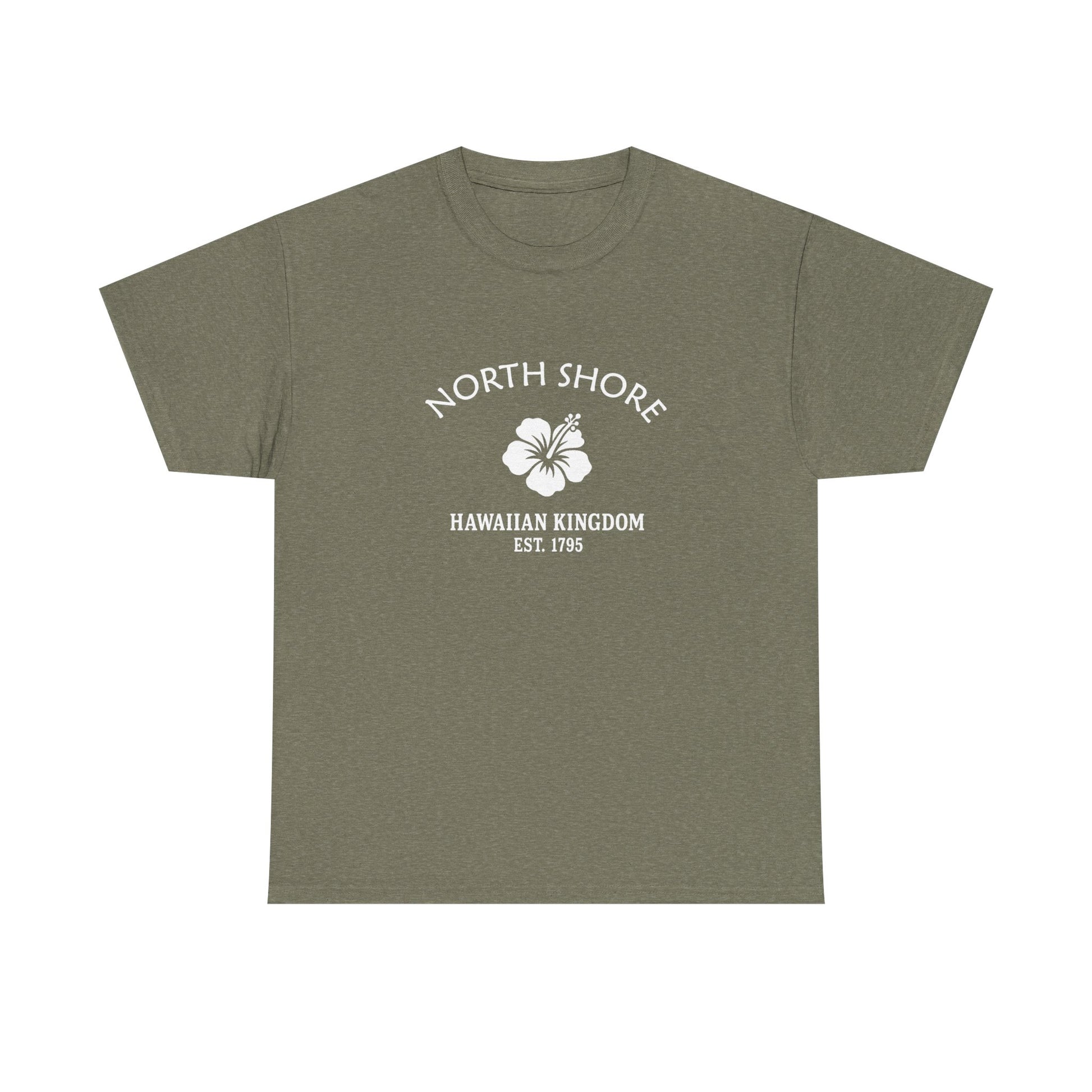
Off the surf, the North Shore keeps an unhurried character — shave ice and food trucks along Kamehameha Highway, the historic shops of Haleʻiwa, and the green sea turtles, the honu, that haul out to rest on the sand at Laniākea. It is a coast of two moods: the winter spectacle of the waves, and the slow, sunlit calm of a Hawaiian beach town.
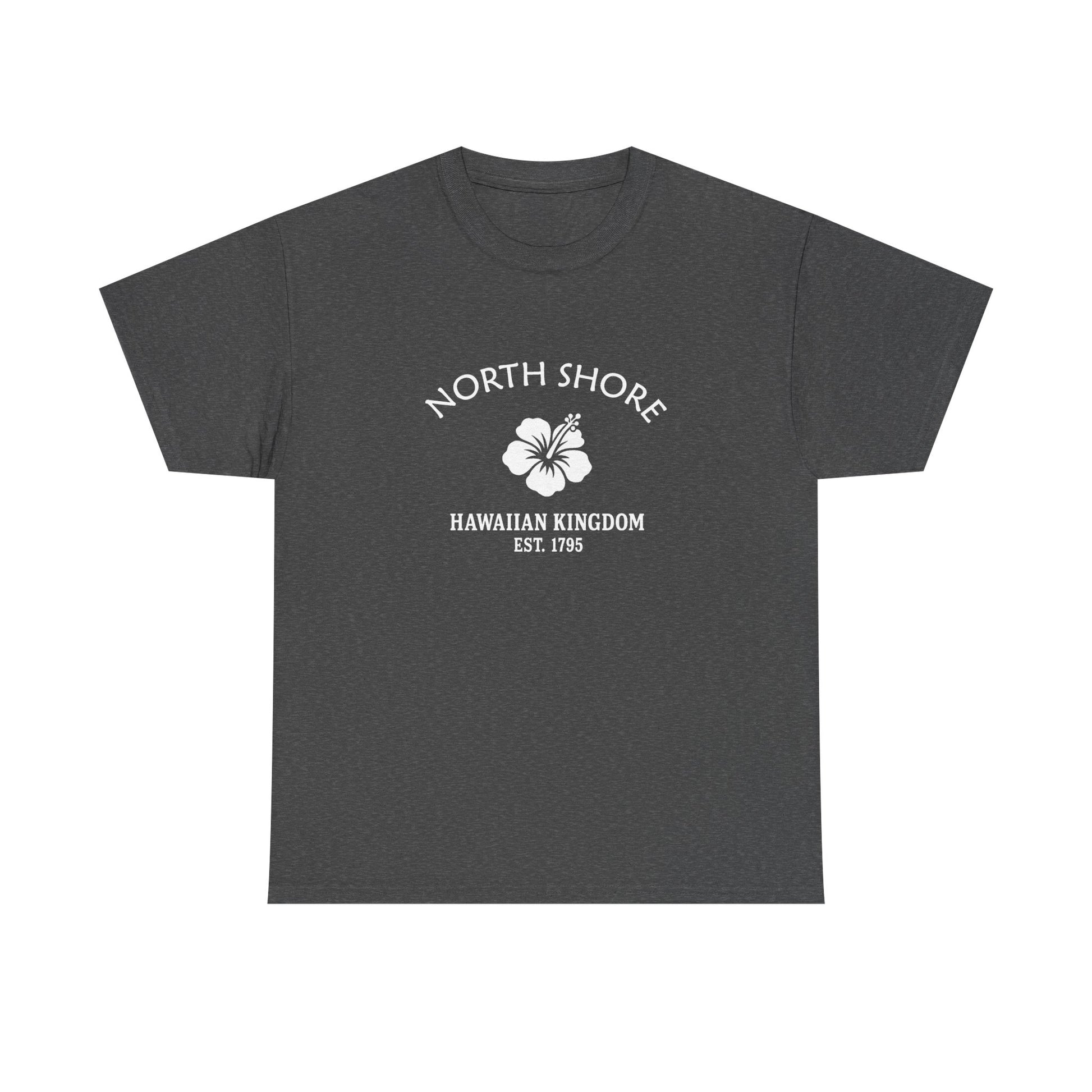
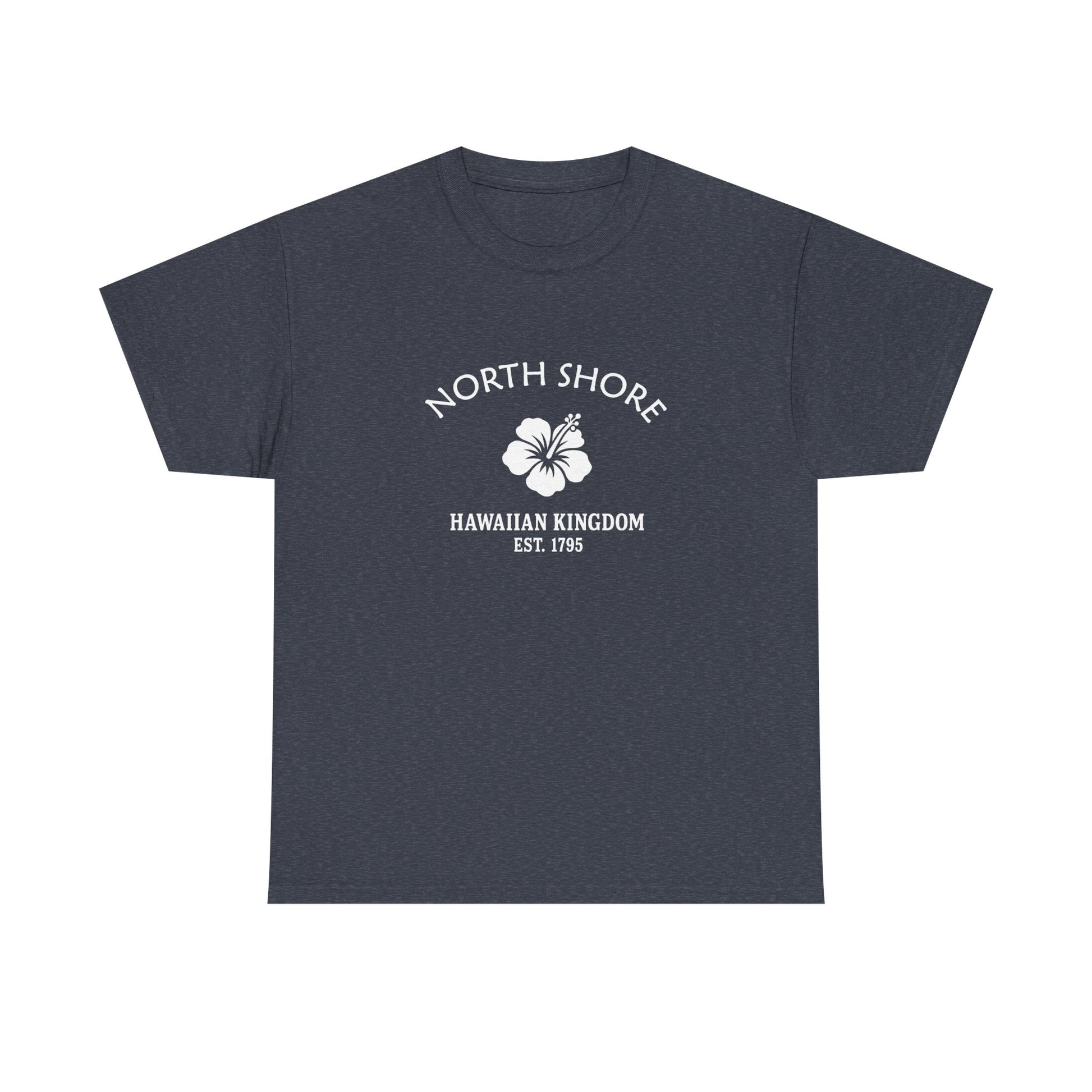
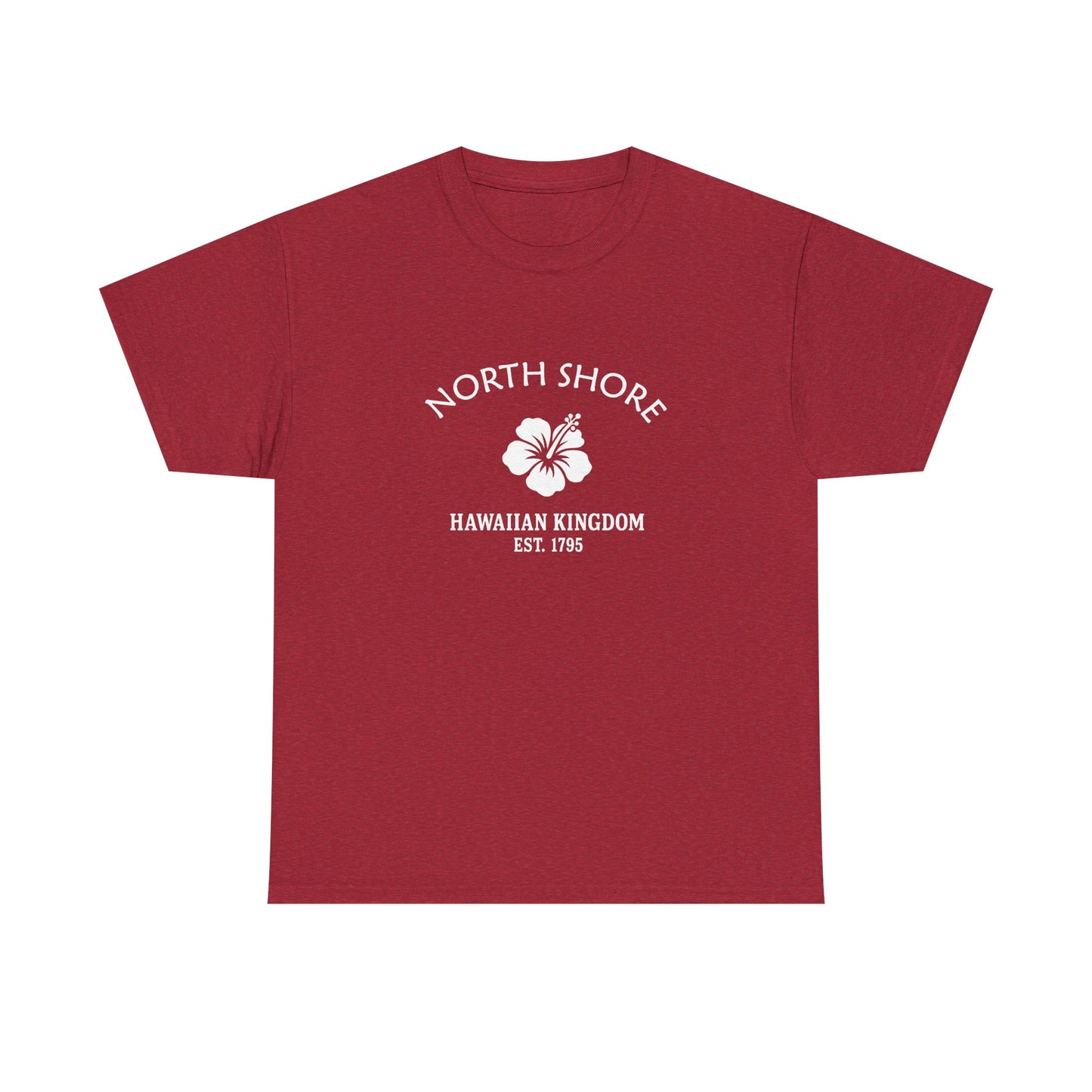
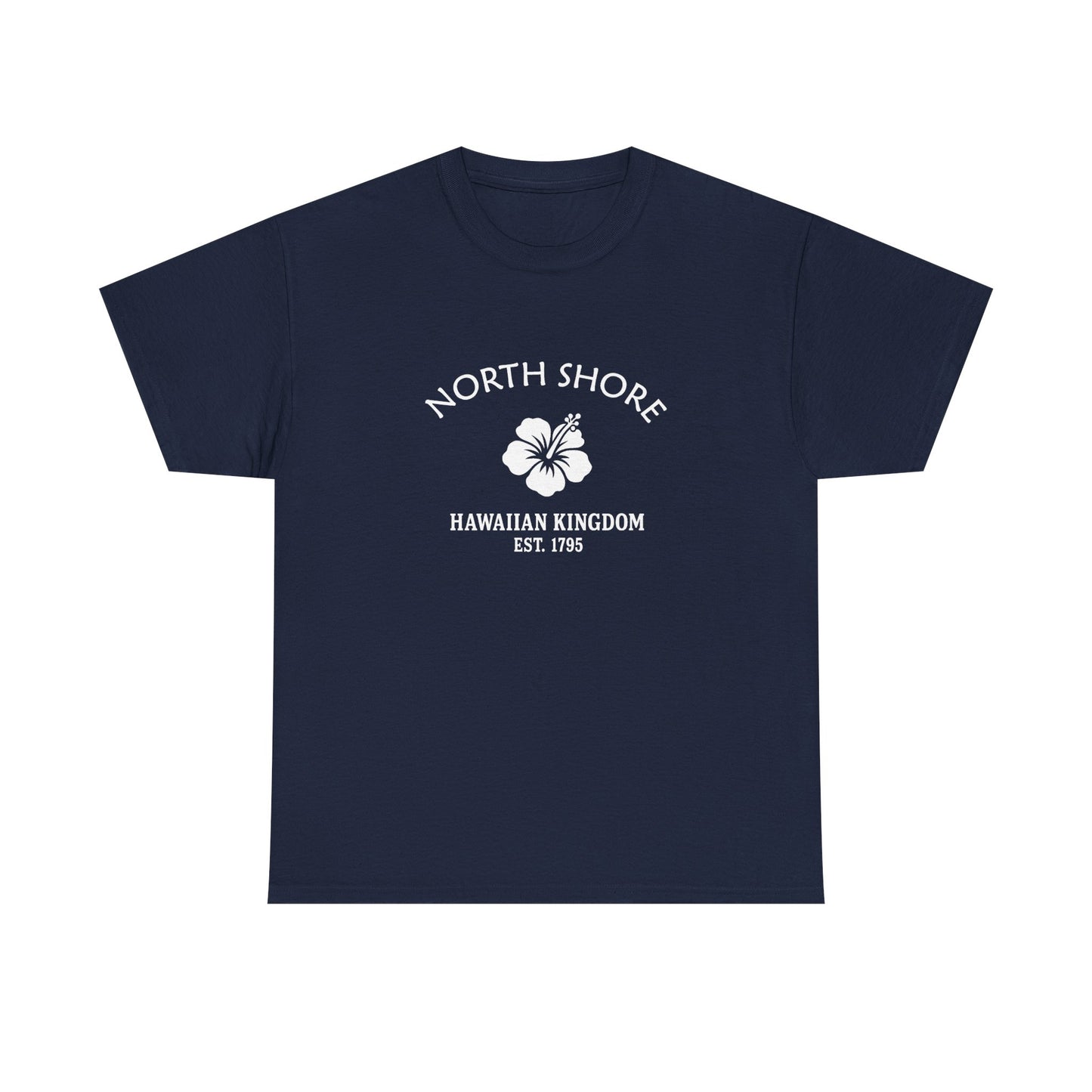
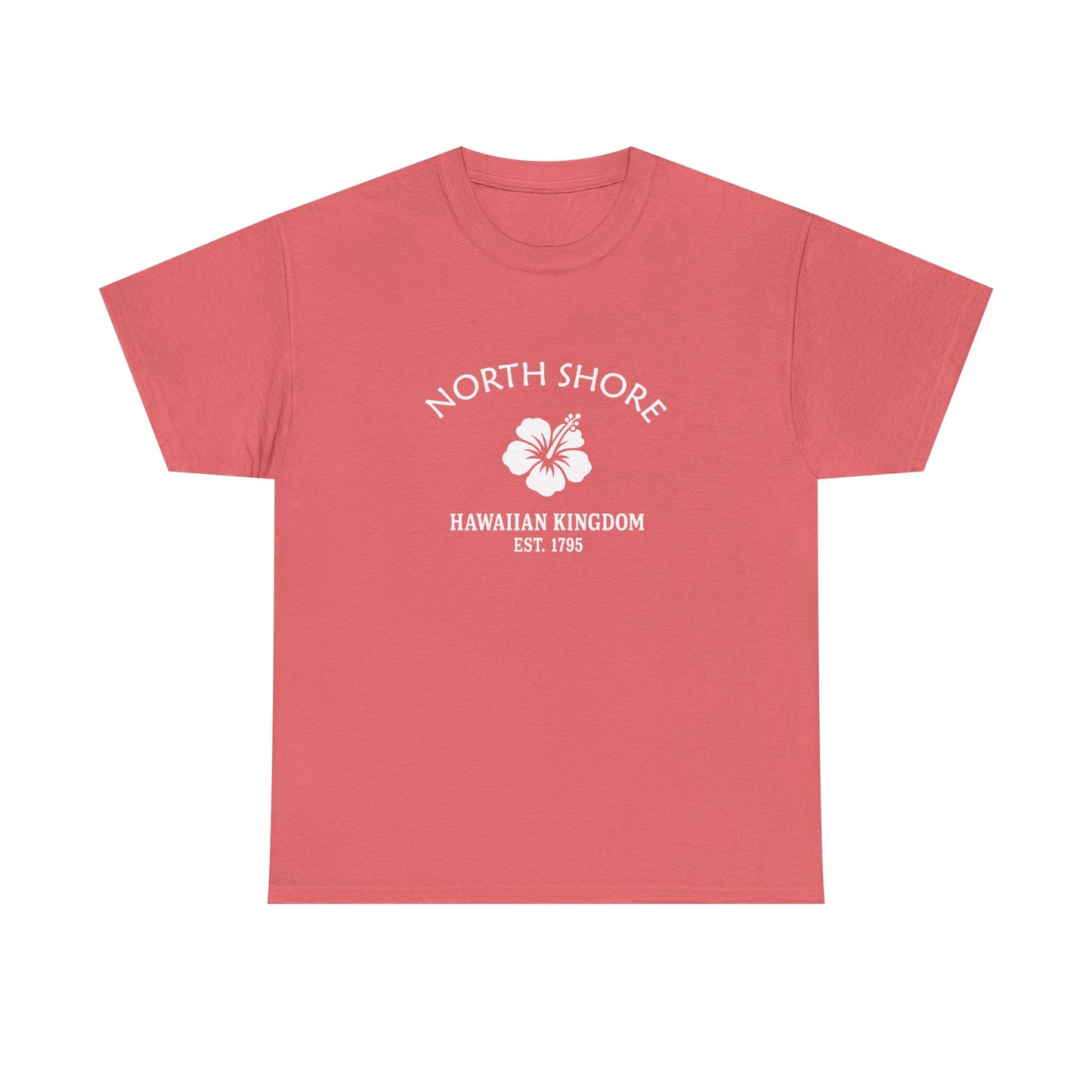
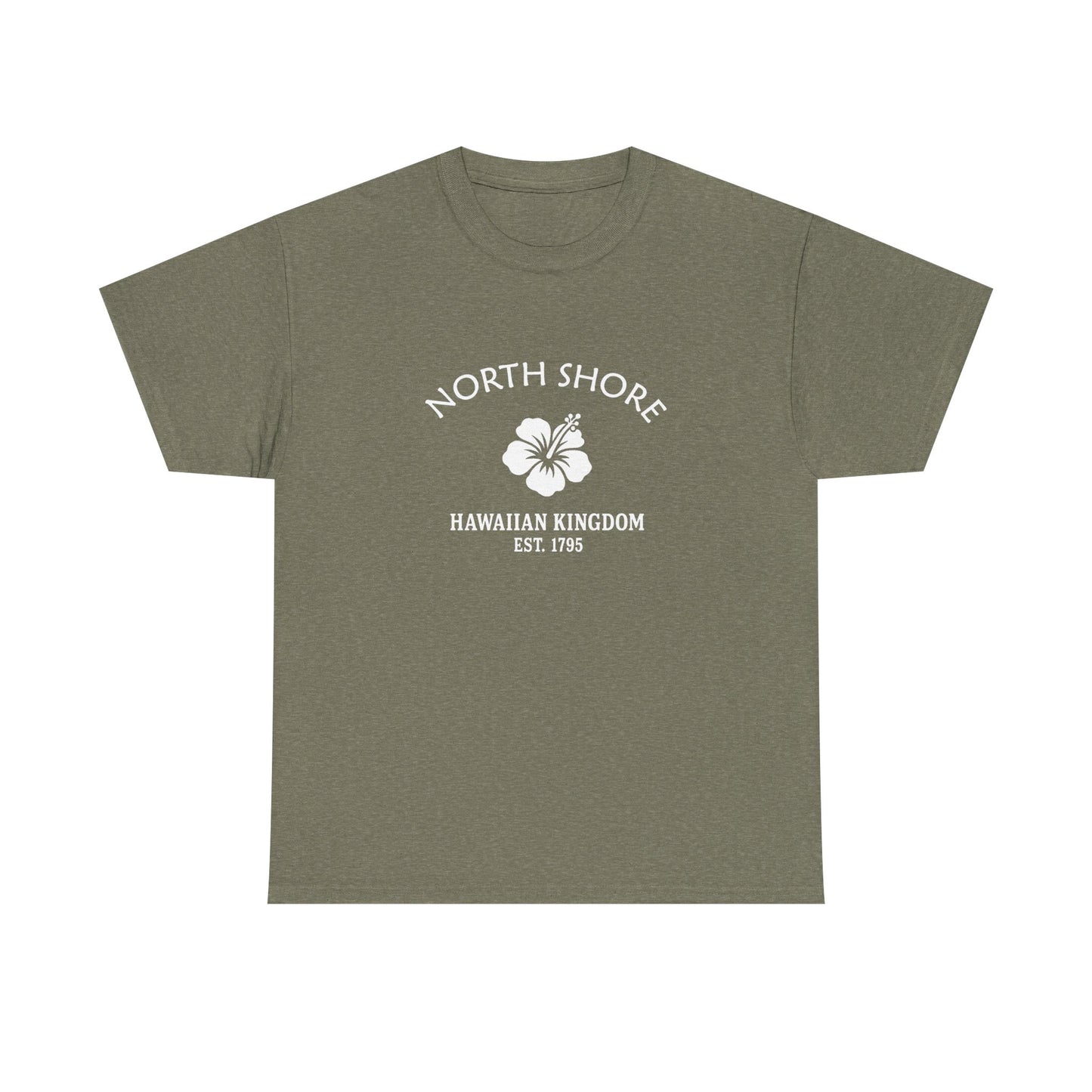
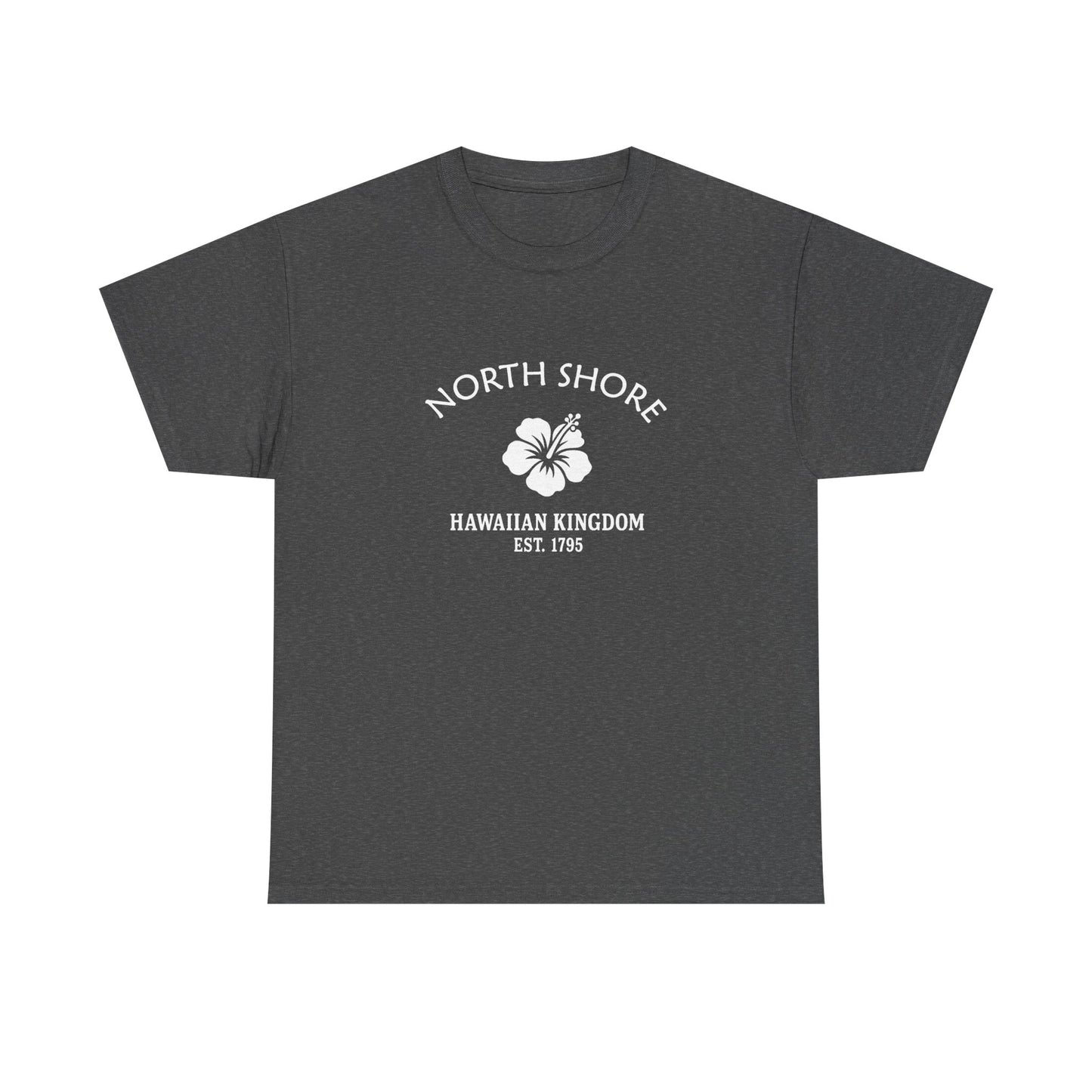
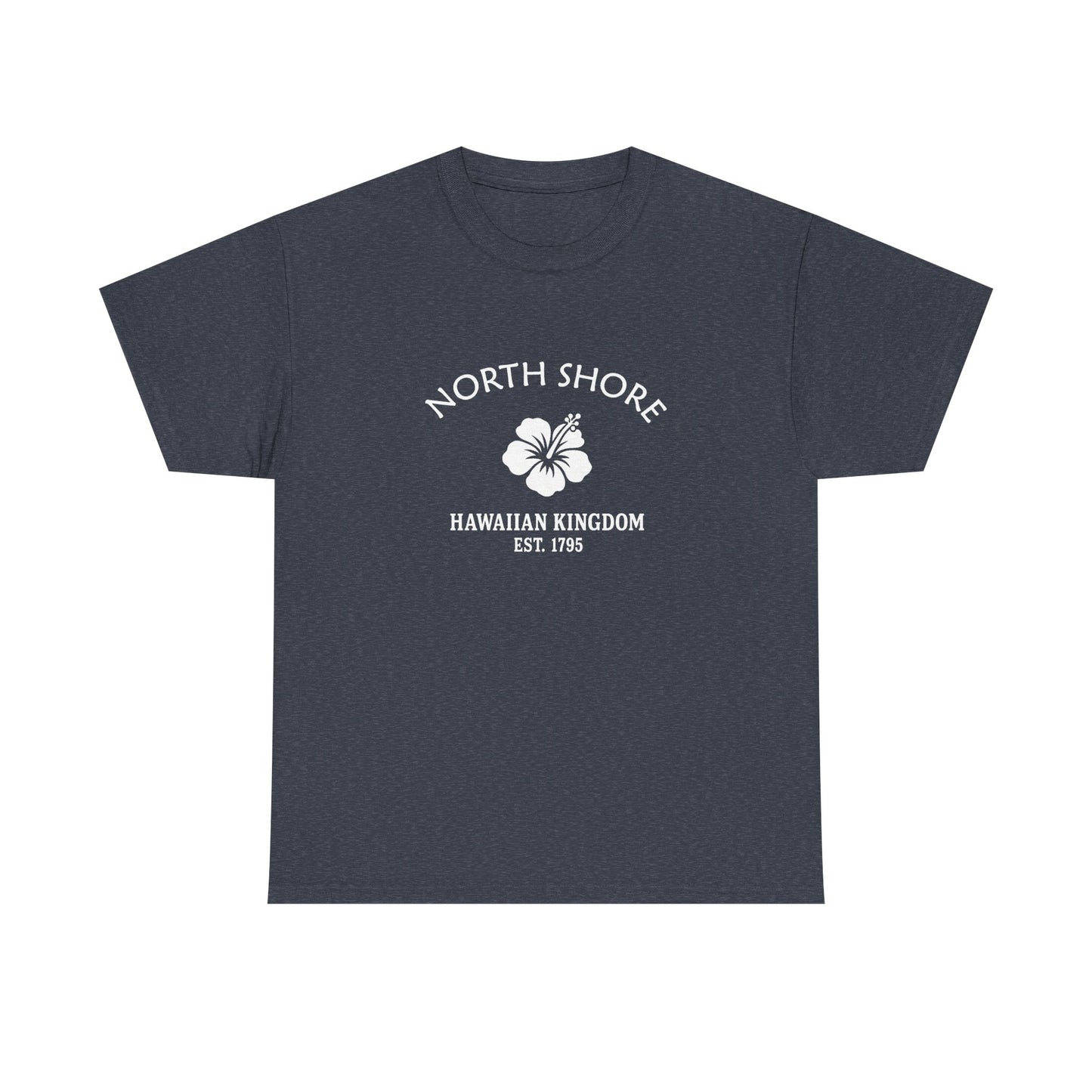
Our North Shore logo carries Hawaiʻi's hibiscus over "Hawaiian Kingdom · Est. 1795," the year Kamehameha I united the islands and founded the Kingdom of Hawaiʻi — the shared emblem of every Merlin Classics Hawaii place. Printed black-and-white with the worn look of an old travel decal or crate stamp, the hibiscus reads as the islands in shorthand: warm, oceanic, aloha. What makes this one the North Shore is the coast behind it — the Seven-Mile Miracle, Haleʻiwa town, and the winter waves.
Why People Visit the North Shore
The North Shore draws surfers and beachgoers from around the world — a pilgrimage coast in winter, a laid-back beach town in summer. Visitors come for the waves, the turtles, the food trucks, and the unmistakable sense of a Hawaiian coast that has kept its own pace. Please visit with care and respect for the communities who call it home.
