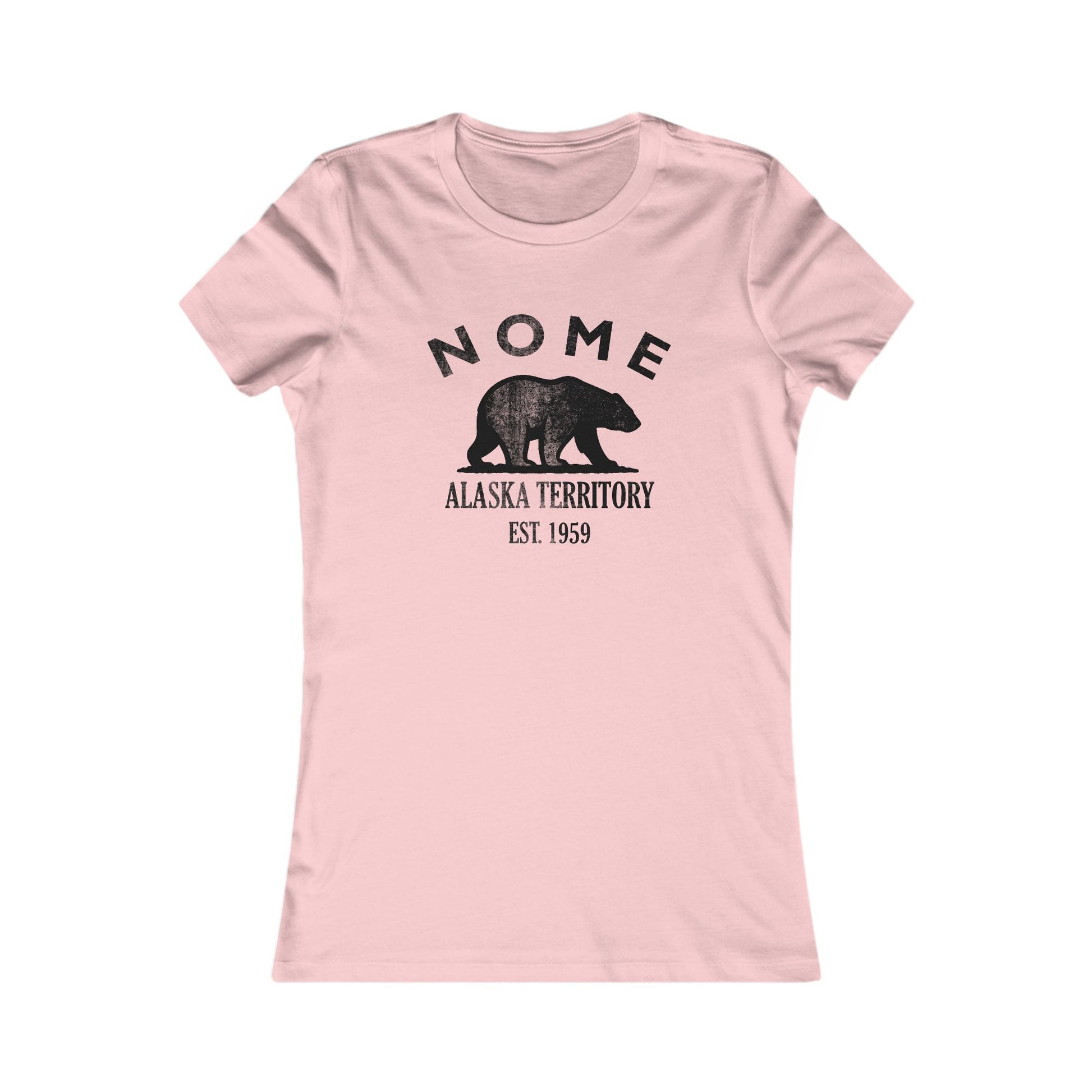
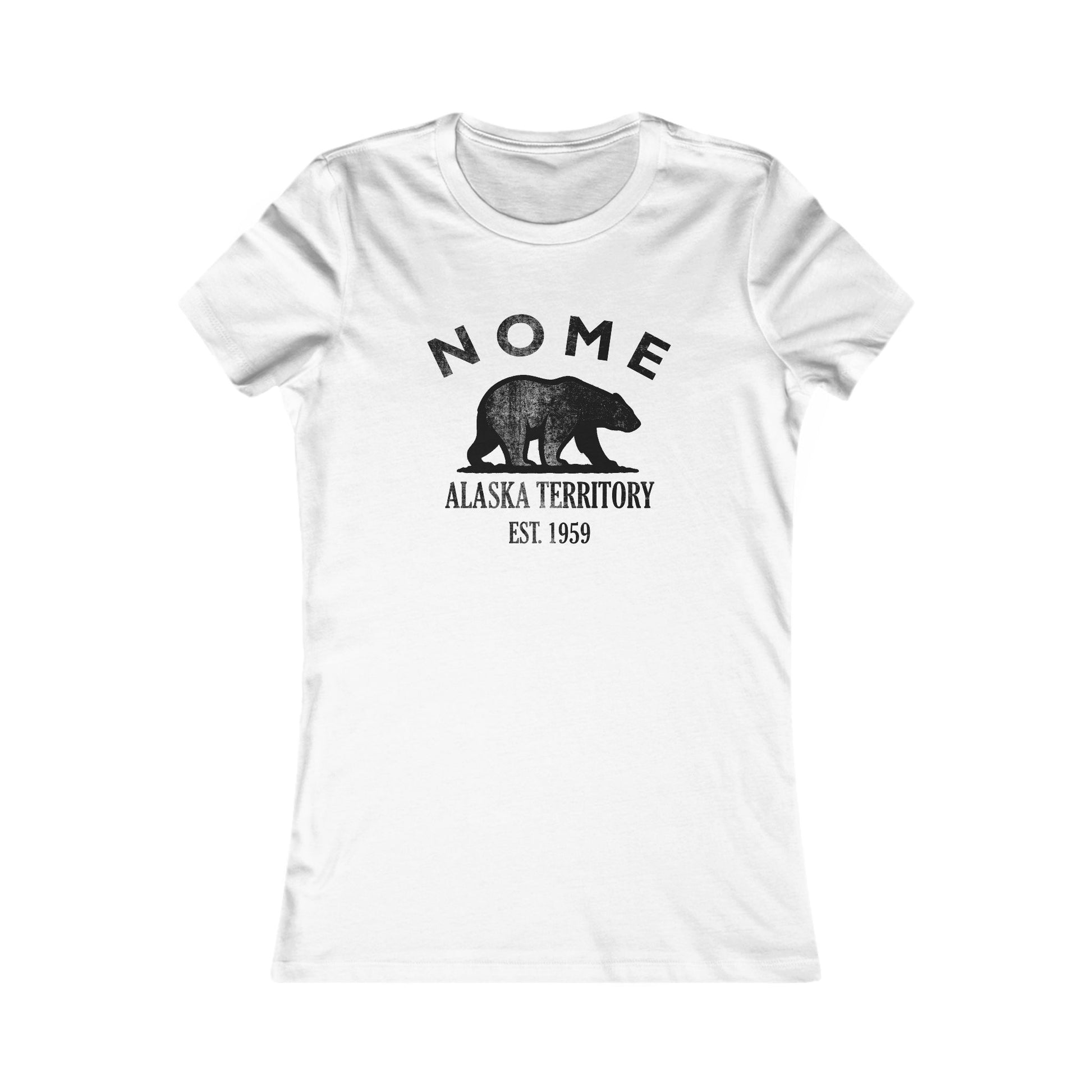
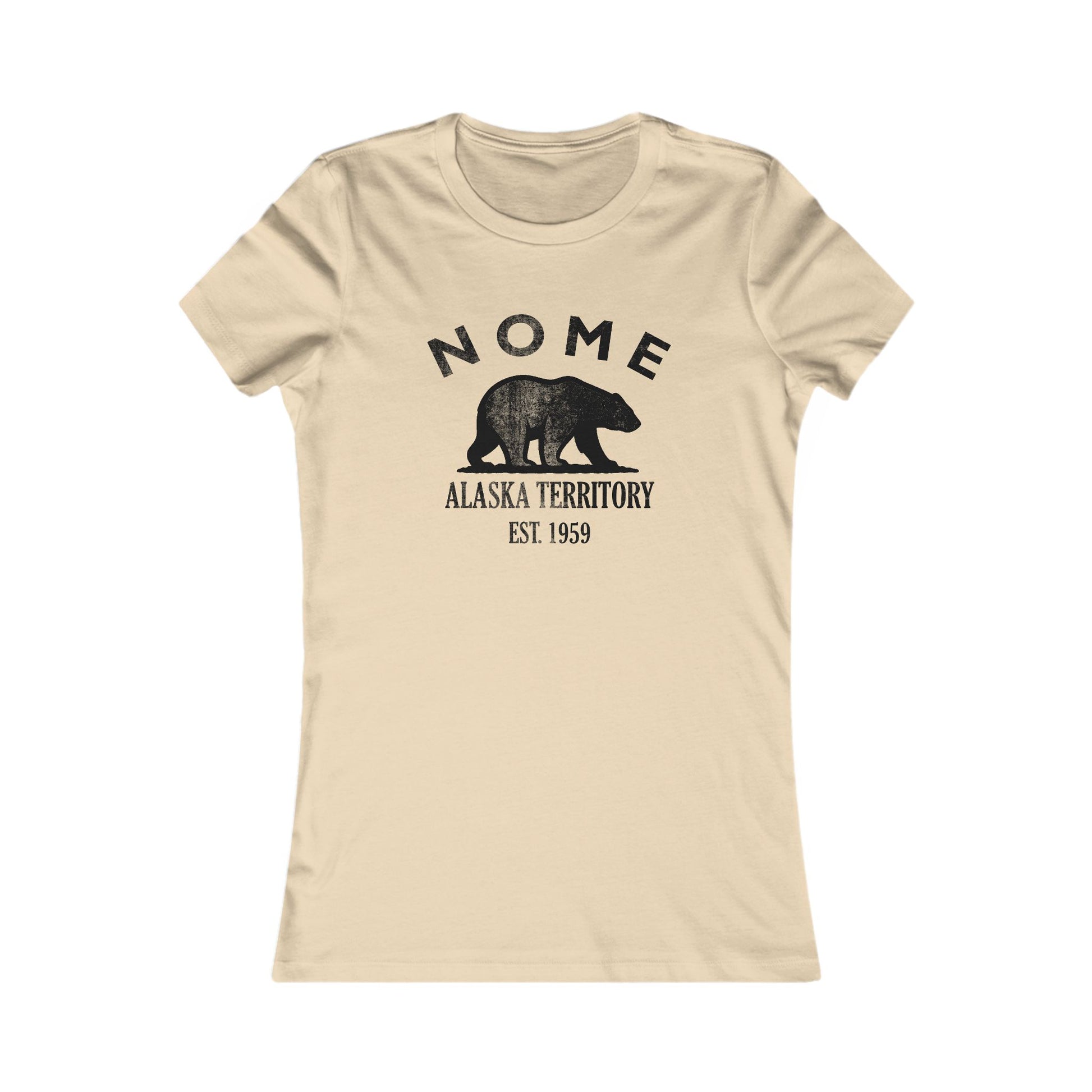
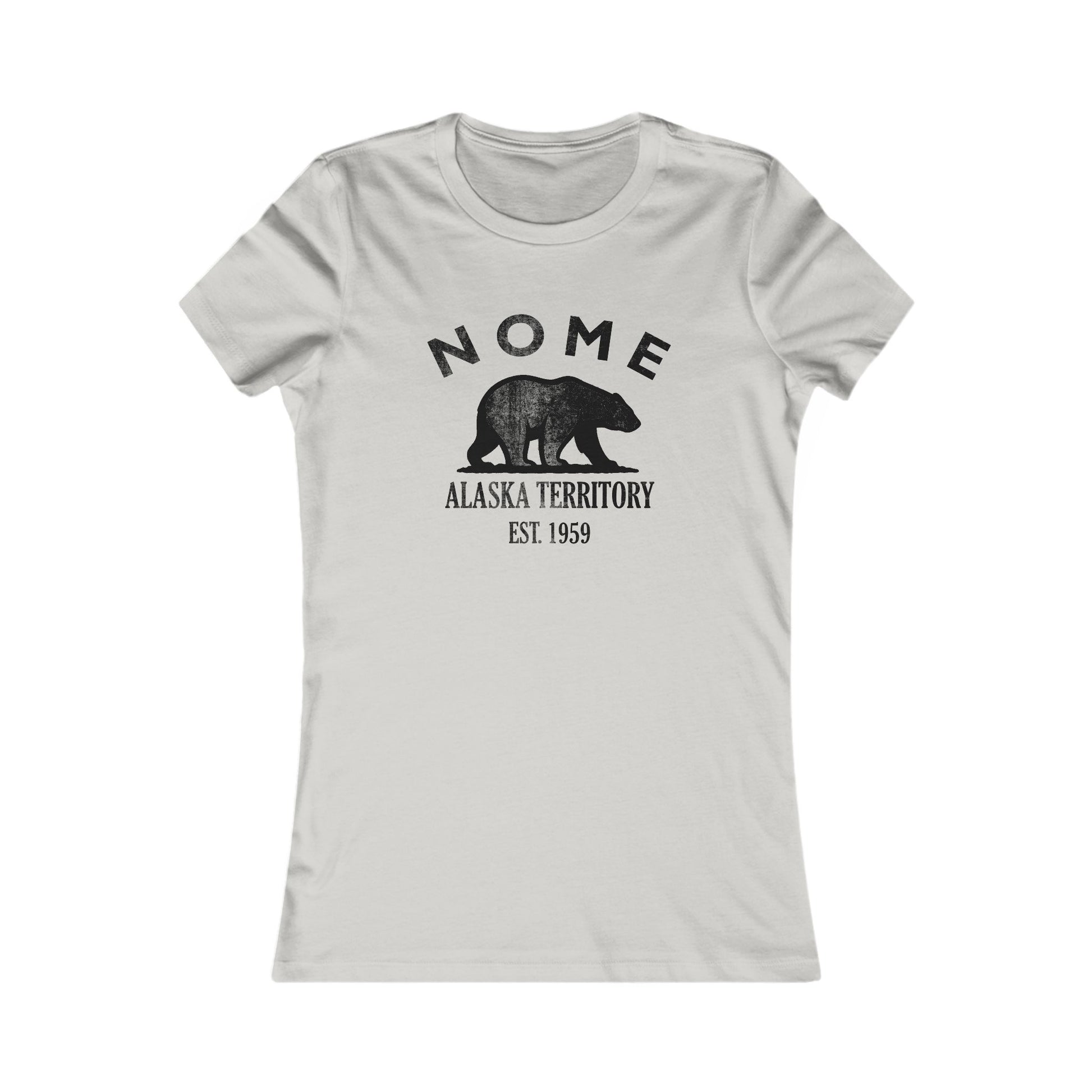
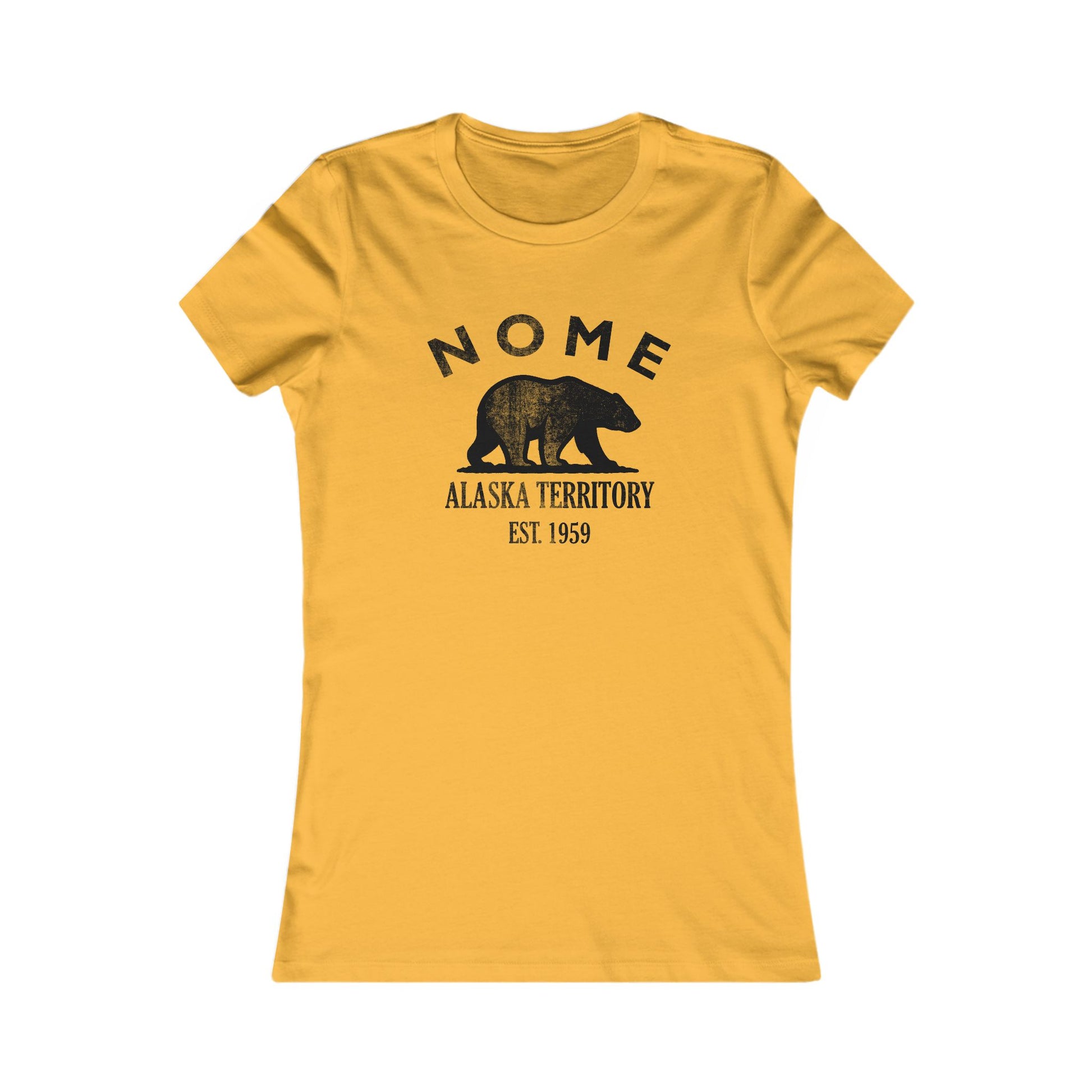
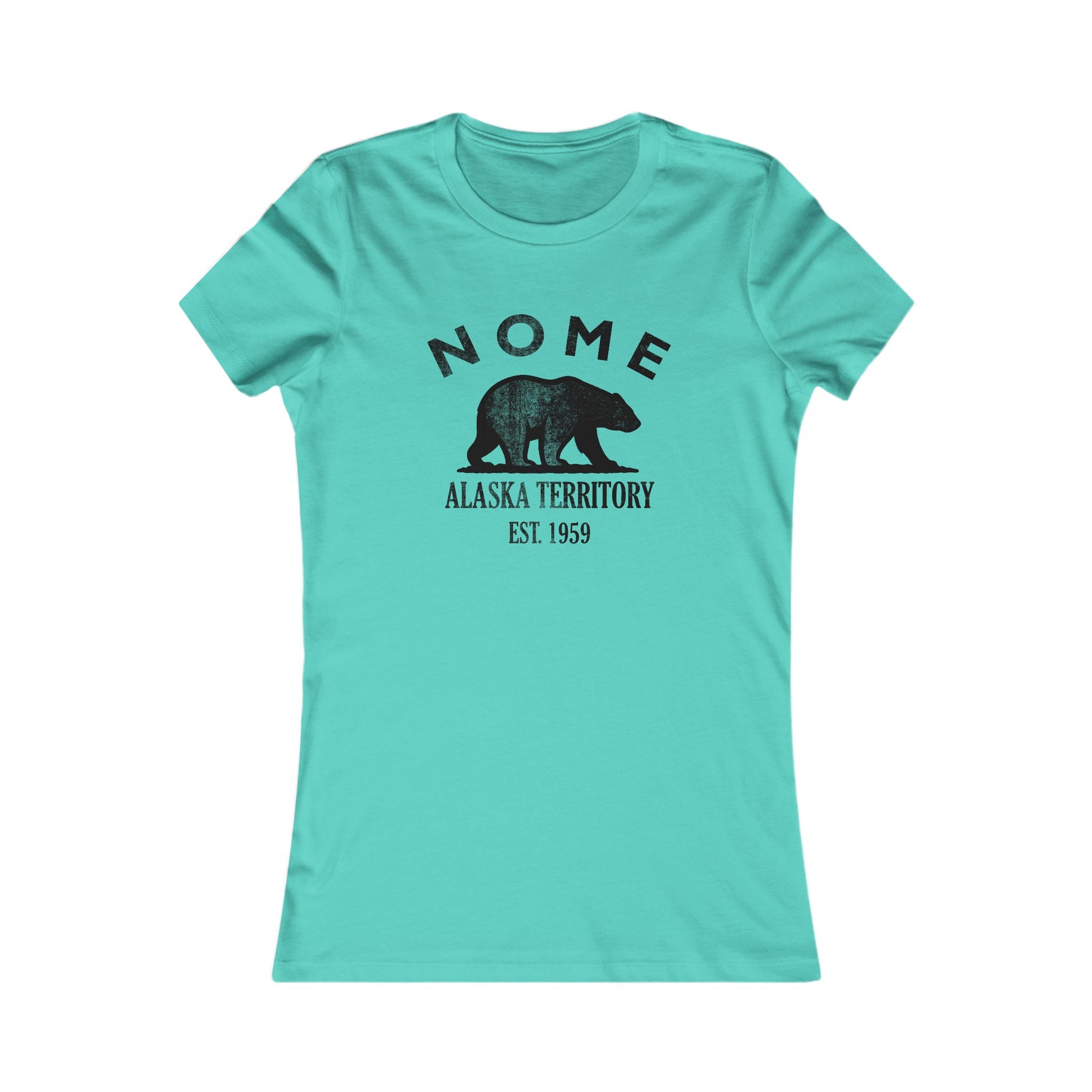
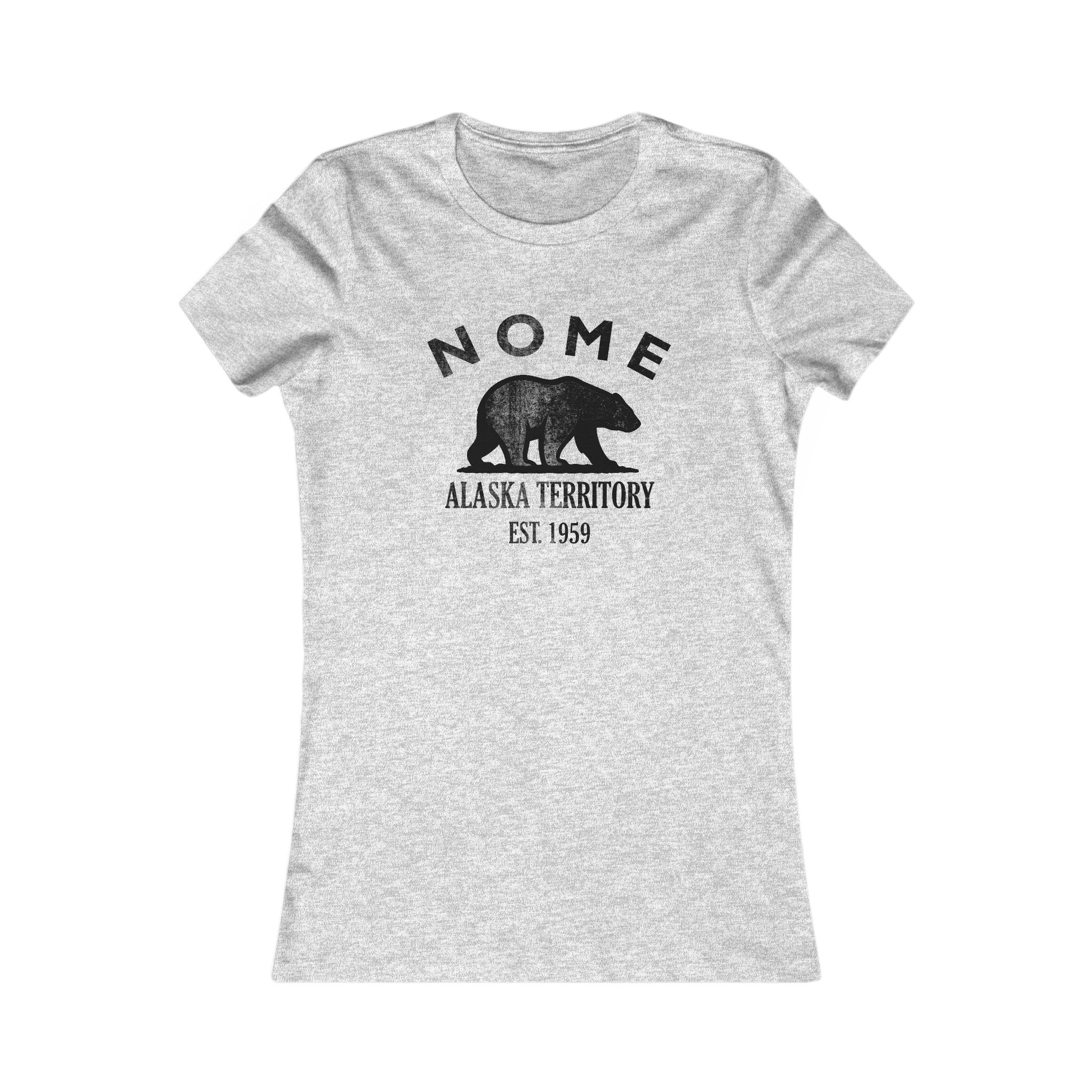
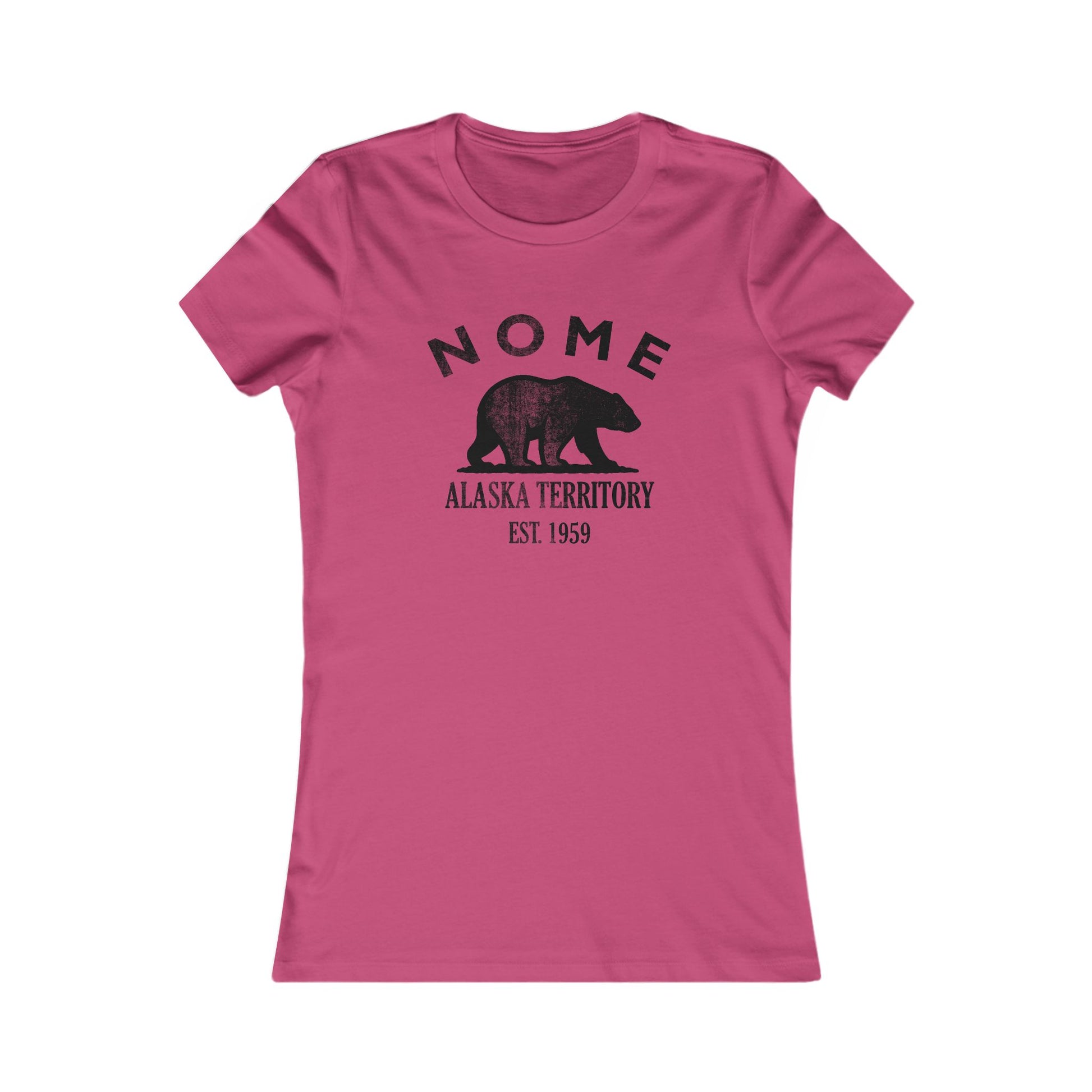
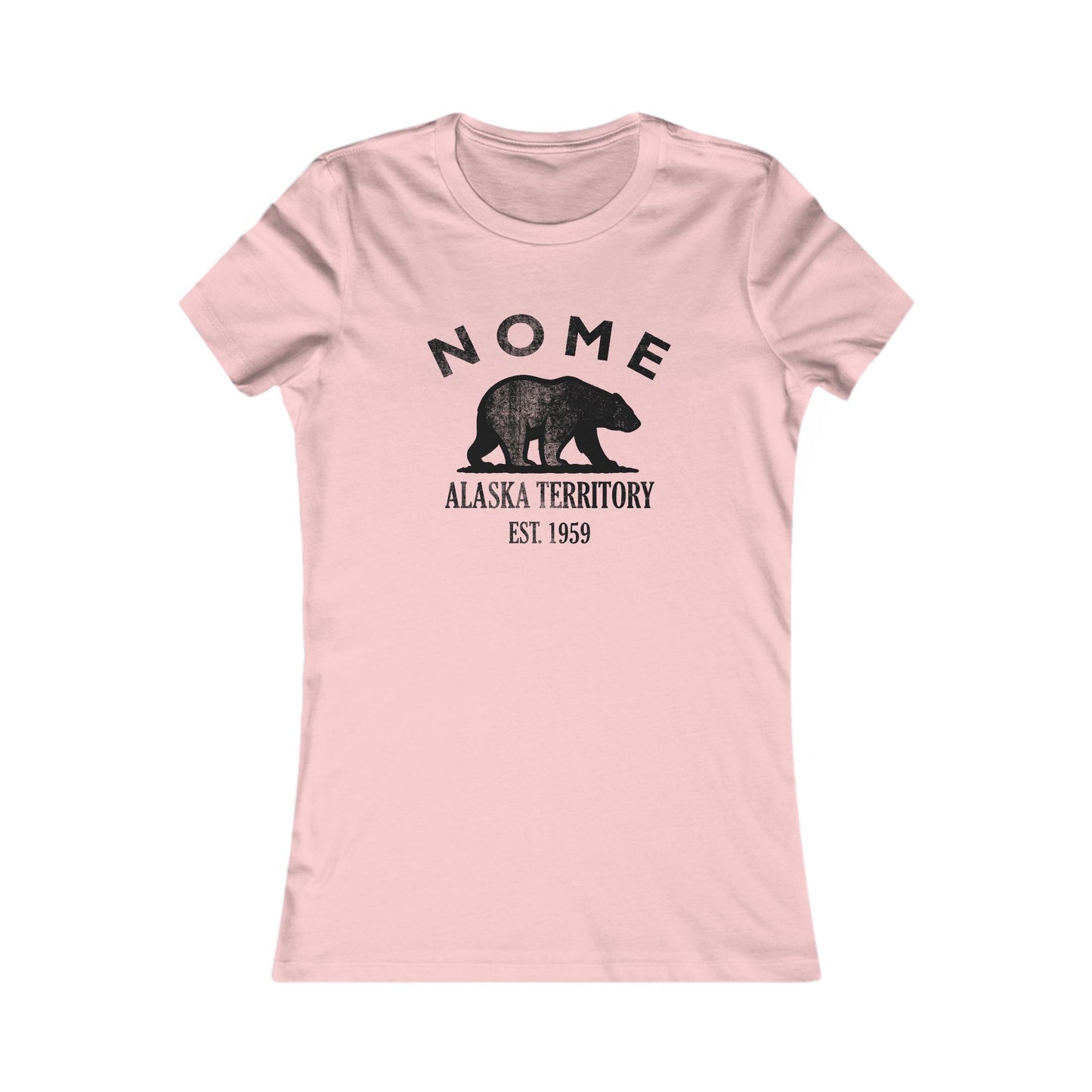
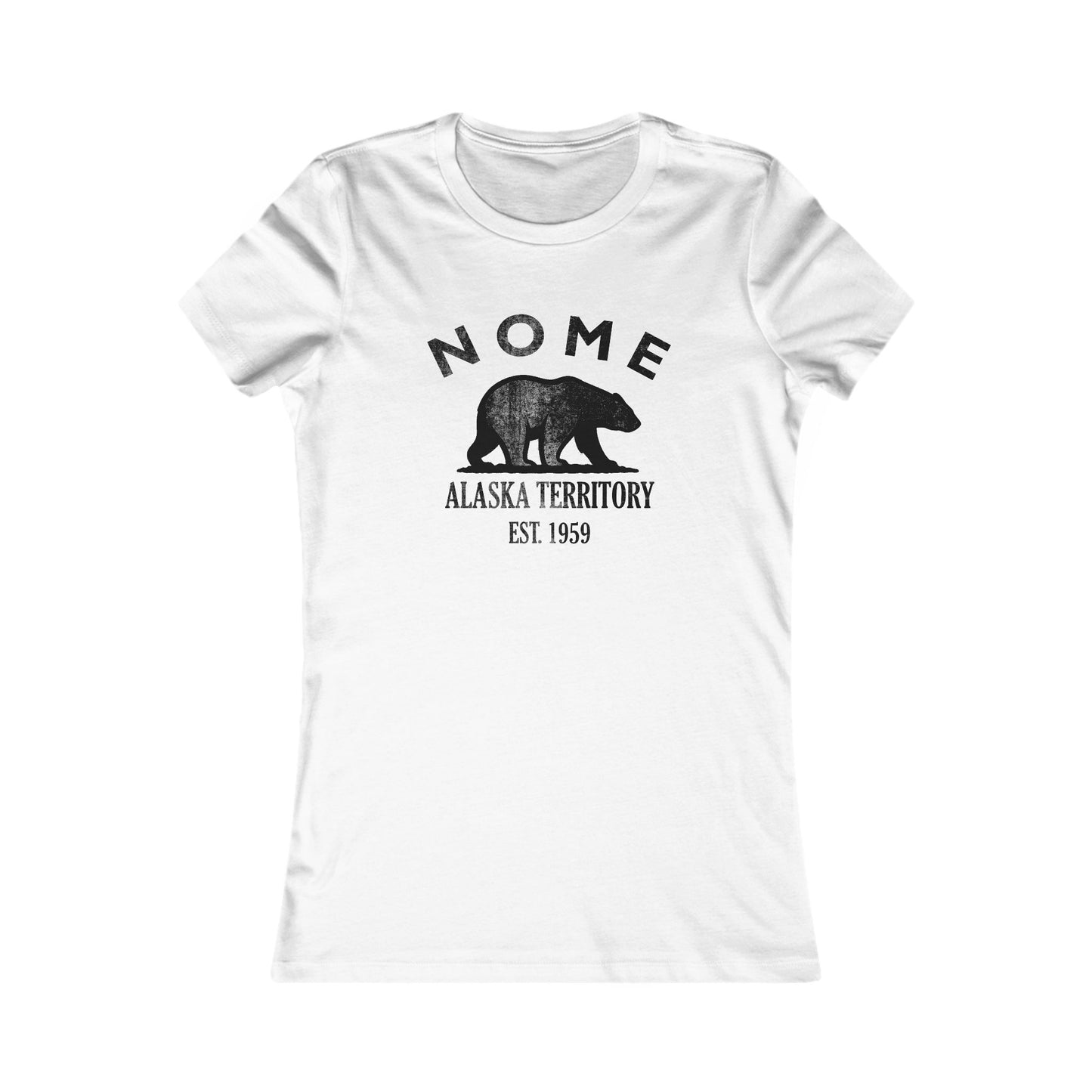
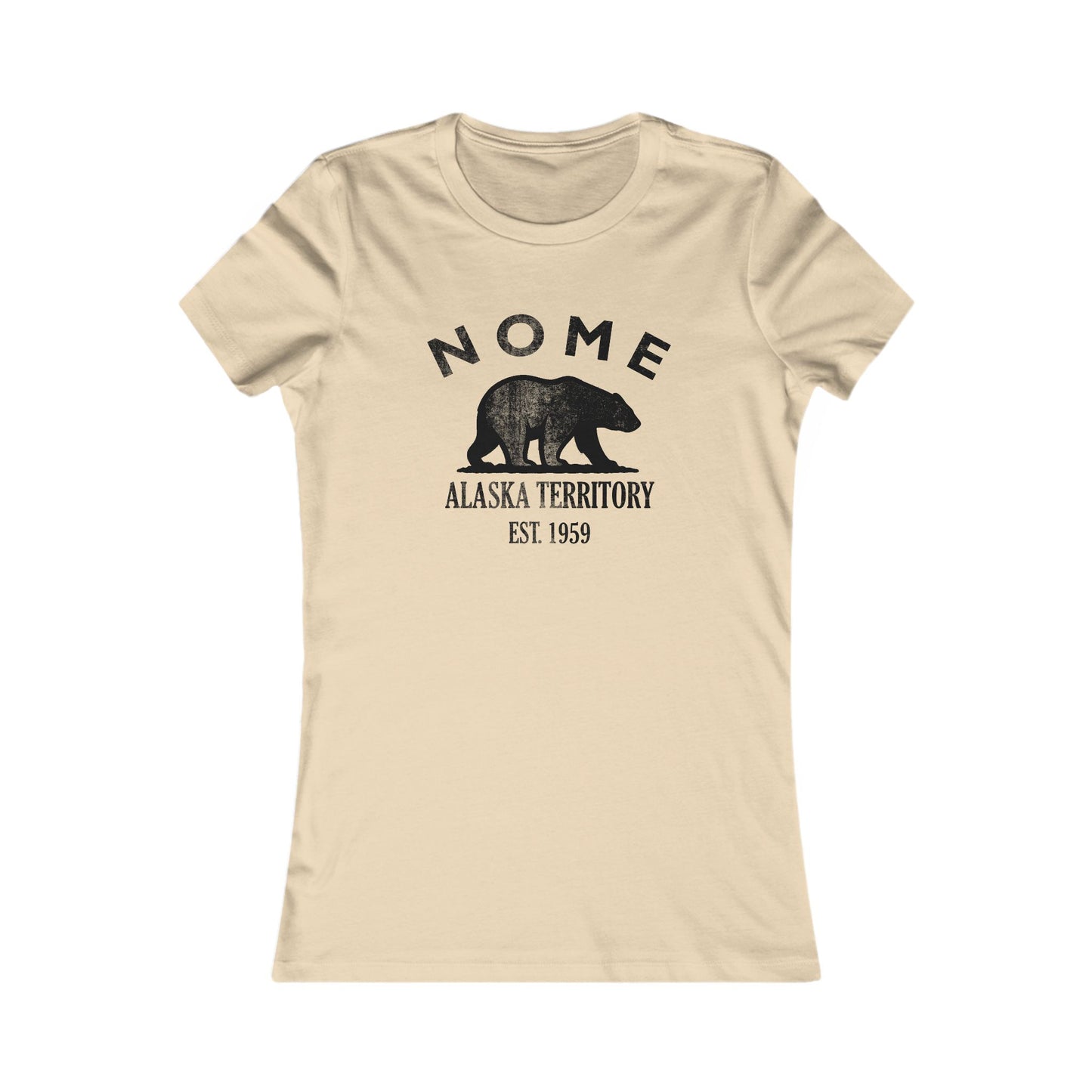
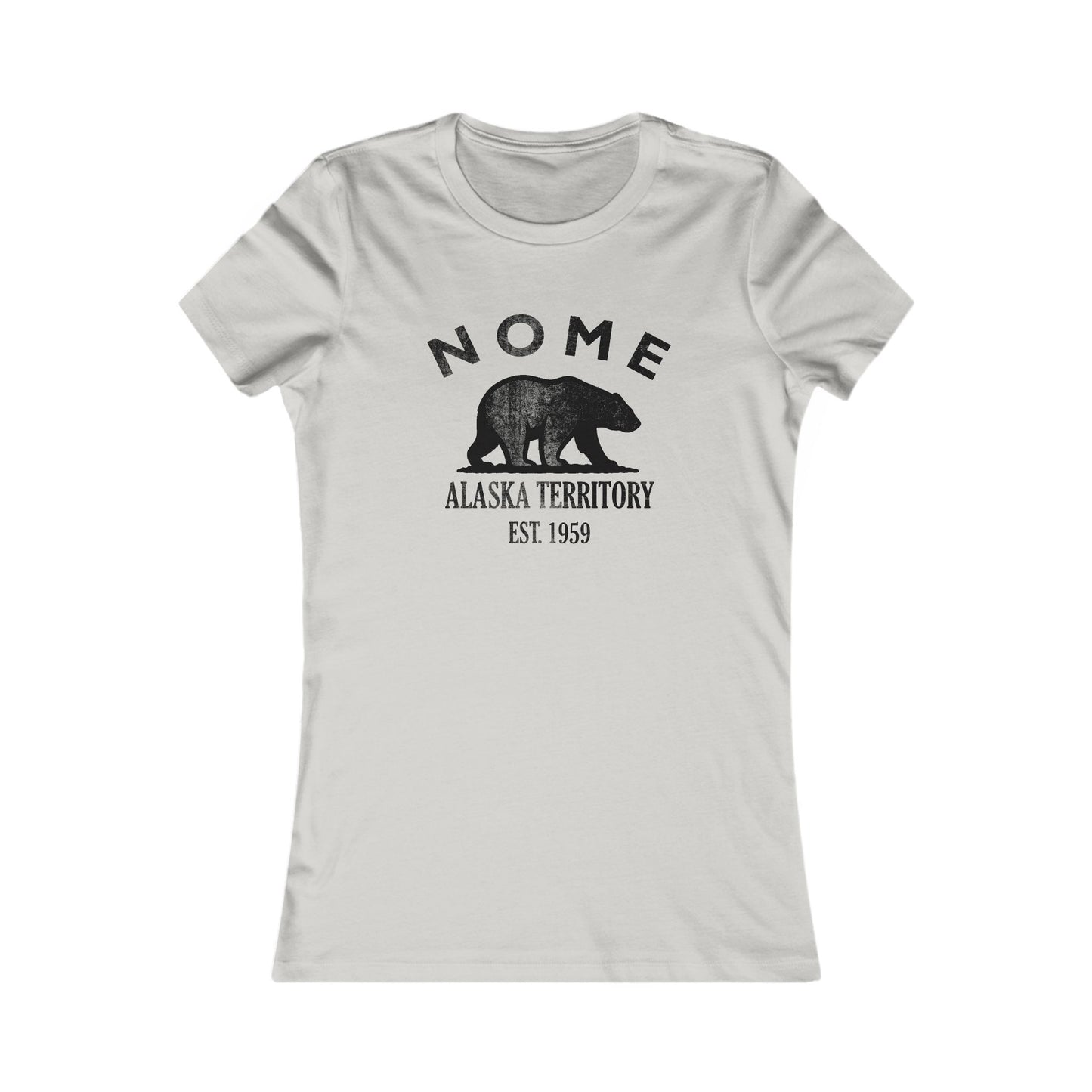
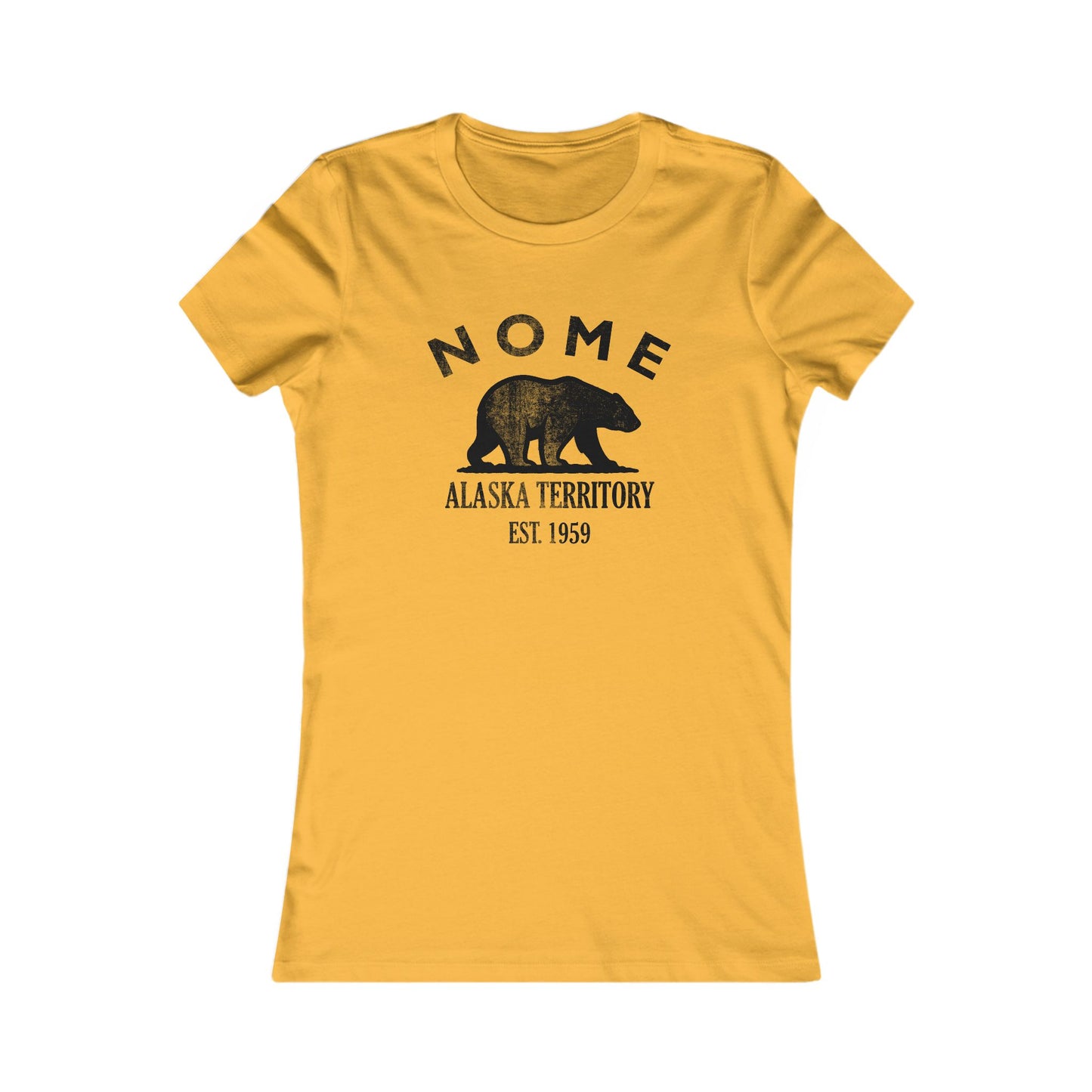
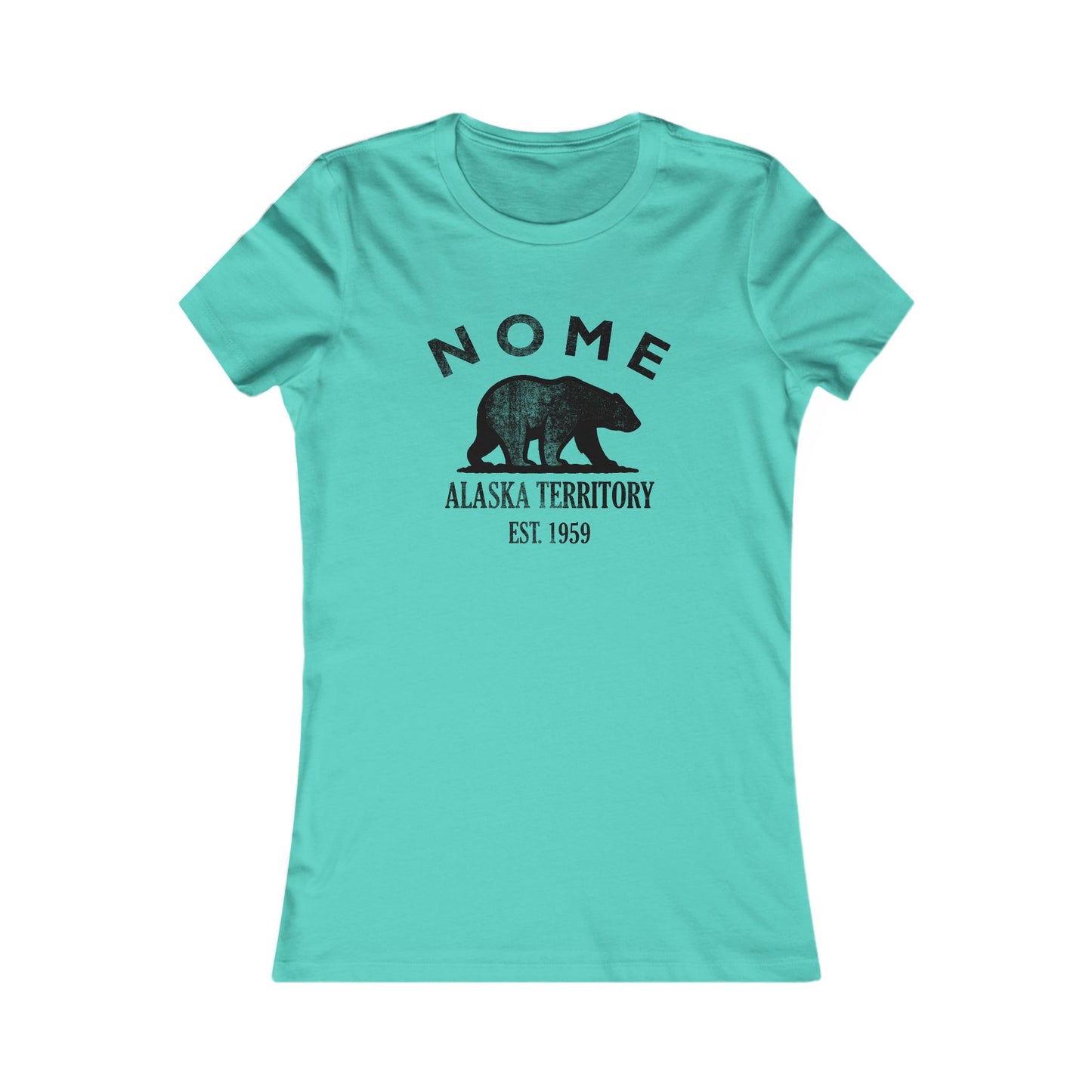
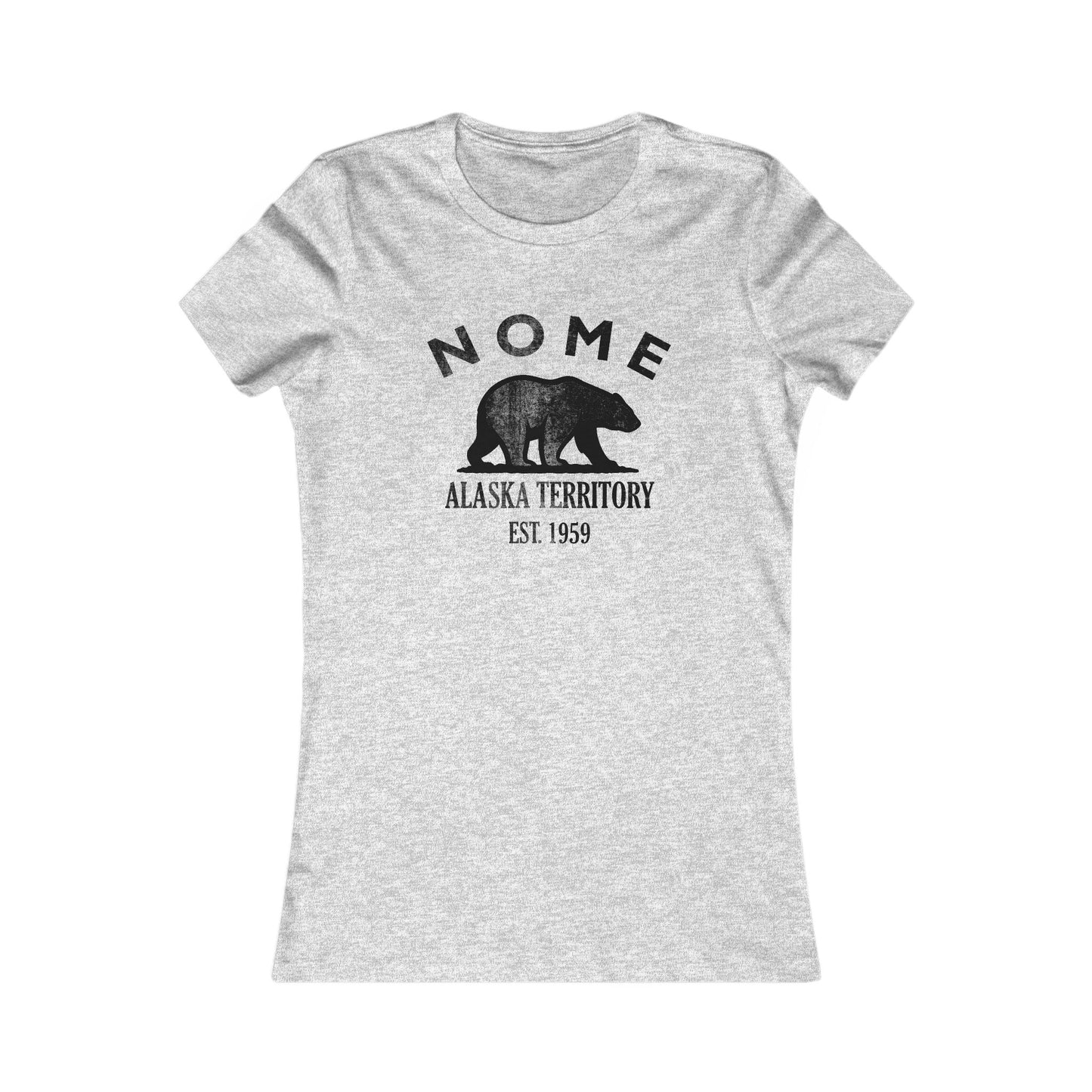
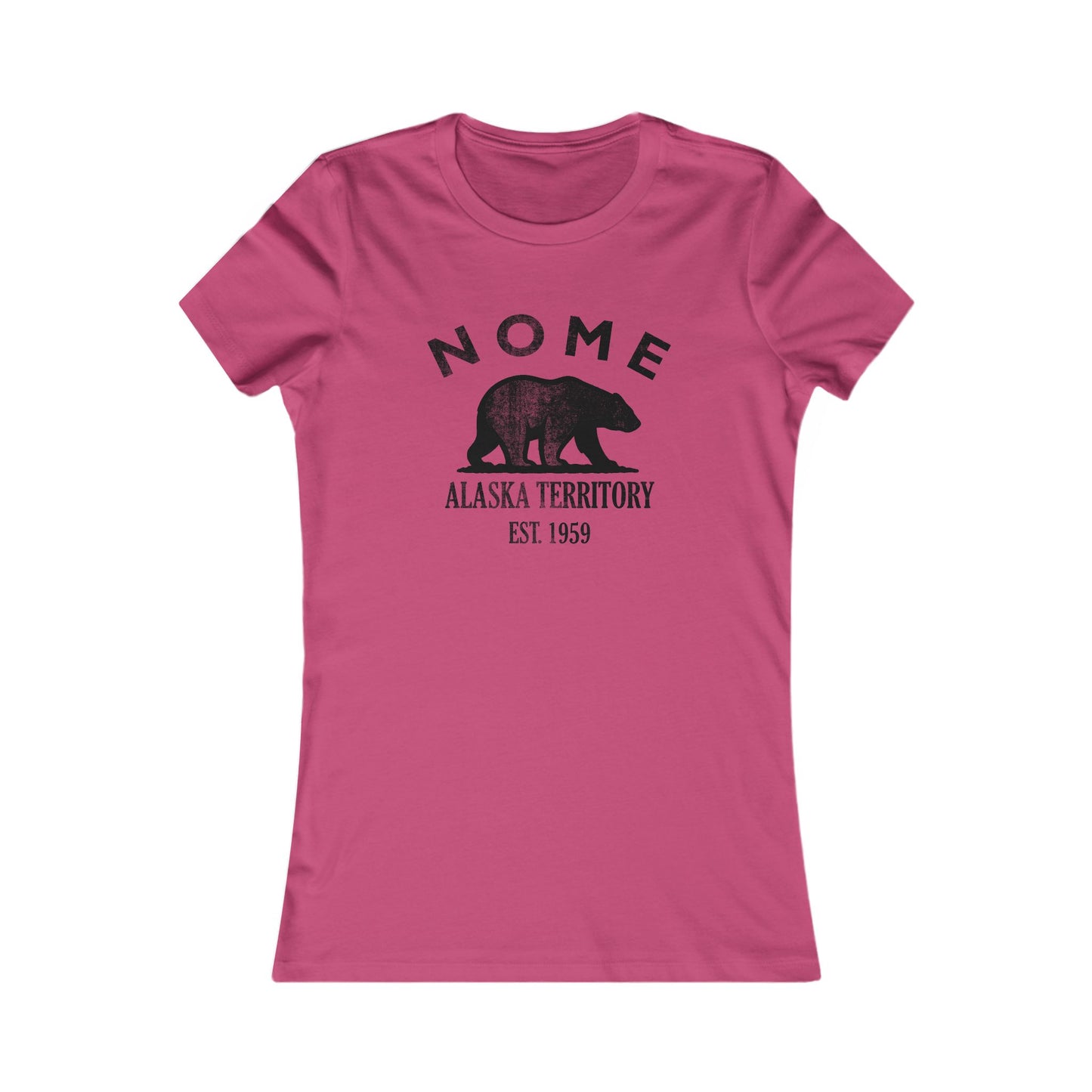
Our Nome logo carries Alaska’s distressed bear over “1959,” the year of statehood — the shared retro emblem of every Merlin Classics Alaska town. Printed in worn black-and-white that recalls a crate stamp or an outfitter’s mark, the bear is the state in shorthand: rugged, patient, at home in hard country. What makes this one Nome is everything around it — the beach that paid in gold, the dog teams, the Bering Sea at the door, and Siberia over the horizon.
The rush itself broke every rule of gold country. In the summer of 1899, gold turned up in the black sand of Nome’s own beach — and a beach below the tide line could not be staked as a claim. The ground was free to anyone with a shovel, a pan, and a strong back. Word reached Seattle, and steamers unloaded tens of thousands of stampeders onto the sand. The 1900 census counted 12,488 people, with summer estimates running far higher — for a moment, Nome was the largest city in Alaska. Tents, saloons, and false-front stores ran for miles along the shore.
Why People Visit Nome Alaska
Nome combines gold-rush history, sled-dog tradition, Bering Strait geography, and open tundra in a way no other town can. Visitors come for race week in March, for the beach where the last great American gold rush ended, for muskox and wildflowers in the long summer light, for the aurora, and for the plain fact that the road runs out here. Remote, resilient, unforgettable.
