


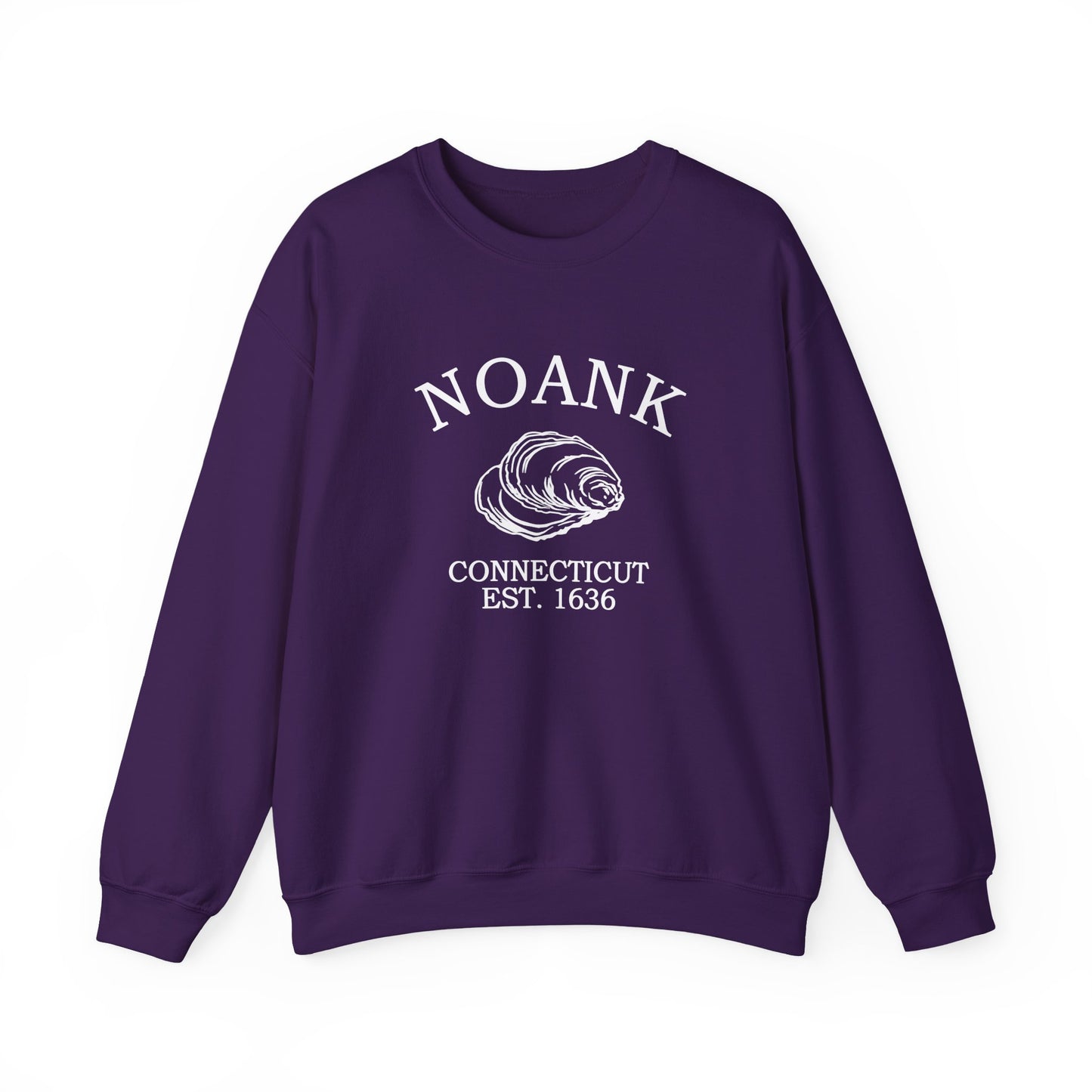

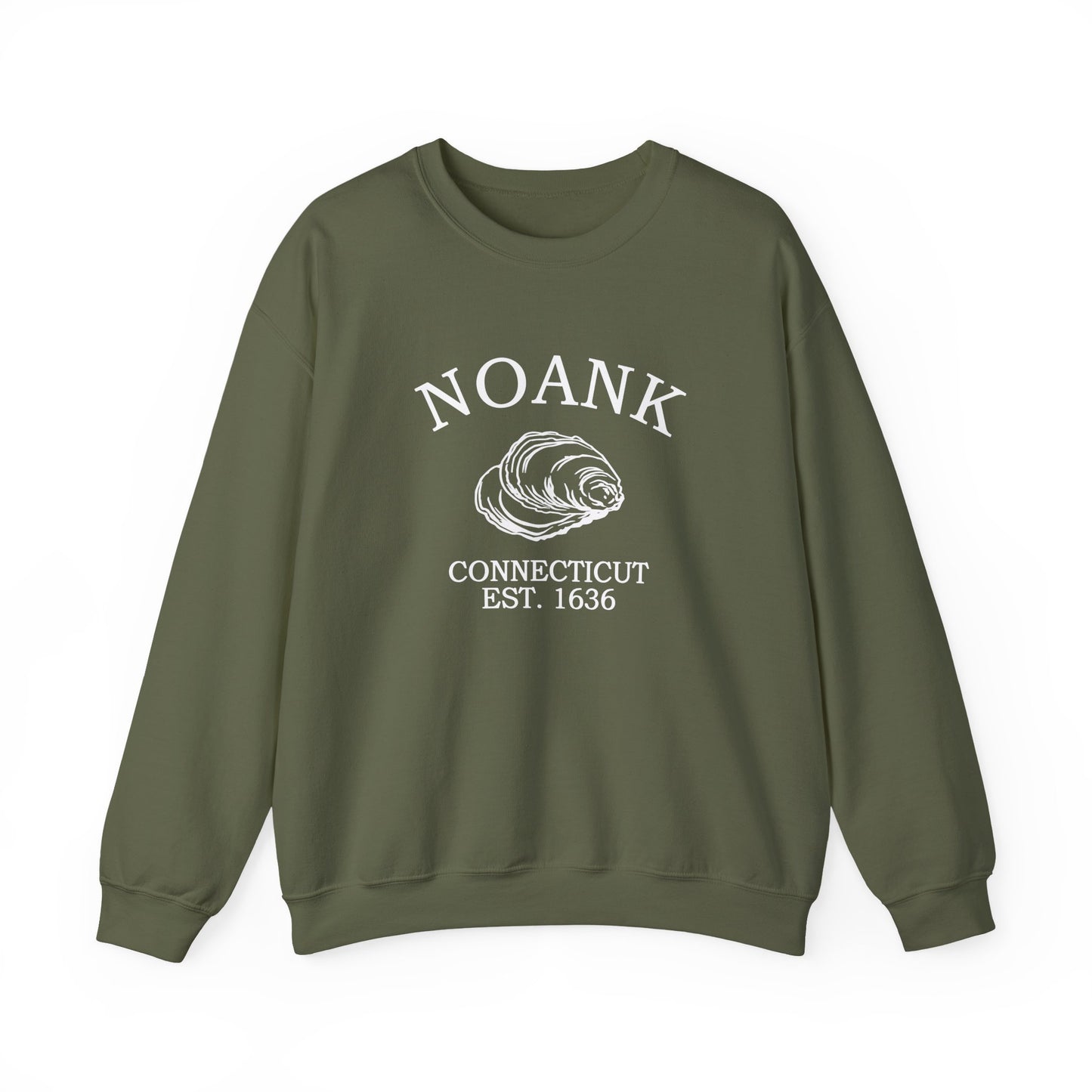
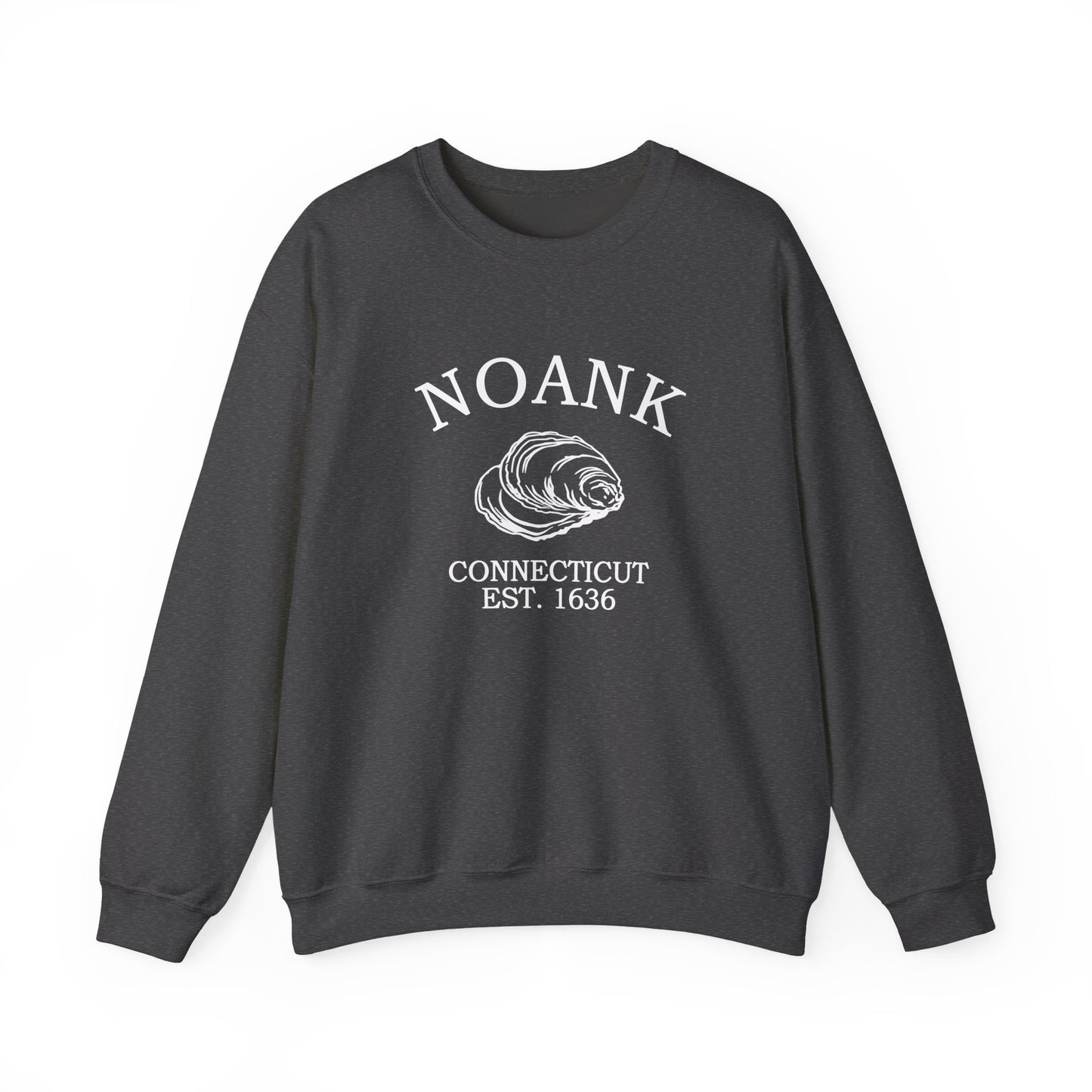
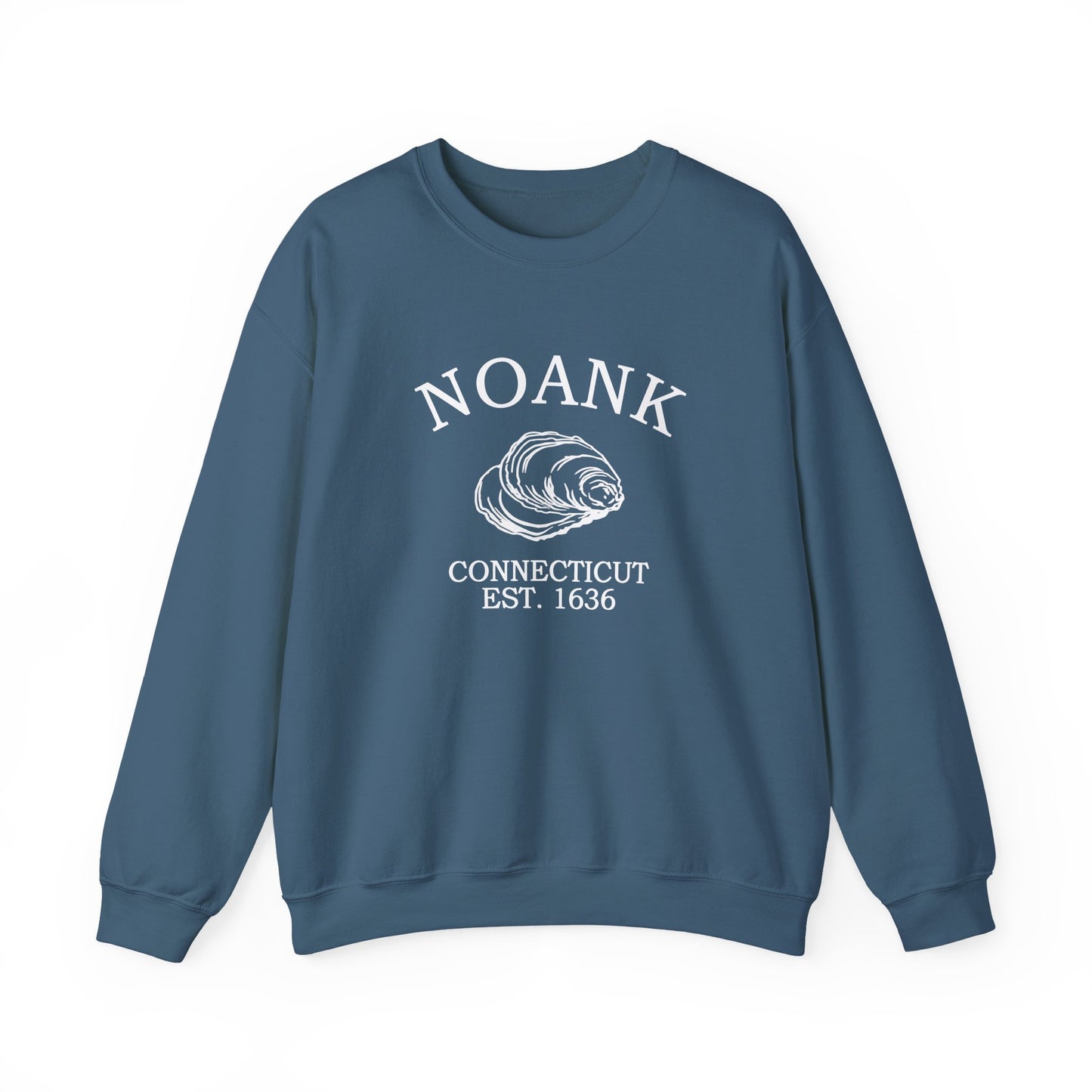
Our Noank logo carries the Connecticut shoreline's oyster above 'Est. 1636,' the year of Connecticut's colonial founding — the shared retro emblem of every Merlin Classics Connecticut place. Drawn in a worn black-and-white that recalls an old oyster-crate label, the oyster is the shoreline in shorthand: briny, working, and unpretentious. The oyster is the through-line that links Noank to every other Connecticut place we make. What makes this one Noank is everything around it — the Palmer yard and the smack, the harbor and the lobster shacks, the cottages and the steeple on the point.
The peninsula passed into colonial hands in 1712, acquired by James Morgan through a land lottery; the earliest surviving house, the Yeomans place on Palmer Cove, dates to about 1713. Growth was slow — there were still only a handful of houses by the 1820s — because the point was nearly an island, cut off to the northwest and open to the water everywhere else. It kept the isolated, end-of-the-road feeling that the village has never quite lost.
Why People Visit Noank
Noank rewards visitors who like their shoreline quiet and real — a working harbor instead of a boardwalk, a dense historic village instead of a strip. People come for the boatyards and the lobster shacks at the water's edge, for the walk through the cottage-lined historic district, and for the view out to the Sound from the end of the point. It is peaceful, photogenic, and unmistakably a Connecticut fishing village.
