


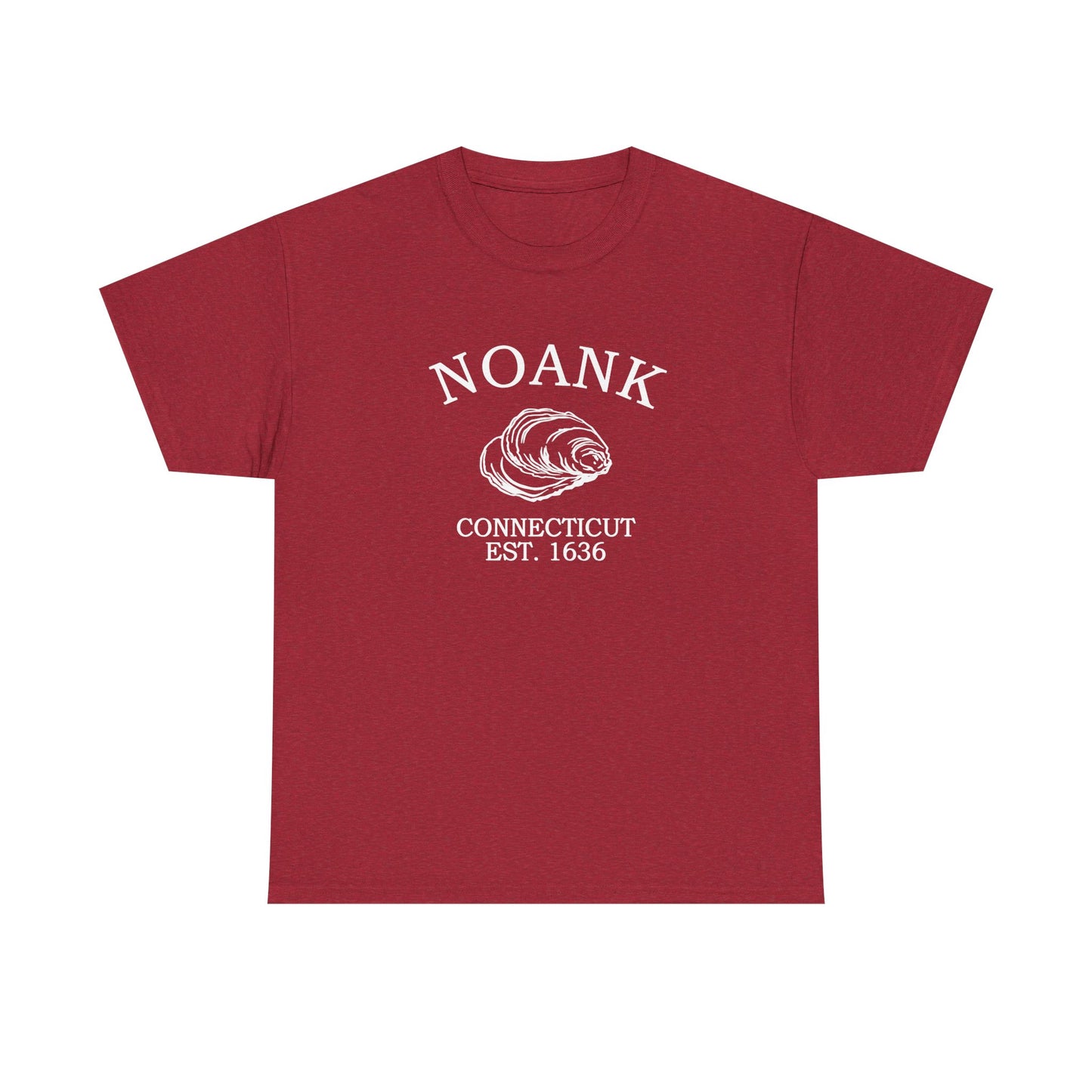
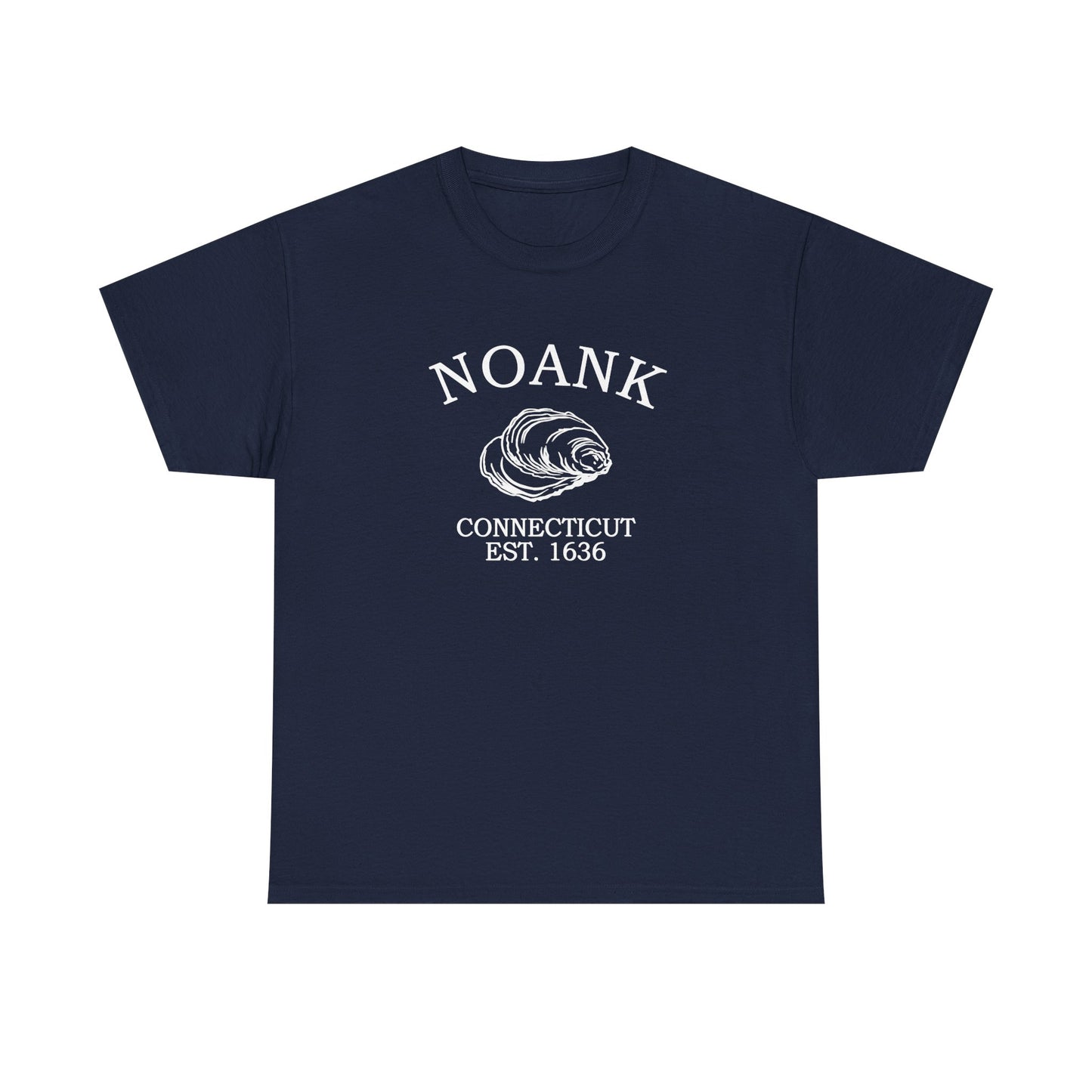
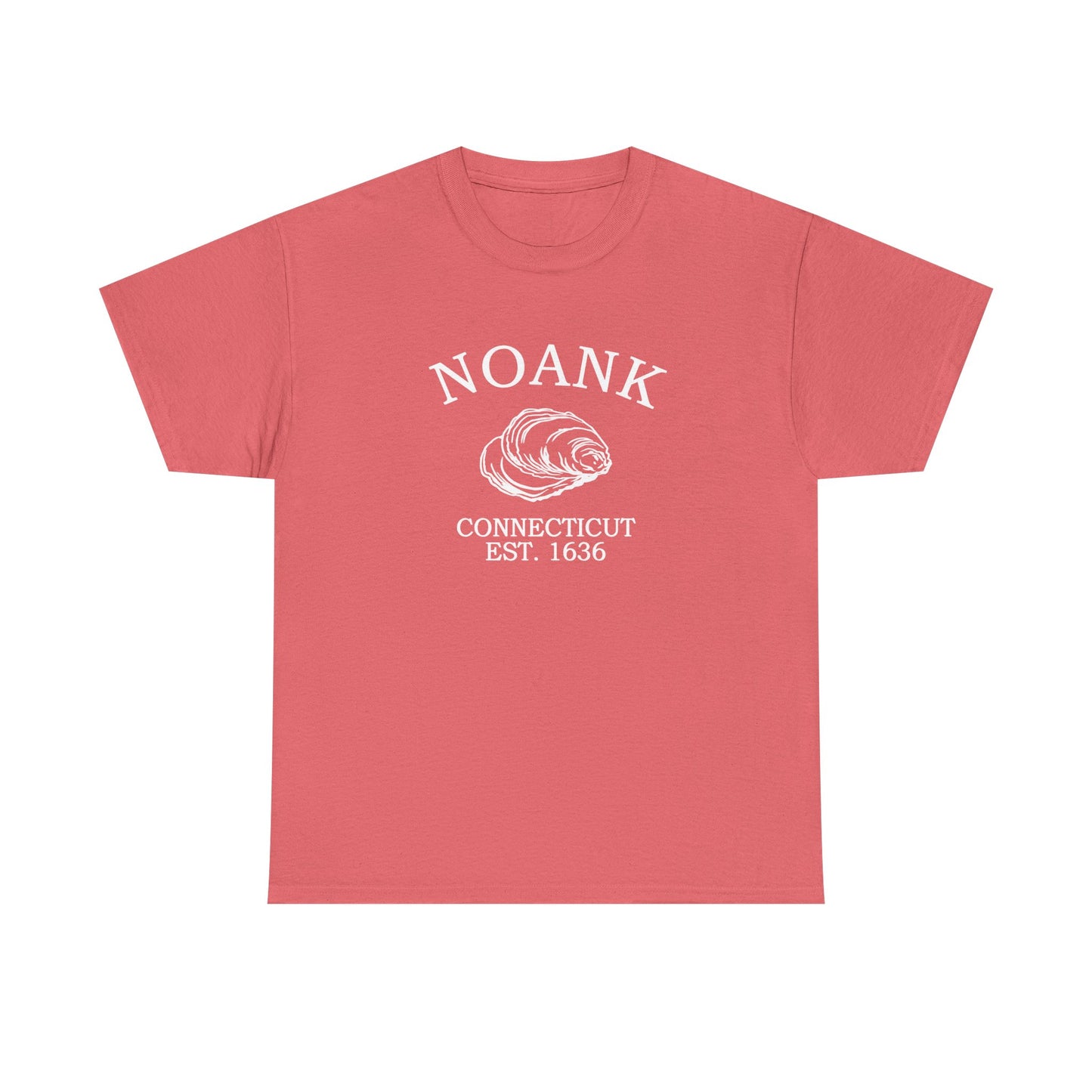
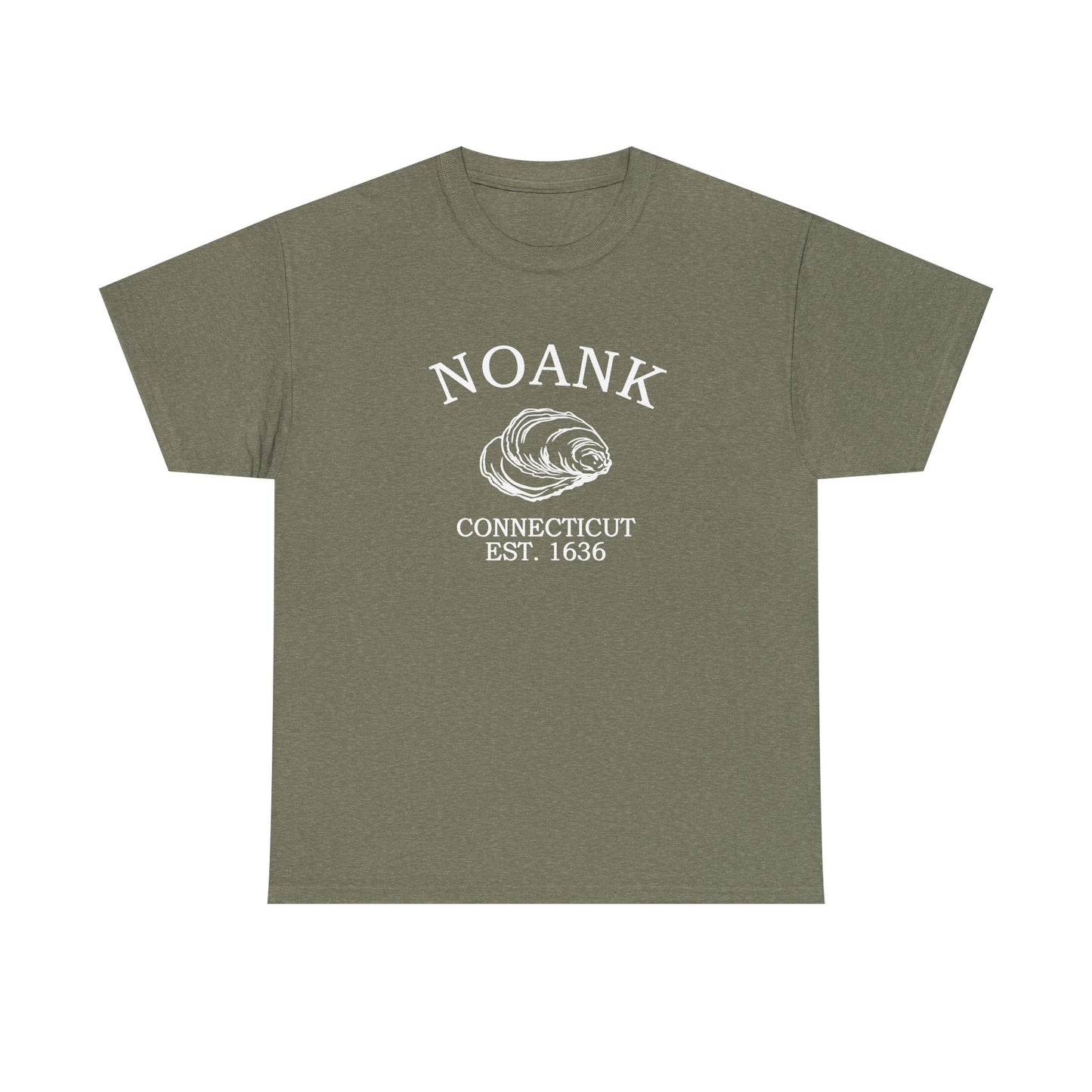
Long before the shipyards, the point belonged to the Pequot, who knew it as Nauyang — 'point of land' — and used it as a summer fishing and camping ground, documented here as early as 1614. The Pequot were forced from this coast in 1655, in the aftermath of the Pequot War; the removal was a dispossession, and it should be named as one. The village still carries the Pequot name it was given, and the Mashantucket and Eastern Pequot nations remain part of southeastern Connecticut today. Noank's story begins on Pequot ground.
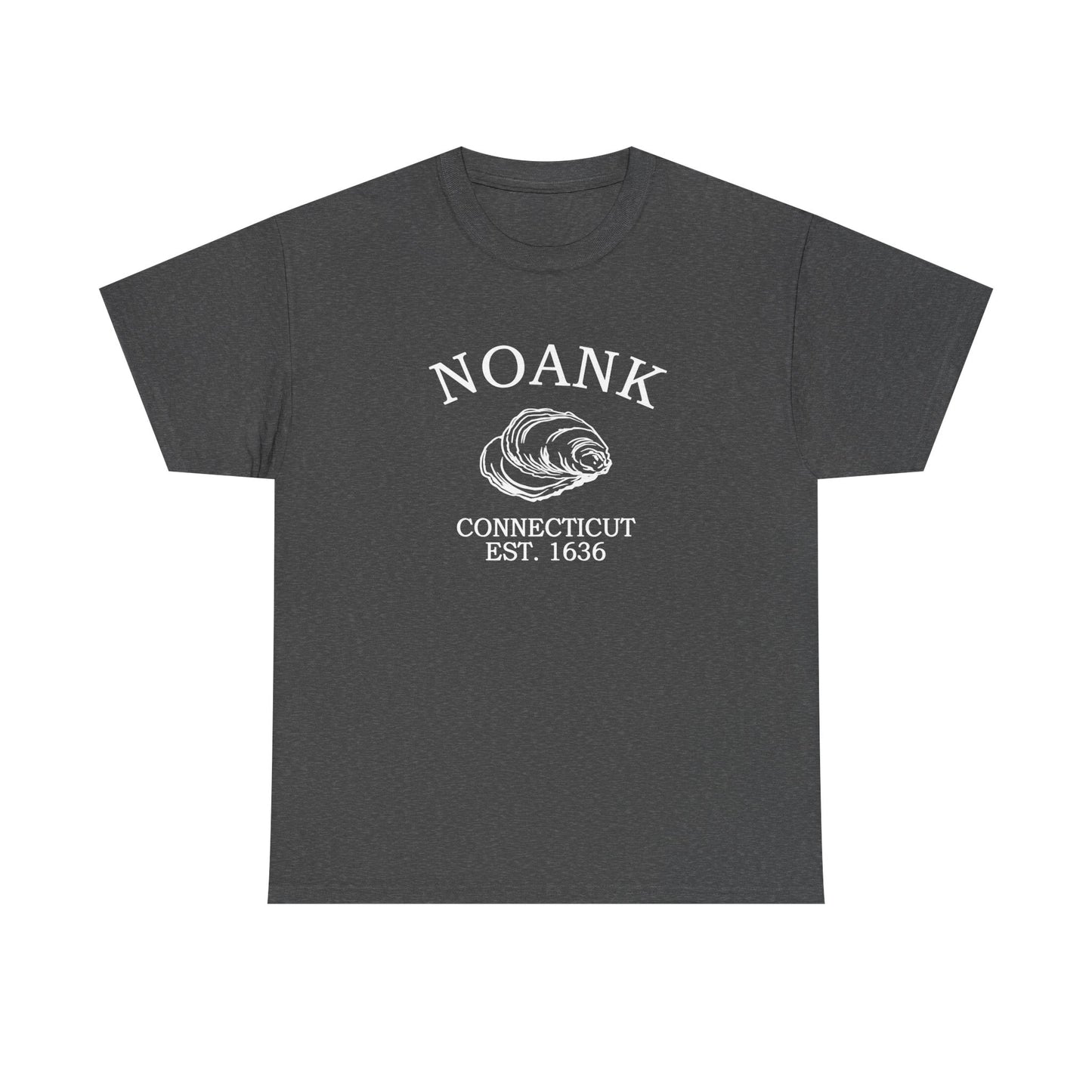
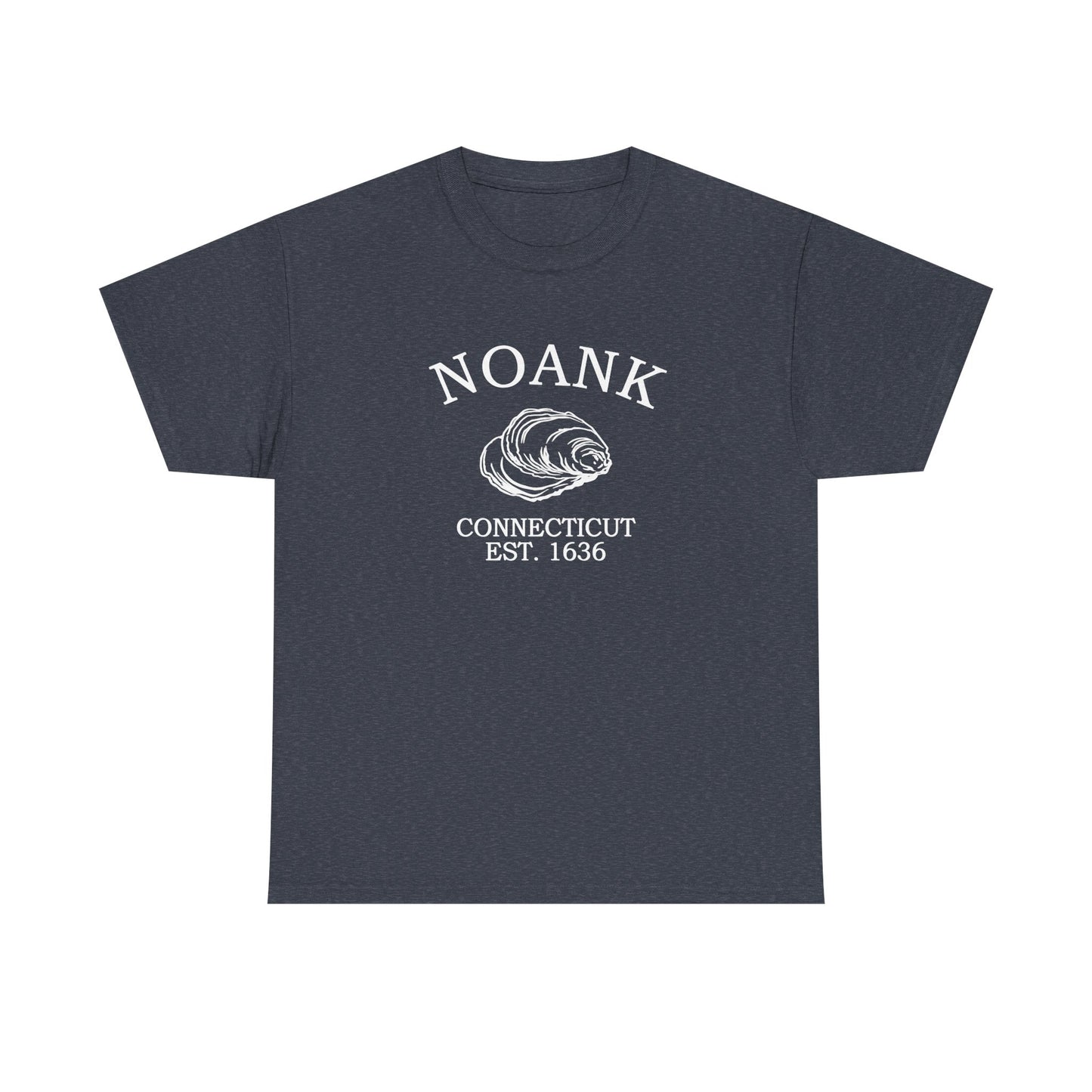
Today Noank is a working harbor at the end of the point, where the Mystic River meets Fishers Island Sound. Its story runs from the Pequot ground it was taken from, through the Morgan lottery and the slow early years, to the Palmer yard that made it a shipbuilding town and the fishing village it has remained. Our Noank designs gather that identity into wearable form — the oyster, the harbor, and the quiet of a village at the end of the road. Noank, Connecticut: a working harbor where the river meets the Sound.
Why People Visit Noank
Noank rewards visitors who like their shoreline quiet and real — a working harbor instead of a boardwalk, a dense historic village instead of a strip. People come for the boatyards and the lobster shacks at the water's edge, for the walk through the cottage-lined historic district, and for the view out to the Sound from the end of the point. It is peaceful, photogenic, and unmistakably a Connecticut fishing village.
