


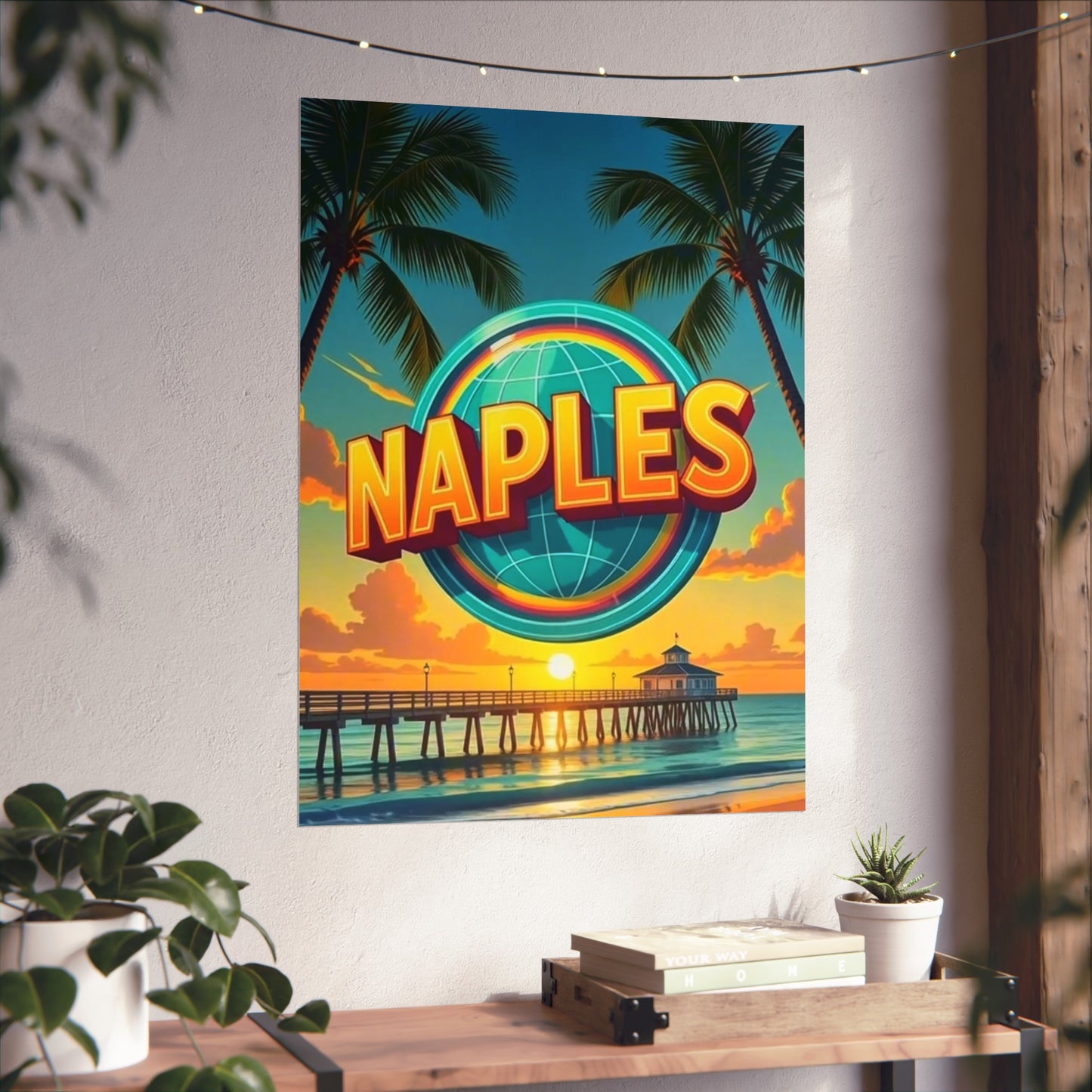
Today Naples is one of the most polished resort cities on the Gulf — the paradise its founders advertised — but underneath the galleries and the golf is a genuine Old-Florida story: a winter colony a Louisville newspaperman named after an Italian bay, a pier that hurricanes keep testing and the town keeps rebuilding, and an Everglades frontier that gave the world the swamp buggy. Our Naples designs gather that identity into wearable form — the pier, the alligator, the 1886 founding, the Paradise Coast. From a newspaperman's American Bay of Naples to the pier that storms could never keep down — wear a little of the Old-Florida Paradise Coast.
A few landmarks carry the early colony into the present. Historic Palm Cottage, built in 1895 of tabby mortar — a mix of lime, crushed shell, and beach sand — is the oldest house in Naples and today the home of the Naples Historical Society. Out past the edge of town, the gladesman country gave Naples its other identity: the Swamp Buggy Races, first run formally on November 12, 1949, when home-built marsh machines tore through the mud at the start of a tradition that still runs today. And after mid-century growth nearly buried the old main street, the 1990s brought a celebrated revival of Fifth Avenue South — a redesign that turned the historic town-to-pier street into one of the country's most admired walkable downtowns.
Why People Visit Naples Florida
Most people come to Naples for the beaches, the golf, and the Gulf sunsets — but the city rewards anyone who looks for the older layer underneath: a winter colony planted in 1886 and named for an Italian bay, a pier rebuilt through more than a century of hurricanes, and a frontier-grit swamp-buggy tradition at the edge of the Everglades. It's bright, warm, and welcoming, with its real history sitting quietly alongside the resort polish.
