


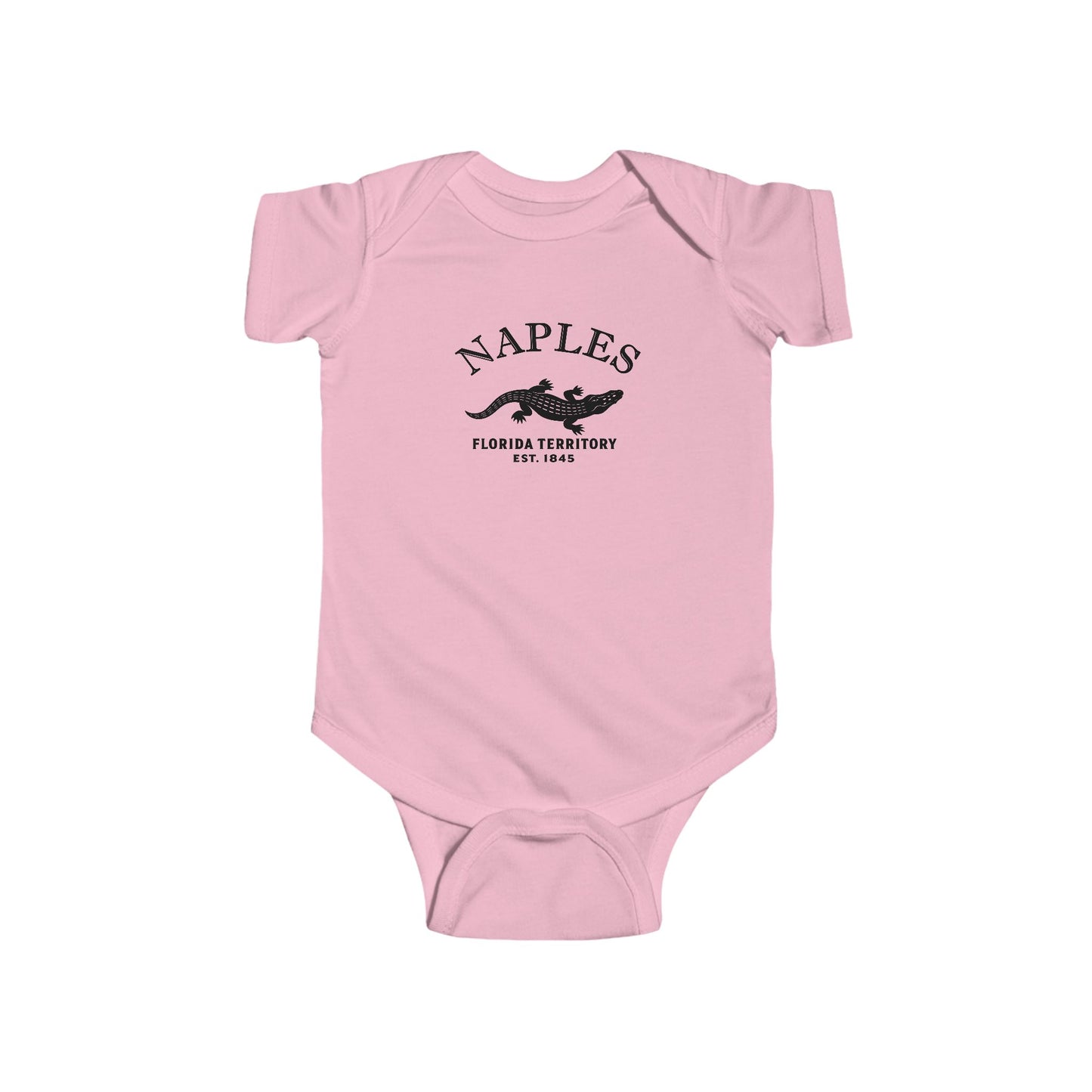
Our Naples logo carries Florida's alligator over "1845," the year of statehood and the shared emblem of every Merlin Classics Florida place. The alligator is the Everglades in shorthand — and Naples sits right at the gateway to the Everglades, the Ten Thousand Islands, and Big Cypress, where the gladesman frontier meets the Gulf-coast resort. Printed black-and-white with the worn look of an old crate label or a piece of marsh-camp signage, it reads as Old Florida. What makes this one Naples is the place behind it: the 1886 winter colony, the 1888 pier, the swamp buggy, and the home by the Gulf.
The Gulf shore here was Calusa homeland for centuries before any of it carried a Kentucky accent — the people who fished these waters and met the first Spanish ships off this coast in 1513; Seminole people followed in the early 1800s. The town itself begins in the autumn of 1886, when the Naples Town Improvement Company — organized by Walter N. Haldeman, publisher of the Louisville Courier-Journal, and his partner John Stuart Williams, a former Confederate general and U.S. senator from Kentucky — bought 3,712 acres between the Gulf of Mexico and Naples Bay for $11,136. They named the place after the Bay of Naples in Italy and marketed it as the "Bay of Naples of America," a winter retreat for wealthy Northern families.
Why People Visit Naples Florida
- Tour Historic Palm Cottage (1895), the oldest house in Naples and home of the Naples Historical Society.
- Visit the Naples Depot Museum, the restored 1927 Seaboard Air Line railroad station.
- Stroll Fifth Avenue South, the revitalized historic main street of galleries, courtyards, and palm-lined blocks.
- Walk the Naples Botanical Garden's themed landscapes and wetland boardwalks.
- See the historic Naples Pier site at the foot of 12th Avenue South, where the 1888 landmark is being rebuilt once more following Hurricane Ian (its latest reconstruction is underway).
