
It started with a bridge. Collins ran short of money finishing a two-and-a-half-mile wooden span to the mainland — the longest in the world at the time — and Fisher loaned him the cash in exchange for land. On March 26, 1915, Collins, Fisher, and the Lummus brothers folded their separate beach companies together and chartered the Town of Miami Beach. Fisher then sold it to the world: grand hotels, polo fields, and a Times Square billboard that promised “It’s always June in Miami.” For one publicity stunt he posed a baby elephant as a golf caddie for a president-elect. America’s winter playground was open for business.
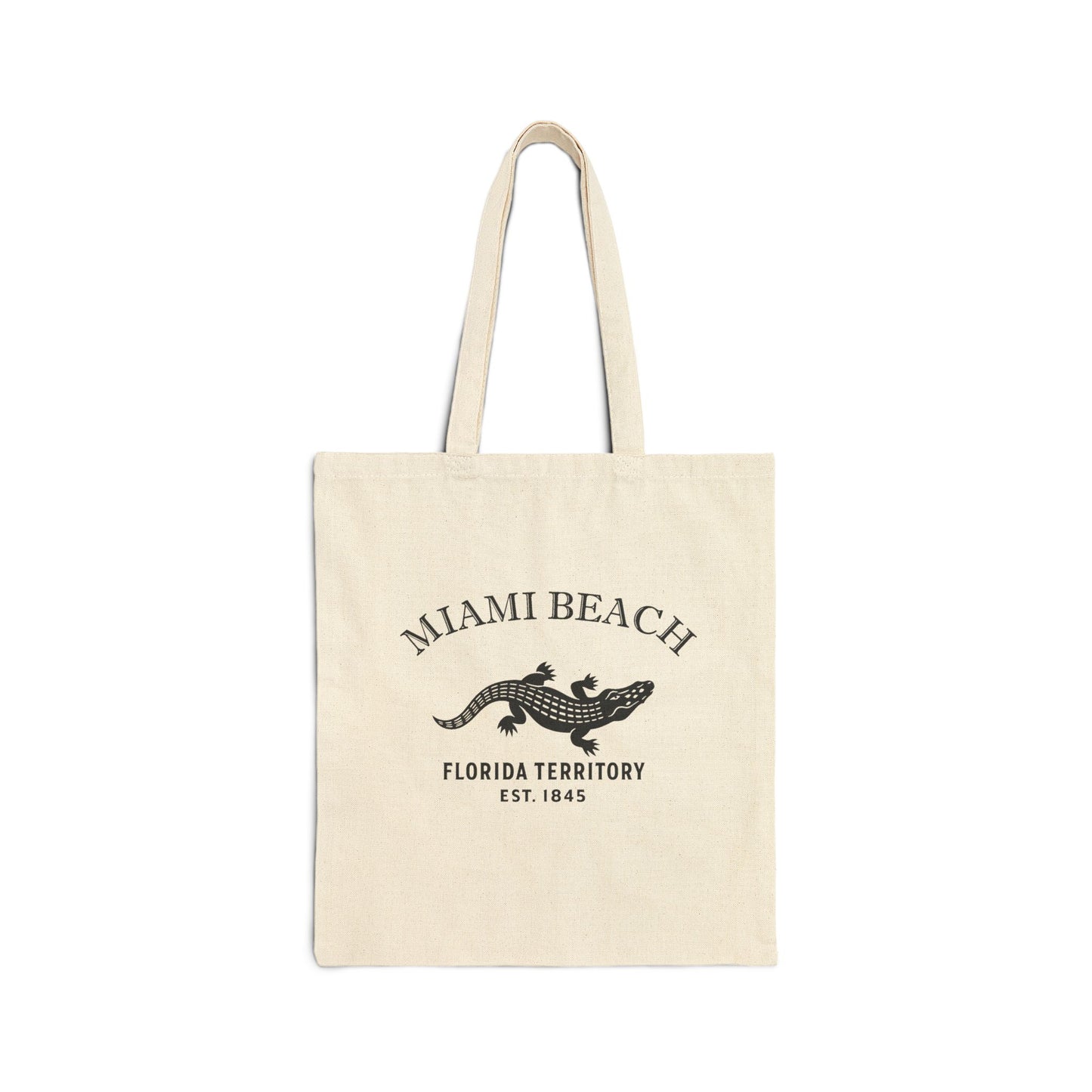
Our Miami Beach logo carries the Florida alligator over “Florida Territory · Est. 1845,” the year Florida became a state — the shared emblem of every Merlin Classics Florida town. Printed in clean retro black-and-white that reads like an old crate label, the alligator stands for Florida as a whole; what makes this one Miami Beach is everything behind it — the Art Deco strip and its neon, the candy-colored lifeguard towers, the man-made island, and the winter playground where the sand meets South Beach.
Why People Visit Miami Beach
Miami Beach rewards visitors who want style with their sand: the world’s great Art Deco strip, a wide Atlantic beach, walkable streets, and neon nights. Add the South Beach glow and the year-round Florida sun, and the man-made island makes an easy case for itself.
