


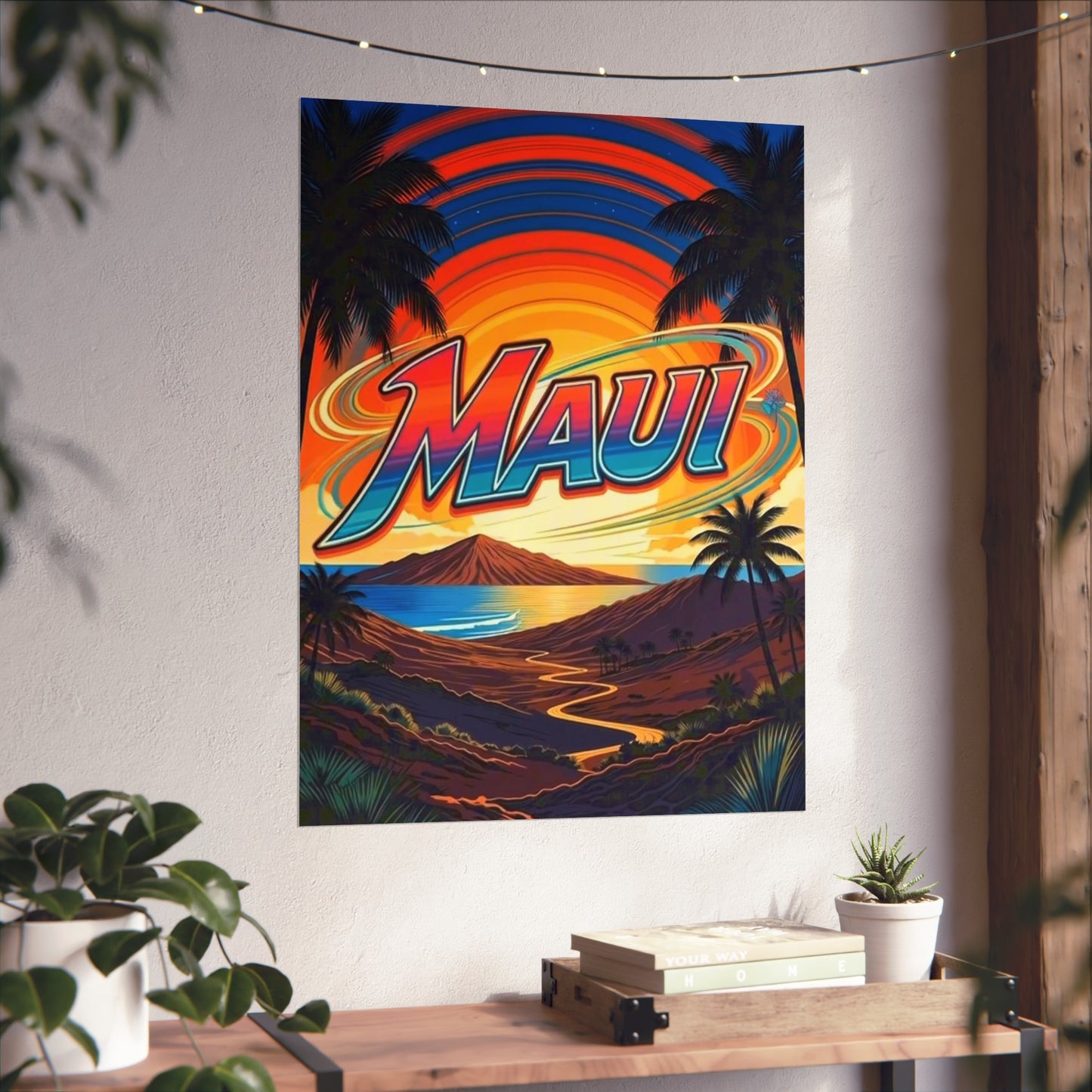
Maui County and Fukuyama, Japan have been formal sister cities since 2008, one of a family of sister-city ties reaching across Japan, Korea, and the wider Pacific.
In the late eighteenth century the island became a center of the wars that would unite the archipelago. In 1790, at the Battle of Kepaniwai in ʻĪao Valley, the forces of Kamehameha I defeated Maui's defenders in a battle so costly that its name remembers the dead. Kamehameha went on to unify the Hawaiian Islands under a single kingdom, and Maui sat near the heart of the new realm. It is a history Hawaiians tell with care: a story of their own rulers and their own land, not a footnote to someone else's arrival.
Why People Visit Maui
Maui draws visitors for its landscape and its depth — a sacred volcanic summit, a rainforest coast road, a green valley behind the harbor towns, and the Pacific where humpbacks winter — all carried by a living Native Hawaiian culture. People come for Haleakalā, the Road to Hāna, and the beaches, and stay for the quiet of upcountry and the sense of a place with a long memory. It is scenic, storied, and unmistakably Hawaiian.
