


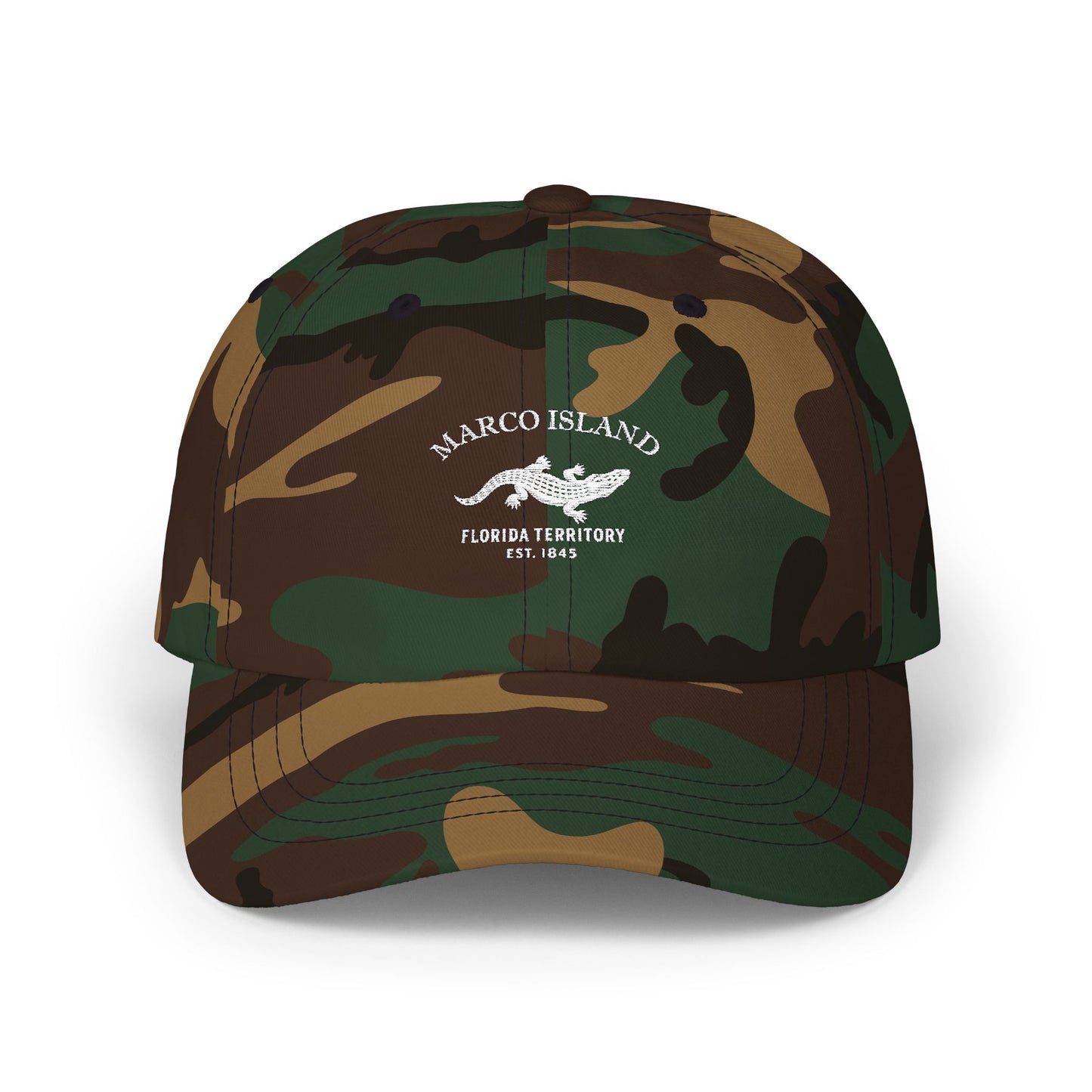
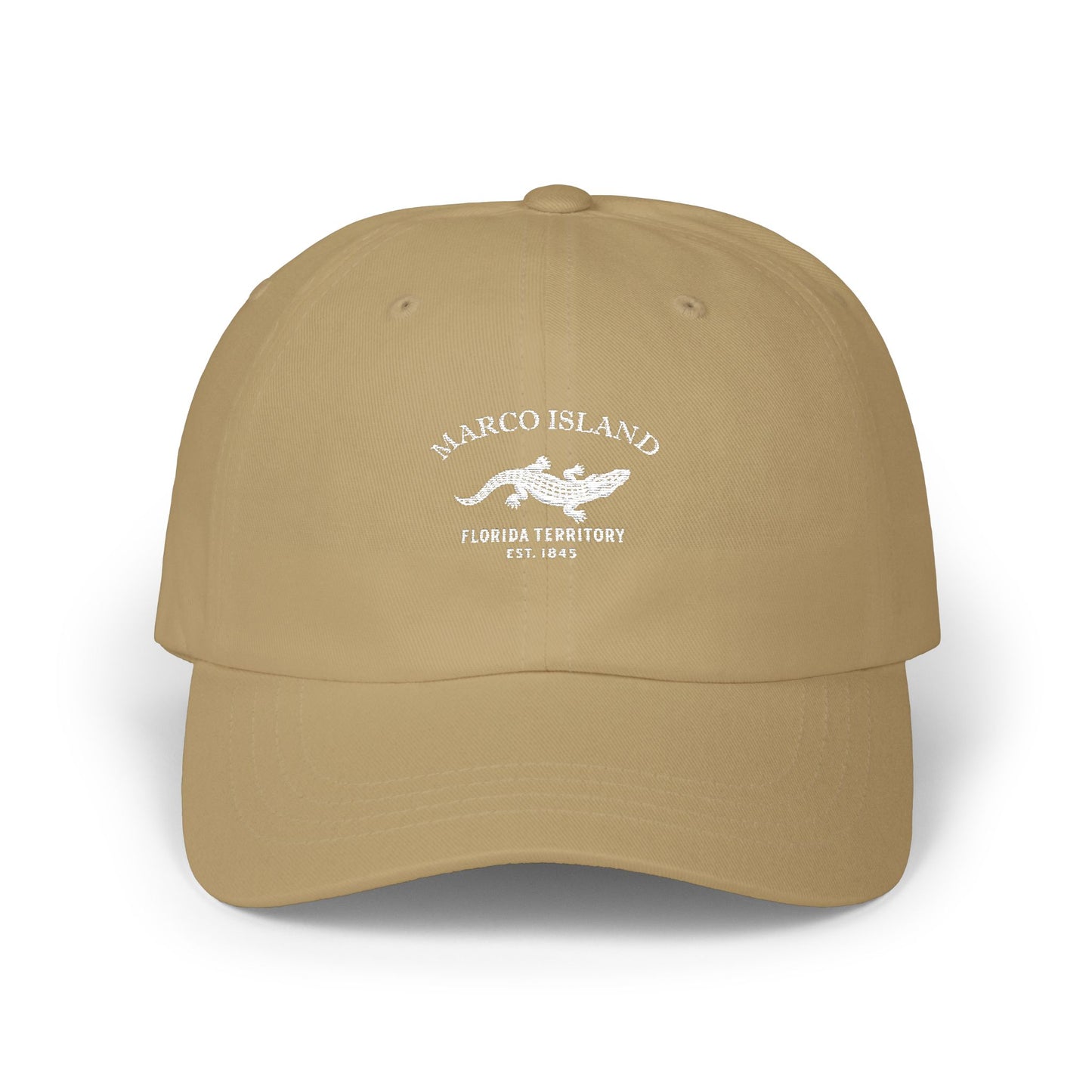
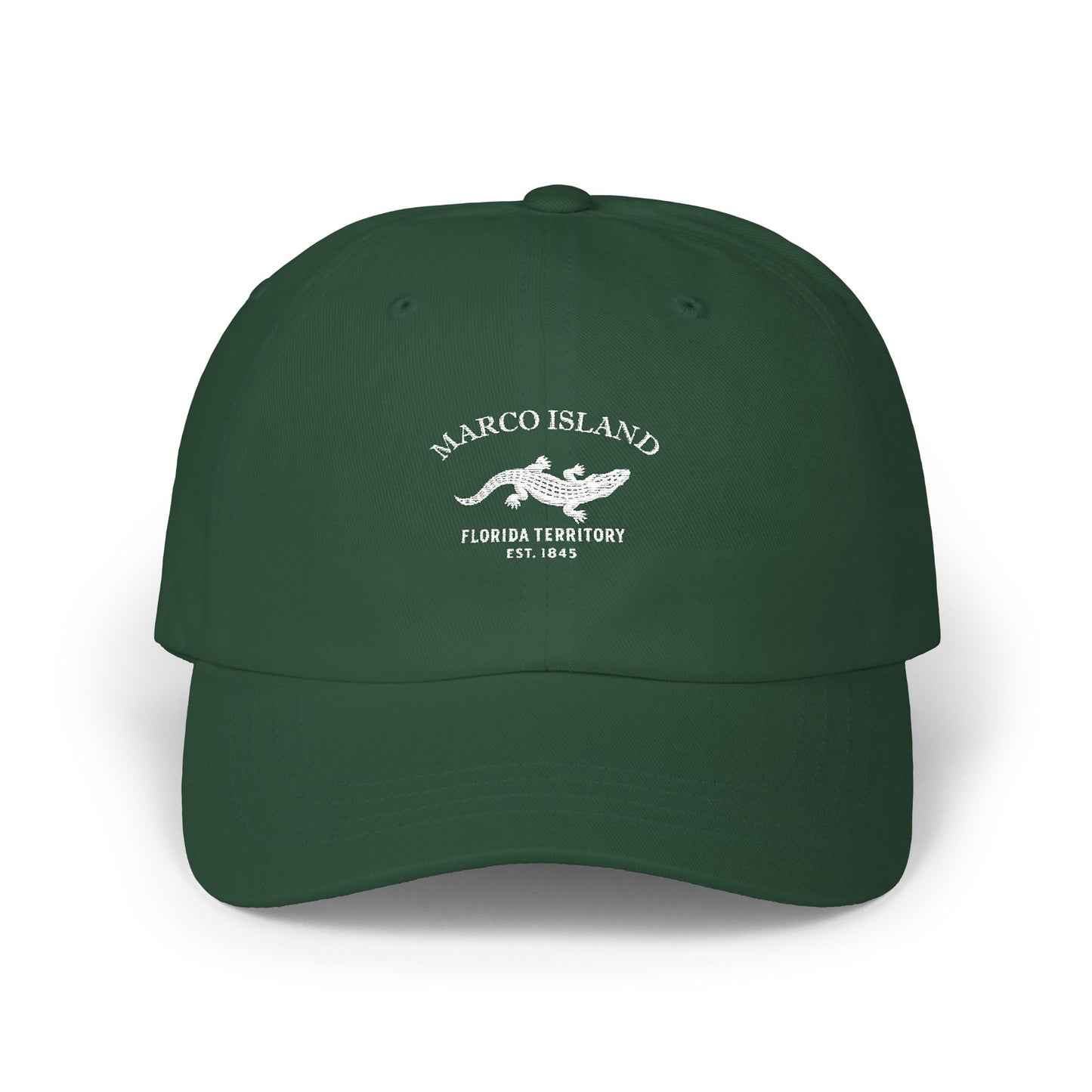
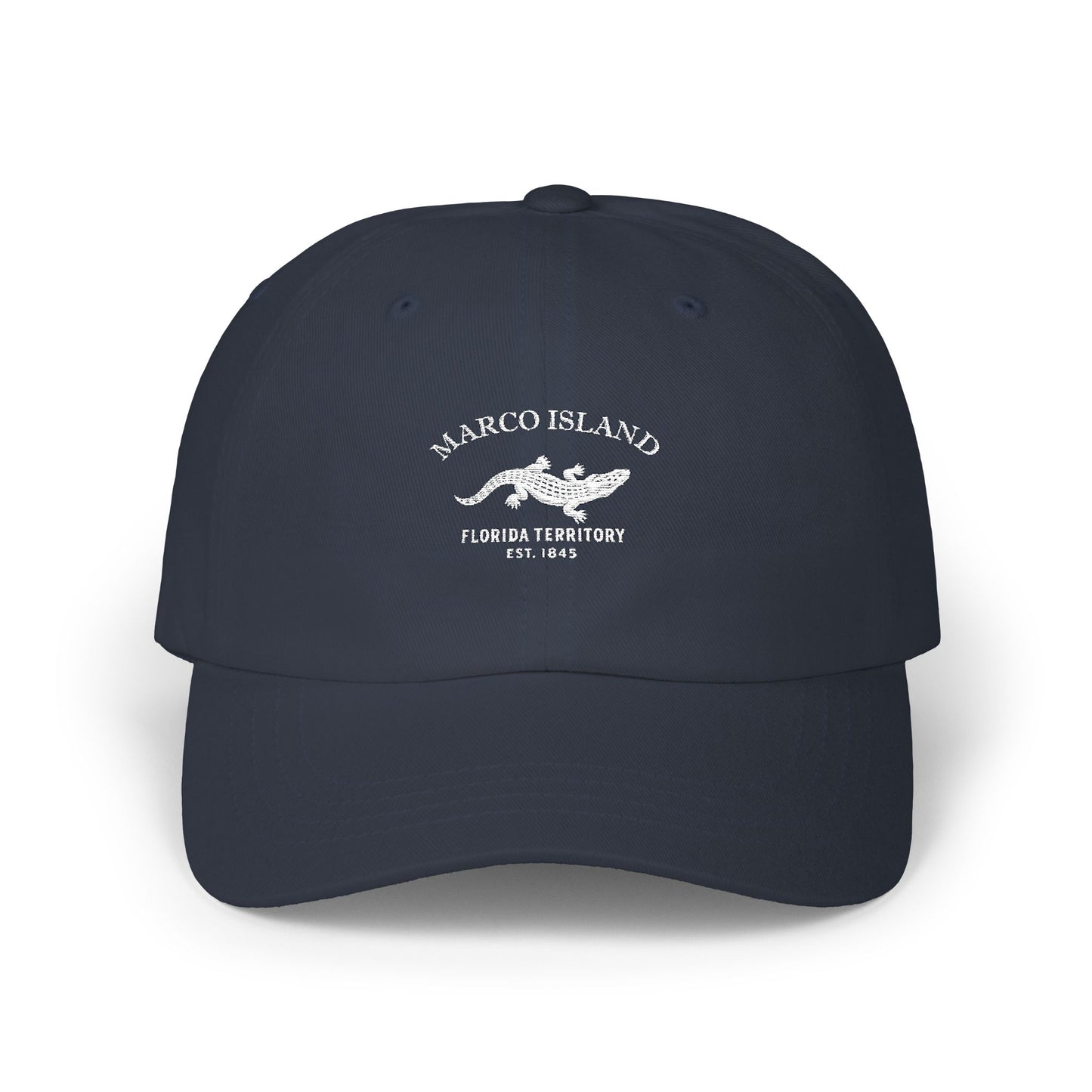
Marco Island’s history stretches back thousands of years to the Calusa people, who built shell mounds and thrived on fishing. Spanish explorers arrived in the 1500s, but the area remained sparsely settled until the late 1800s, when pioneers established fishing camps. Its founding identity reflects both Indigenous ingenuity and frontier hardship. Hurricanes and isolation tested endurance, but the island’s abundance offered sustenance. Marco Island’s story highlights resilience: Native heritage, colonial contact, and modern settlement. These roots created a layered community identity, balancing cultural pride with the endurance necessary to survive Florida’s storms, swamps, and coastal frontier challenges.
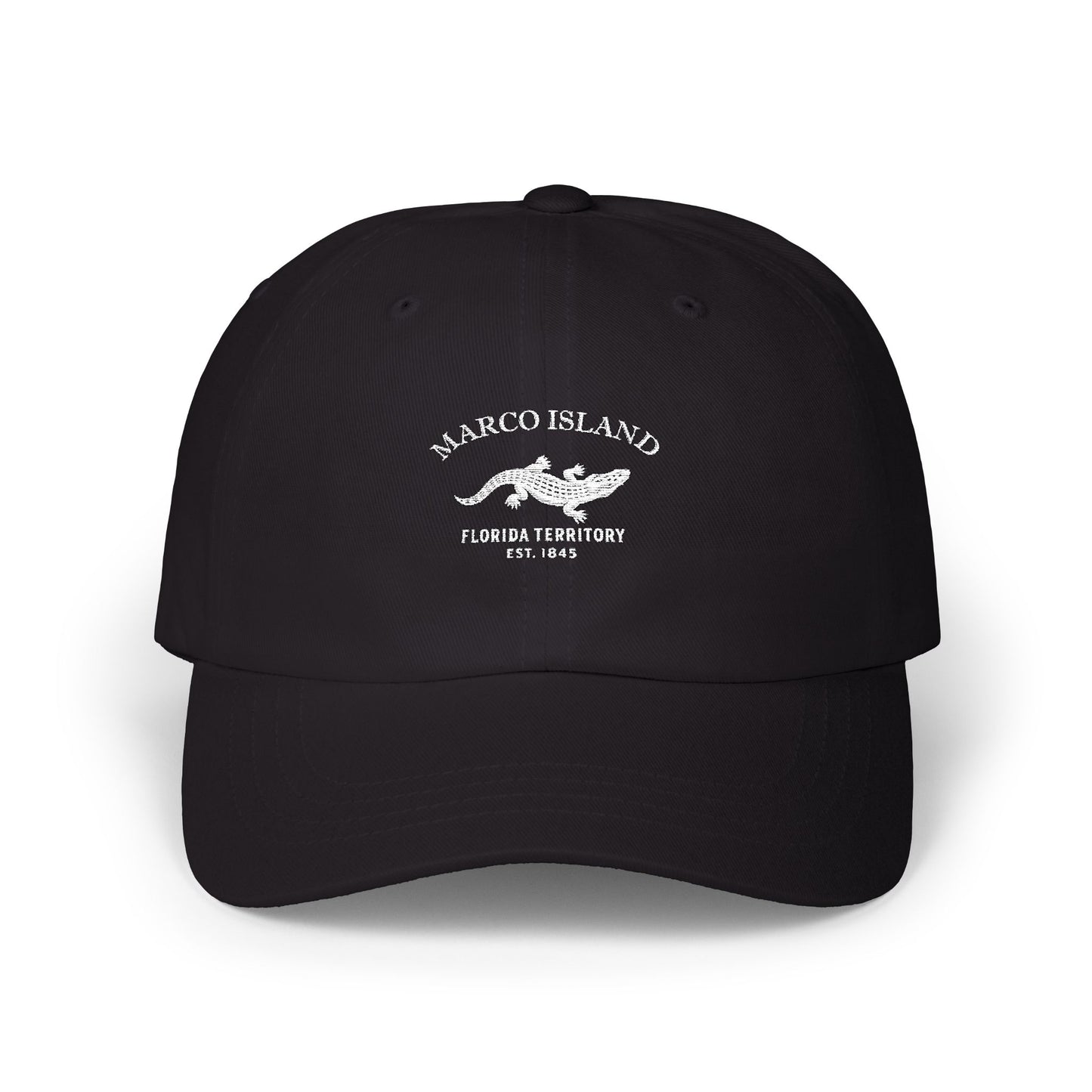
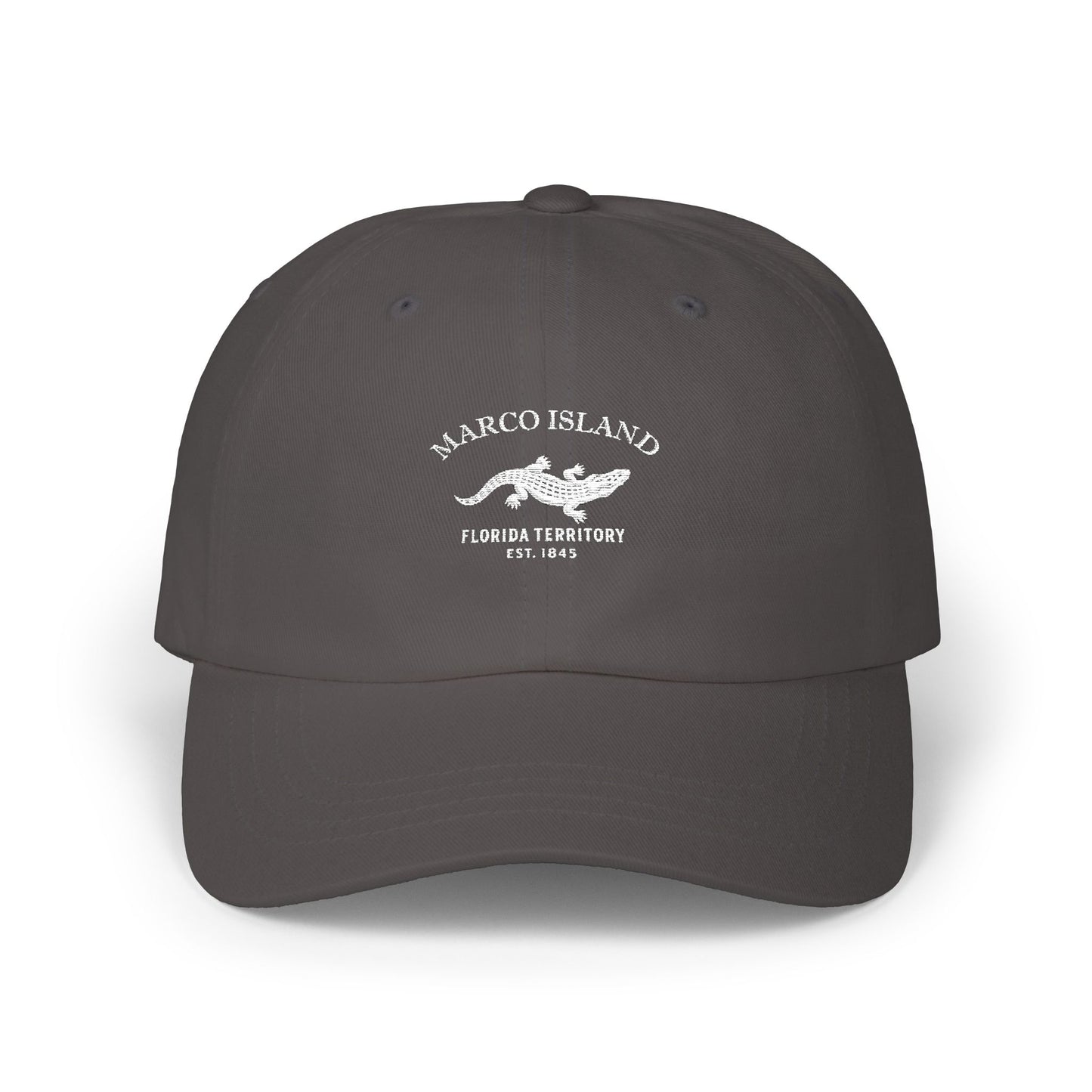
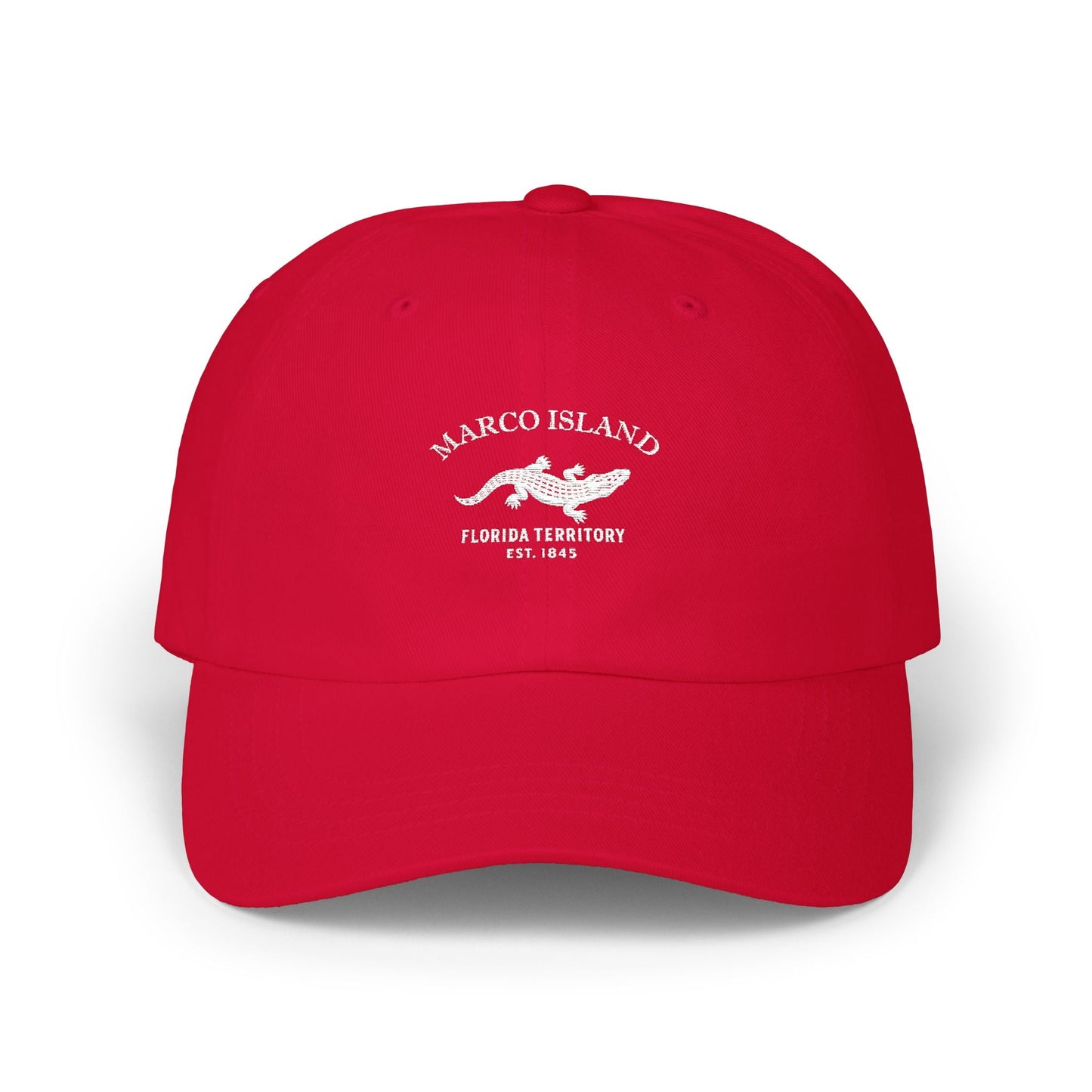
Our Marco Island retro logo uses Florida’s alligator motif, representing resilience, toughness, and survival. The alligator reflects both the wild swamps of the past and the resilience required to endure hurricanes and storms. “1845” grounds the motif in Florida’s statehood. Its black-and-white styling is retro, resembling woodcut stamps and crate labels. The motif bridges Marco Island’s dual identity: Indigenous heritage and modern resort hub. On merchandise, it conveys toughness, pride, and authenticity, retro in tone. The alligator design honors Marco Island’s layered identity, making it a vintage emblem of resilience, continuity, and Florida cultural pride.
Why People Visit Marco Island Florida
Marco Island offers easy days by the water with learning moments nearby. Visitors enjoy beaches, parks, and low key bayside walks. It is bright, family friendly, and relaxed. Travelers find year round appeal in parks, paths, and public spaces. The setting combines natural beauty with accessible neighborhoods and landmarks. History and everyday culture sit side by side in a welcoming way.
