
When Ponce de León’s Spanish reached this coast in the early 1500s, they named the island La Isla de San Marco and met the Calusa, who fought them off; by the 1700s, war and disease had emptied the chiefdom. Centuries later the pioneers came. William T. Collier founded the village of Marco in 1870, and his son, Capt. Bill Collier, opened the Olde Marco Inn in 1896 — still serving guests today. For decades the island ran on clams and oysters, canned at Caxambas Pass and shipped north.
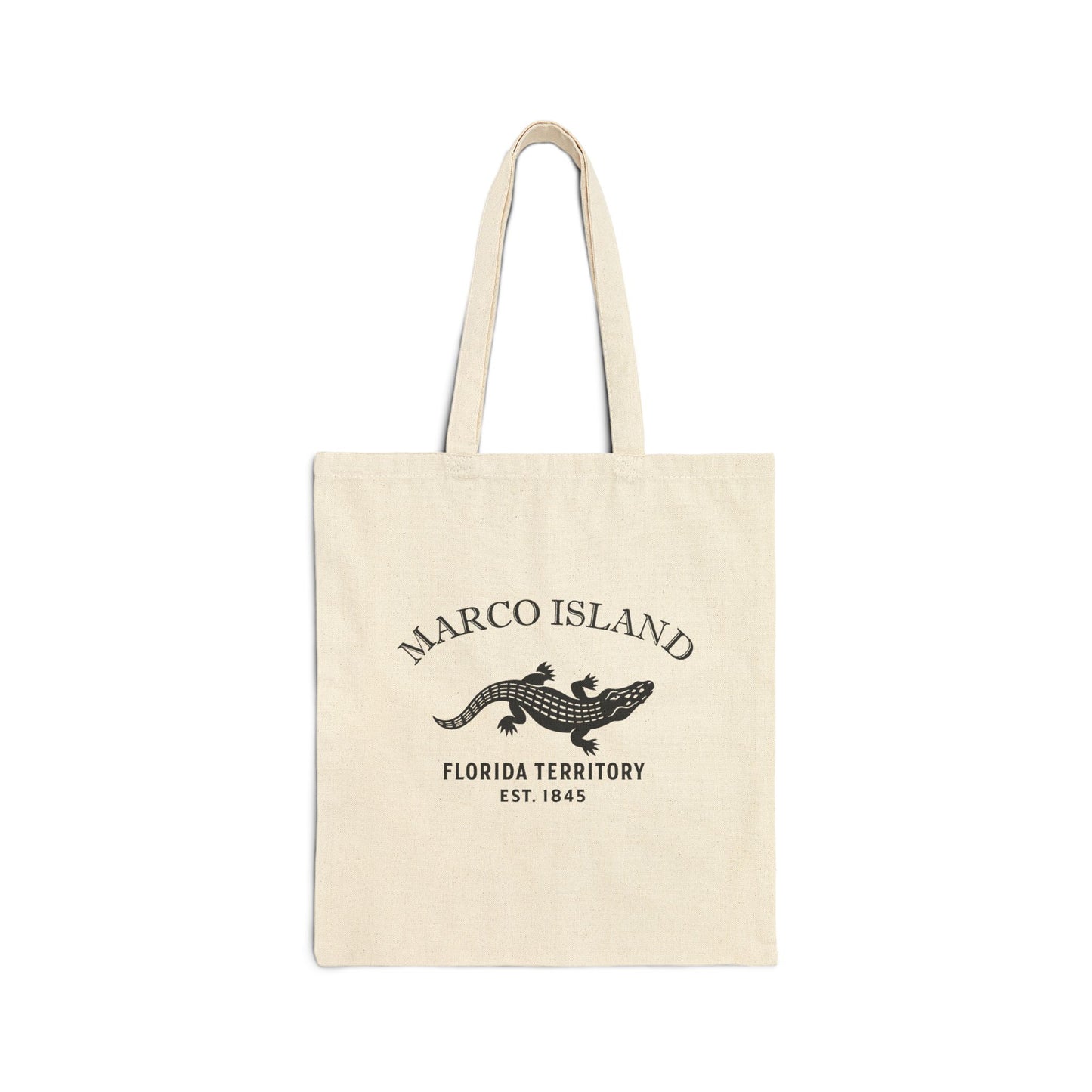
Our Marco Island logo carries the Florida alligator over “Florida Territory · Est. 1845,” the year Florida became a state — the shared emblem of every Merlin Classics Florida town. Printed in clean retro black-and-white that reads like an old crate label, the alligator stands for Florida as a whole; what makes this one Marco Island is everything behind it — the Calusa shell mounds and Indian Hill, the six-mile sugar-sand beach, the canal-laced planned island, and the Ten Thousand Islands at its back door.
Why People Visit Marco Island
Marco Island rewards visitors who want wide white sand, warm shallow water, and shells underfoot, with a rare depth of history close by. Add the boat trips into the Ten Thousand Islands and the year-round Gulf sun, and the case makes itself.
