







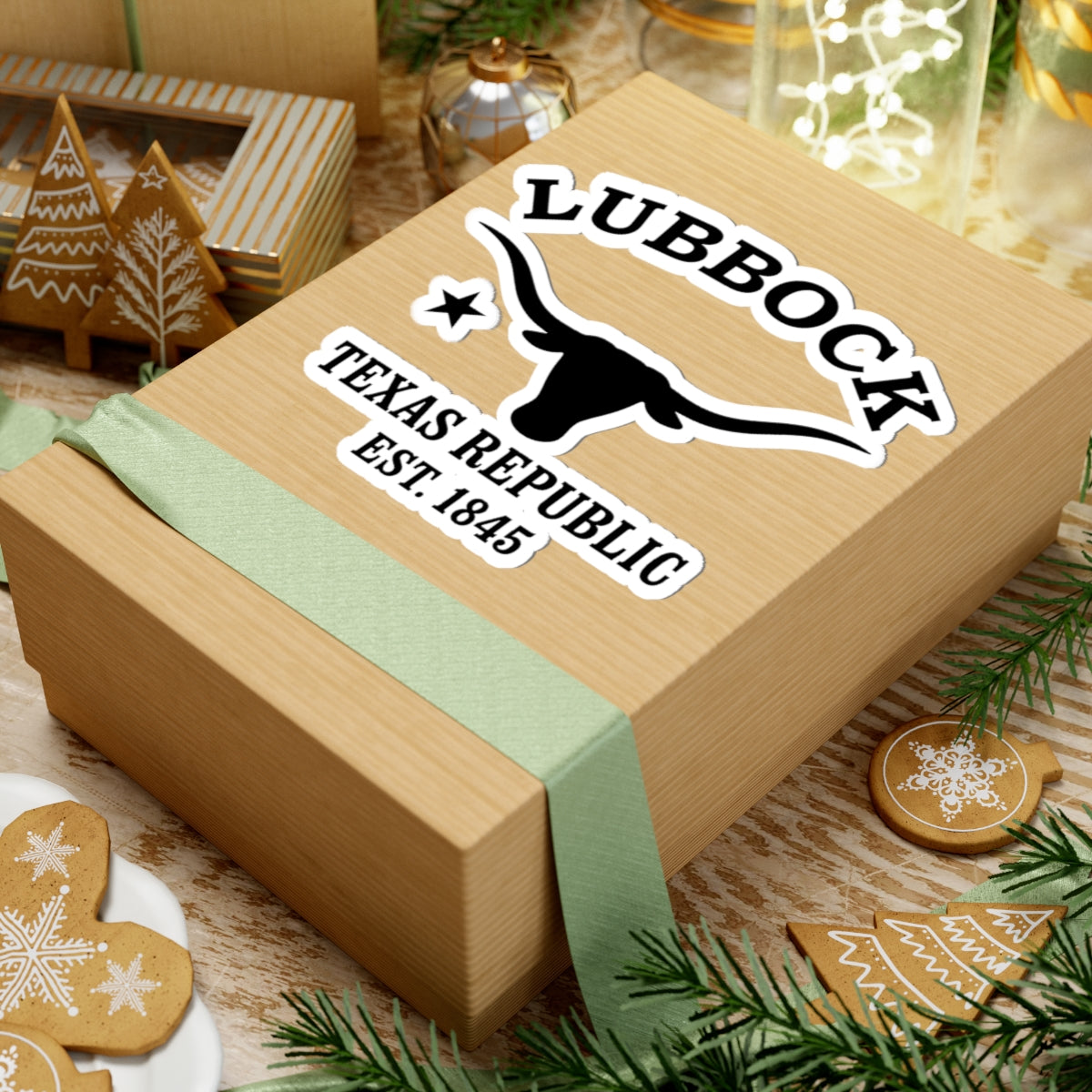


Lubbock was founded in 1890 on the South Plains, named after Texas Ranger Thomas Lubbock. Indigenous peoples had lived there for centuries before ranchers arrived. Early settlers endured drought, dust storms, and isolation, but resilience anchored survival. Cotton and cattle provided livelihoods. Lubbock’s founding identity reflects Texas’s frontier grit, agricultural endurance, and independence. Its story highlights ambition and toughness, creating a layered identity tied to ranching, farming, and resilience. Lubbock’s origins emphasize independence, pride, and endurance, making it a community rooted in frontier determination and Texan resilience across harsh and changing conditions.
Our Lubbock retro logo uses Texas’s longhorn and Lone Star motif, symbolizing independence, toughness, and pride. The longhorn reflects ranching grit and agricultural pride, while the star recalls Texas Republic heritage. Its black-and-white styling is retro, resembling rodeo posters, barn signage, and cotton labels. The motif bridges Lubbock’s dual identity: frontier farming hub and suburban university city. On merchandise, it conveys authenticity and pride, retro vintage in tone. The longhorn and star emblem honors Lubbock’s layered identity, making it a vintage symbol of Texas heritage. Retro in style, it reflects toughness and tradition, perfectly suited for Lubbock.
Why People Visit Lubbock Texas
Lubbock blends heritage with friendly public spaces. Visitors enjoy music history, wide parks, and approachable museums. It feels spacious, sunny, and grounded. Travelers find year round appeal in parks, paths, and public spaces. The setting combines natural beauty with accessible neighborhoods and landmarks. History and everyday culture sit side by side in a welcoming way.
