


What's with Kodiak? Kodiak is Alaska's Emerald Isle — first capital of Russian Alaska, home port of a huge fishing fleet, and the only home of Earth's biggest brown bears. It sits on Chiniak Bay at the edge of Alaska's largest island — the second-largest in the United States — green under near-constant cloud, ten hours by ferry from the road system and perfectly content about it.
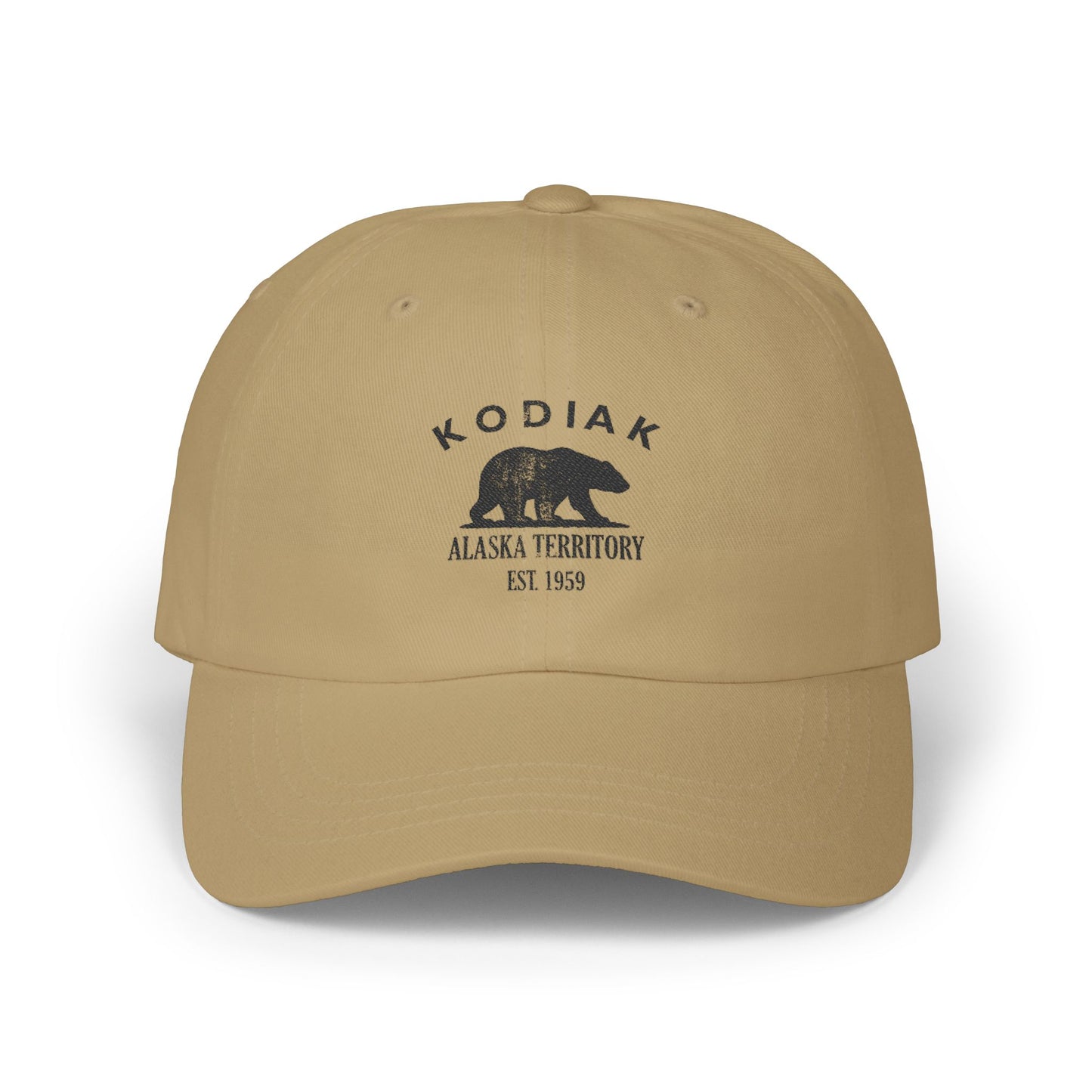
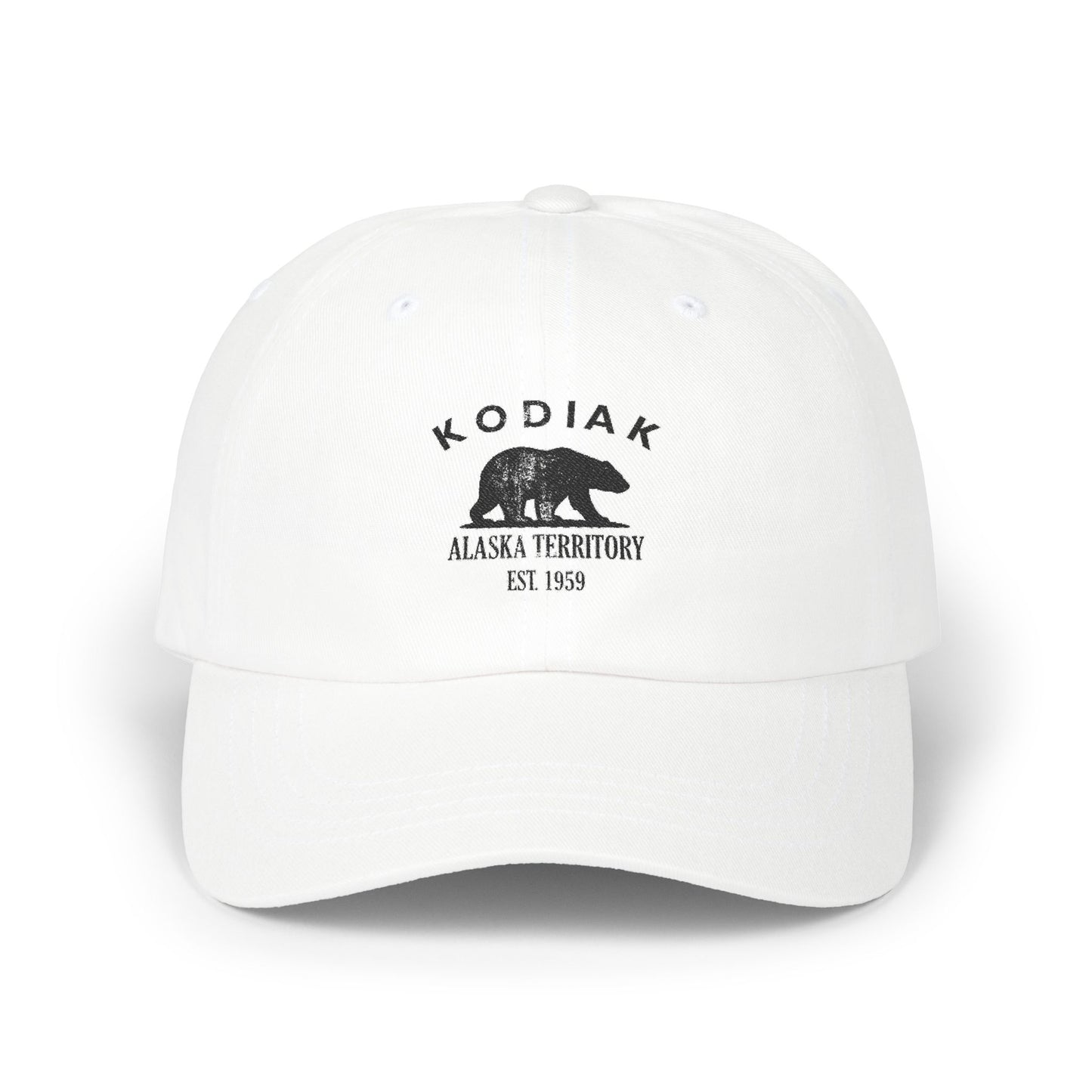
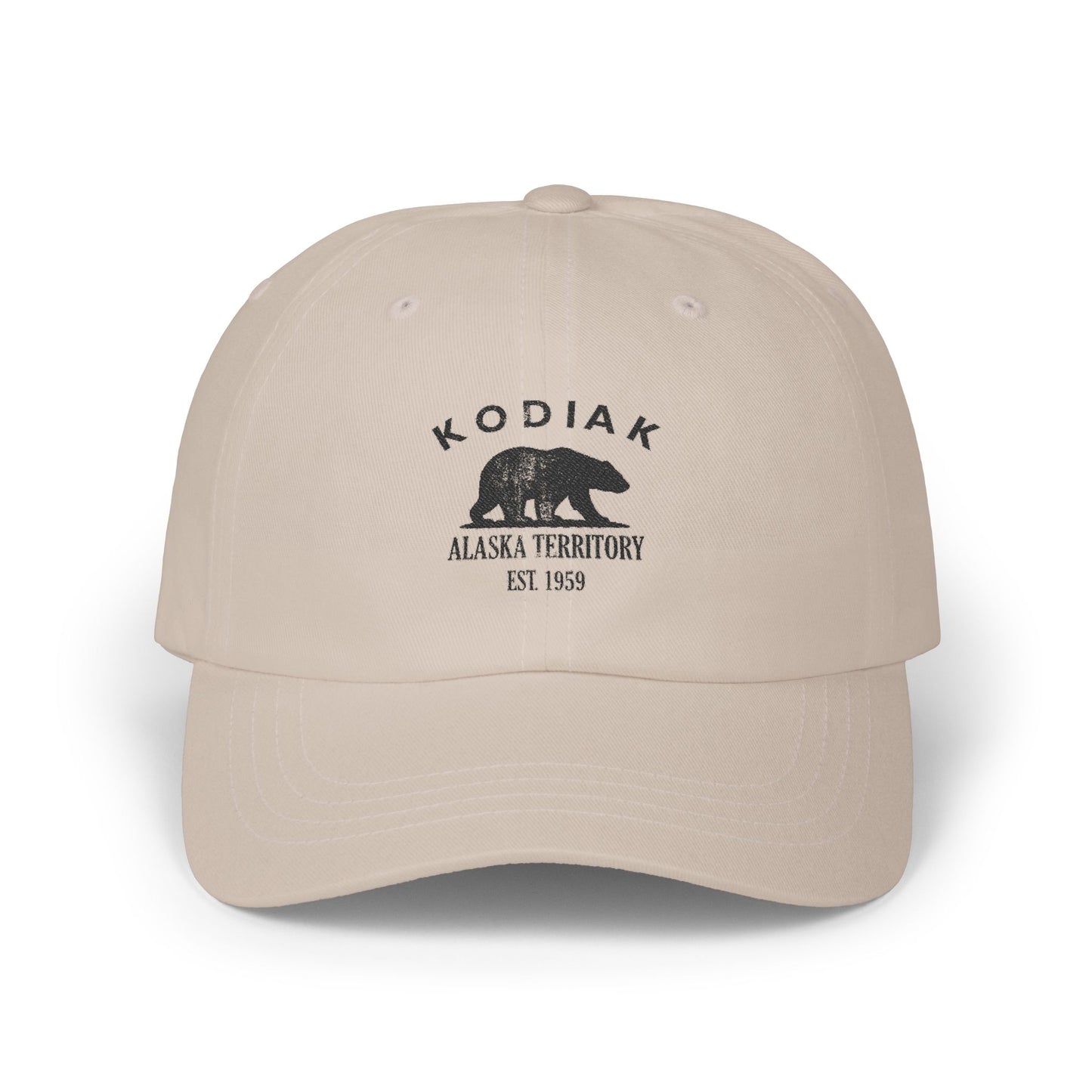
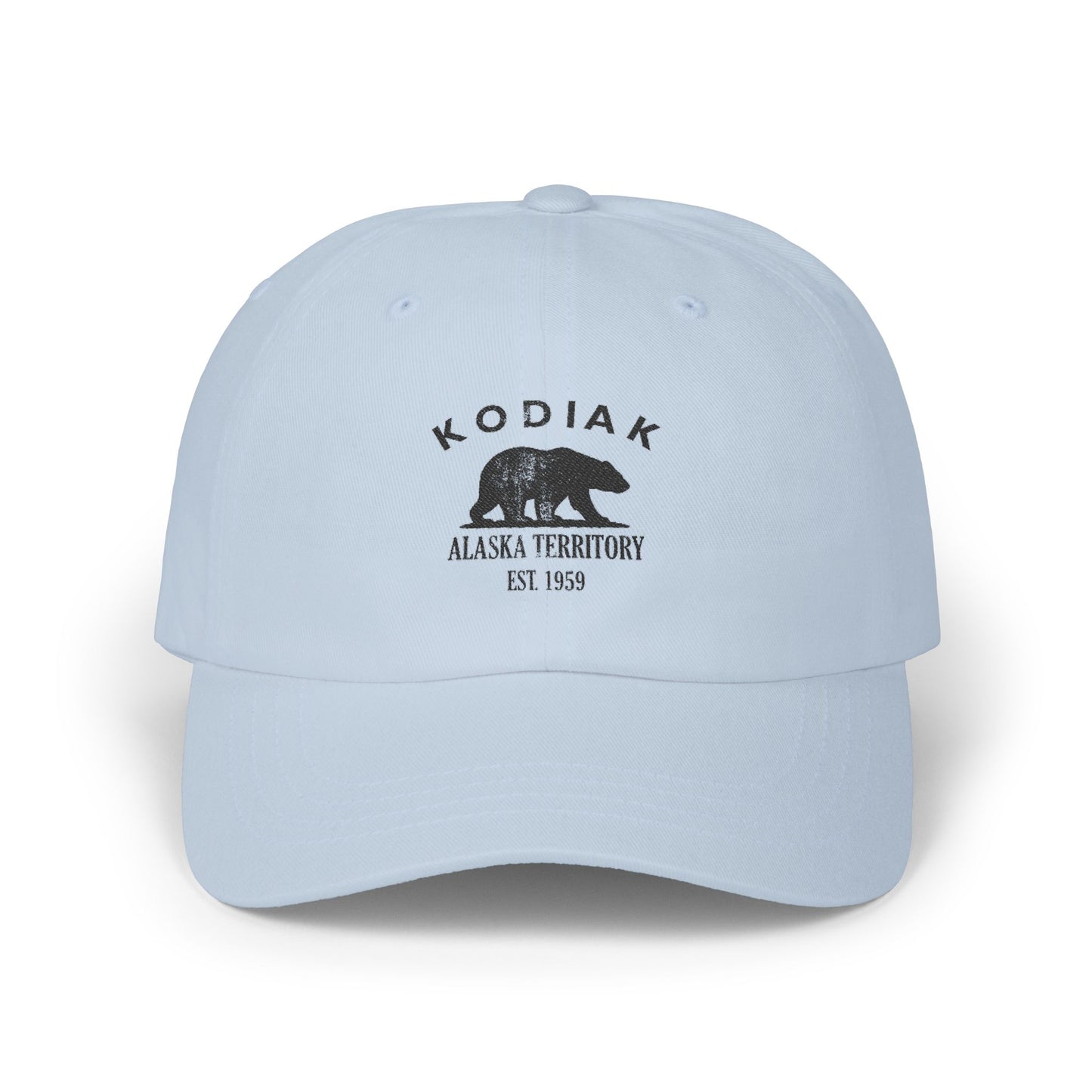
Our Kodiak logo carries Alaska's distressed bear above "Est. 1959," the year of statehood — the shared retro emblem of our Alaska places, drawn in worn black-and-white like an old crate stamp. Nowhere does the bear mean more than here: on Kodiak it is not a motif but a neighbor. What makes this one Kodiak is everything around it — the Emerald Isle green, the Russian bells, the king crab, and the biggest bears alive.
Why People Visit Kodiak Alaska
- Go bear viewing in the Kodiak National Wildlife Refuge — floatplane, boat, or guided hike to watch the biggest brown bears on Earth work a salmon stream.
- Walk the Russian layer downtown: the Baranov Museum in the c. 1808 Magazin, the Holy Resurrection church and Saint Herman's relics, and the Alutiiq Museum's 7,000-year story.
- Hike Fort Abercrombie State Historical Park — WWII gun emplacements in the spruce above the cliffs — and Pillar Mountain over town.
- Fish the famous water: charters for halibut and salmon, the Buskin River run, and the harbor's forest of masts.
- Ride out to Narrow Cape for the spaceport road, surf-watching, and buffalo on the hills.
- Ferry or floatplane to the wild edges — Shuyak Island's kayak country and Spruce Island's pilgrim trail.
