
What stayed longest was the church. The Holy Assumption of the Virgin Mary Russian Orthodox Church, finished in 1896, is the oldest standing Russian Orthodox church in Alaska — a National Historic Landmark whose blue domes still rise over Old Town, with the small St. Nicholas Chapel of 1906 beside it on the old fort ground. Inside the church hangs a centuries-old icon of Our Lady of Kazan, among the oldest non-Native artworks in Alaska. More than a century on, the services are still held; Old Town Kenai is not a recreated village but a living one, a piece of Russian America that never quite left.
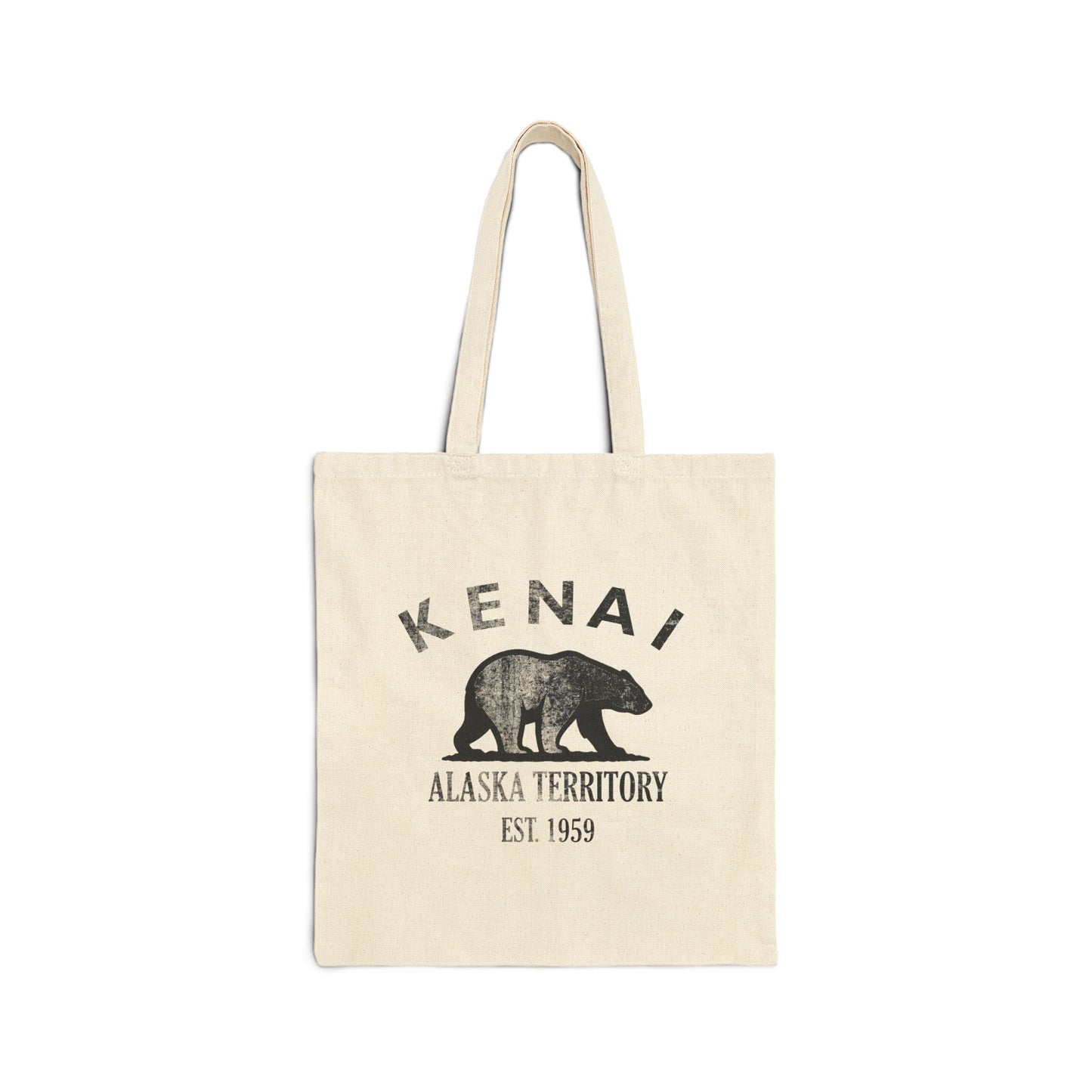
Our Kenai logo carries Alaska's bear over “Alaska Territory · Est. 1959,” the year Alaska became the forty-ninth state — the shared emblem of every Merlin Classics Alaska place. Printed in a distressed black-and-white that reads like an old outfitter's stamp, the bear is the Last Frontier in shorthand: rugged, wild, and at home in the cold. What makes this one Kenai is the country behind it — the Russian bluff, the king-salmon river, and the long view across Cook Inlet to the volcanoes.
Why People Visit Kenai
Kenai pairs deep history with wide-open Alaska — a living Russian-era church, a salmon river that sets the summer's rhythm, and the long view across Cook Inlet to the mountains. It's accessible, working, and real: a Last-Frontier town that kept its old bones.
