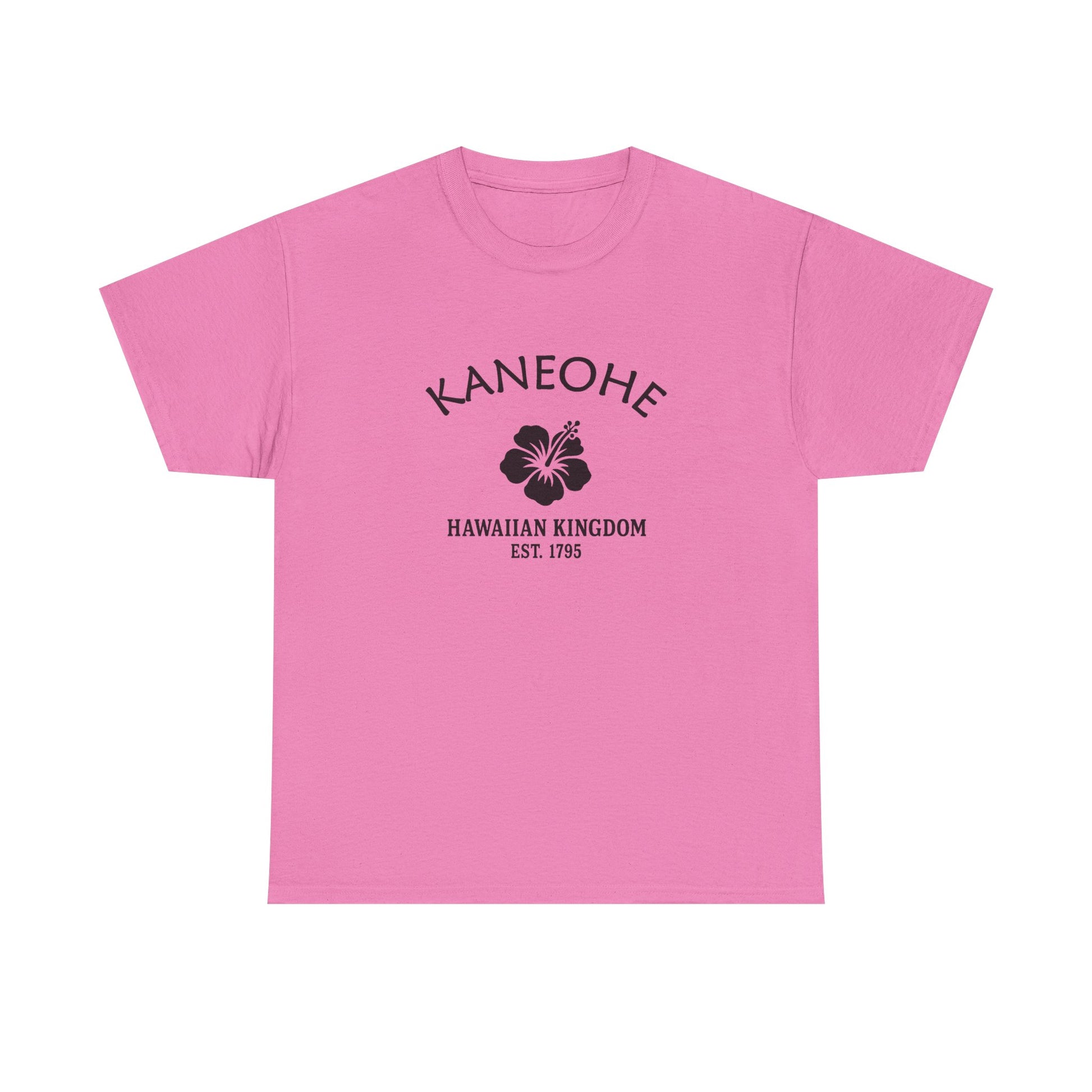
At approximately 7:48 in the morning on December 7, 1941 — about eight minutes before the first bombs fell on Pearl Harbor — Japanese carrier aircraft attacked Naval Air Station Kāneʻohe Bay on the Mokapu Peninsula. Twenty-seven of the thirty-six PBY Catalina long-range patrol seaplanes moored at the base were destroyed; eighteen sailors and one civilian were killed and sixty-five wounded. Kāneʻohe Bay was the first U.S. position struck in the Pacific Theater of World War II. The base had been commissioned only ten months earlier, on February 15, 1941, on land Woodrow Wilson had designated as the Kuwaʻaohe Military Reservation by executive order on June 14, 1918. Today the entire Mokapu Peninsula is Marine Corps Base Hawaiʻi Kāneʻohe Bay, consolidated April 15, 1994. Twenty-seven years after the attack, on June 7, 1968, the Byōdō-In Temple was dedicated at the Valley of the Temples Memorial Park at the foot of the Koʻolau Range — a half-scale non-denominational replica of the 950-year-old Phoenix Hall of the Byōdō-in at Uji, Japan, built to commemorate the centennial of the first Japanese immigrants who had arrived in Hawaiʻi in 1868. Byōdō-In means Temple of Equality. The two dates — December 7, 1941 and June 7, 1968 — sit twenty-seven years apart on the same shore. Native Hawaiians governed Kāneʻohe for centuries before either of them as a major ahupuaʻa in the Koʻolaupoko district of windward Oʻahu, an agricultural heartland of taro and sweet potato fed by the abundant rainfall of the Koʻolau Range and home to approximately thirty royal loko iʻa (fishponds) — of which Heʻeia Fishpond is today the most thoroughly restored, kept alive and producing by the community organization Kākoʻo ʻŌiwi. The town's name is older still: Kāneʻohe — "bamboo man" — comes from the ancient story of a woman who compared her husband's cruelty to the sharp edge of cut bamboo, recorded in the canonical Place Names of Hawaiʻi by Pukui, Elbert, and Mookini. Kāneʻohe Bay itself is the largest sheltered body of water in the Hawaiian Islands, an eight-mile caldera remnant of the ancient Koʻolau volcano, and the only barrier-reef-protected bay on Oʻahu. Inside it, the Kāneʻohe Sandbar — Ahu o Laka — surfaces at low tide a half-mile from shore. This is the windward side, the side the rain reaches first.
Kāneʻohe, on Oʻahu's windward side, has roots in Hawaiian agriculture and tradition that run deep below the modern town. Indigenous Hawaiians cultivated taro in loʻi fields, fished the reefs of Kāneʻohe Bay, and built approximately thirty royal fishponds along its shore. Missionaries later introduced churches and schools, but Hawaiian culture remained central. The community's identity has always been tied to the land and ocean — symbols of strength and continuity in Hawaiian tradition, carried forward through every era that followed.
Why People Visit Kāneʻohe Hawaiʻi
Kāneʻohe offers windward Oʻahu's most distinctive water destination at the Kāneʻohe Sandbar (Ahu o Laka), the only barrier-reef-protected bay on Oʻahu, the 1968 Byōdō-In Temple at Valley of the Temples as a windward-side cultural landmark commemorating the centennial of the first Japanese immigrants to Hawaiʻi, the 400-acre Hoʻomaluhia Botanical Garden, the green pleated cliffs of the Koʻolau Range as the dramatic backdrop of the town, the December 7, 1941 historical landscape of Mokapu Peninsula and NAS Kāneʻohe Bay as the first U.S. position struck in the Pacific Theater, the active Heʻeia Fishpond restoration as living Native Hawaiian cultural heritage, and the long Kāneʻohe ahupuaʻa heritage of the Koʻolaupoko district that has carried these shores for centuries. It is the windward side — the side the rain reaches first, and the side that remembers.
