


Then came the cane. Through the nineteenth and early twentieth centuries the Pioneer Mill Company planted West Maui in sugar, and Kāʻanapali’s fields ran from the mountains down to the sea, worked by immigrant families from Portugal, Japan, the Philippines, and Puerto Rico whose cultures still flavor the islands. Kāʻanapali was the railroad’s seaward end: a landing on the north side of Puʻu Kekaʻa, with a wharf and offshore moorings, shipped the processed sugar out to the world. For the better part of a century, this was plantation country.
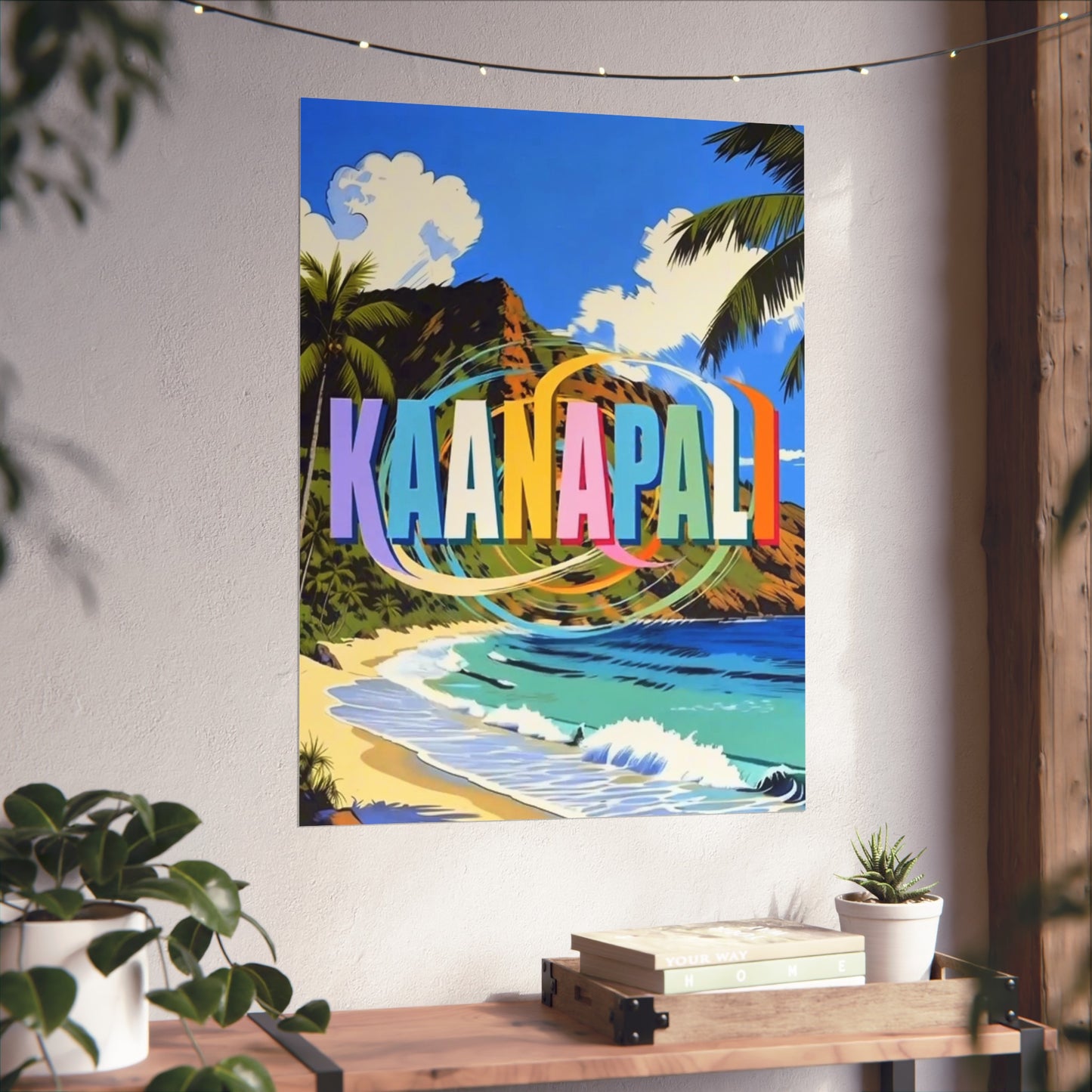
Today Kāʻanapali is West Maui’s resort coast — a long, bright beach beneath green mountains, the islands in view and whales offshore in winter — but its story runs deeper than the hotels: royal land and sacred ground, a century of sugar, and the little steam train that still runs through the island’s memory. Our Kāʻanapali designs gather that into wearable form. Kāʻanapali, Maui — three miles of golden sand below the West Maui Mountains, where black lava meets the sunset sea.
Why People Visit Kāʻanapali
Kāʻanapali offers the classic West Maui beach day: warm, calm water, a long walkable shore, mountains behind and islands in view. It pairs an easy resort coast with deep heritage — royal land, sacred ground, a century of sugar, and the memory of the Sugar Cane Train. It is sunny, scenic, and welcoming, with year-round appeal.
