





What’s with the two deserts? Joshua Tree sits on a seam. The town and its national park straddle the line where two great deserts meet: the higher, cooler Mojave to the west — above about 3,000 feet, where the rain is a little more generous and the Joshua trees grow — and the lower, hotter Colorado Desert to the east, all creosote, ocotillo, and cholla cactus. Cross the park from one side to the other and the whole world changes: spiky Joshua-tree forests and piled boulders give way to open cactus flats and palm-shaded oases fed by water forced up along the San Andreas fault. Two deserts, one town at the gateway — which is a lot of strangeness for one stretch of California.
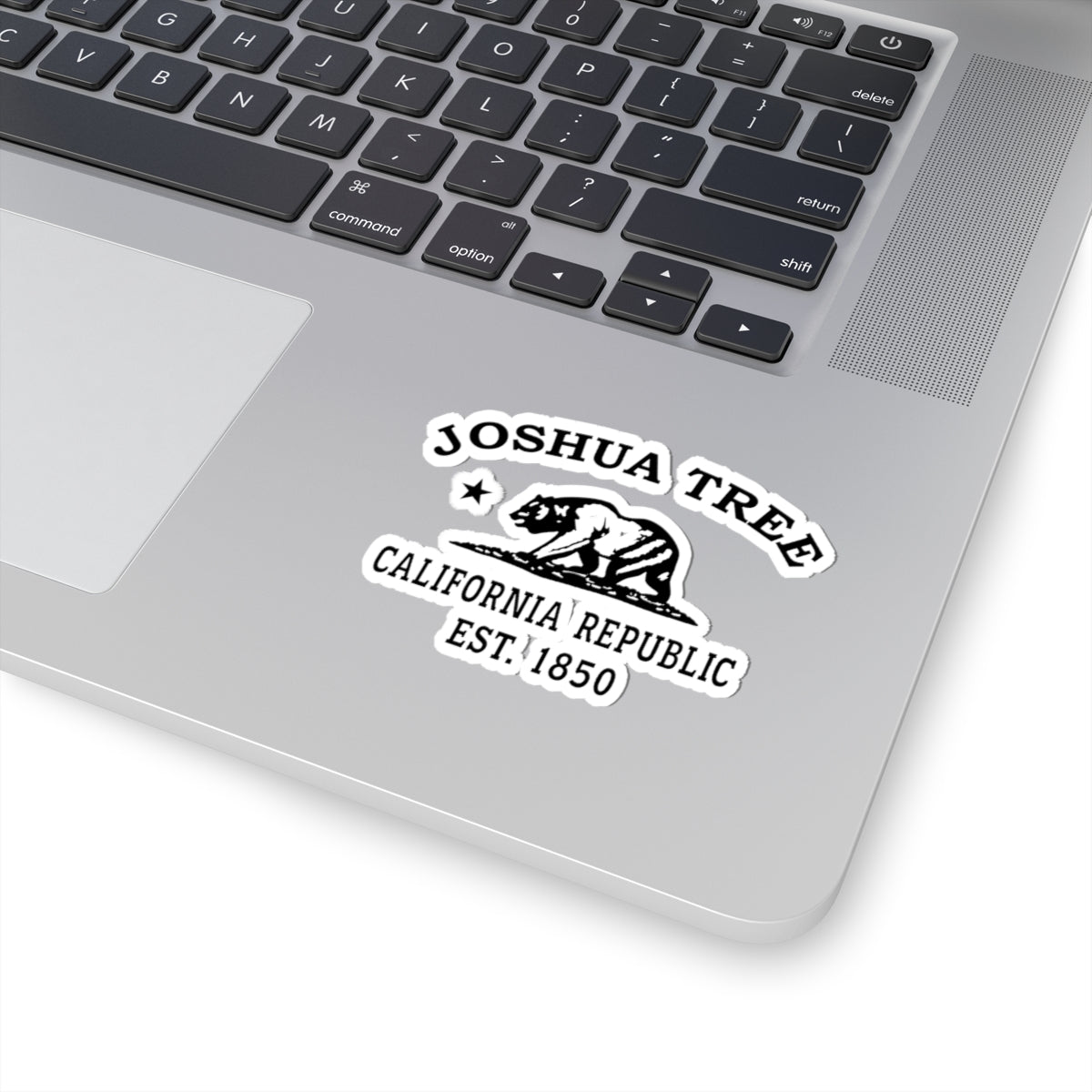
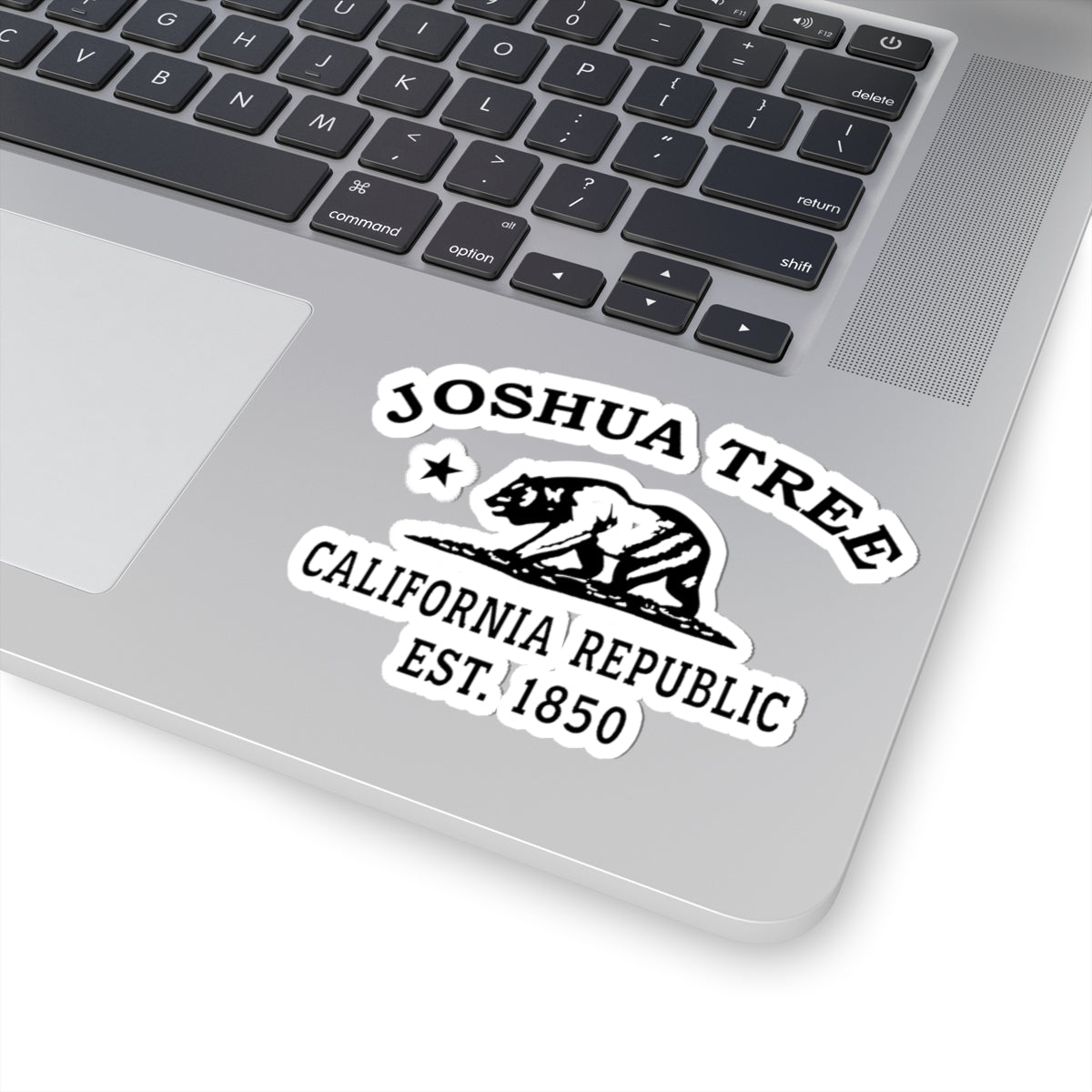
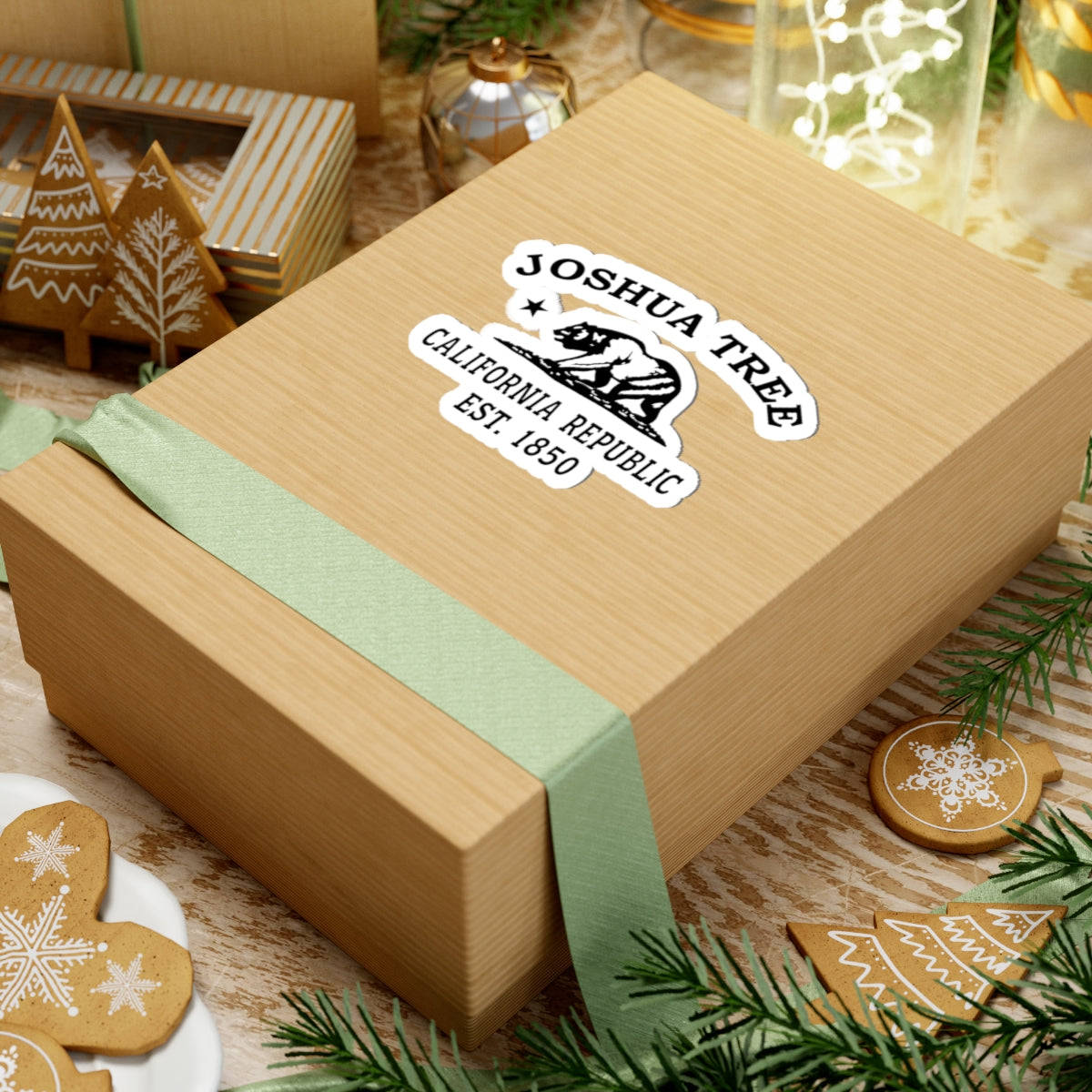
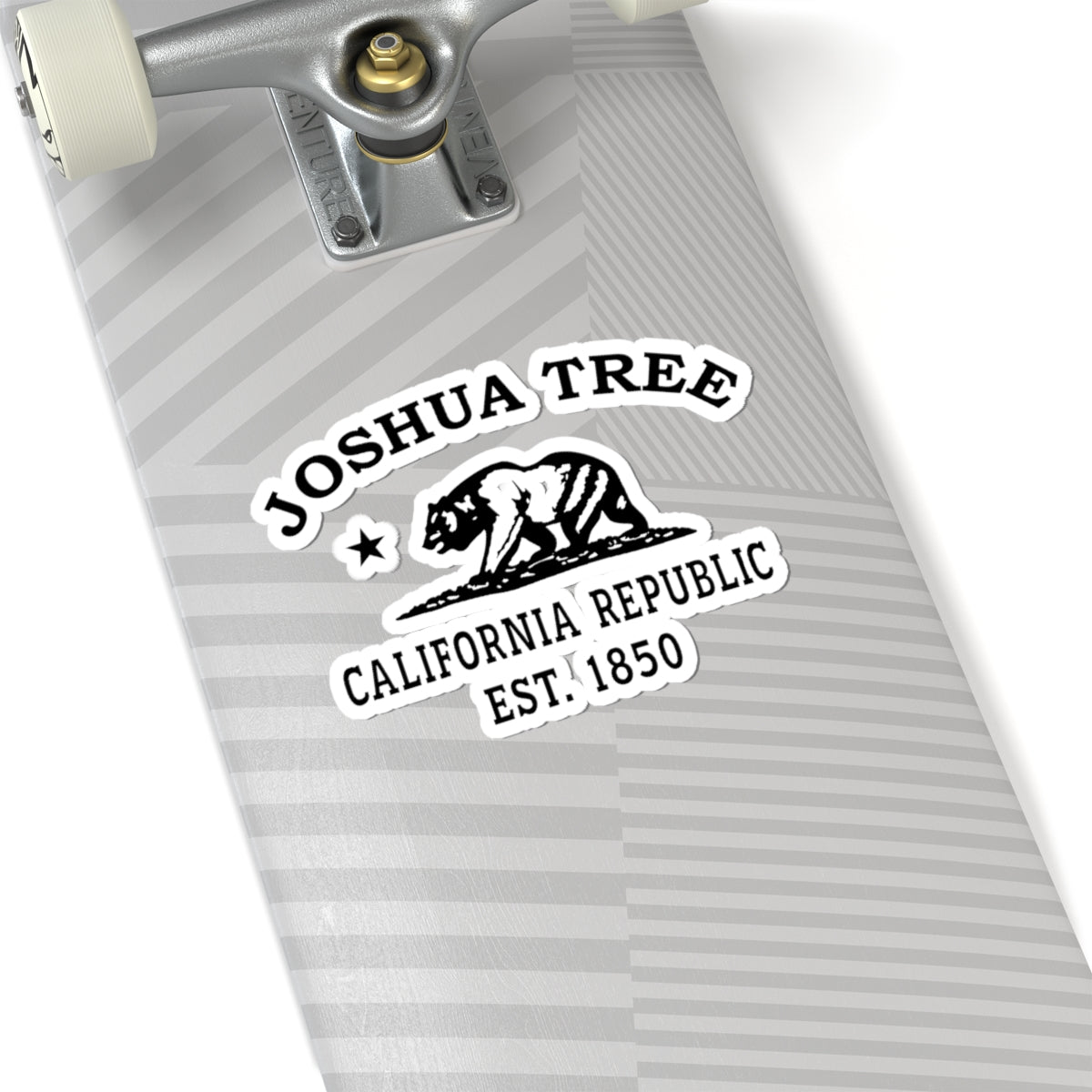
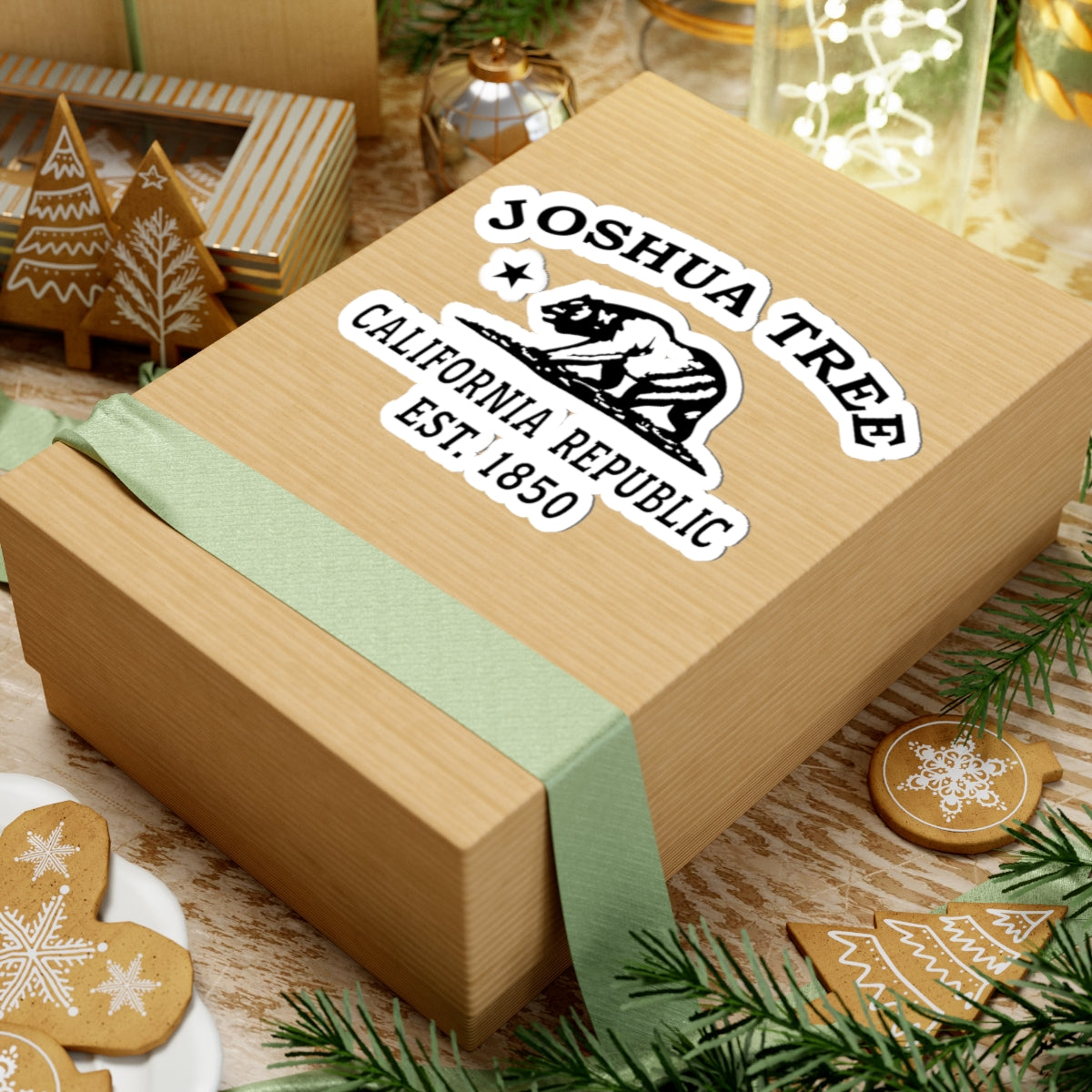
Our Joshua Tree logo carries California’s bear and star over “California Republic · Est. 1850,” the year of statehood and the shared emblem of every Merlin Classics California place. The bear and the lone star are the state in shorthand — independence, the Republic, the frontier — printed black-and-white with the worn look of an old crate label or a WPA poster. What makes this one Joshua Tree is everything behind it: the two deserts, the spiky trees, the piled boulders, and the dark, star-thick sky.
Why People Visit Joshua Tree
People come for the strangeness: trees out of a storybook, boulders made for scrambling, and a night sky so dark the Milky Way throws shadows. Pair the park with the town’s desert-arts scene and you have a high-desert getaway unlike anywhere else in California.
