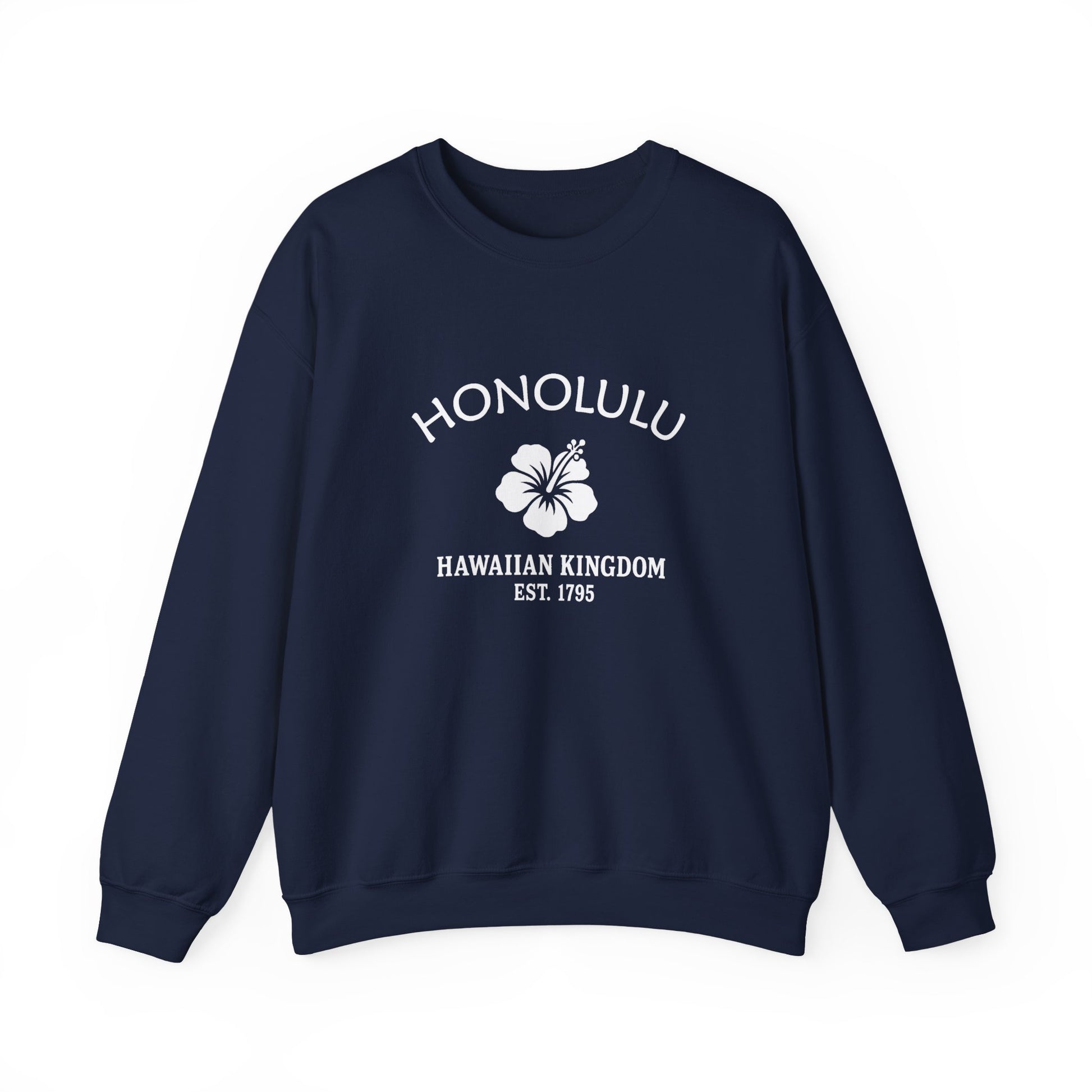
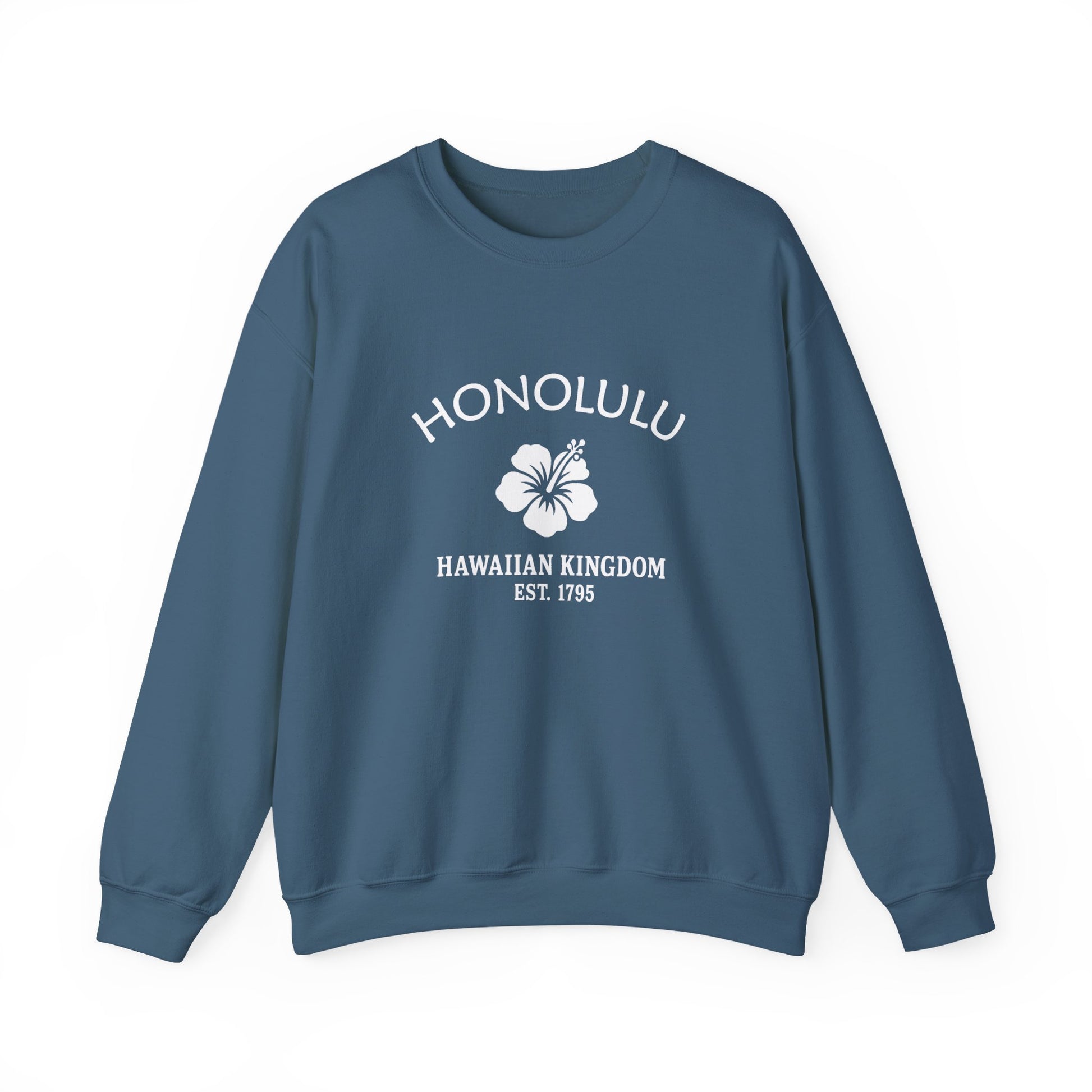
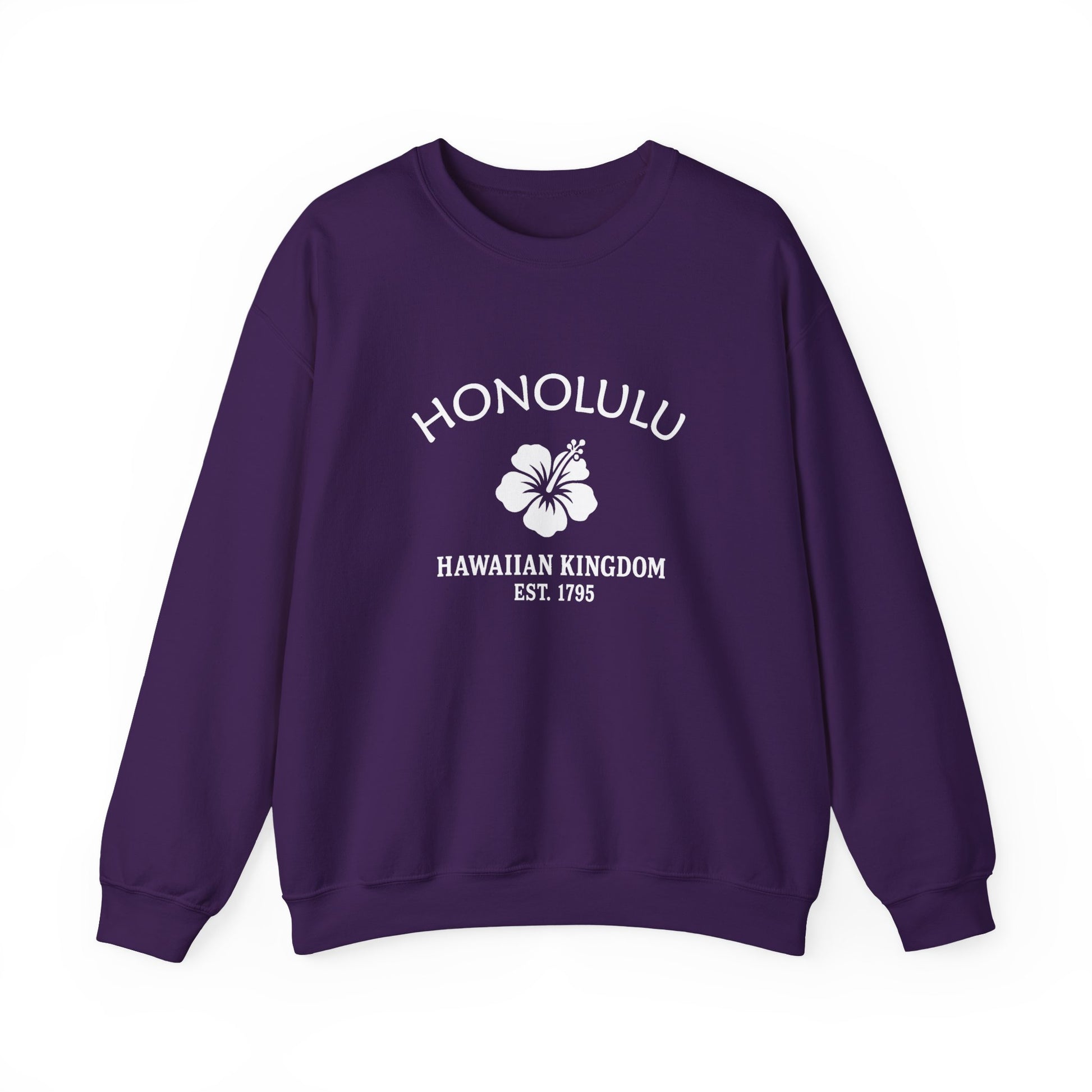
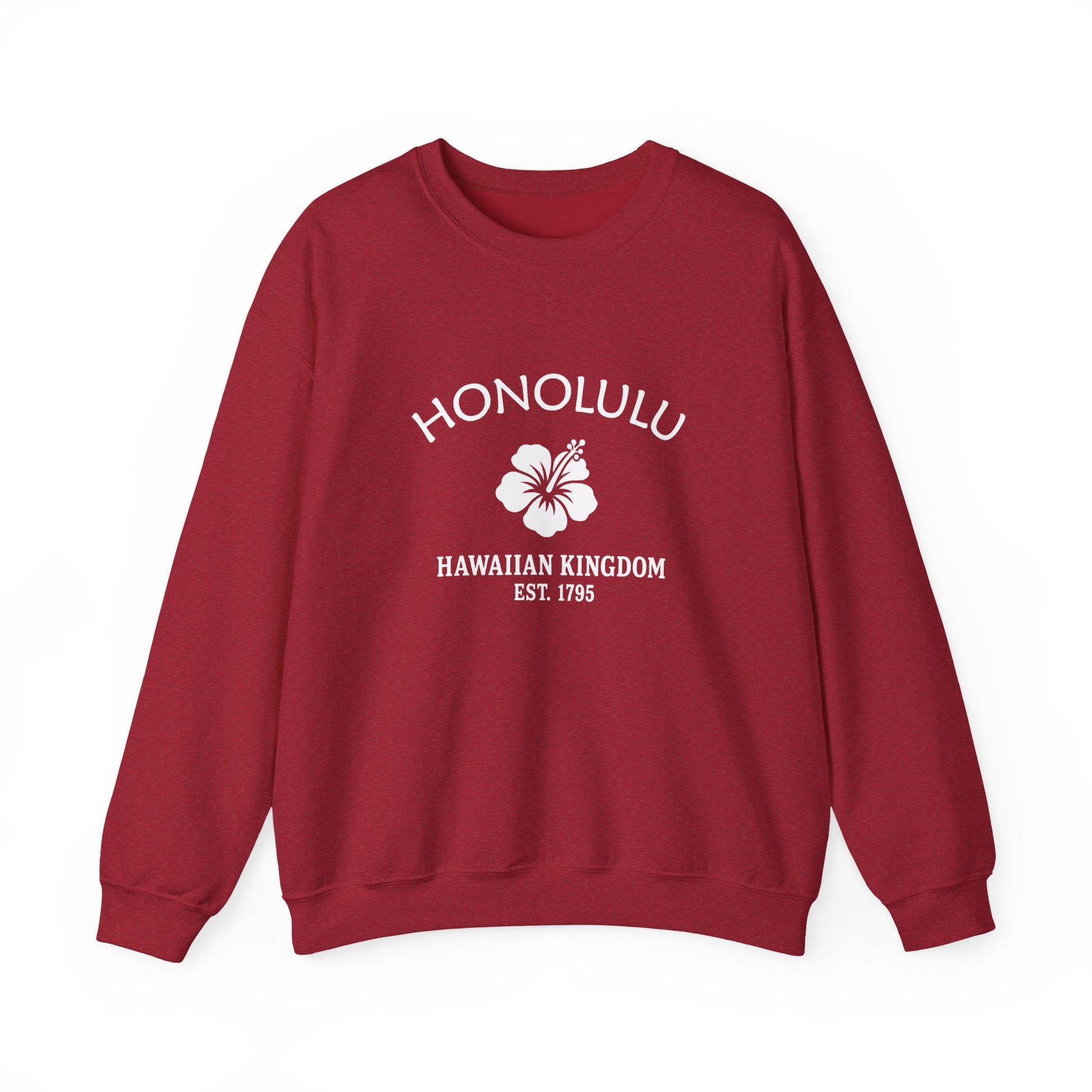
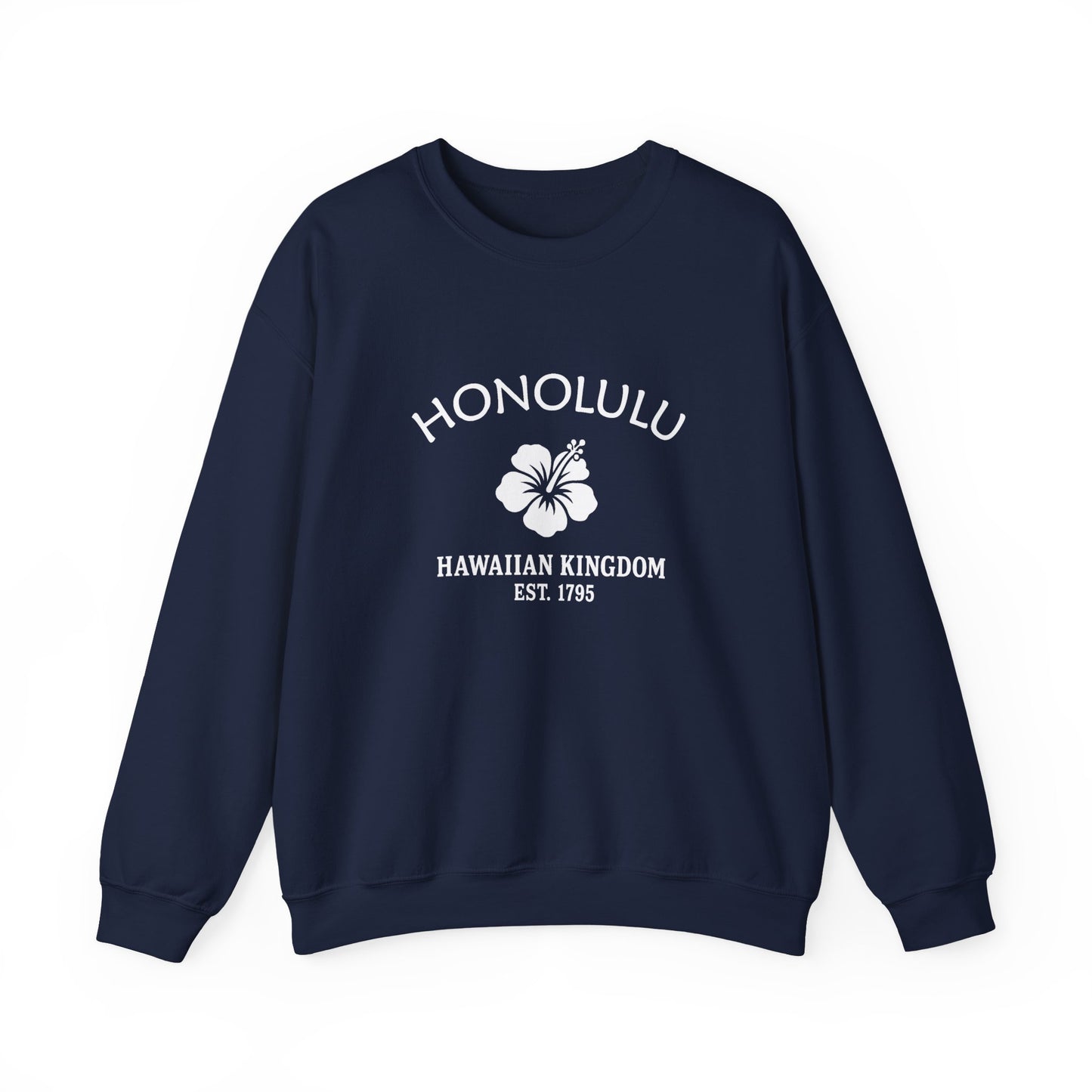
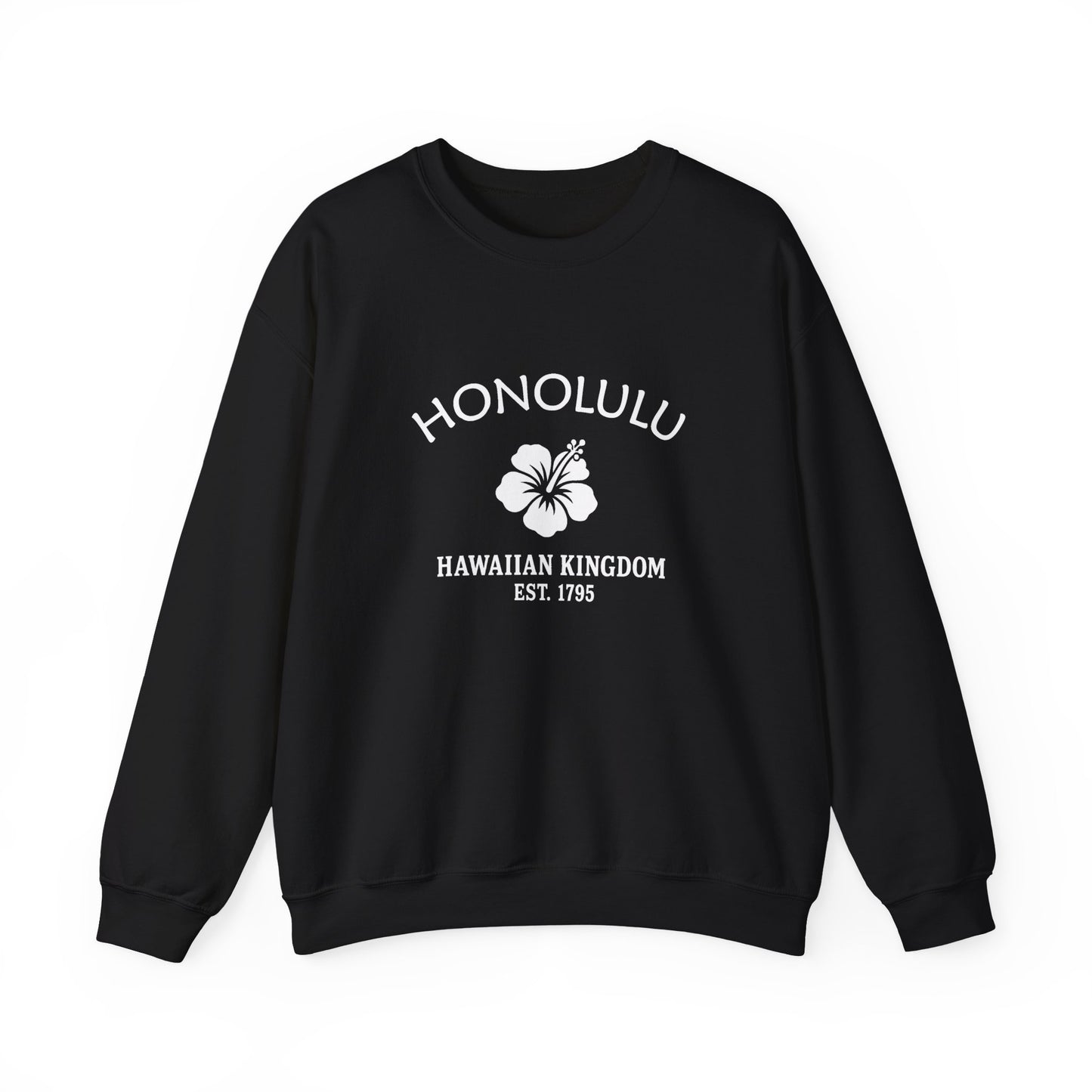
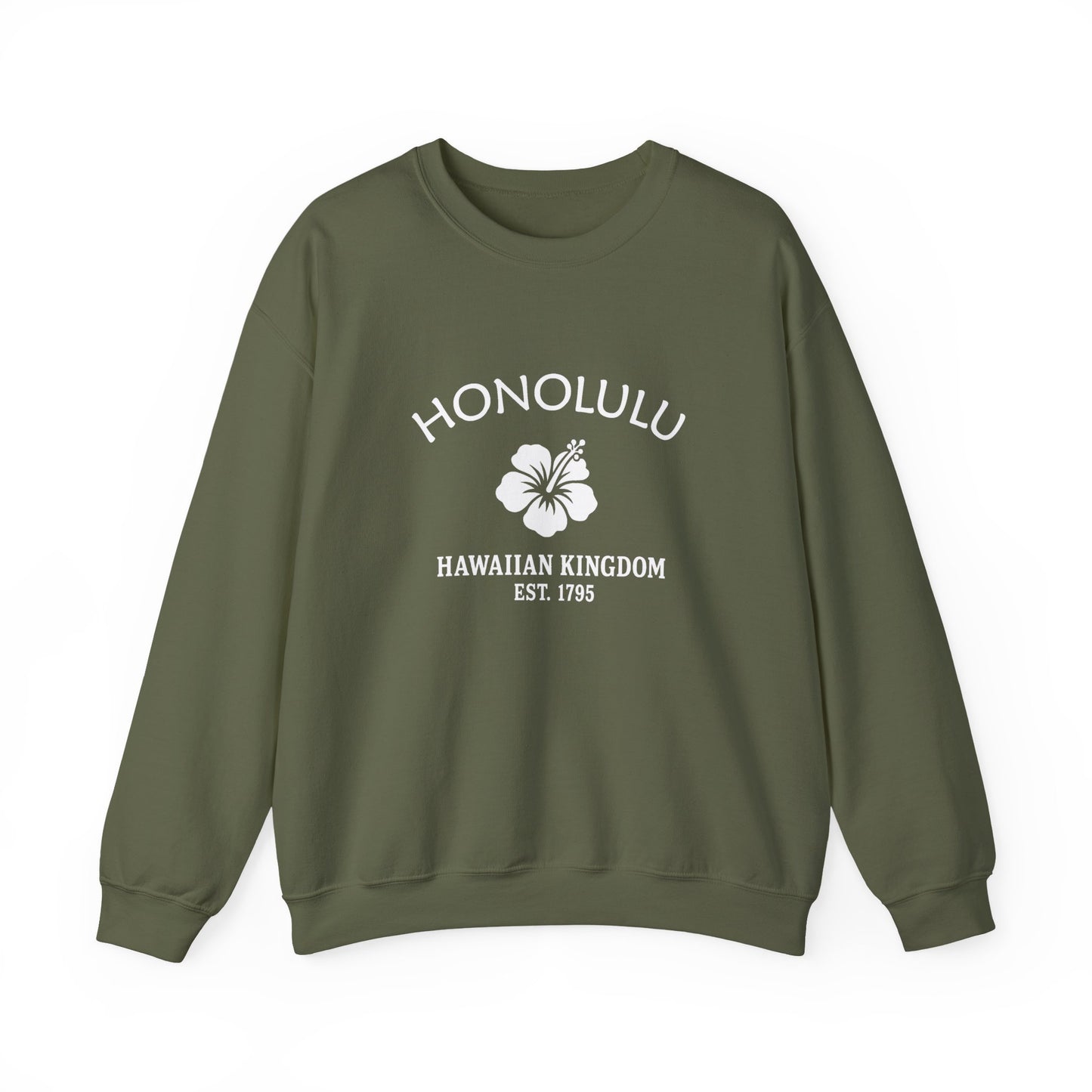
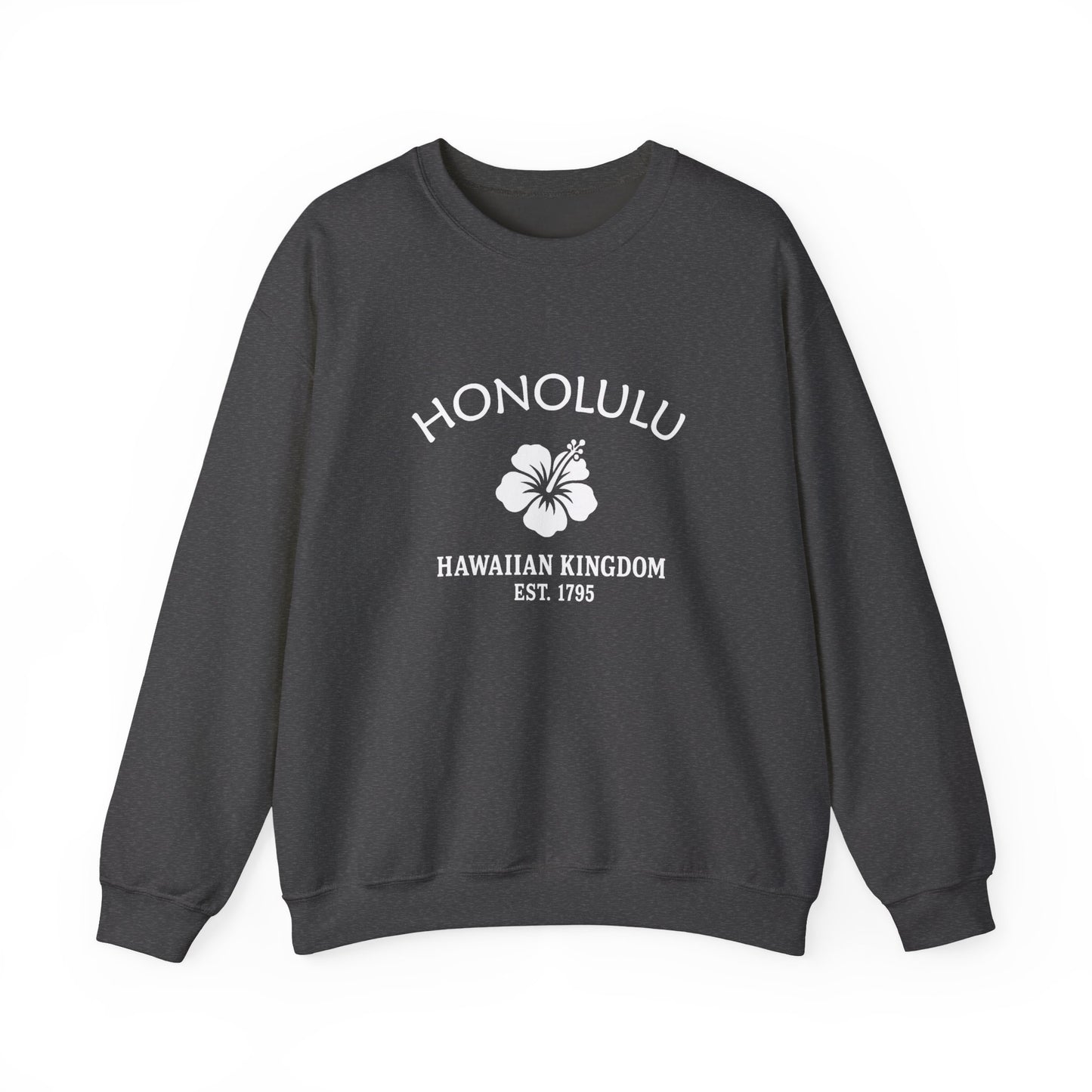
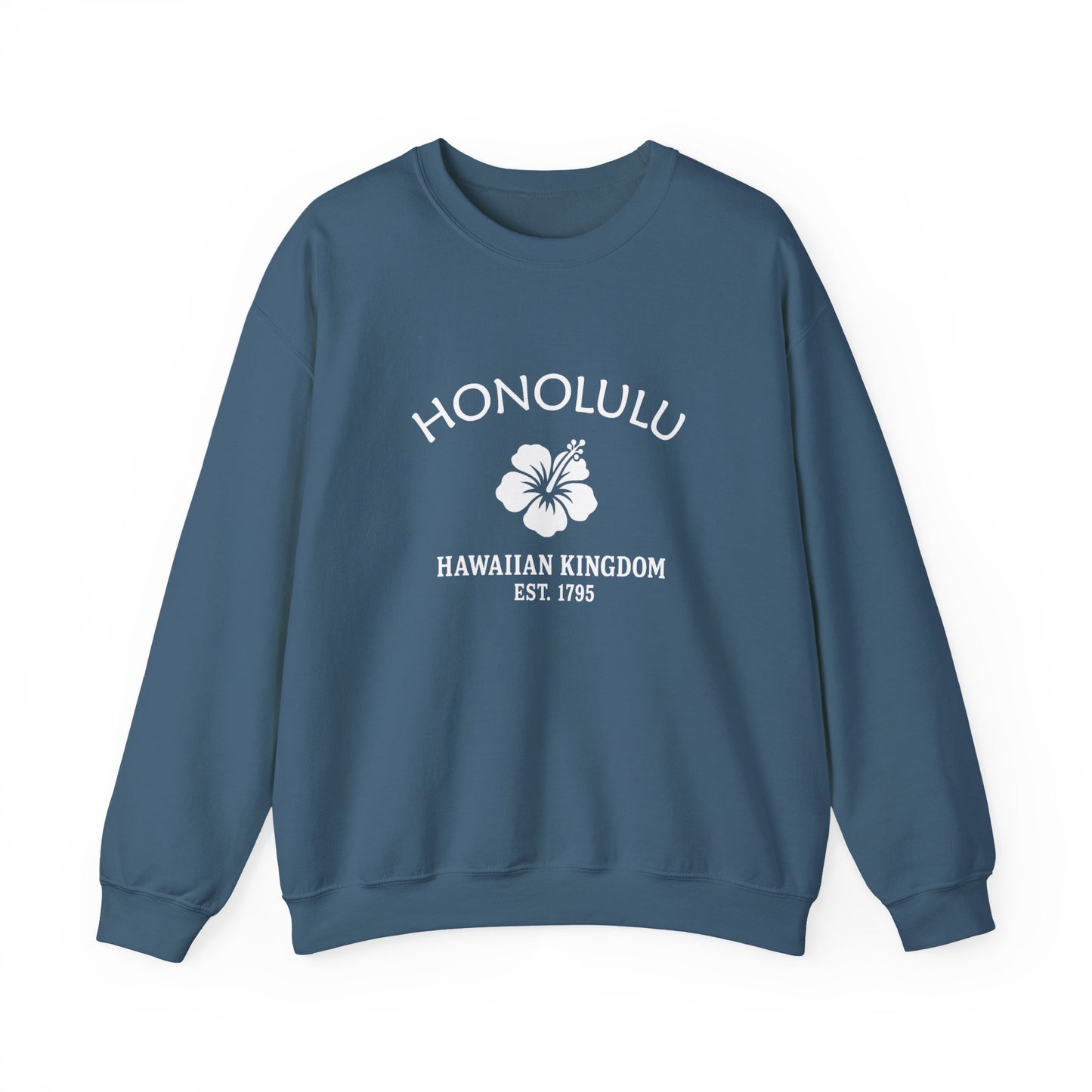
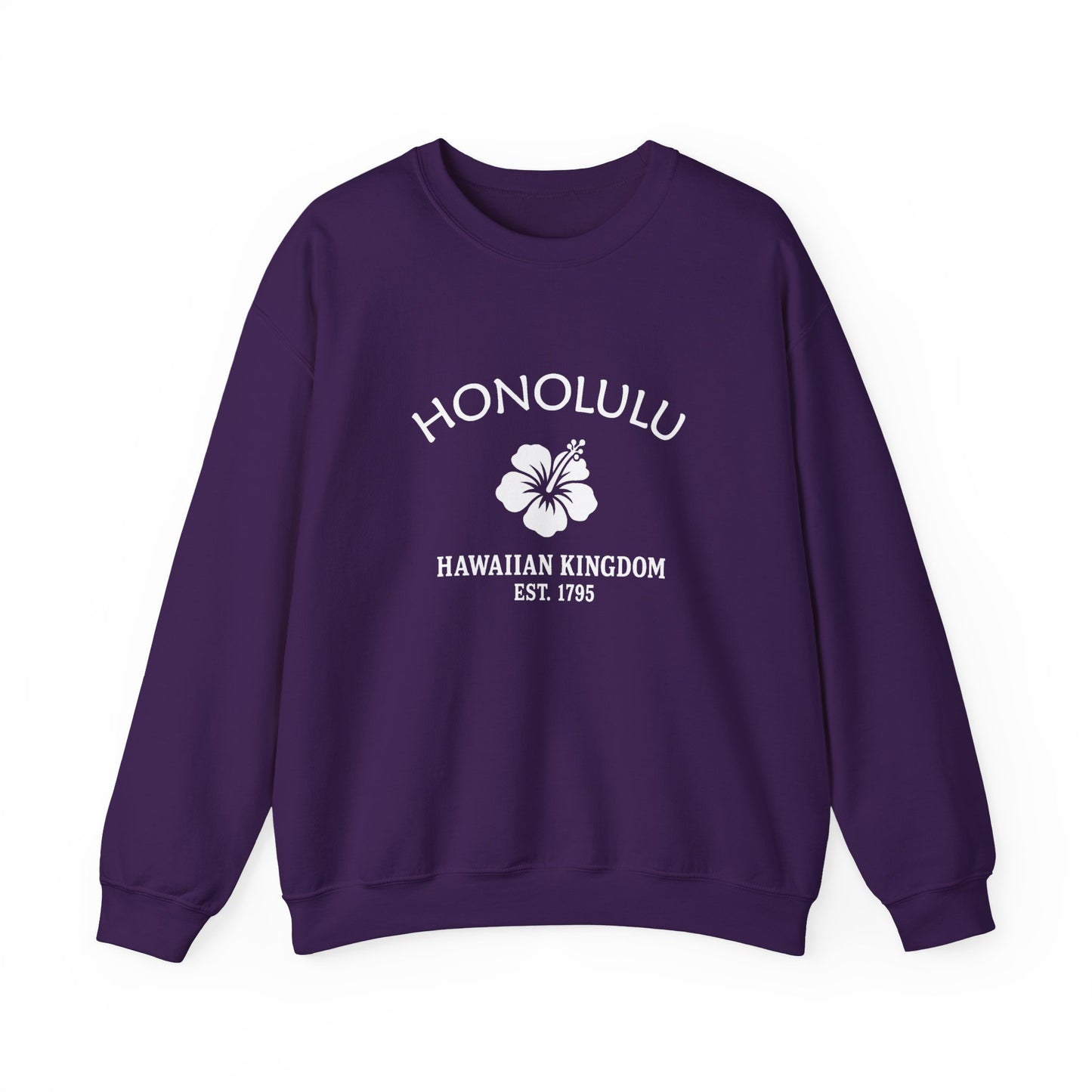
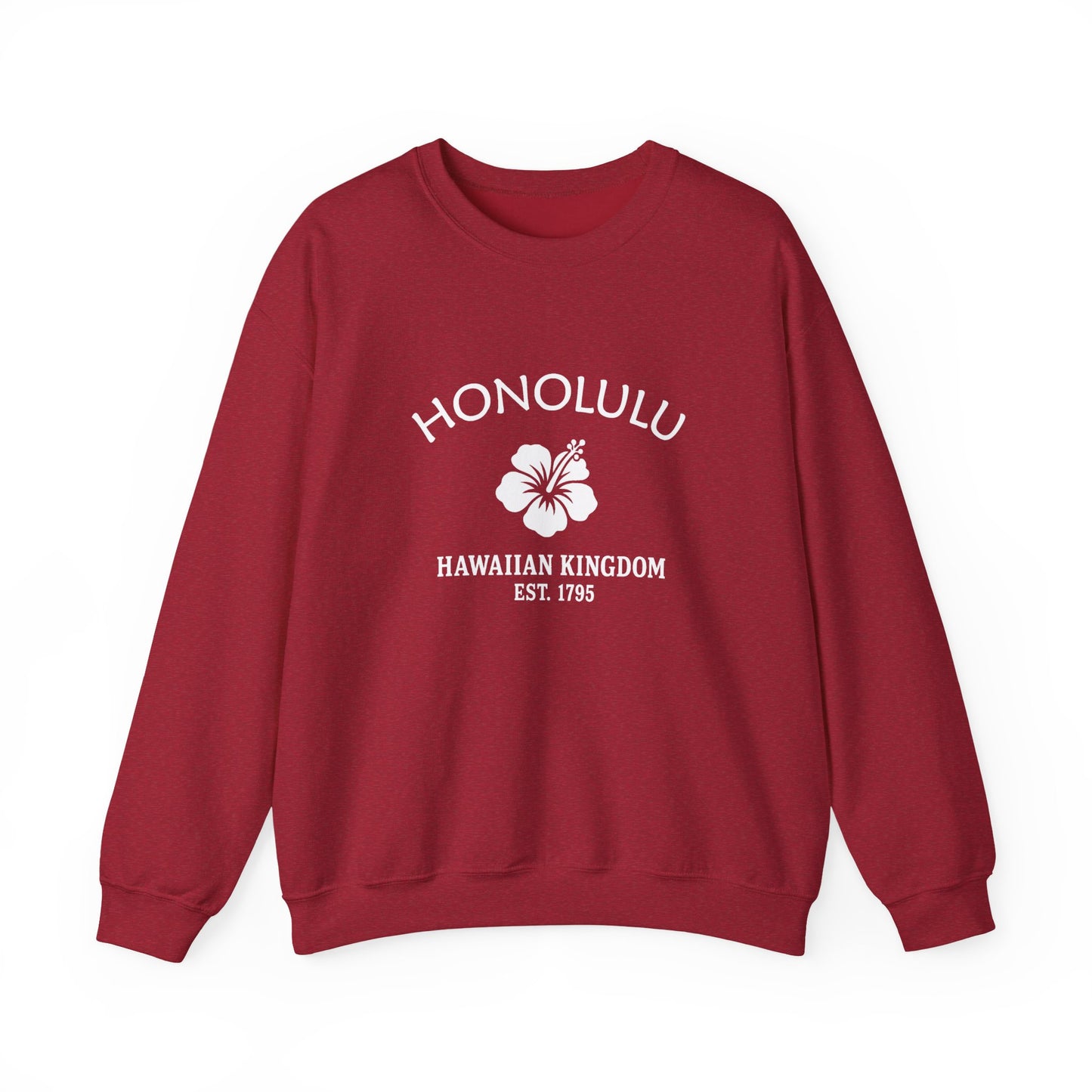
Our Honolulu logo carries the same emblem every Merlin Classics Hawaiʻi place wears — the hibiscus, above "Hawaiian Kingdom · Est. 1795," the year of unification under Kamehameha, printed in a worn, hand-pressed black and white. The hibiscus is the islands' mark, the through-line that ties Honolulu to every other Hawaiʻi place we make — a nod to the aloha that defines them. What makes this one Honolulu is everything around it: the harbor, the capital downtown, and Diamond Head standing over the shore.
That kingdom did not survive the century. In 1893 the Hawaiian Kingdom was overthrown by a group of businessmen backed by U.S. forces; the monarchy was ended, and in 1898 the islands were annexed by the United States, becoming a territory in 1900. It is a hard and contested history, and Honolulu does not hide it — ʻIolani Palace stands restored at the center of downtown precisely as a place to remember the kingdom that was. The Hawaiian identity the monarchy embodied did not disappear; it remains, to this day, the deep current beneath the modern city.
Why People Visit Honolulu
Honolulu offers the full range of Hawaiʻi in one place — royal and wartime history, world-class museums, and a famous shoreline, all in a walkable, welcoming capital city. Visitors come for Diamond Head, the beaches, and the heritage downtown, and stay for the food, the culture, and the easy access to the rest of Oʻahu. From the palace to the crater to the harbor, it rewards both a quick visit and a long stay. It is historic, cosmopolitan, and unmistakably Hawaiian.
