Honolulu begins with its harbor. The name itself means roughly "sheltered bay" or "calm port," and that protected water is the reason a city grew here at all. Native Hawaiians settled the harbor and the green valleys behind it for centuries, building walled fishponds along the shore, farming kalo in the wet lowlands, and reading the trade winds that funnel down from the Koʻolau mountains. The land ran in ahupuaʻa — wedge-shaped divisions reaching from the mountains down to the reef — so a single community held everything from upland forest to fishing grounds. Long before any foreign sail appeared, this was a gathering place, a sheltered shore at the center of a well-settled island.
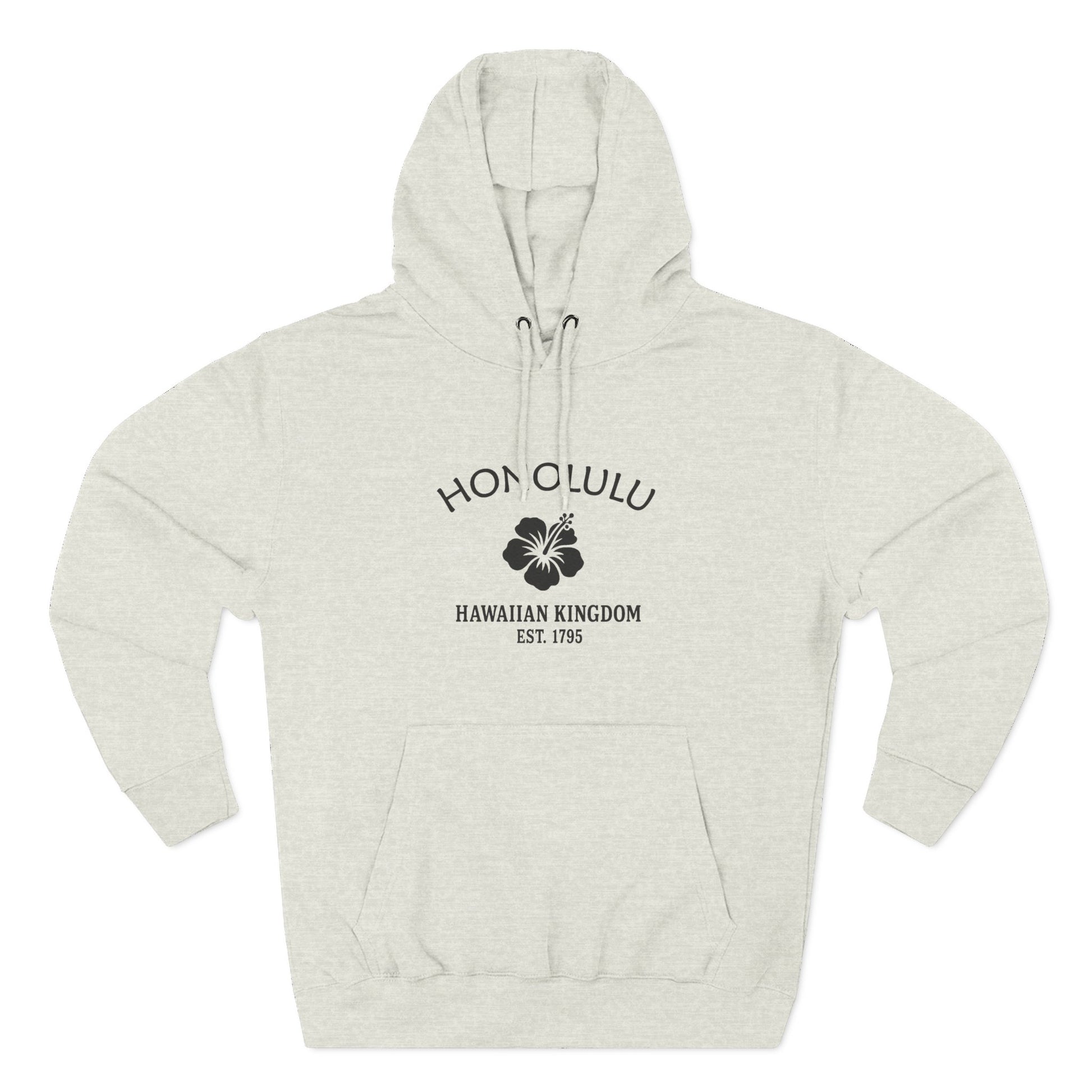
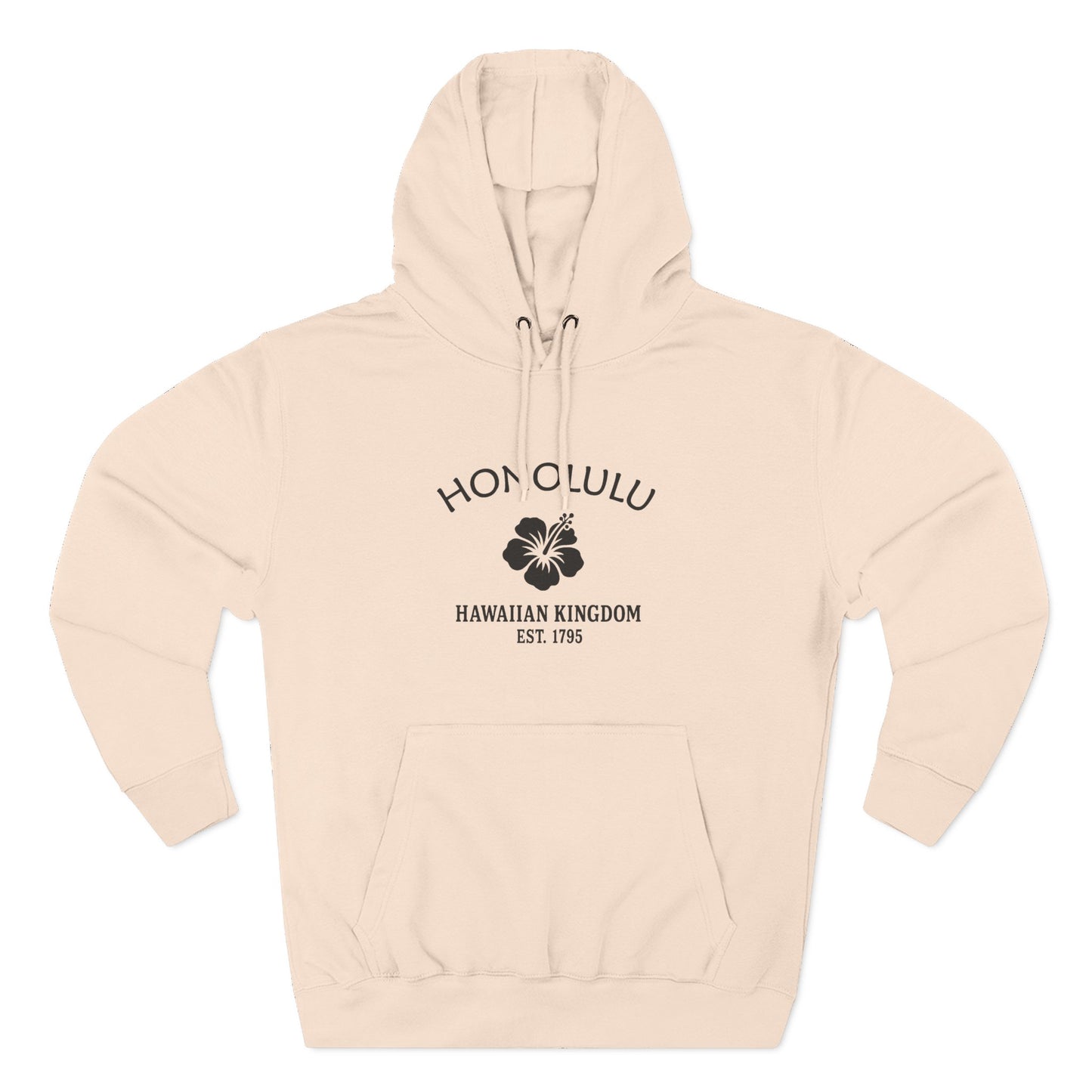
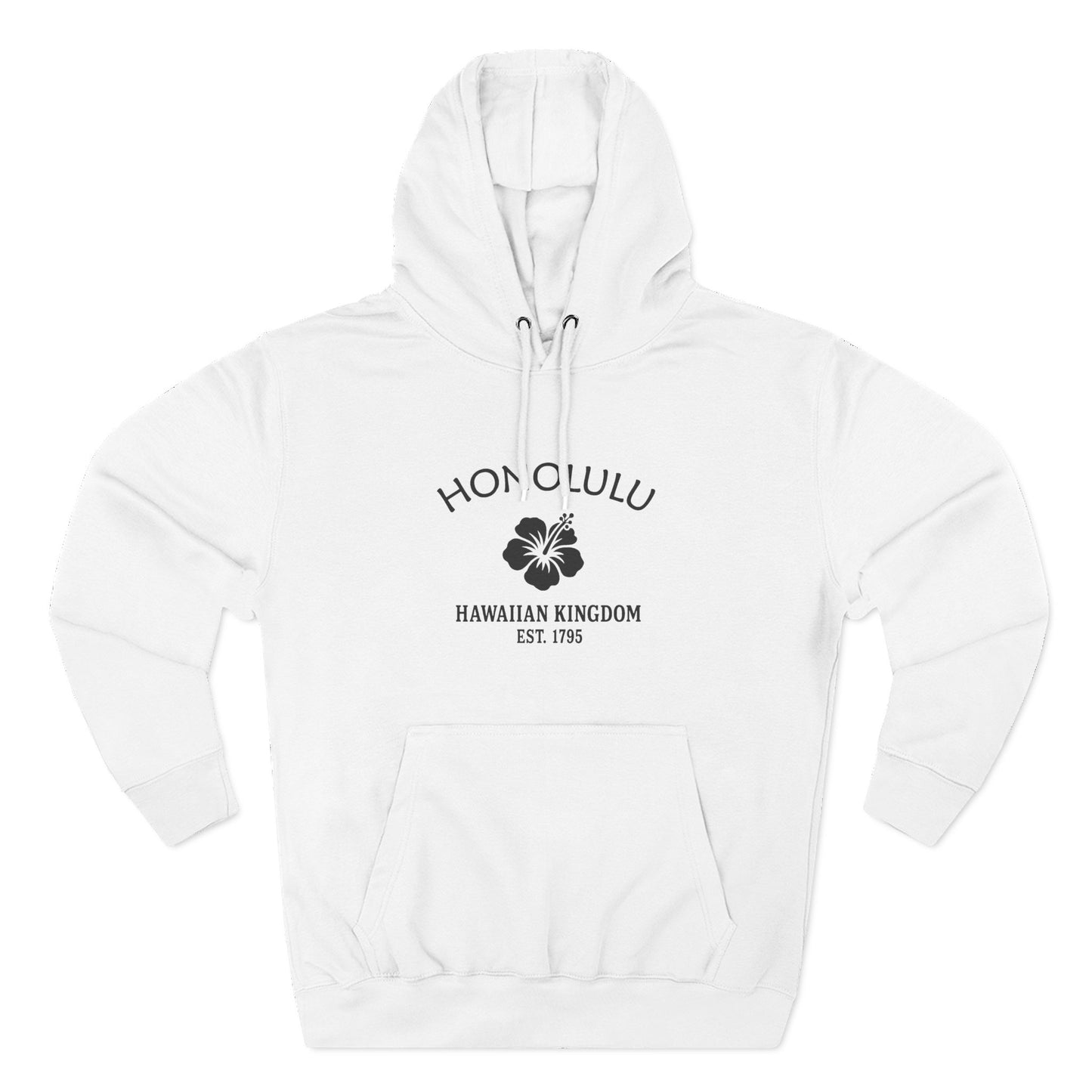
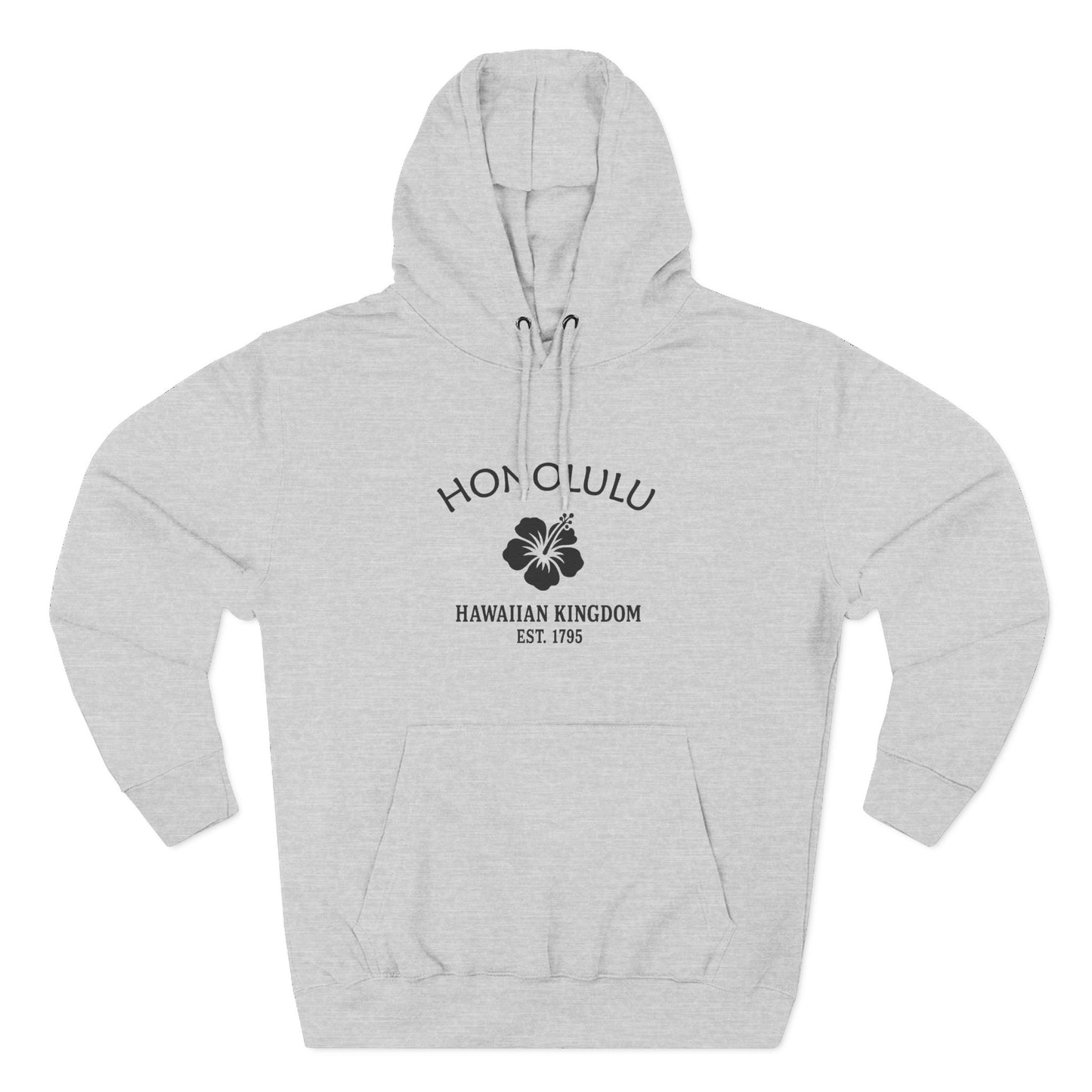
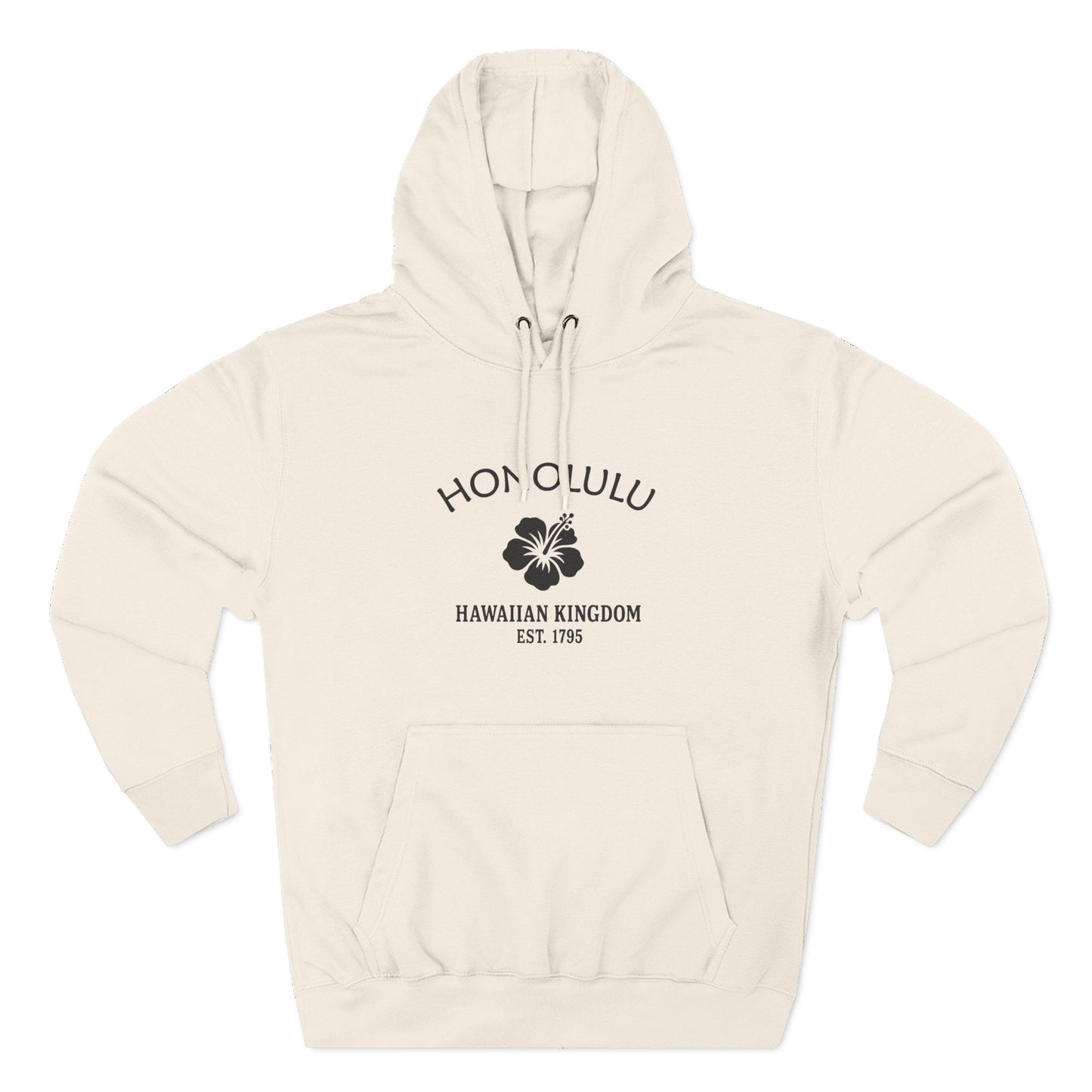
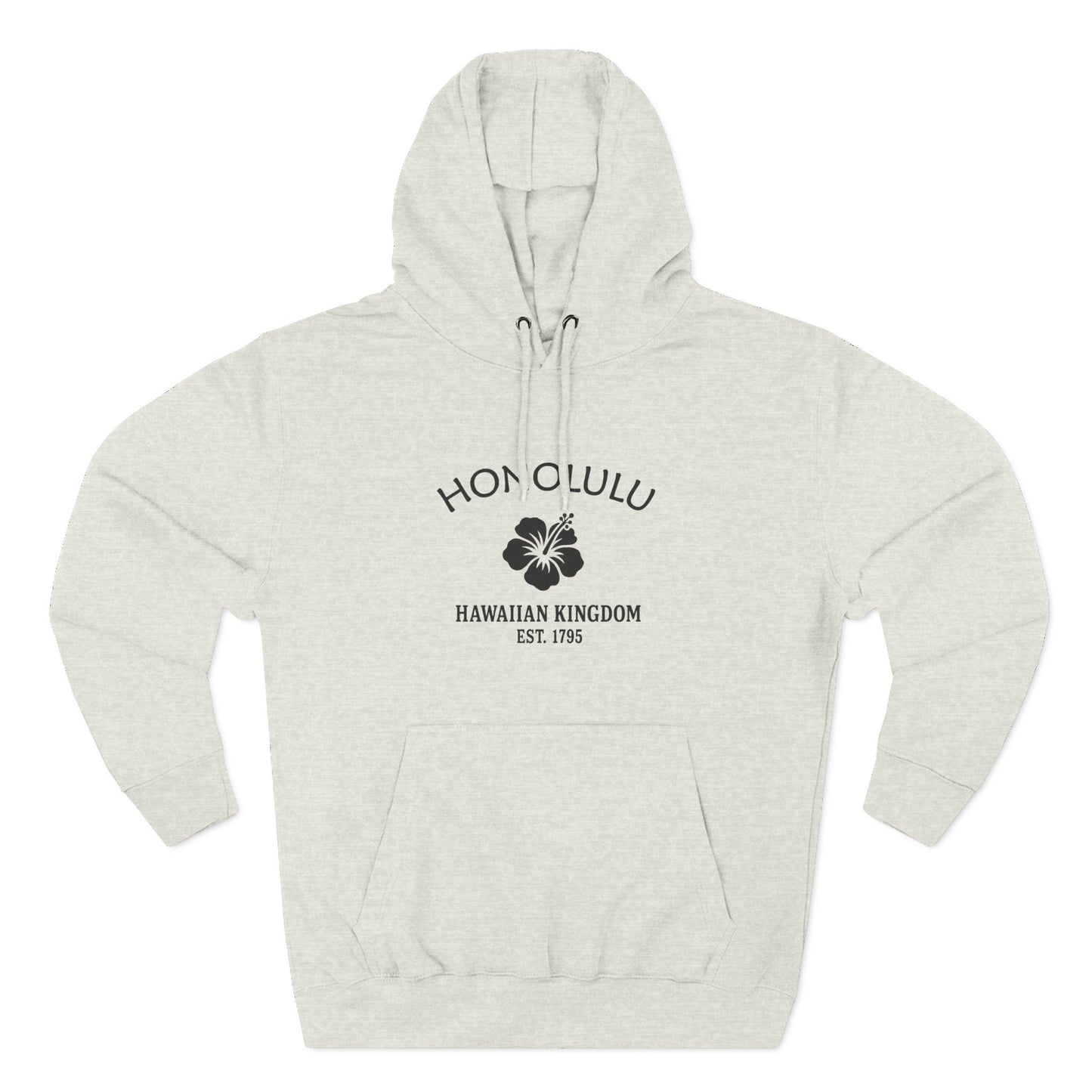
Today Honolulu is the capital and beating heart of Hawaiʻi — a real city on a famous shore, where ʻIolani Palace and the Capitol district sit a short drive from the beaches, and Diamond Head watches over it all. Its story runs from a Native Hawaiian harbor through a royal kingdom and a great Pacific port to the modern island capital it is now. Our Honolulu designs gather that identity into wearable form — the hibiscus-and-1795 emblem, the harbor, and the crater. Honolulu, Hawaiʻi: the sheltered bay beneath Diamond Head.
Why People Visit Honolulu
Honolulu offers the full range of Hawaiʻi in one place — royal and wartime history, world-class museums, and a famous shoreline, all in a walkable, welcoming capital city. Visitors come for Diamond Head, the beaches, and the heritage downtown, and stay for the food, the culture, and the easy access to the rest of Oʻahu. From the palace to the crater to the harbor, it rewards both a quick visit and a long stay. It is historic, cosmopolitan, and unmistakably Hawaiian.
