
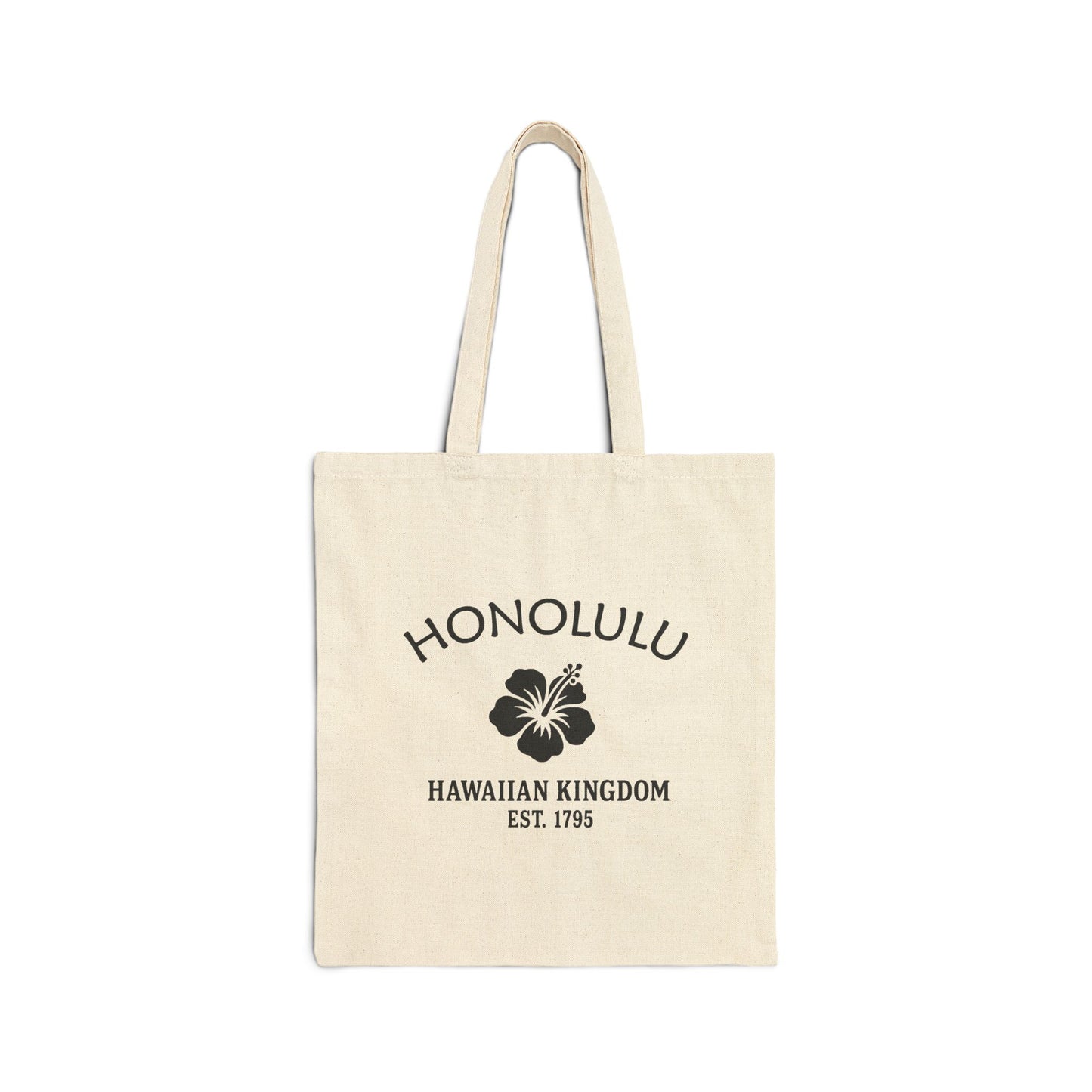
The harbor made Honolulu a Pacific crossroads. After Western contact in the 1790s, ships crowded the anchorage — traders, then whalers, then missionaries — and the little port grew into the busiest in the islands. As the Hawaiian Kingdom consolidated, Honolulu became its capital, and by the later nineteenth century the monarchy was seated downtown at ʻIolani Palace, the only royal palace on American soil. For a few decades the city was the working capital of an independent Pacific kingdom, with a king or queen in residence and the world's ships at its docks.
Our Honolulu logo carries the same emblem every Merlin Classics Hawaiʻi place wears — the hibiscus, above "Hawaiian Kingdom · Est. 1795," the year of unification under Kamehameha, printed in a worn, hand-pressed black and white. The hibiscus is the islands' mark, the through-line that ties Honolulu to every other Hawaiʻi place we make — a nod to the aloha that defines them. What makes this one Honolulu is everything around it: the harbor, the capital downtown, and Diamond Head standing over the shore.
Why People Visit Honolulu
Honolulu offers the full range of Hawaiʻi in one place — royal and wartime history, world-class museums, and a famous shoreline, all in a walkable, welcoming capital city. Visitors come for Diamond Head, the beaches, and the heritage downtown, and stay for the food, the culture, and the easy access to the rest of Oʻahu. From the palace to the crater to the harbor, it rewards both a quick visit and a long stay. It is historic, cosmopolitan, and unmistakably Hawaiian.
