Skip to product information
1 of 1

Honolulu Hawaii Vintage Retro Cotton Canvas Tote Bag - White Logo

Honolulu Hawaii Vintage Retro Cotton Canvas Tote Bag - White Logo

Regular price $28.00 USD
Regular price Sale price $28.00 USD
Sale
Free U.S. Shipping
Color
Size
Quantity


The Honolulu tote, for the town that is where Diamond Head watches over Waikīkī. Heavy 12 oz cotton canvas with the Honolulu vintage retro logo printed on both sides in white.

The tote is the Honolulu piece that gets used daily: groceries, books, a towel for the beach, the farmers’ market on Saturday. It is flat to mail, so it is also the simplest Honolulu gift to send to someone out of state. Ships free in the U.S.

Clean and minimalist, this everyday tote is made from heavy 12 oz (407 g/m²) cotton canvas with the retro logo printed on both sides. It comes in one 15" × 16" size with 20" self-fabric shoulder handles and a sewn-in label — sturdy 100% cotton canvas for errands, books, or groceries.

Honolulu takes its name from the sheltered harbor between the Koʻolau Range and the sea. Kamehameha III moved the capital of the Kingdom here from Lahaina in 1845, the city and county were organized in 1907, and the capital of the State of Hawaiʻi has been here since statehood in 1959.

The 1926 Aloha Tower marks the harbor, Chinatown keeps the port’s immigrant history, Waikīkī curves east to the tuff cone of Diamond Head, Lēʻahi, and the trade winds cross the whole of it. The Gathering Place’s great Pacific city is the mark on this piece.


QUICK FACTS — HONOLULU HI COTTON CANVAS TOTE

Town: Honolulu, Hawaiʻi

Founded: Kingdom capital 1845; city and county 1907

Known for: Capital of Hawaiʻi since 1845; Diamond Head and Waikīkī; Honolulu Harbor and the 1926 Aloha Tower; the Koʻolau Range

Art: Honolulu vintage retro logo, white (printed)

Blank: Cotton canvas tote, 15" × 16", 20" self-fabric handles

Fabric: Heavy 12 oz (407 g/m²) 100% cotton canvas

Print: Retro logo both sides, white ink

Made to order in the USA


Made to order and shipped free in the U.S. More Honolulu pieces, and the rest of Hawaii, are one button away.


View full details

Wear Local. Feed Local. Stay Classic.

Product FAQs

How does your sizing work?

Every item is made to order, so please check the size chart on this page before you buy. Women's fitted tees run small; size up for a looser fit. Caps are one size with an adjustable strap.

How are items made and when will they arrive?

We make each item to order using premium blanks, embroidery and soft-hand prints. Production takes 2-5 business days (weekends and holidays excluded), then 4-10 days in transit via USPS, UPS or FedEx to U.S. addresses; most orders arrive within 6-15 business days. You'll get a tracking link the moment it ships. Any current shipping offer is shown in the bar at the top of every page and applies automatically at checkout, no code needed.

How do I send a gift?

Enter the recipient's address as the shipping address and your own as the billing address at checkout. Nothing ships with a price; the package includes a plain packing slip. Tracking goes to your email, not theirs. For birthdays and holidays, order two weeks ahead to be safe.

What's the return policy?

Made-to-order items can't be returned or exchanged for size or color, so please use the size chart and photos before ordering. If anything arrives defective, misprinted or damaged, send a photo and your order number within 30 days and we'll replace it or refund you.

How do I care for my item?

Apparel: wash cold, inside out, with like colors; no bleach; tumble dry low or hang dry. Embroidered pieces: iron inside out to protect the stitching. Caps: spot clean. Printed glasses and water bottles: hand wash only, no dishwasher, so the artwork lasts. Mugs and engraved glasses are dishwasher safe. Any item-specific care notes are in the description above.

Who makes this?

Merlin Classics is a small Connecticut brand making original retro designs for the towns people love. Every piece is printed, embroidered or engraved to order in the USA, and the business supports hunger relief in the communities our collections celebrate.

The harbor made Honolulu a Pacific crossroads. After Western contact in the 1790s, ships crowded the anchorage — traders, then whalers, then missionaries — and the little port grew into the busiest in the islands. As the Hawaiian Kingdom consolidated, Honolulu became its capital, and by the later nineteenth century the monarchy was seated downtown at ʻIolani Palace, the only royal palace on American soil. For a few decades the city was the working capital of an independent Pacific kingdom, with a king or queen in residence and the world's ships at its docks.

Honolulu begins with its harbor. The name itself means roughly "sheltered bay" or "calm port," and that protected water is the reason a city grew here at all. Native Hawaiians settled the harbor and the green valleys behind it for centuries, building walled fishponds along the shore, farming kalo in the wet lowlands, and reading the trade winds that funnel down from the Koʻolau mountains. The land ran in ahupuaʻa — wedge-shaped divisions reaching from the mountains down to the reef — so a single community held everything from upland forest to fishing grounds. Long before any foreign sail appeared, this was a gathering place, a sheltered shore at the center of a well-settled island.

Why People Visit Honolulu

Honolulu offers the full range of Hawaiʻi in one place — royal and wartime history, world-class museums, and a famous shoreline, all in a walkable, welcoming capital city. Visitors come for Diamond Head, the beaches, and the heritage downtown, and stay for the food, the culture, and the easy access to the rest of Oʻahu. From the palace to the crater to the harbor, it rewards both a quick visit and a long stay. It is historic, cosmopolitan, and unmistakably Hawaiian.

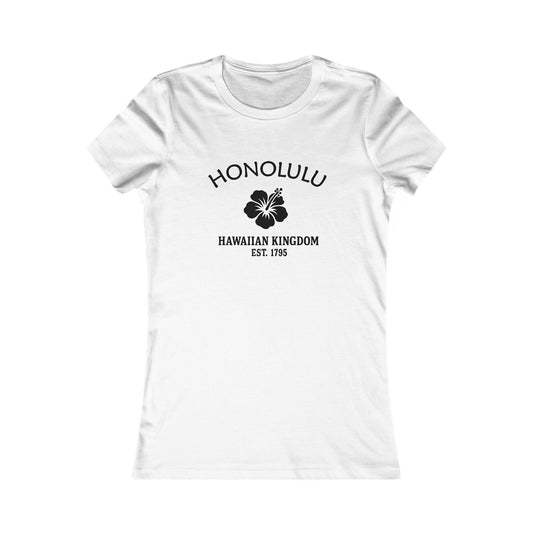
Honolulu Hawaii Merlin Classics retro vintage logo featuring the Hawaiʻi hibiscus above Hawaiian Kingdom Est. 1795