


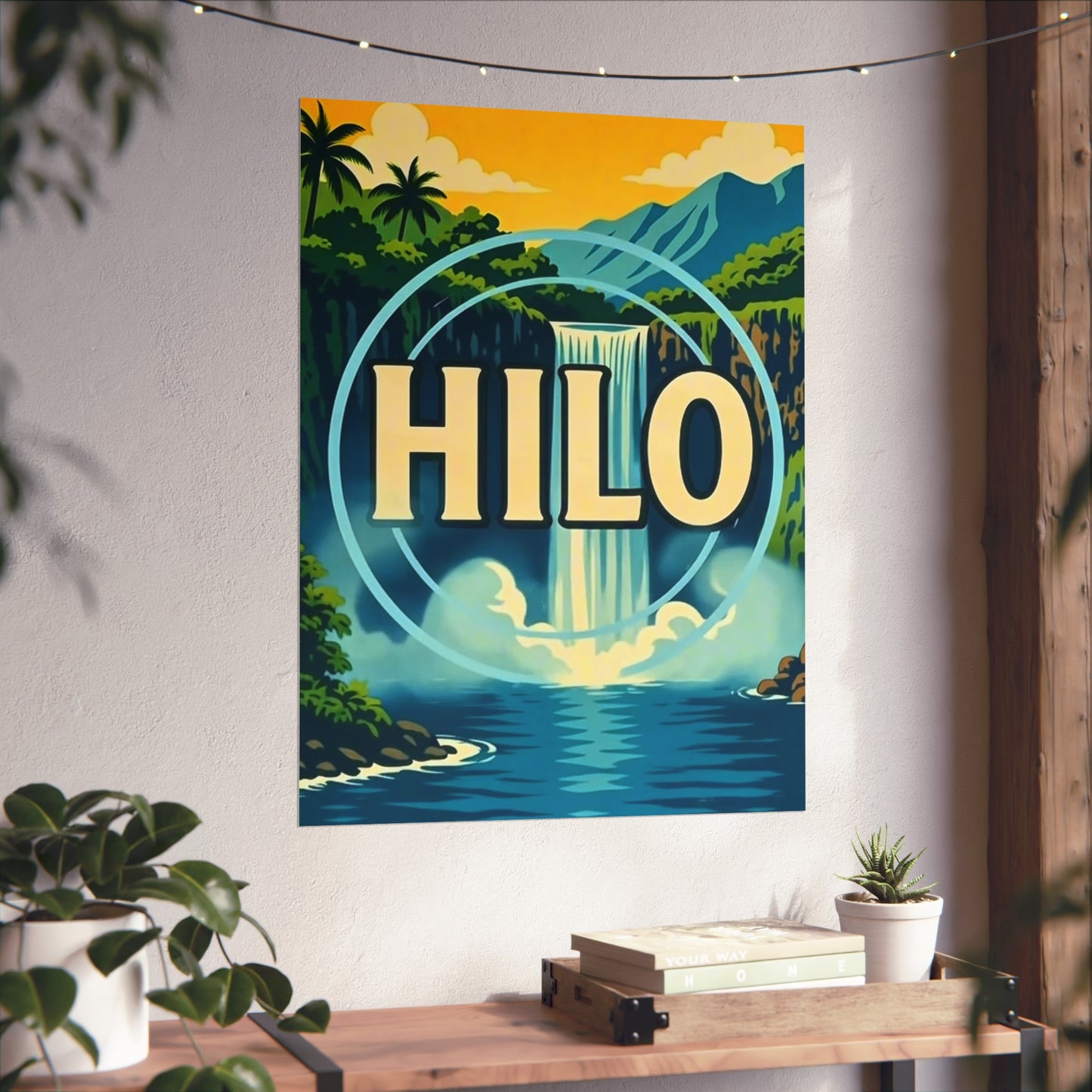
Today Hilo is the bayfront cultural capital of Hawaiʻi Island — a rain-green town of waterfalls, gardens, and hula, looking out across its crescent bay to Mauna Kea. Its story runs from a Native Hawaiian homeland on the bay through a plantation port and the hard lessons of the sea to the warm, multicultural town it is now. Our Hilo designs gather that identity into wearable form — the hibiscus-and-1795 emblem, the bay, and the falls. Hilo, Hawaiʻi: rain, rainbows, and aloha.
Hilo's resilience was tested hard by the sea. Tsunamis in 1946 and again in 1960 struck Hilo Bay with terrible force and great loss of life, sweeping through the low downtown along the water. The city rebuilt — and rather than rebuild in harm's way, it deliberately turned the most exposed bayfront into the open green parkland and gardens you see today, a quiet buffer between the town and the water. That history is remembered, not hidden, at the Pacific Tsunami Museum downtown, and it helped give rise to the Pacific-wide warning systems that protect coastlines now.
Why People Visit Hilo
Hilo offers the most authentic, culturally rich side of Hawaiʻi Island — waterfalls, gardens, markets, and deep Hawaiian heritage, all in a relaxed bayfront town. Visitors come for the rainforest scenery and the easy access to volcanoes and coast, and stay for the unhurried, welcoming feel of a real town rather than a resort strip. From the morning rainbows at Waiānuenue to the gardens along the bay, it rewards a slow pace. It is green, genuine, and beautiful in every season on the bay.
