


Long before the road, Hāna was one of the great places of old Hawaiʻi, and it remains one of the most traditional Native Hawaiian communities in the islands. For centuries Hawaiians have farmed kalo (taro) in its valleys and fished its bays, and Hāna was a seat of power and a contested prize among the chiefs of Maui and Hawaiʻi Island. In the 1500s the Maui ruler Piʻilani united the island and built the Alaloa, the ʻlong roadʻ that once encircled Maui — the ancient ancestor of todayʻs highway. Hāna is also the birthplace of Queen Kaʻahumanu, born here around 1768. These are living, sacred places, and they are treated here with respect: the great heiau at Piʻilanihale and the cliffs of Kaʻuiki are honored from a distance, not as souvenirs.
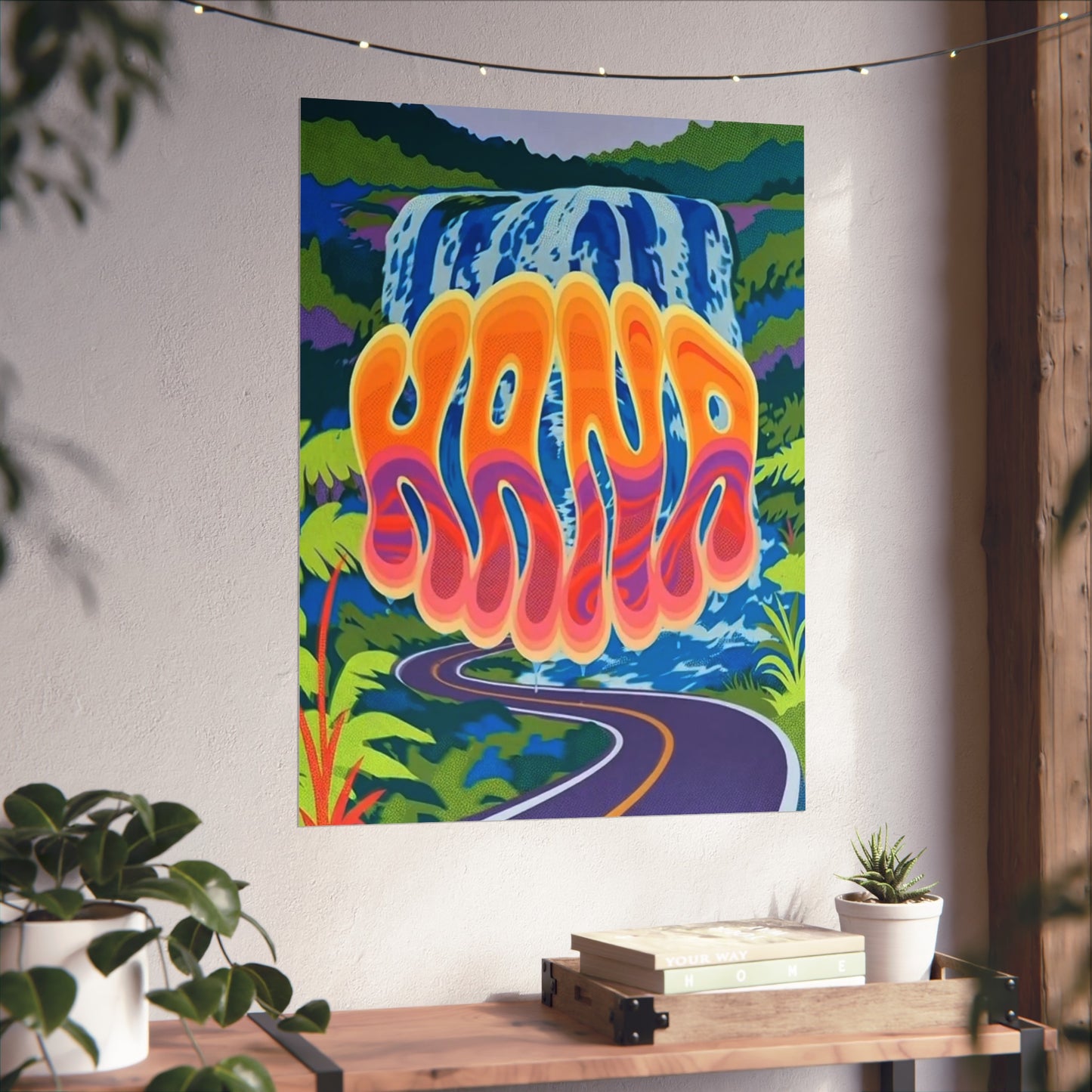
Today Hāna is the lush reward at the end of Mauiʻs long and winding road — black sand, waterfalls, and a slower way of life kept close. Our Hāna designs gather that identity — the hibiscus emblem, the Road to Hāna, the windward coast — into wearable form. Hāna — the lush reward at the end of Mauiʻs long and winding road.
Why People Visit Hāna
People come the length of the highway for the quiet at the end of it: a pocket of old Hawaiʻi with black-sand beaches, waterfalls, and a slow, traditional pace. The drive is the point, and Hāna is the reward — so take it slowly, and travel with respect for a place that has kept old Hawaiʻi close.
