


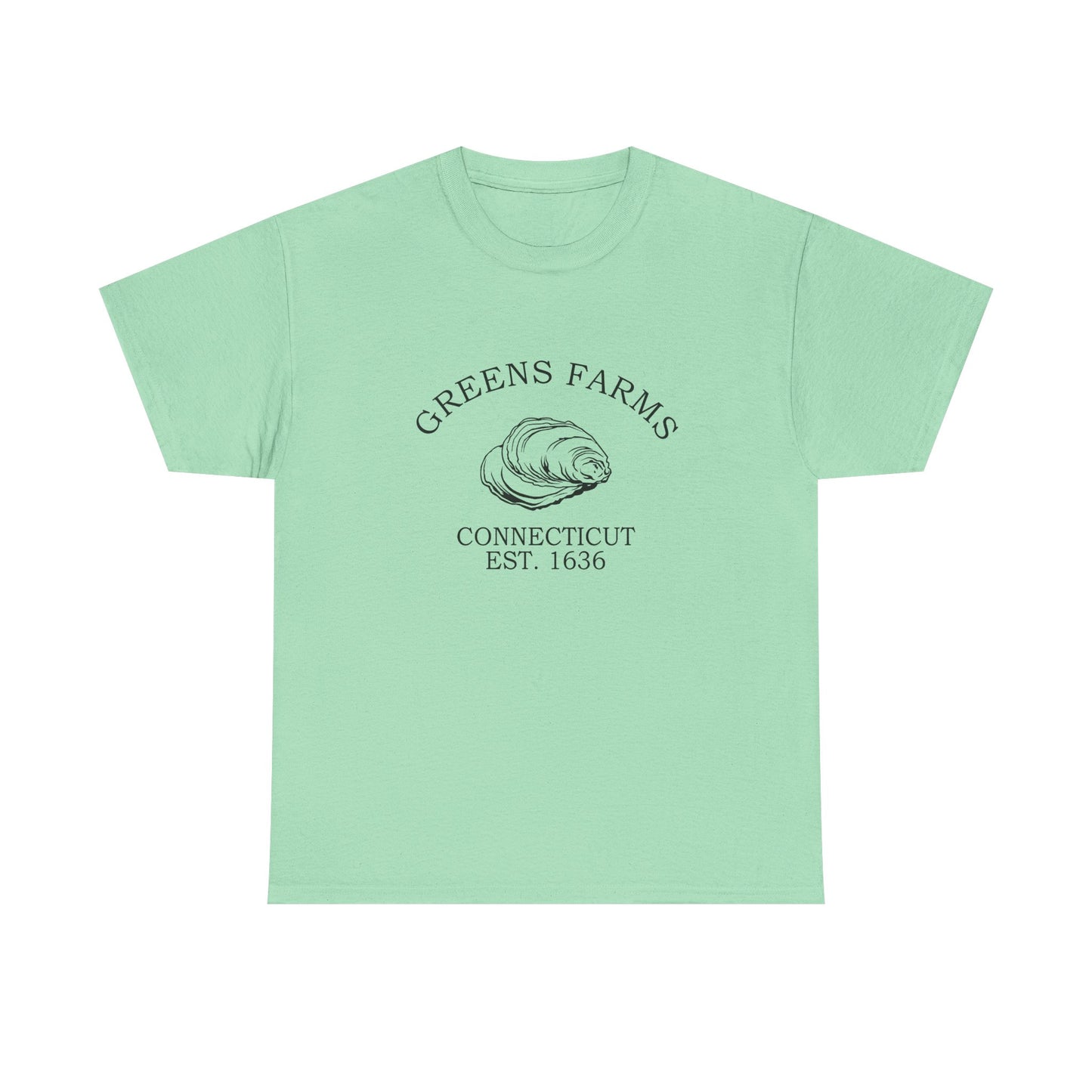
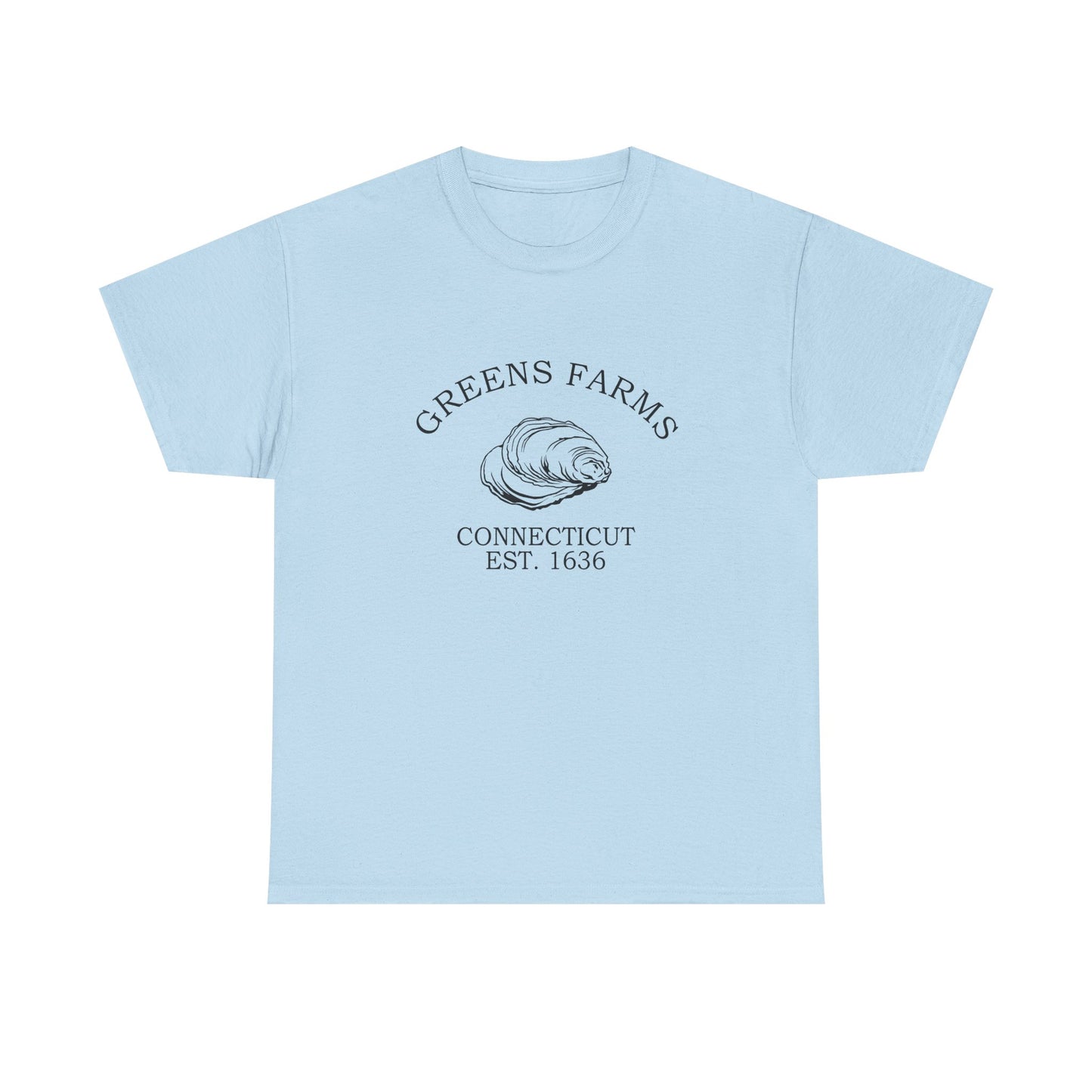
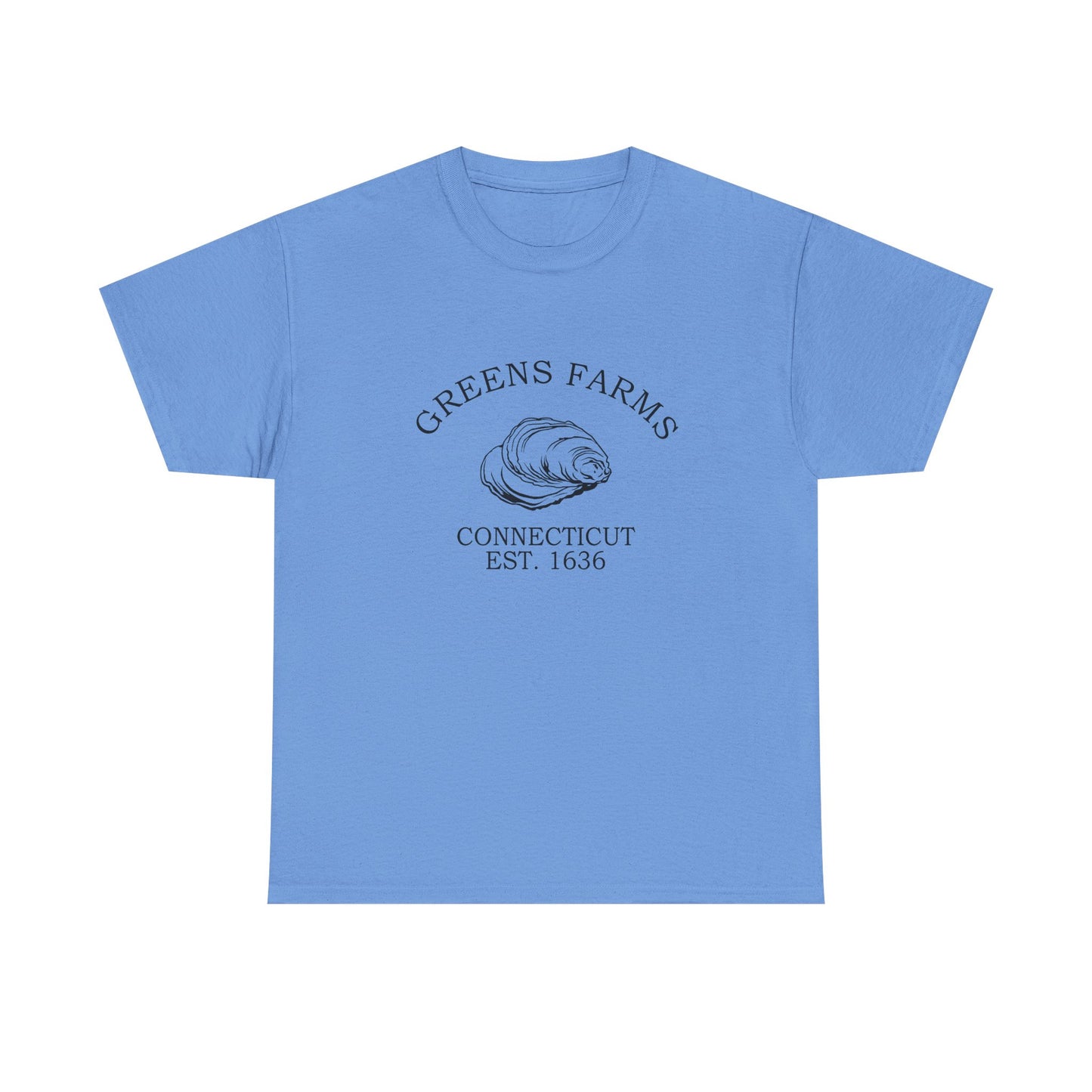
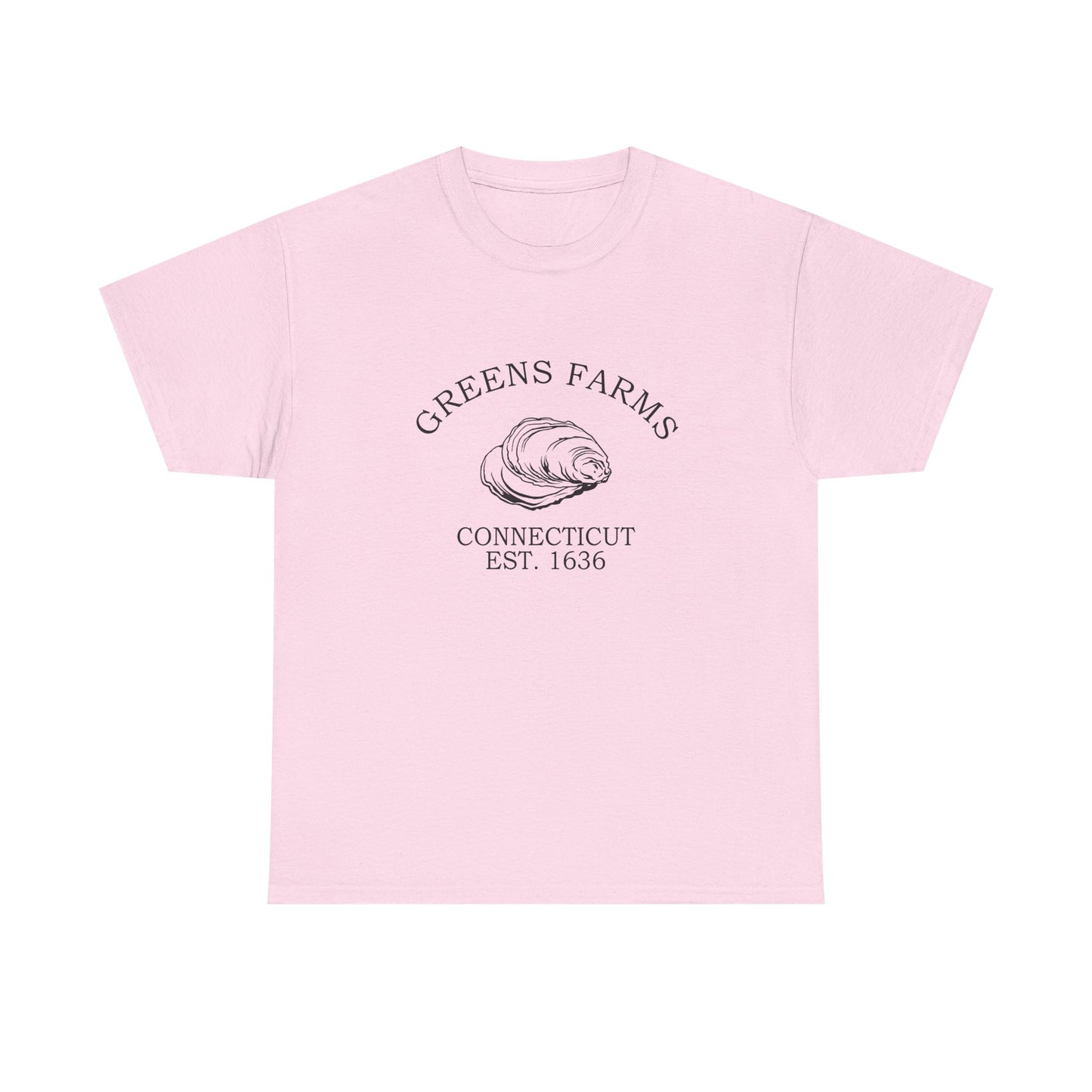
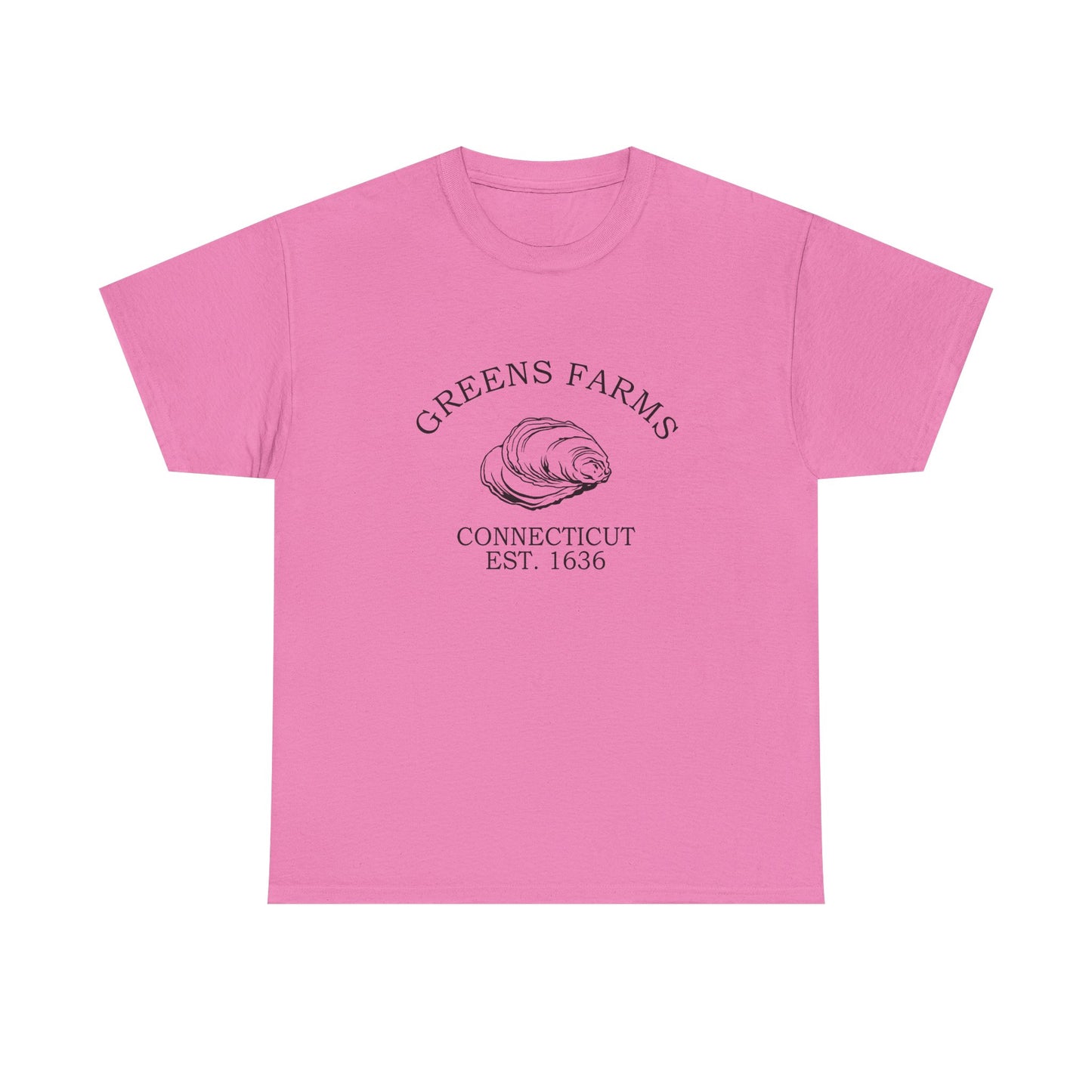
Today Greens Farms blends shoreline calm with the deepest colonial memory on the Westport coast. Its story runs from Machamux and the five families of 1648, through the burned and rebuilt parish, the onion boats and the railroad, to the first state park and the quiet lanes of the present. Wear a little of the beautiful land.
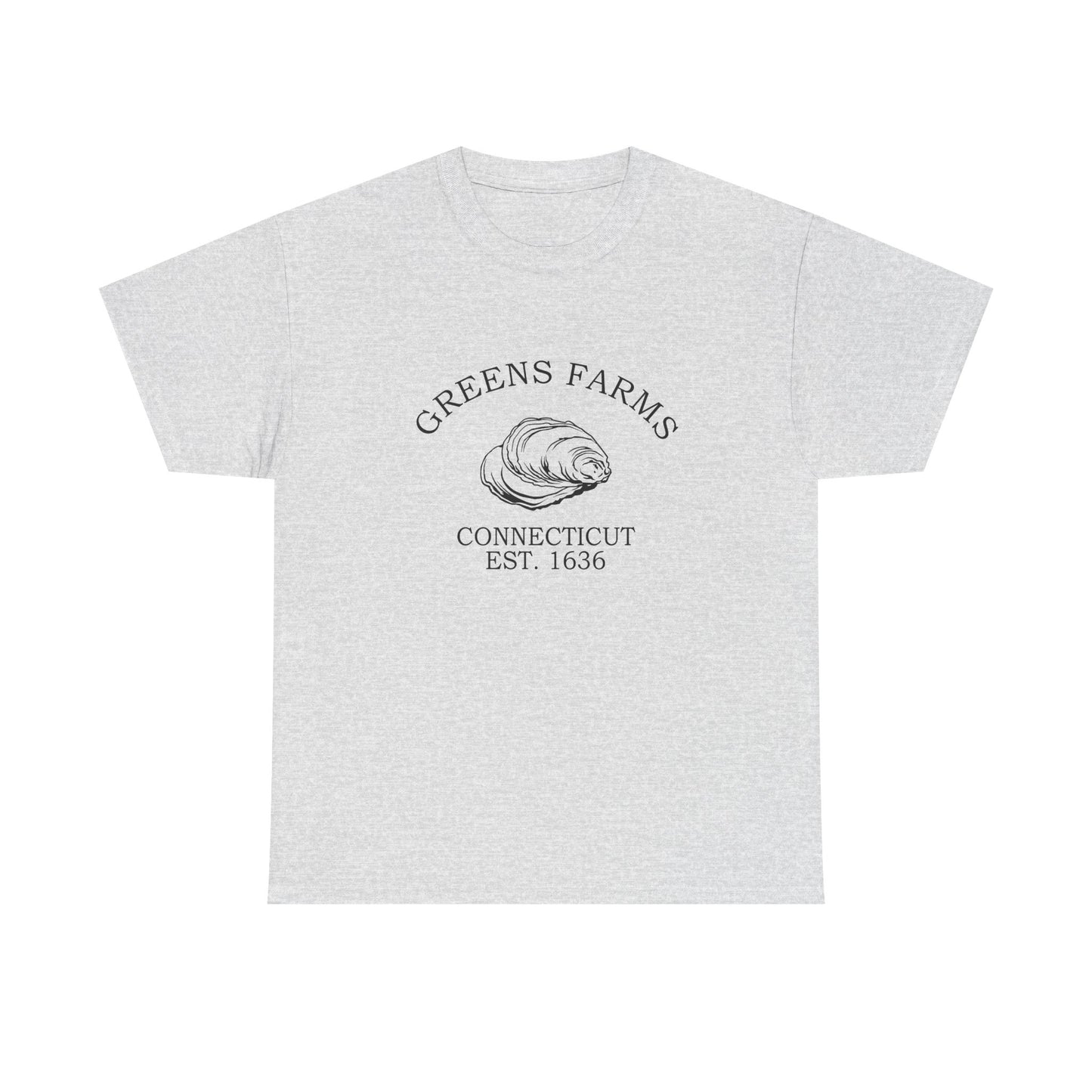
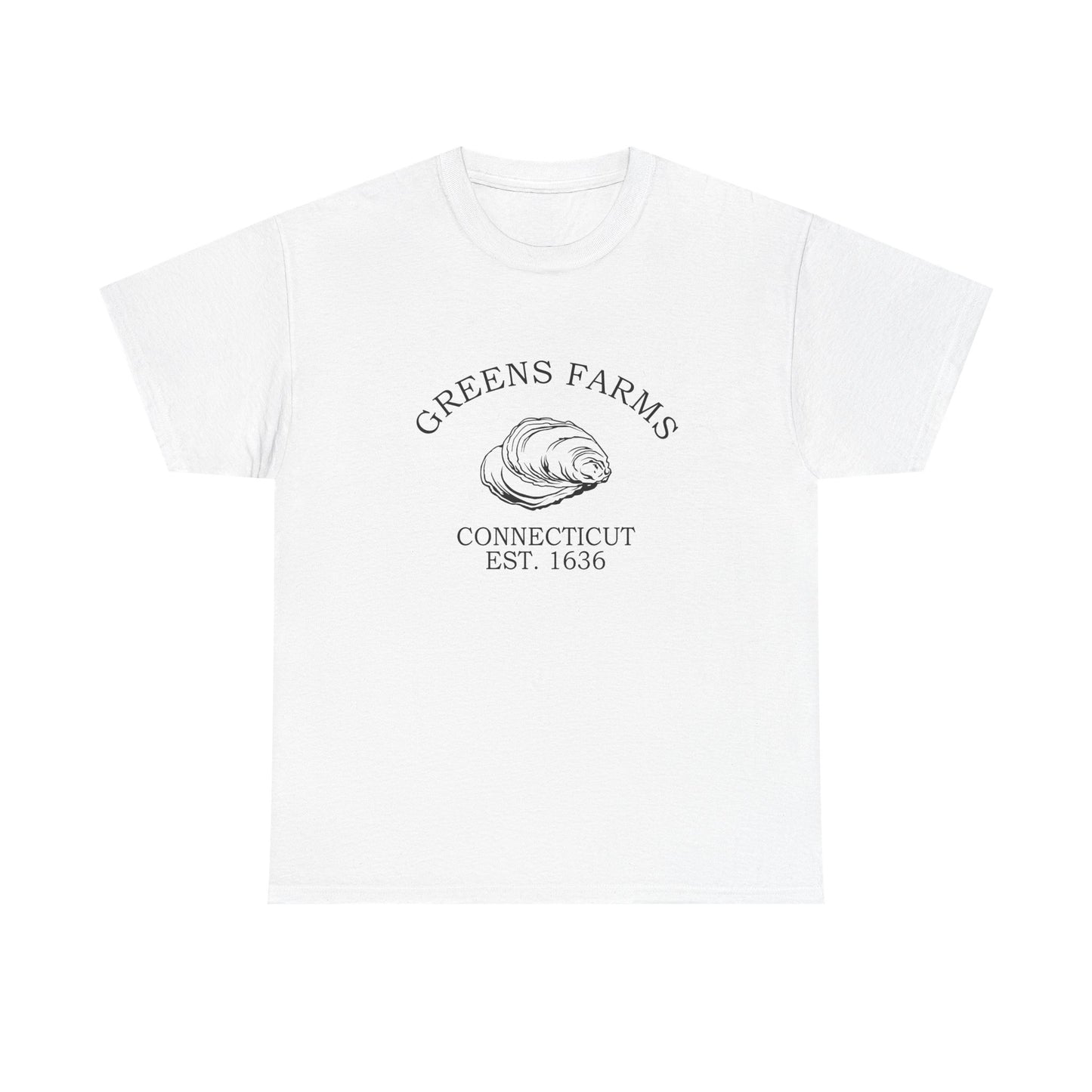
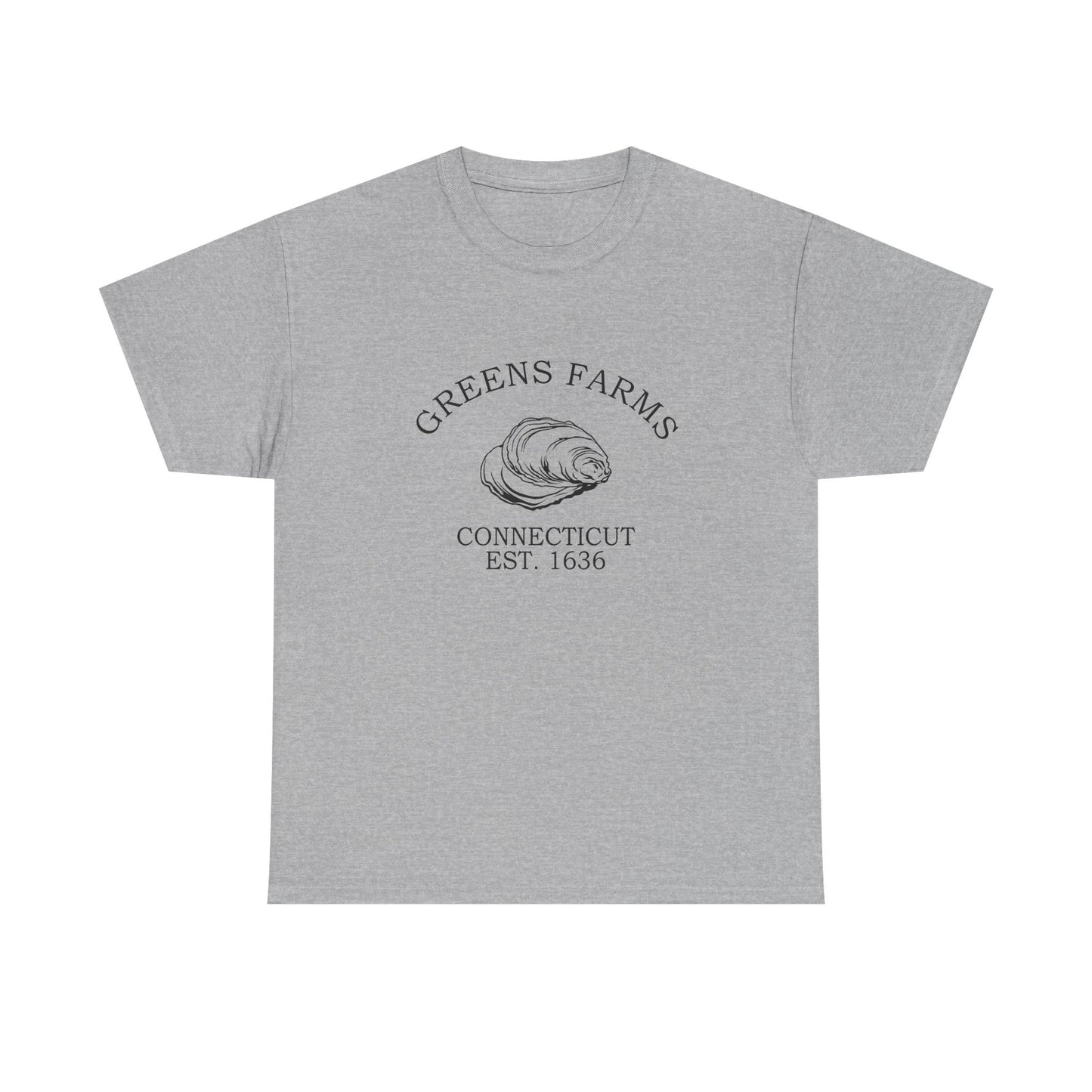
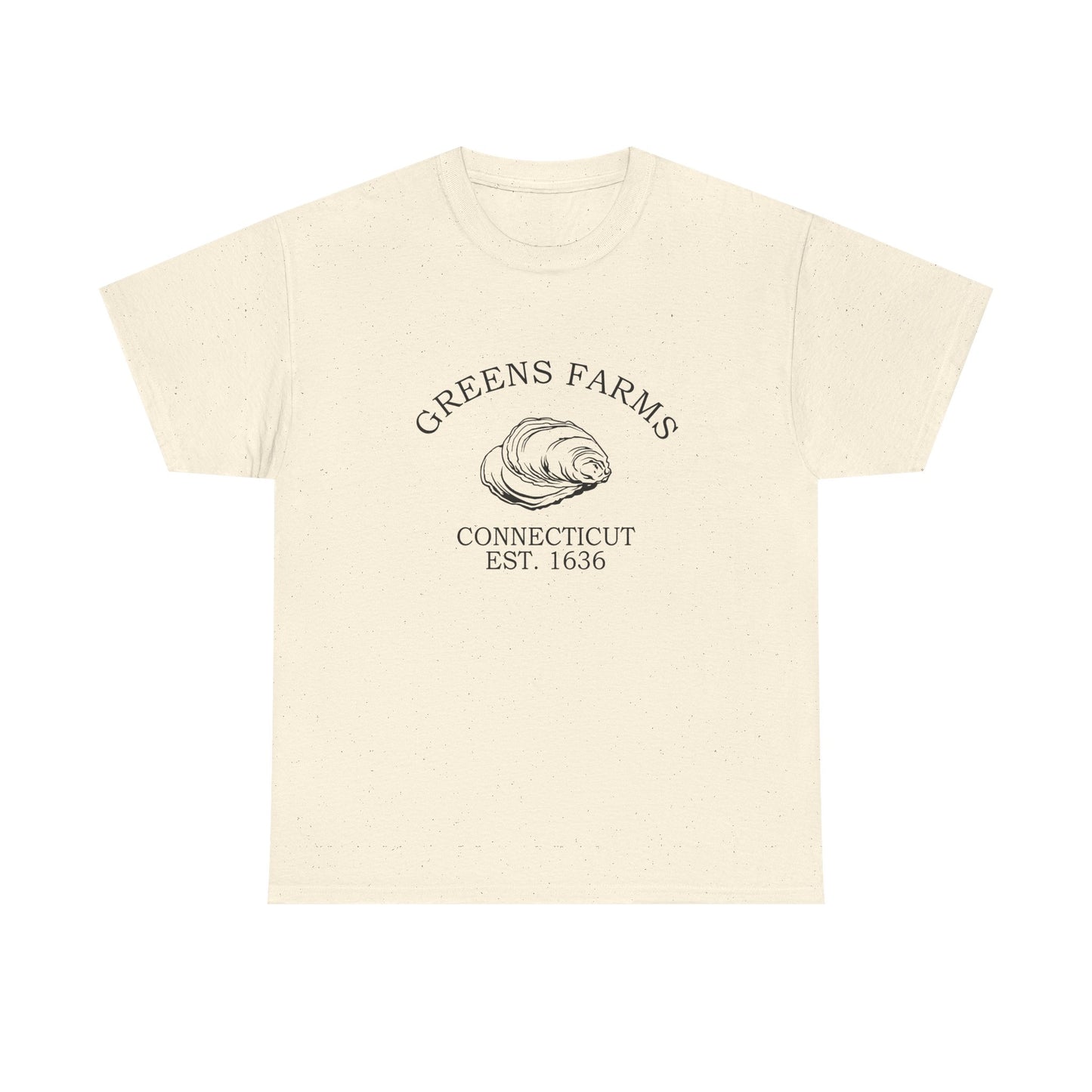
Our Greens Farms retro logo features the oyster shell above "Est. 1648" — a fitting emblem for a shoreline that has lived by the salt marsh and the Sound since the Bankside landing. The shell speaks to abundance, maritime heritage, and the fertile coast the Bankside Farmers chose; printed in worn, hand-pressed black and white, it wears like something found in a tack room. What makes it Greens Farms is everything around it — the boulder, the marsh, and the beautiful land. And the name still travels: our own Machamux Farm collection carries it north to Redding, where the beautiful land keeps a second address — and where the name's own four-century story, 1714 deed and all, is told in full.
Why People Visit Greens Farms
Greens Farms offers calm beaches, salt-marsh nature, and village charm steeped in the deepest colonial history on the Westport shore. Visitors come for the first-state-park beach at Sherwood Island and stay for the sense of a place that has held its name — the beautiful land — for nearly four centuries.
