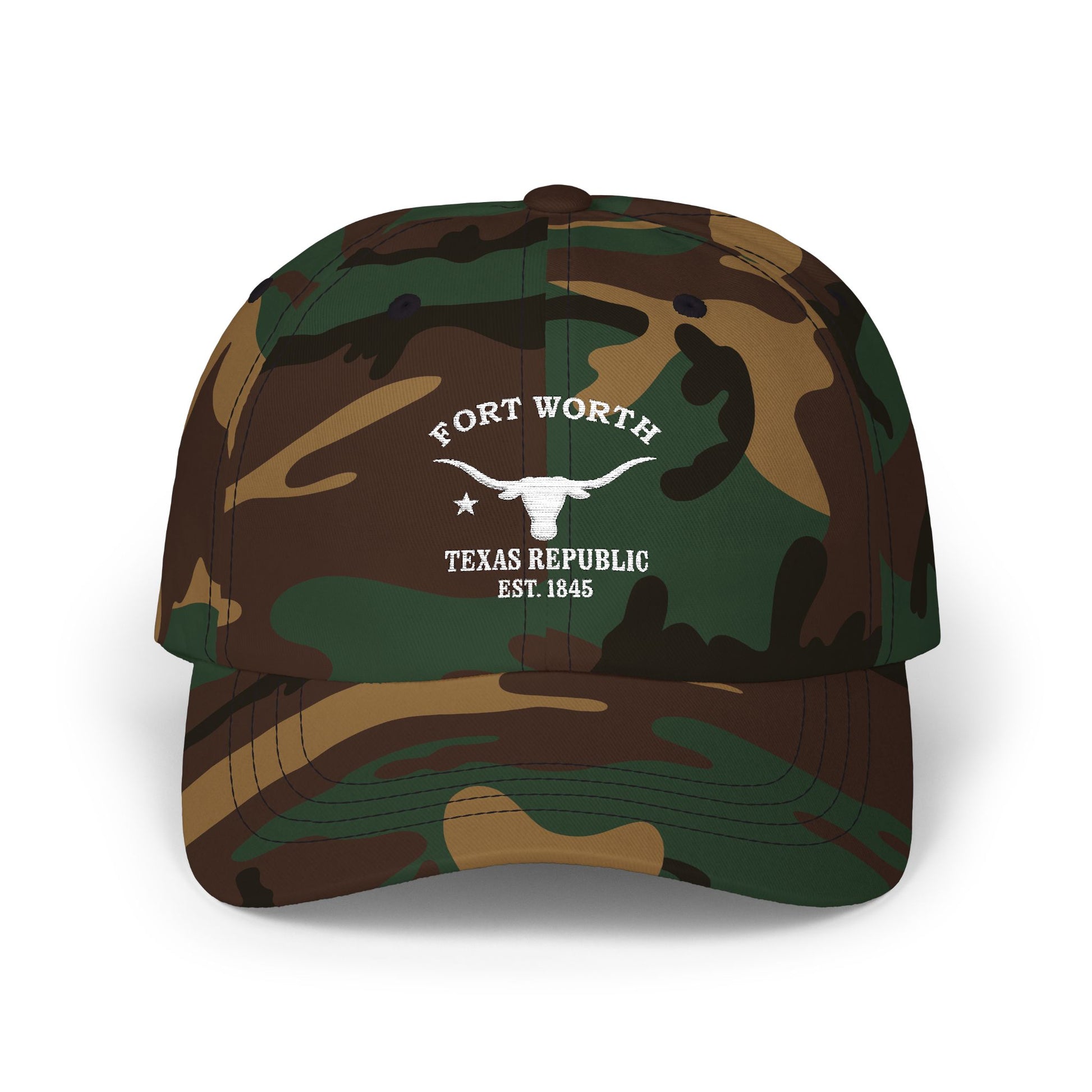
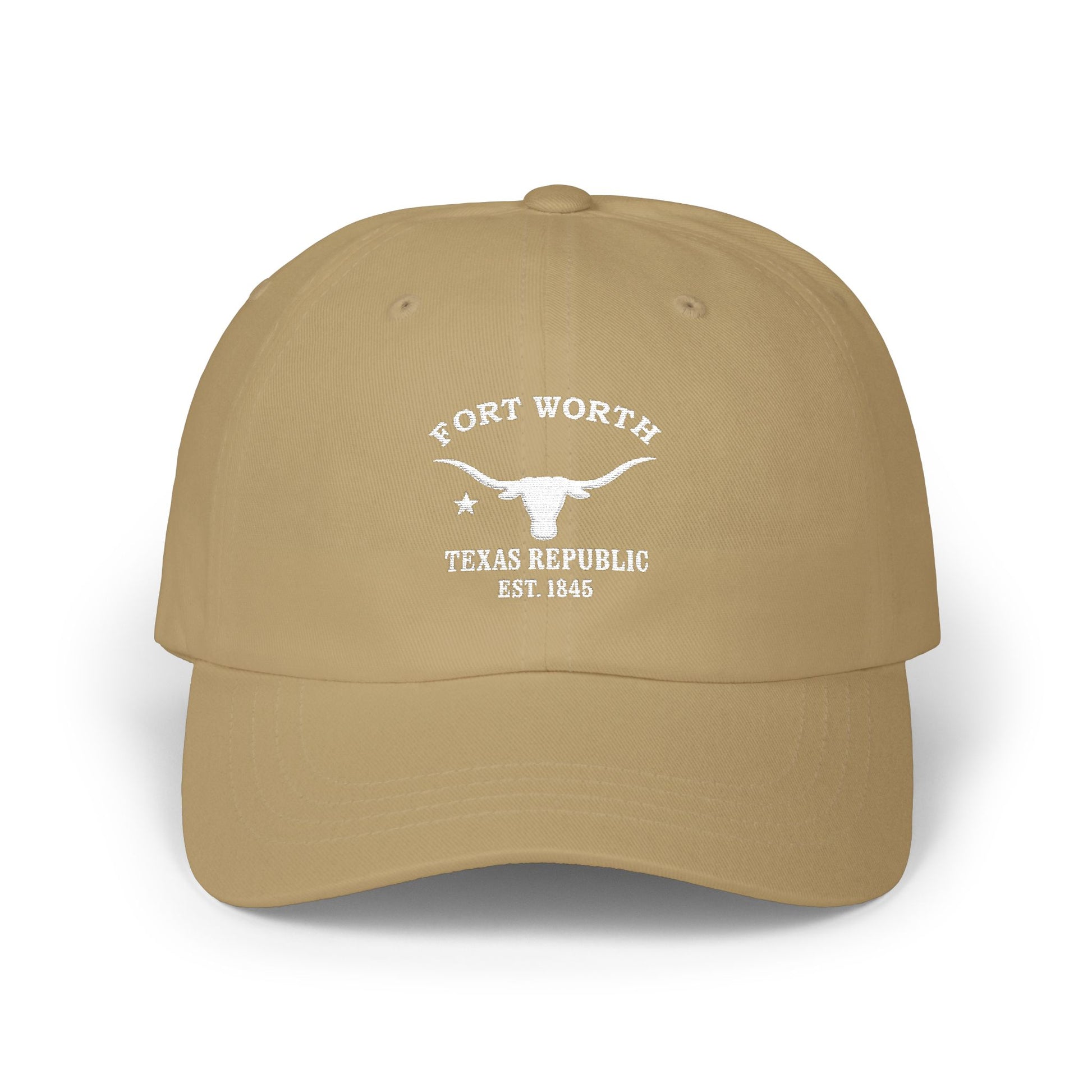
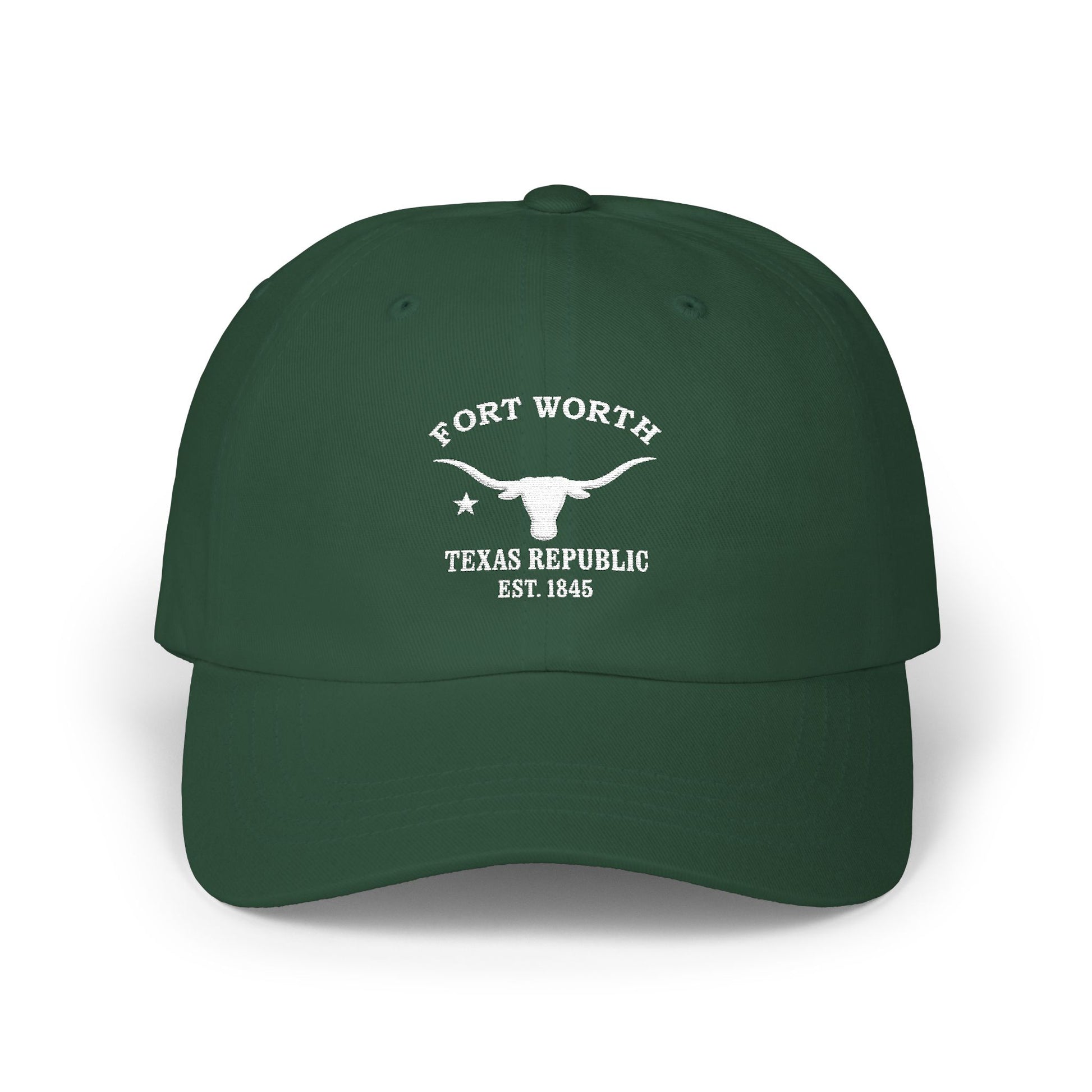
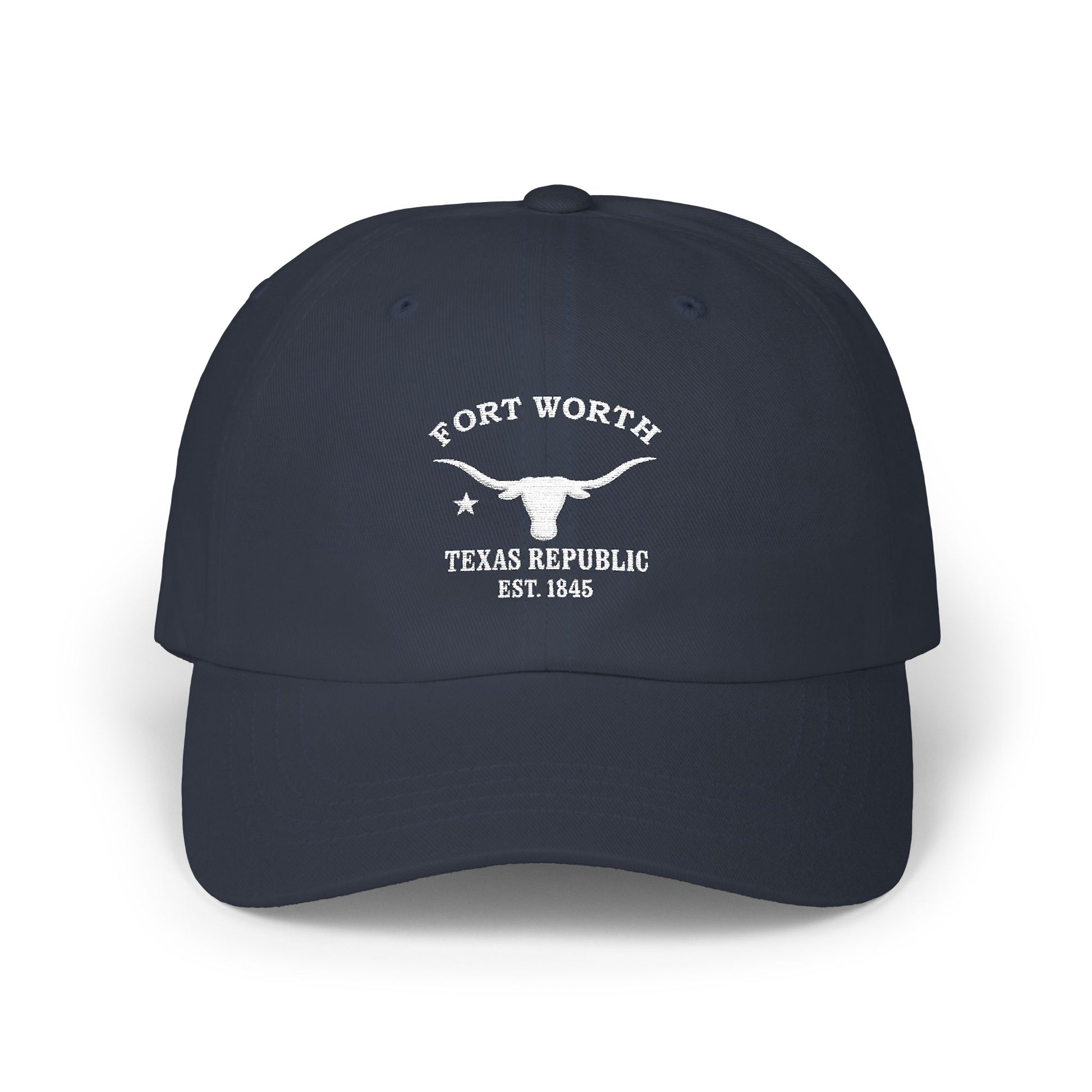
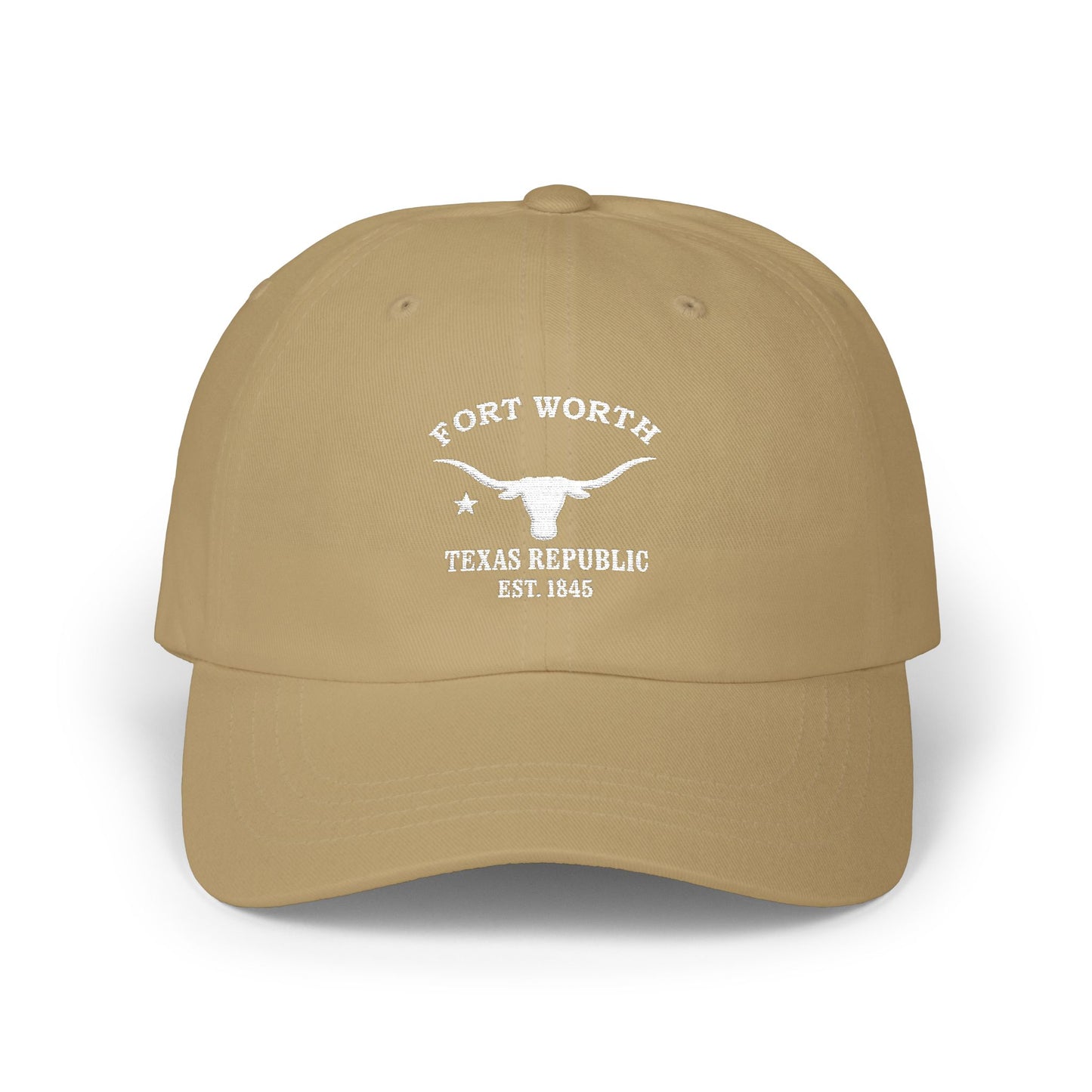
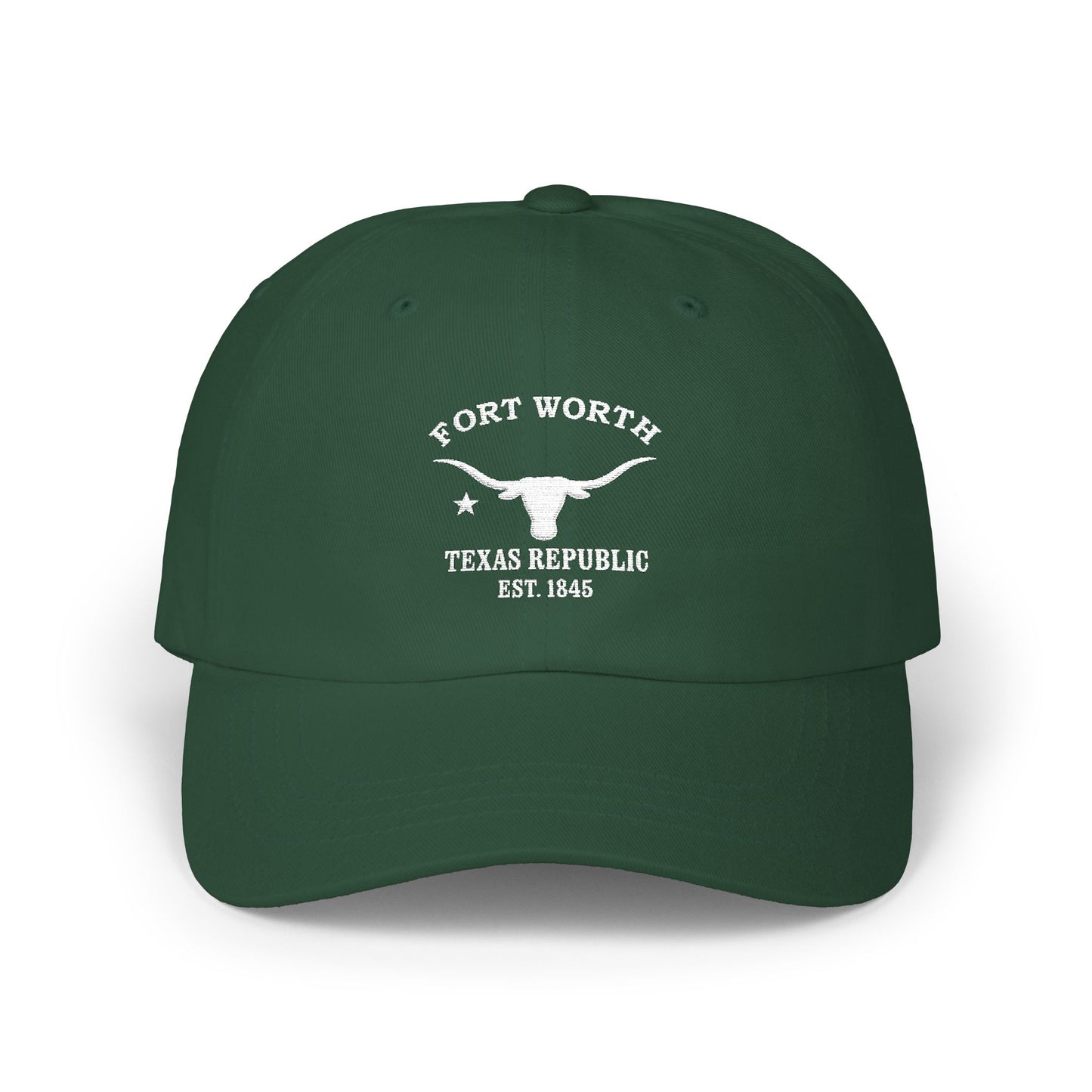
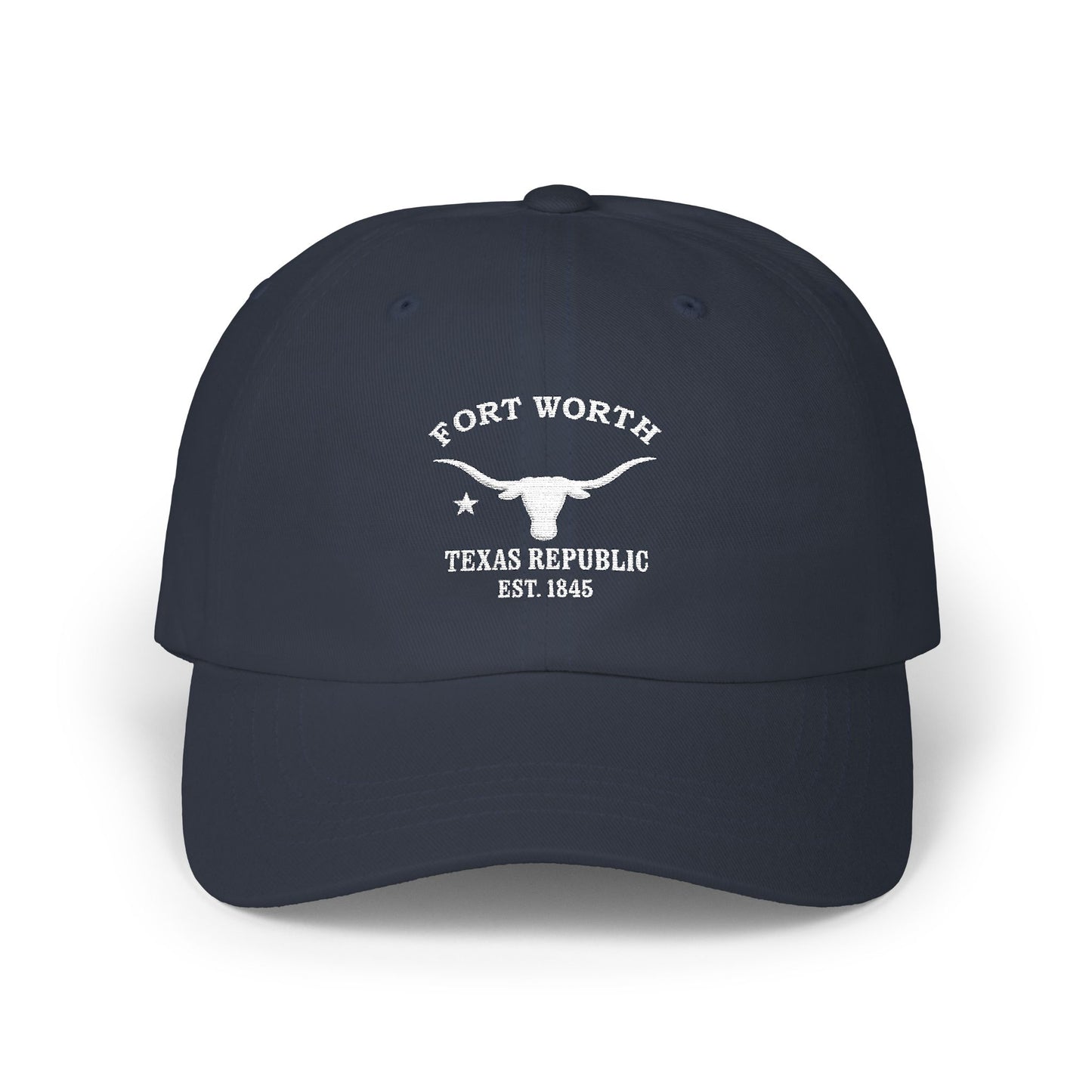
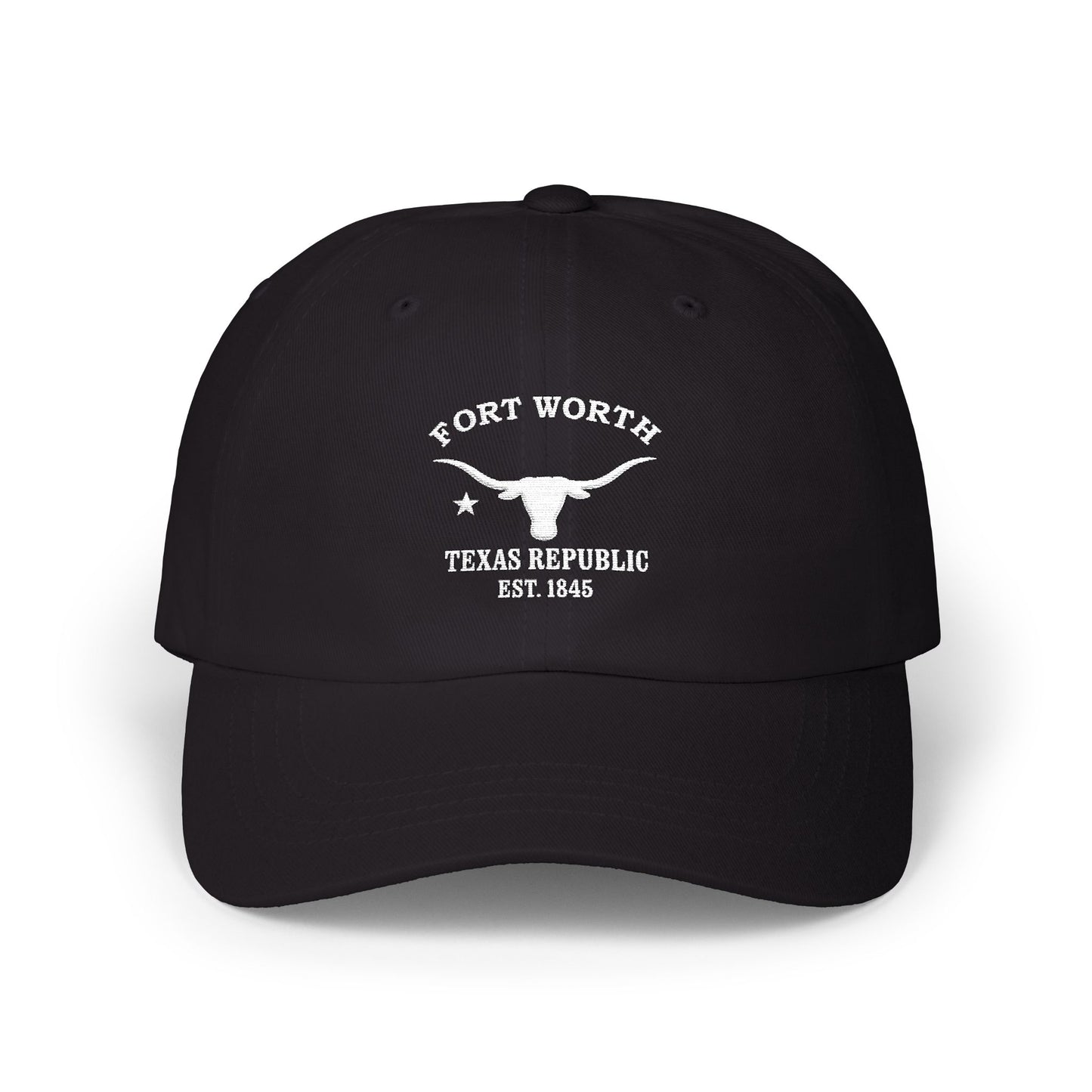
Fort Worth was founded in 1849 as a military post to protect settlers from Native raids on the Texas frontier. Named after Major General William Jenkins Worth, the outpost grew into a cattle town, earning the nickname "Cowtown." Early settlers endured isolation, drought, and raids but built livelihoods from ranching and trade. Its founding identity reflects frontier toughness, independence, and ambition. Fort Worth's story is tied to cattle drives along the Chisholm Trail, where resilience and grit defined life. This heritage established Fort Worth as a proud Texas town, deeply rooted in ranching and frontier resilience.
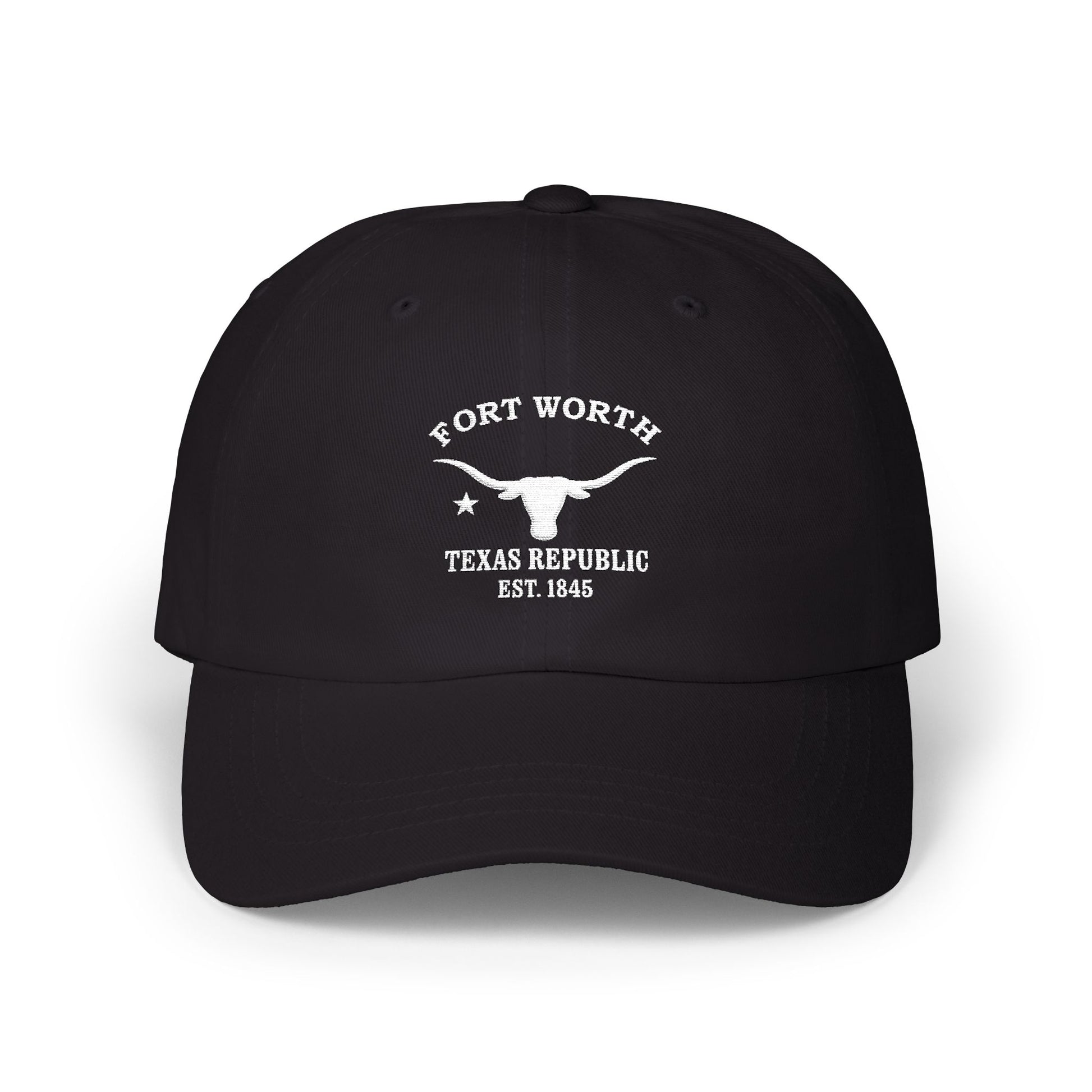
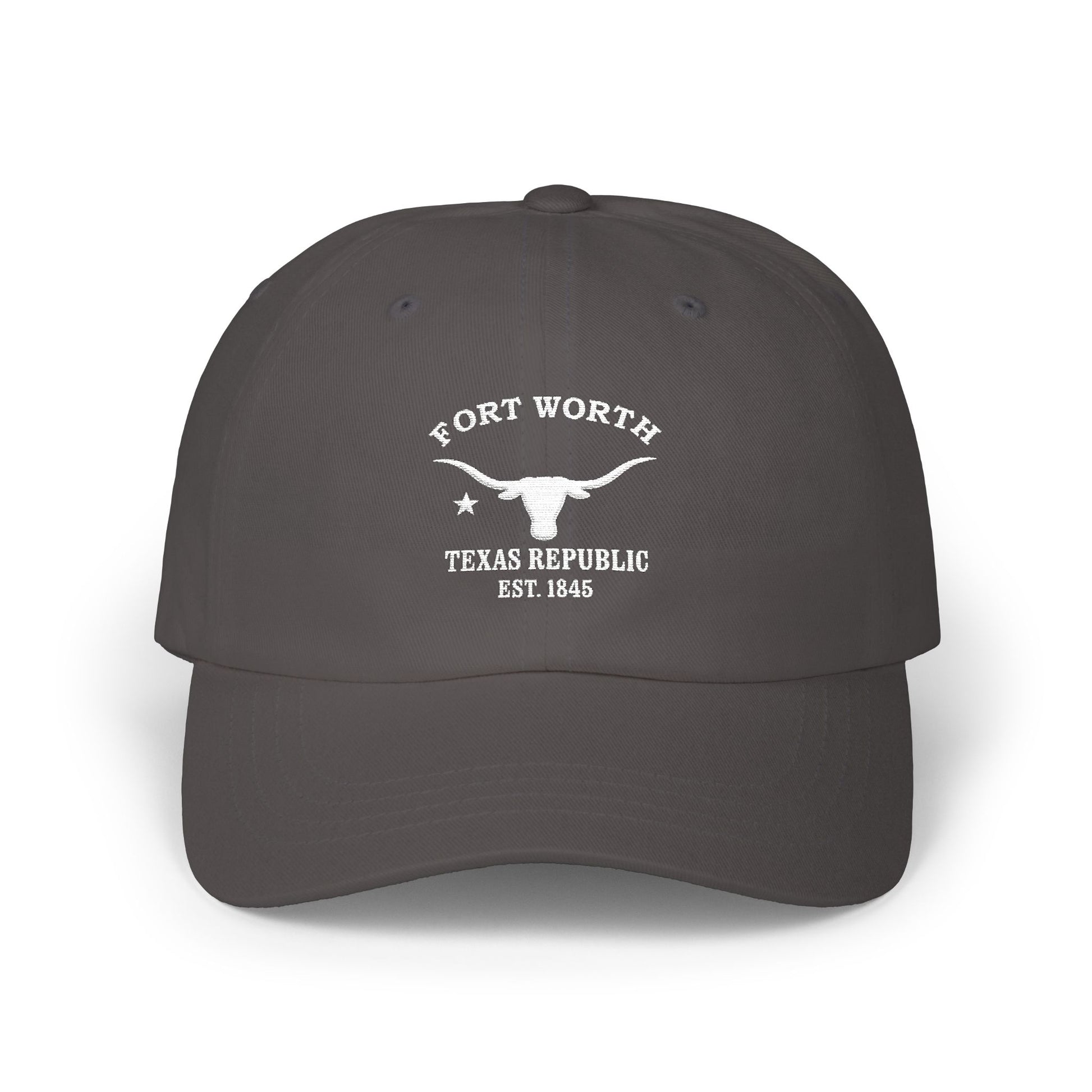
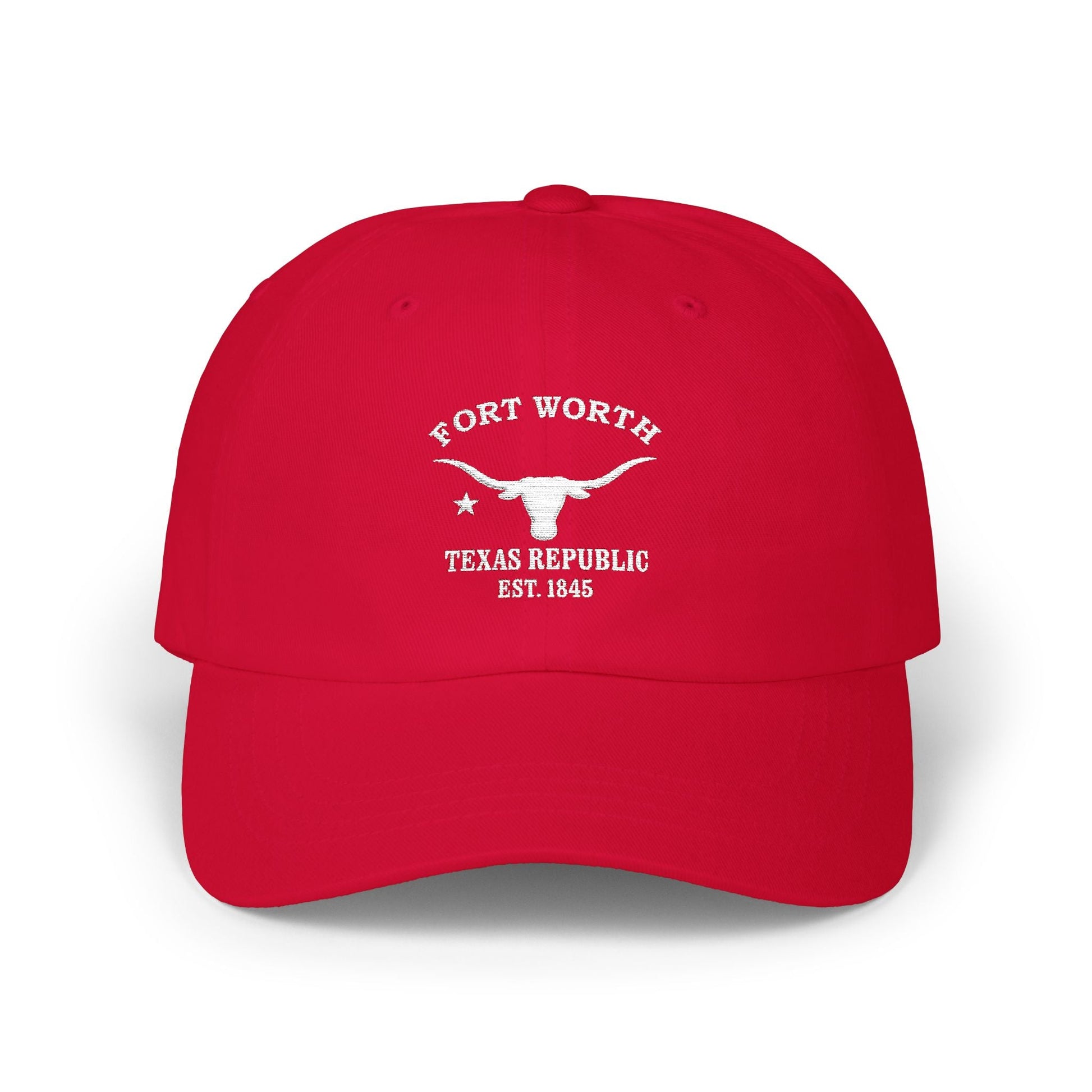
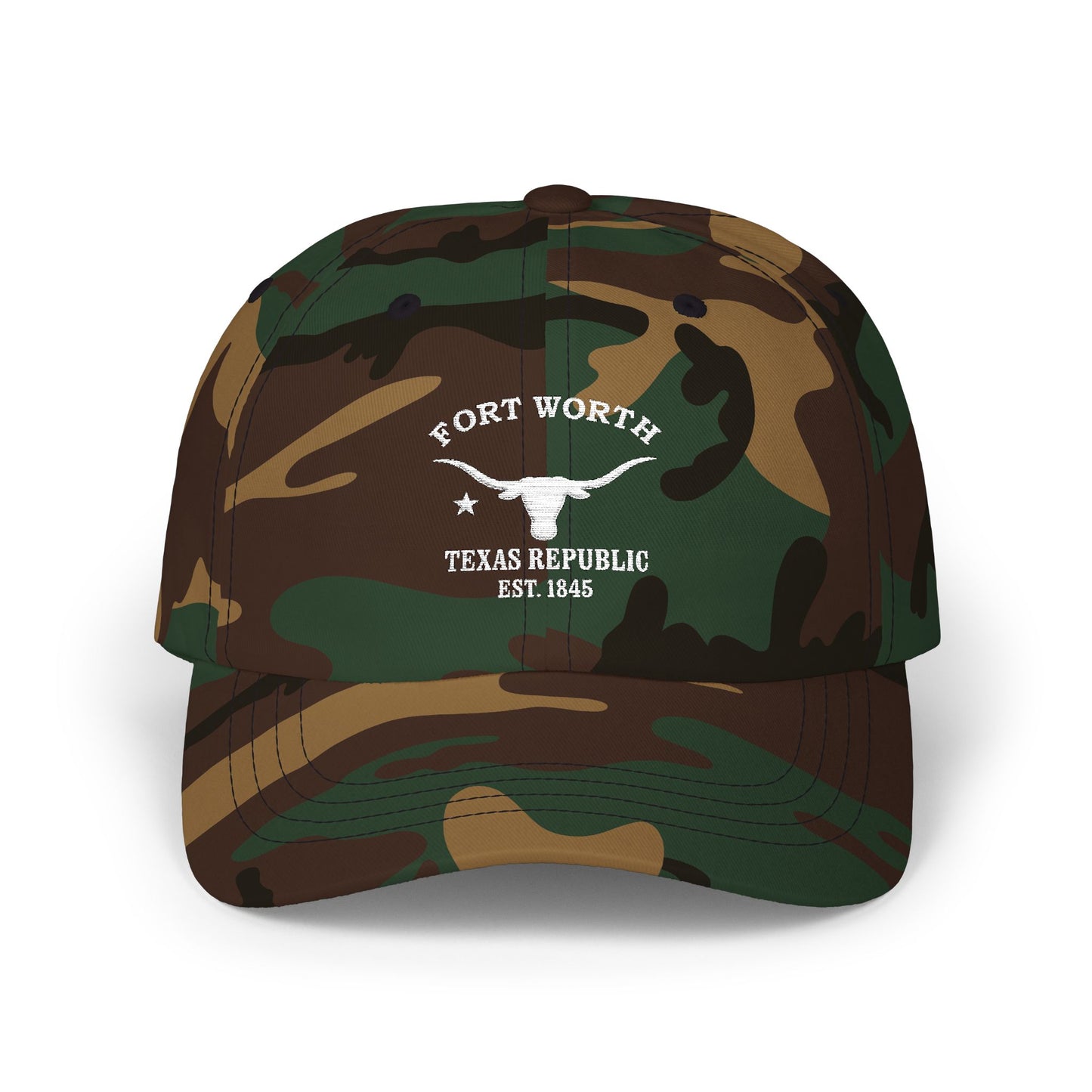
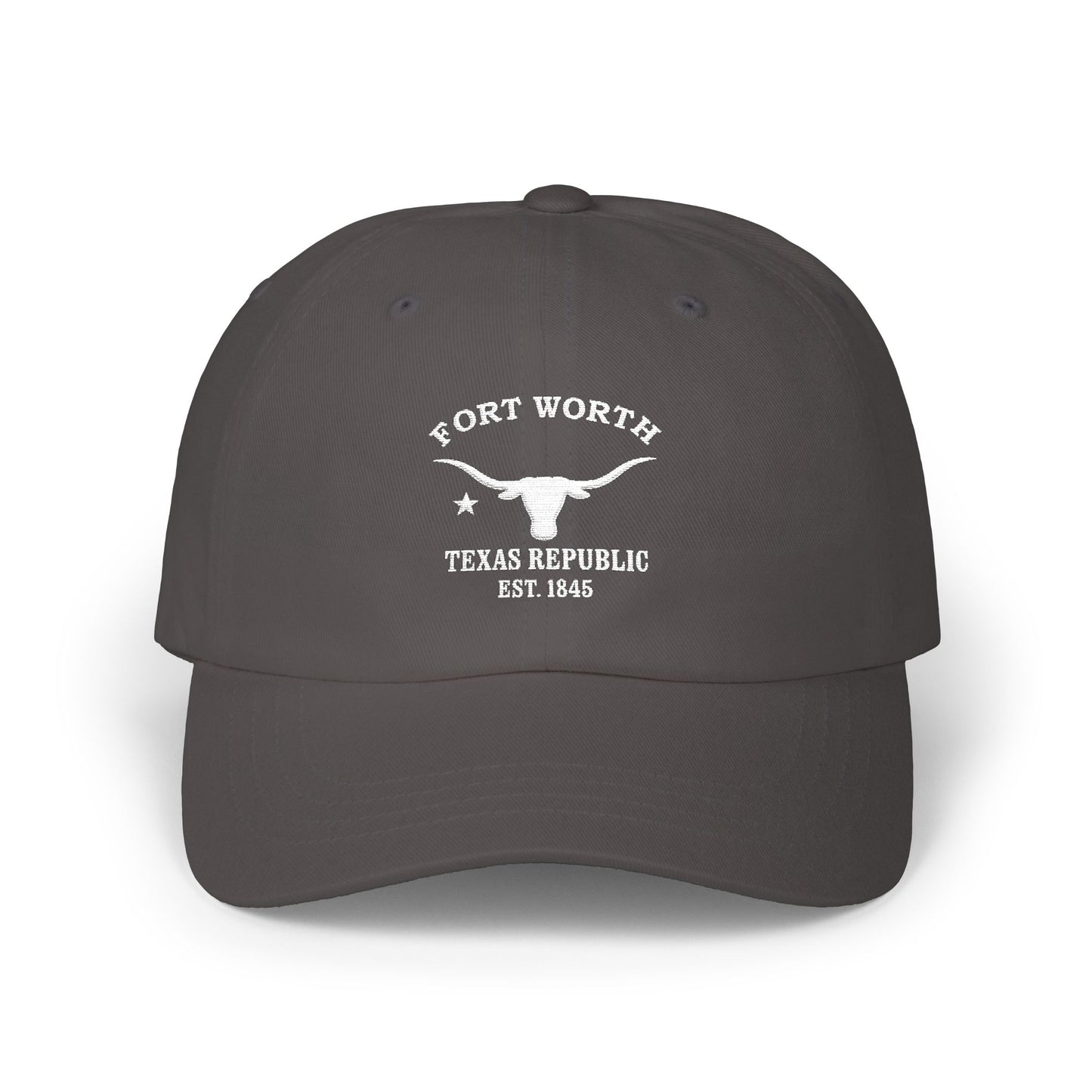
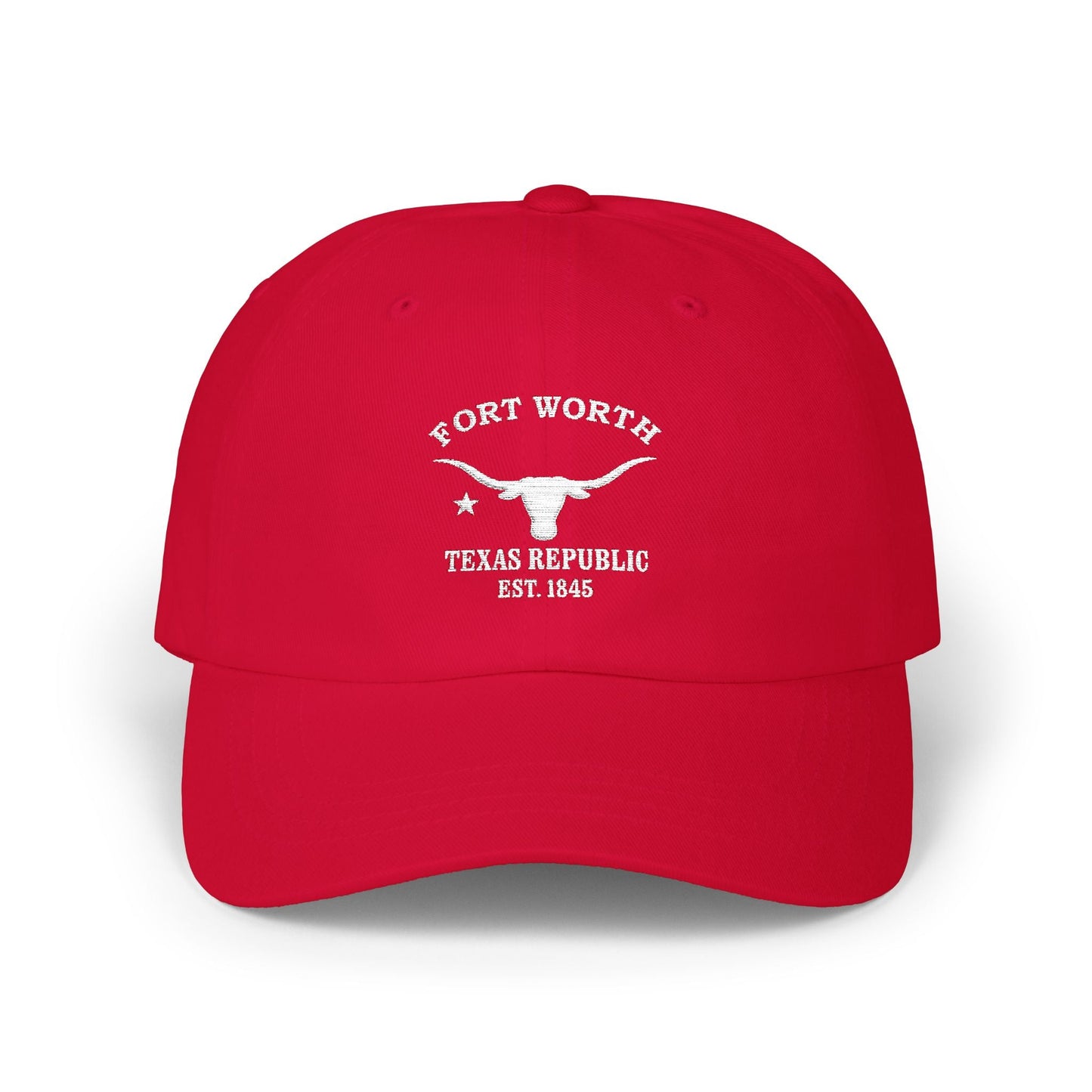
Our Fort Worth retro logo uses Texas's longhorn and Lone Star motif, symbols of ranching toughness and independence. The longhorn reflects cattle heritage, while the star represents pride and resilience. Its black-and-white styling recalls rodeo posters, stockyard signage, and cattle brands. The motif bridges Fort Worth's dual story: frontier cowtown and suburban metropolis. On merchandise, it conveys authenticity and vintage pride, not flashy modern polish. The longhorn and star emblem honors Fort Worth's enduring cowboy identity, making it a retro emblem of resilience, heritage, and ambition. The design captures Texas grit and suburban optimism.
Why People Visit Fort Worth Texas
Fort Worth balances cowboy history with quiet galleries and green spaces. Visitors enjoy museums, gardens, and festive squares. It is proud, cultured, and welcoming. Travelers find year round appeal in parks, paths, and public spaces. The setting combines natural beauty with accessible neighborhoods and landmarks. History and everyday culture sit side by side in a welcoming way. Visitors can plan relaxed mornings and unhurried afternoons without missing key sights.
