
What made the town was cattle. From 1867, drovers pushed longhorns north out of South Texas toward the railheads of Kansas along the Chisholm Trail, and Fort Worth was the last real stop before the long dry run to the Red River. Cowboys laid in supplies, watered their herds, and blew off steam in the saloons and dance halls of a rowdy district that earned the name Hell's Half Acre. Over some seventeen years more than five million cattle walked through town. Fort Worth fed them, outfitted their drovers, and took a nickname it has never shed: Cowtown.
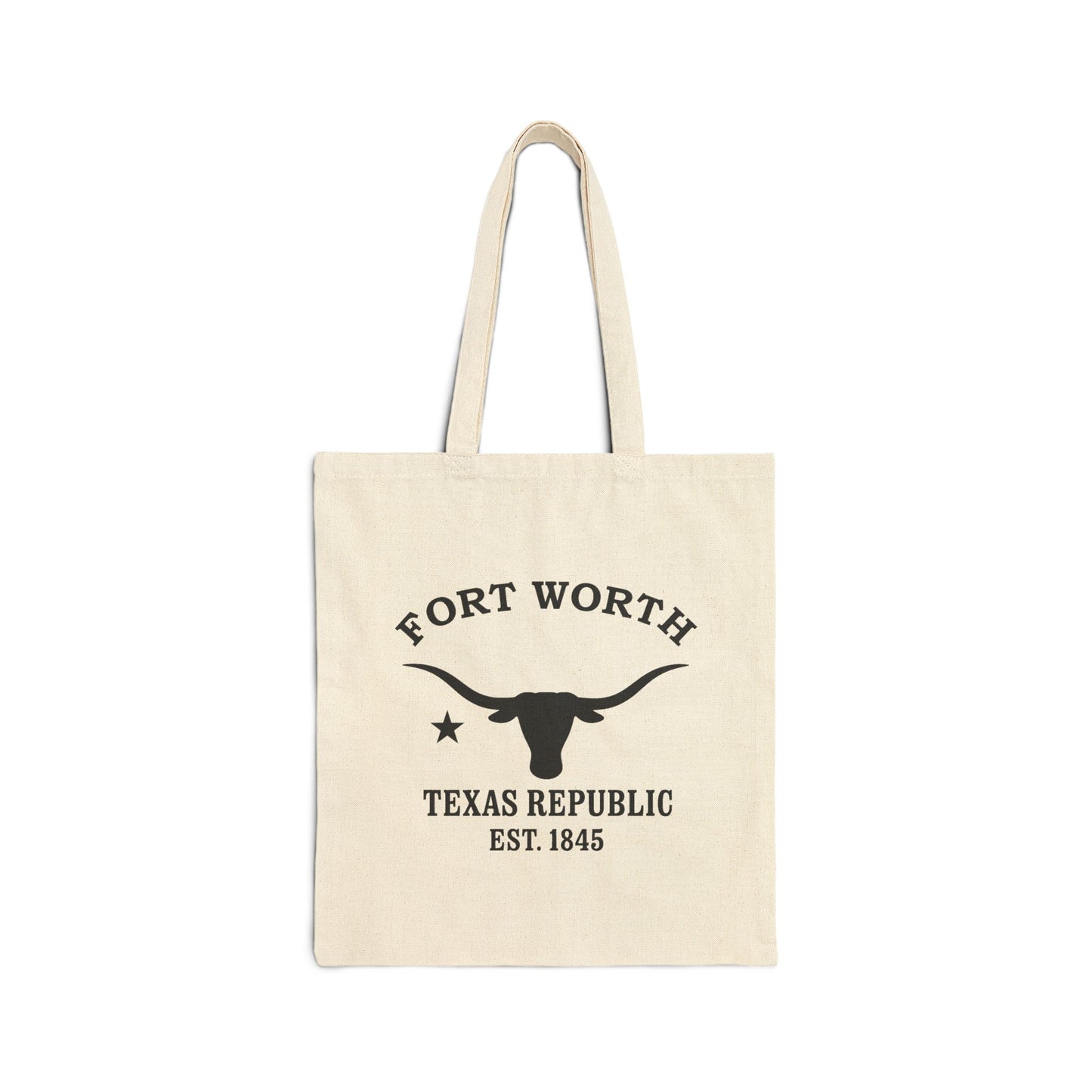
Our Fort Worth logo carries the Texas longhorn and the Lone Star above "Texas Republic — Est. 1845," the shared retro emblem of our Texas towns; the longhorn is pure Cowtown, and 1845 marks the year Texas joined the Union — the state's birthday, not the city's, which came four years later in 1849. Rendered in worn black-and-white, like an old rodeo poster, a cattle brand, or stockyard signage, it ties Fort Worth to every other Texas town we make. What makes this one Fort Worth is the story behind it — the fort, the Chisholm Trail, and the place where the West begins.
Why People Visit Fort Worth
Visitors come to Fort Worth for the rare combination it offers: a real working cowboy past in the Stockyards, where the longhorns still walk, and a world-class art scene minutes away in the Cultural District. Add Sundance Square, the Water Gardens, the Botanic Garden, and the winter rodeo, and a single day can hold cattle pens and fine paintings. Proud, friendly, and unmistakably Texan, Fort Worth rewards anyone who wants the West and the wider world in the same town.
