


The trader was Captain E.T. Barnette. In August 1901 he was steaming up the Tanana River aboard the sternwheeler Lavelle Young, hoping to plant a trading post far upriver, when low water forced the boat into the shallow Chena and stranded it well short of his goal. Under his contract, the captain put Barnette and his tons of goods ashore right there, on the bank where downtown Fairbanks stands today. Barnette was furious — he was hundreds of miles from where he meant to be — but he had little choice, so he set up shop and waited to see what the country would bring.
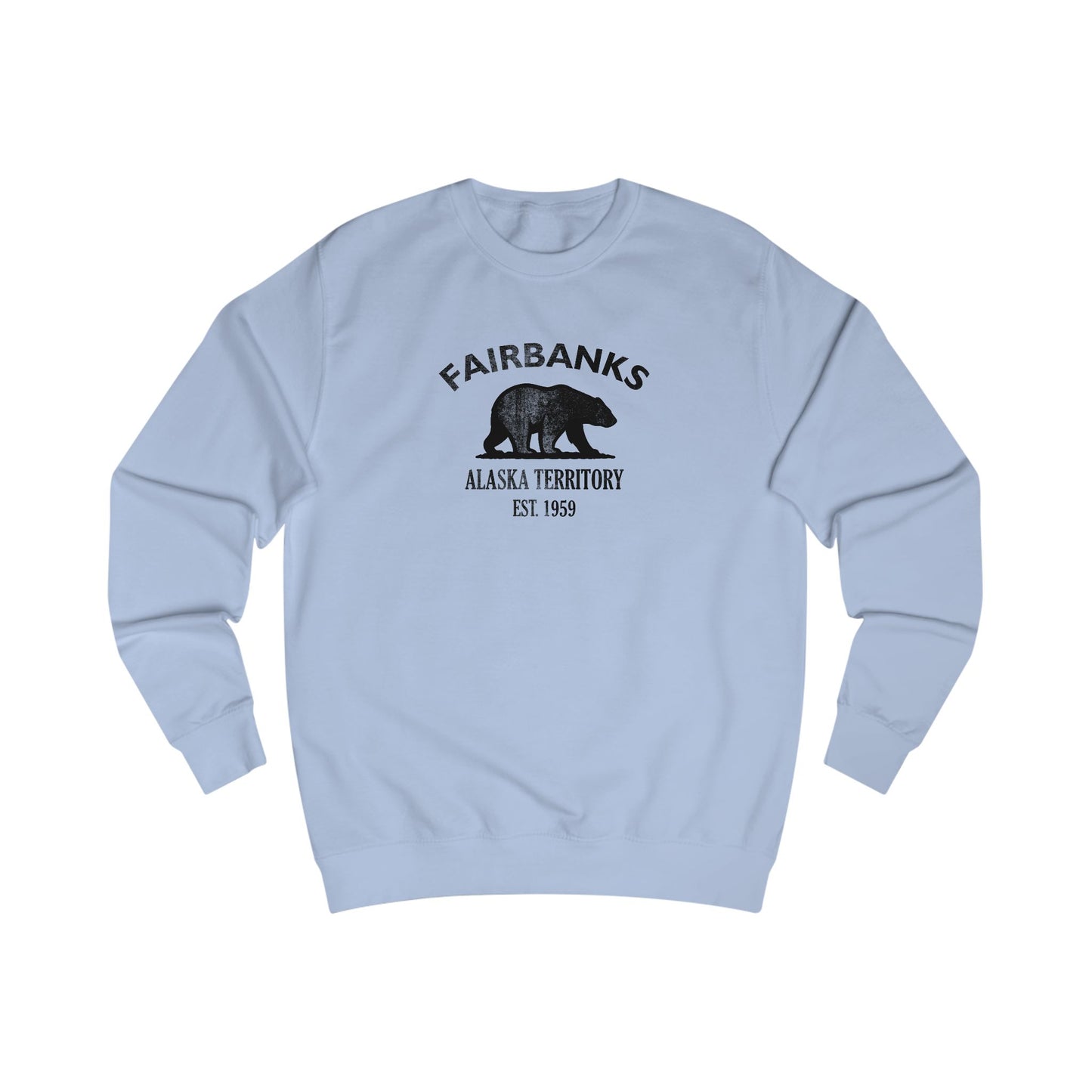
Our Fairbanks logo carries the distressed Alaska bear above "Alaska Territory — Est. 1959," the shared retro emblem of our Alaska towns; the bear stands for the wild Interior country the gold-seekers pushed into, and 1959 marks the year Alaska joined the Union as a state. Rendered in worn black-and-white, like a stamp on a miner's crate or an outfitter's sign, it ties Fairbanks to every other Alaska town we make. What makes this one Fairbanks is the story behind the brand — the grounded riverboat, the gold strike, and the city that grew up golden-hearted under the northern lights.
Why People Visit Fairbanks
Visitors come to Fairbanks for the aurora — the city's spot under the auroral oval is hard to beat — and stay for the layered Interior story: gold dredges and frontier cabins, a northern university and big-sky wilderness in every direction. It is the gateway to Denali and the Arctic, with hot springs and ice art for the winter and the Midnight Sun for the summer. Equal parts gold-rush heritage and far-north spectacle, Fairbanks rewards anyone drawn to the heart of Alaska.
