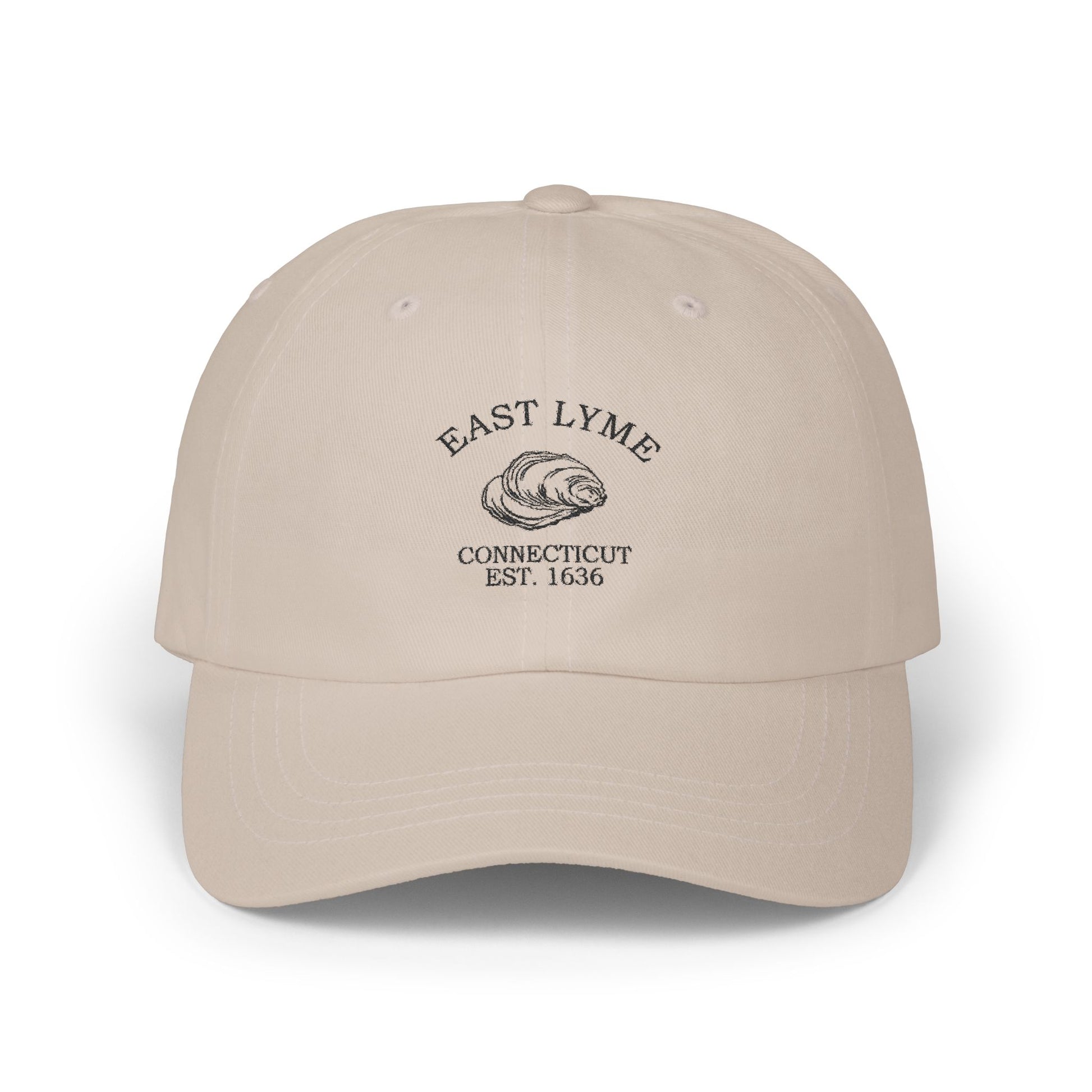
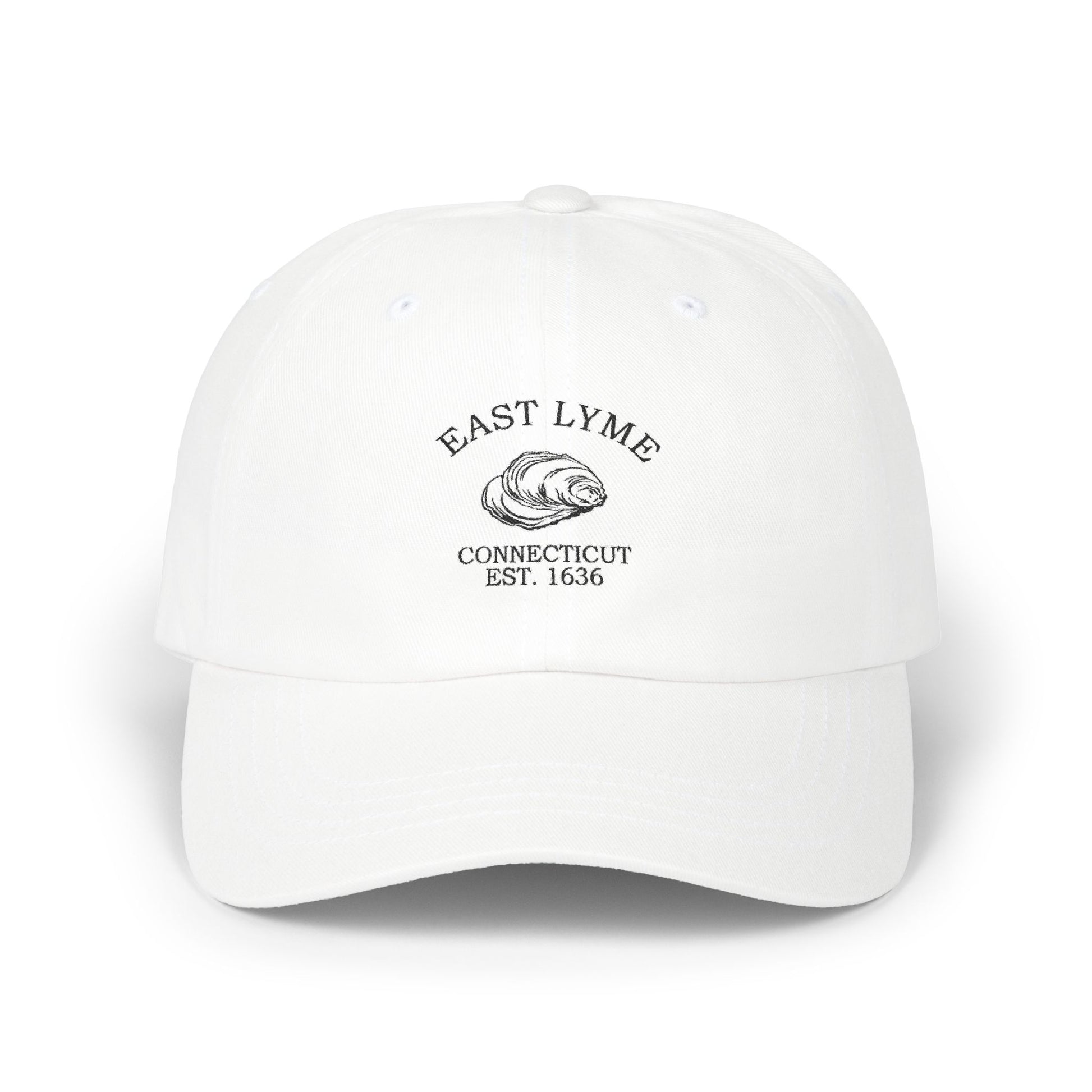
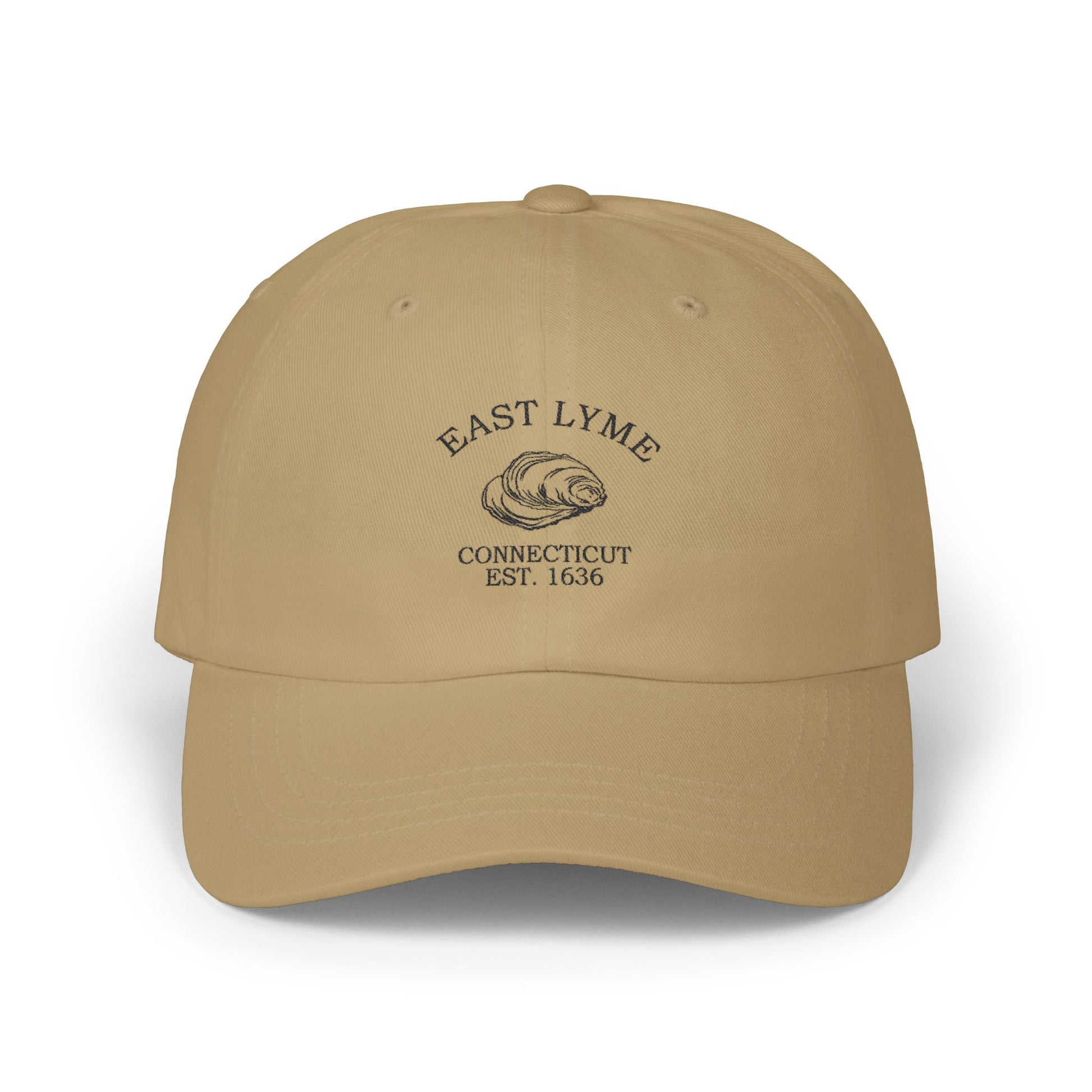
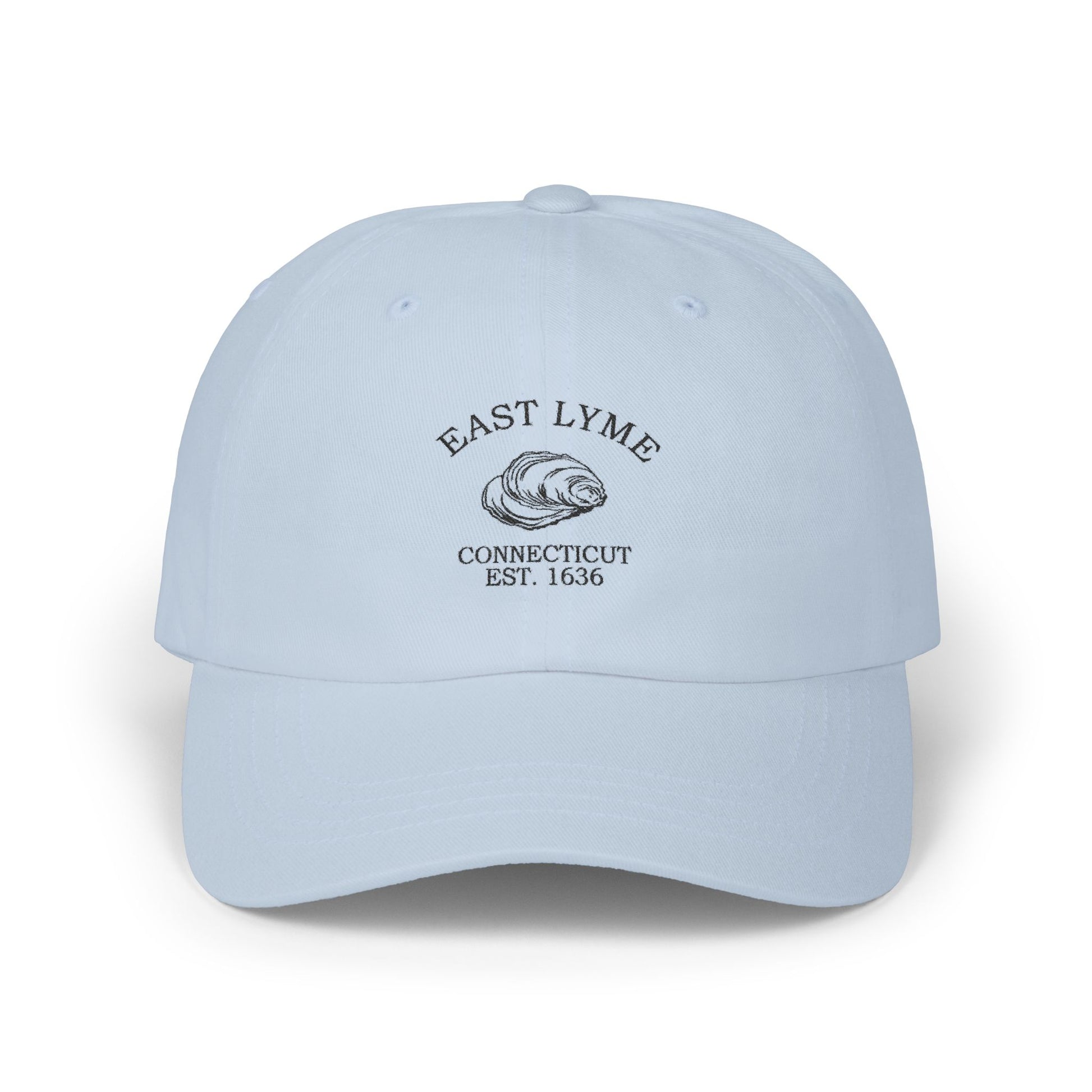
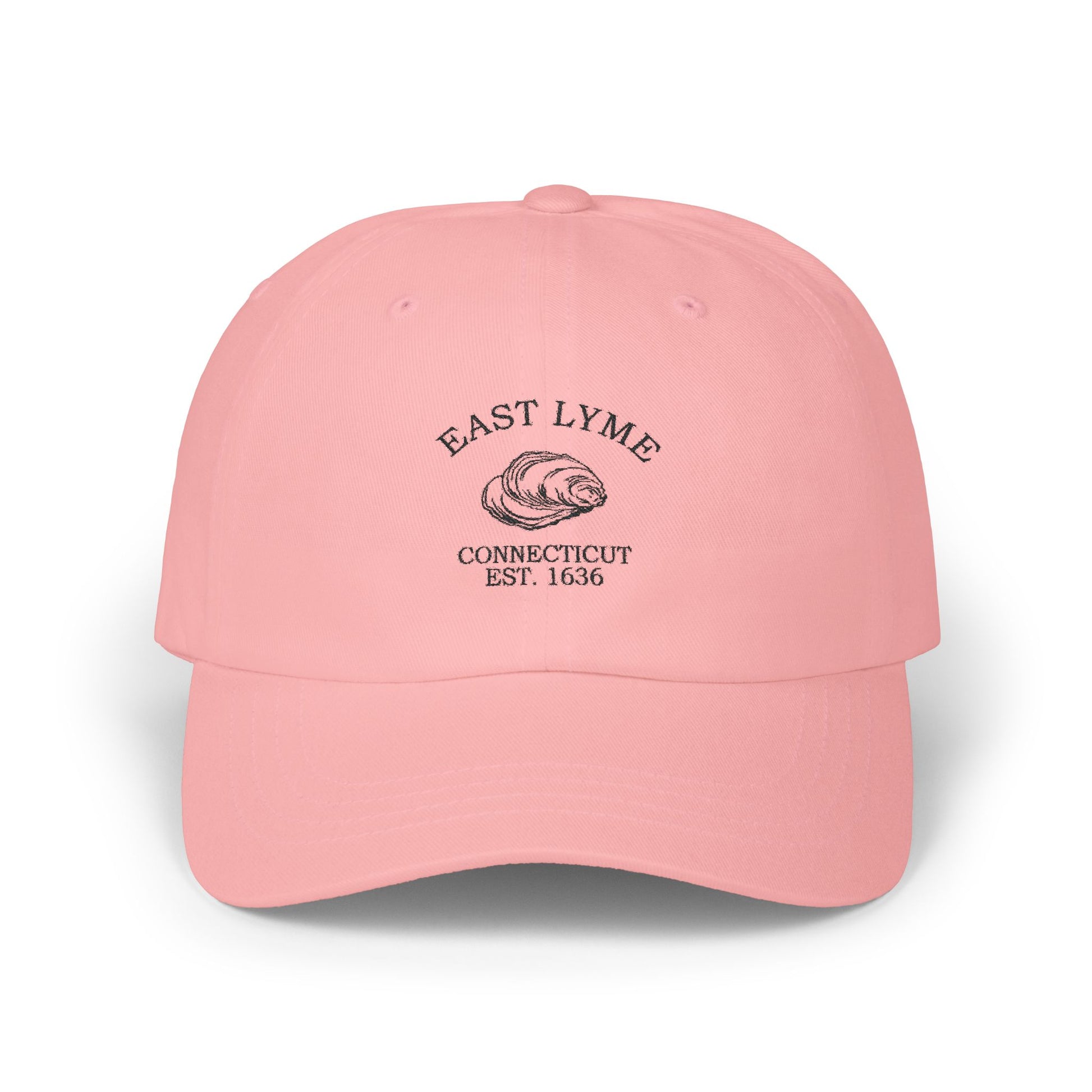

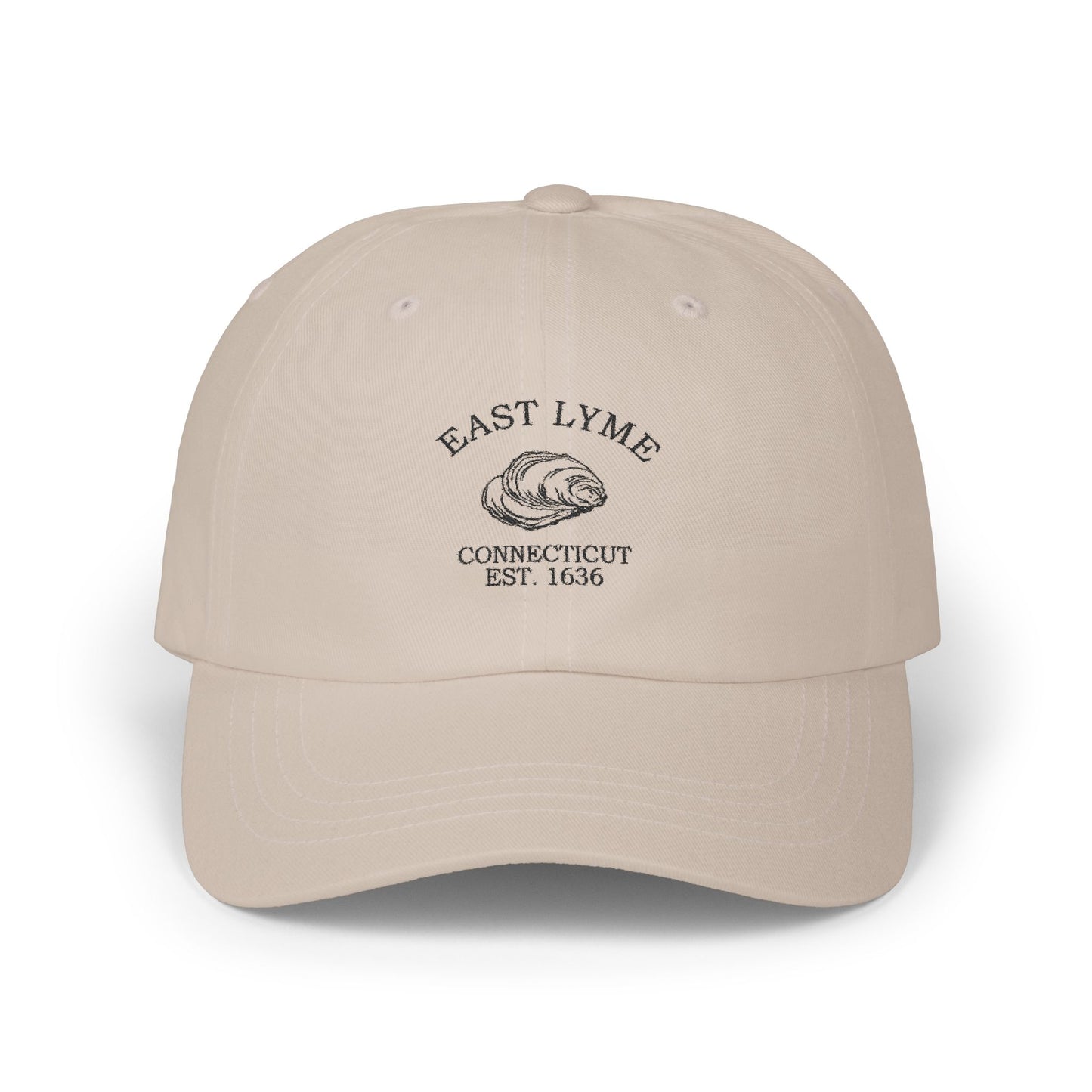
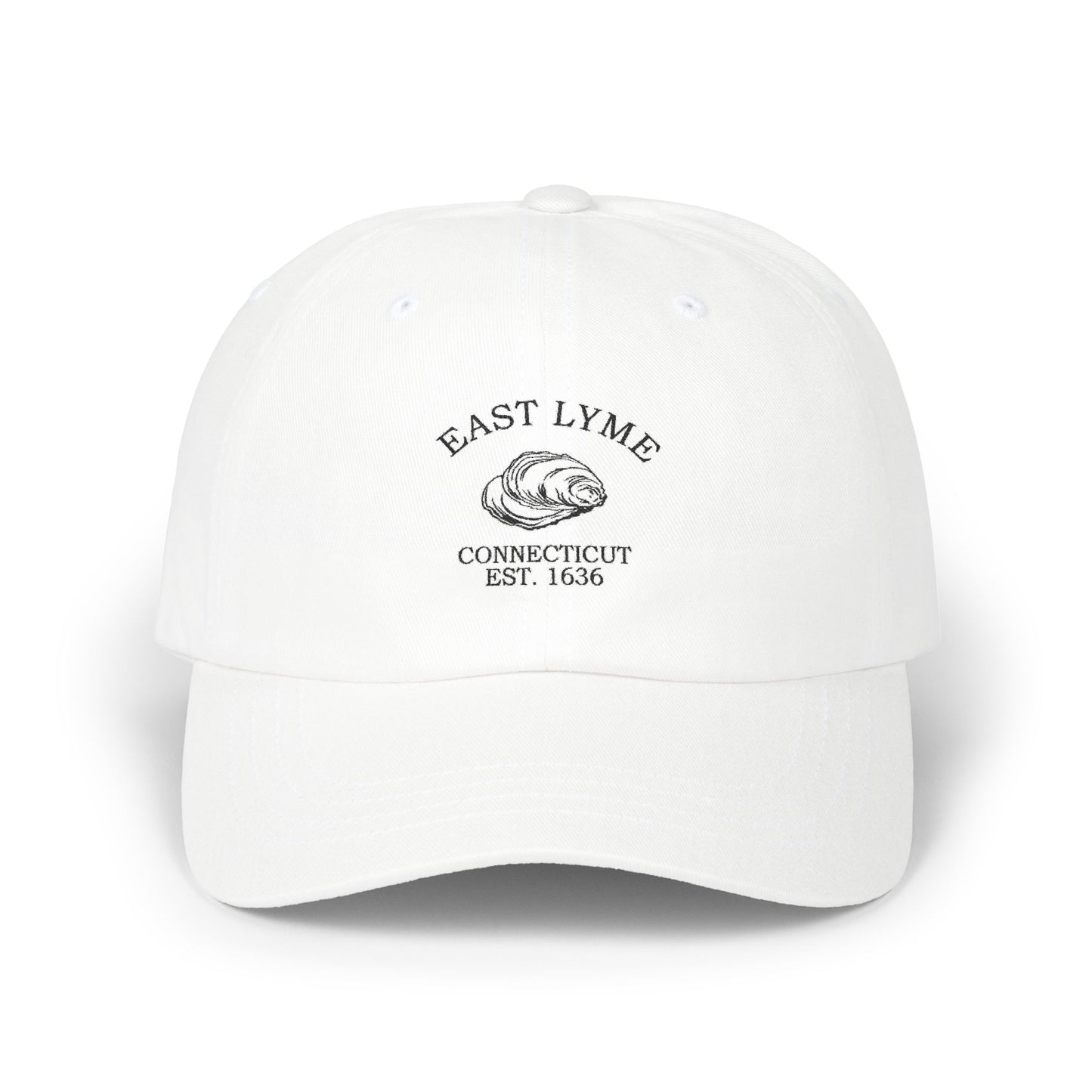
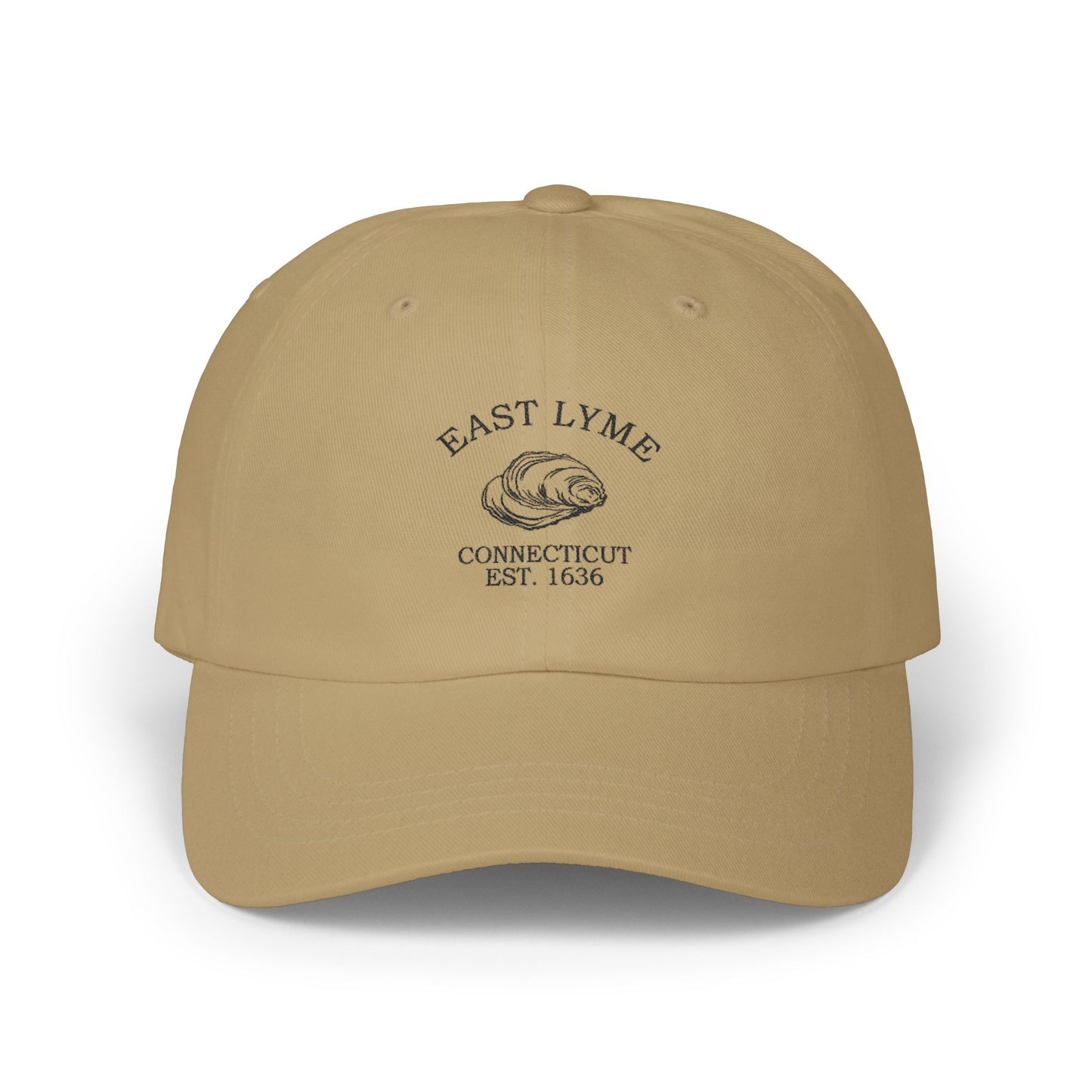
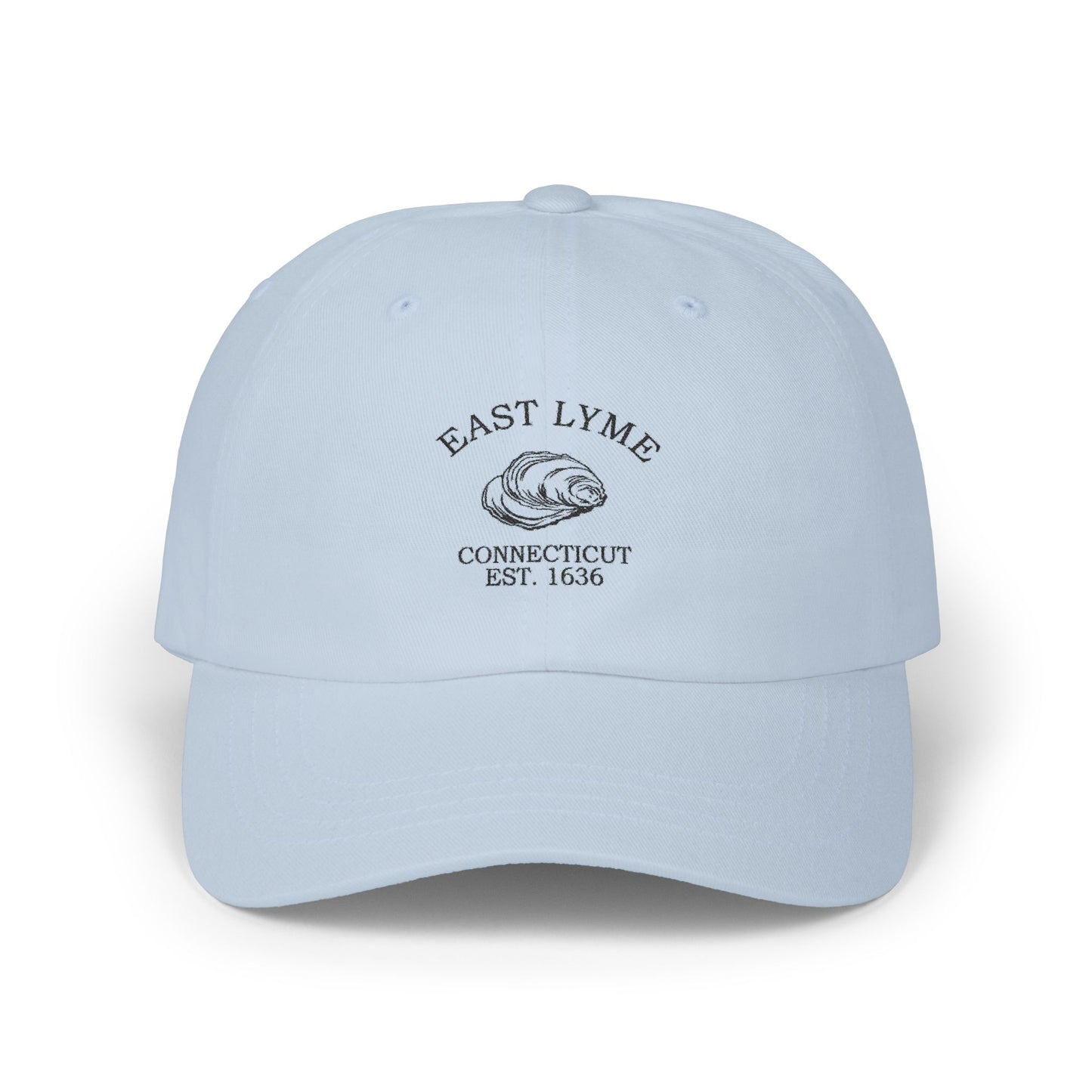
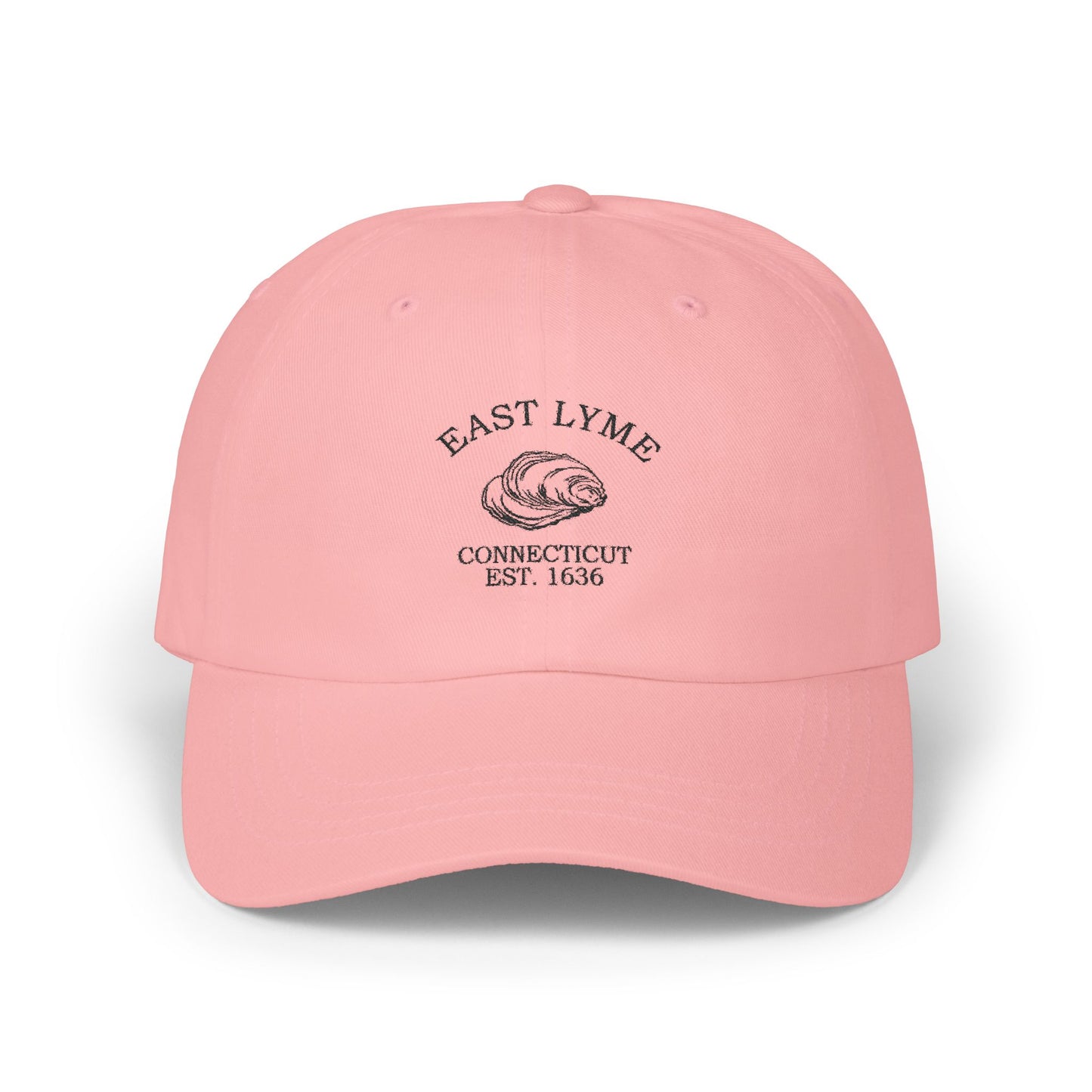

Our East Lyme logo carries the Connecticut oyster above “Connecticut — Est. 1636,” the shared retro emblem of our Connecticut towns, drawn in worn black-and-white like an old oyster-crate label or a coastal sign. The oyster is the through-line that links East Lyme to every other Connecticut town we make; East Lyme's own town seal keeps a different shellfish — the Niantic Bay scallop — and that scallop is the detail that makes this one East Lyme: the seal, the two villages, the boardwalk, and the long blue edge of the Sound.
The shoreline changed in 1851, when the railroad reached the coast and turned the old fishing landing into something new: a summer place. Families from New York and Hartford came down for the season, building beach cottages at Crescent Beach, Black Point, and Giants Neck, and Niantic settled into the double life it still leads — a quiet town of about eighteen thousand most of the year that nearly doubles when the porches open in June and the bay fills with sailboats and sportfishing skiffs. The named beach colonies — Crescent Beach, Black Point, Giants Neck, Attawan, Saunder's Point — still keep that cottage-summer rhythm today, porches opening to the Sound.
Why People Visit East Lyme
East Lyme rewards visitors who want the Connecticut shoreline at its most easygoing — a sandy state-park beach, a waterfront boardwalk, and a village built on the bay. People come for Rocky Neck and the Niantic Bay Boardwalk, for the colonial Thomas Lee House, and for a simple, scenic shoreline day where beach-cottage summers and quiet New England history sit a short walk apart.
