


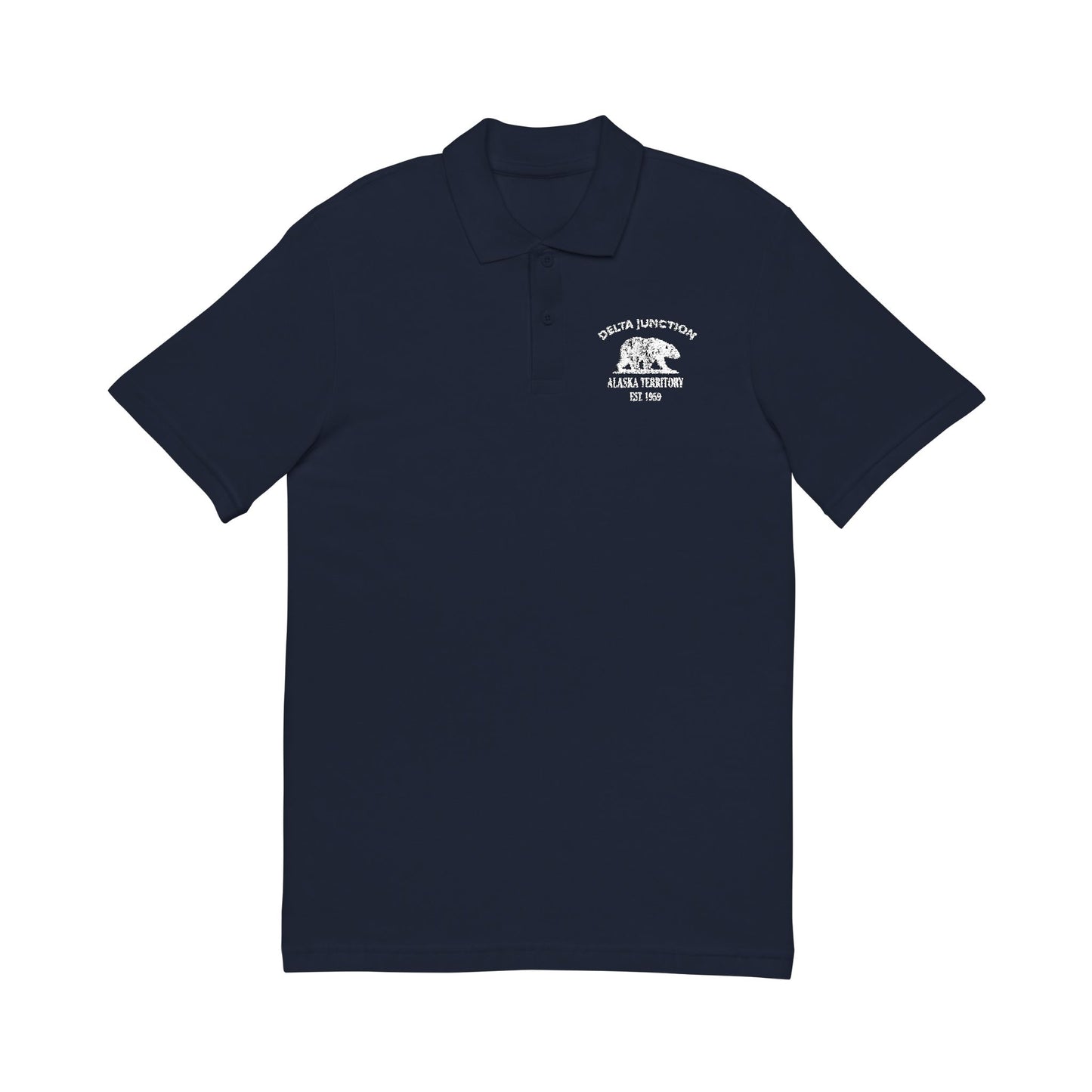
Today Delta Junction is the end-of-the-highway town, proud of its Milepost 1422, its free-roaming bison herd, its historic roadhouses, and its place in the Tanana Valley under the Alaska Range. Its story runs from the Athabascan valley and the 1904 telegraph station through the roadhouse-trail years, the 1920s buffalo experiment, and the 1942 highway that gave the town its name and its fame. Our Delta Junction designs gather that identity into wearable form — the milepost, the bison, the bear, the Last Frontier. Delta Junction — the end of the Alaska Highway, Milepost 1422.
The end of the road — and you made it. Delta Junction is Historic Milepost 1422, the official end of the Alaska Highway, where the famous road finally runs out at the Triangle and the visitor center hands you a certificate for finishing North America's ultimate road trip. It started as a telegraph station in 1904, became a buffalo town when the government turned a herd of plains bison loose here in the 1920s, and sits in the Tanana River Valley under three mountain ranges, where the wind is strong enough to have its own name. This page tells the story.
Why People Visit Delta Junction Alaska
- Get your photo and certificate at the End of the Alaska Highway, Milepost 1422, at the Triangle.
- Visit Big Delta State Historical Park and Rika's Roadhouse (1909) on the Tanana River.
- Tour Sullivan Roadhouse, among the oldest in Interior Alaska, by the visitor center.
- Watch for the free-roaming Delta bison herd on the Delta Bison Range.
- Fish and camp at Quartz Lake, and catch the Deltana Fair in late July.
